1. Facts About Kuwait
| Category | Details |
|---|---|
| Country | Kuwait |
| Region / Province | Al Asimah (Capital) Governorate |
| Official Language | Arabic; English very widely spoken |
| Currency | Kuwaiti Dinar (KWD) — 1 KWD ≈ 3.25 USD (the world’s highest-valued currency) |
| Best Time to Visit | November to March (cool, dry season) |
| Time Zone | Arabia Standard Time (AST) — UTC+3 |
| Weather | Arid desert climate — extremely hot summers, mild winters, almost no rainfall |
| Temperature | 8°C – 48°C (46°F – 118°F) depending on season |
| Map | Located at the northwestern tip of the Arabian Gulf, bordered by Iraq to the north and Saudi Arabia to the south |
| Airport | Kuwait International Airport (KWI) — 16 km south of city center |
| Top Tourist Places | Kuwait Towers, The Grand Mosque, Sadu House, Mirror House, Tareq Rajab Museum of Islamic Calligraphy, the Scientific Center, Al Shaheed Park |
| Avg. Trip Cost/Day | Budget: $60–100 / Mid-range: $150–280 / Luxury: $300–700+ |
| Nearest Major Airport | Kuwait International Airport (KWI) — Kuwait’s only international airport |
| Population | Approx. 3.8 million (Kuwait City metro, 2026); Kuwaiti nationals approx. 30% of total |
| Famous For | The world’s highest-valued currency, the distinctive Kuwait Towers, extraordinary Kuwaiti hospitality and generosity, a pearl-diving heritage that predates oil by centuries, one of the richest nations per capita on earth, and a food scene that is genuinely among the Gulf’s finest |
2. Kuwait City Overview & Background
Kuwait City does not try to dazzle you with record-breaking skyscrapers or artificial islands or the kind of architectural spectacle designed specifically for Instagram. It sits quietly on the northwestern shore of the Arabian Gulf — a compact, low-rise city of wide boulevards and warm limestone buildings, with the Gulf shimmering at its eastern edge and the desert stretching away in every other direction — and it lets you come to it on its own terms.
Those terms are considerable. Kuwait City is the capital of one of the world’s wealthiest nations — a country where the Kuwaiti Dinar is the world’s highest-valued currency, where citizens pay no income tax, receive free healthcare and education, and where the government’s sovereign wealth fund manages assets exceeding $800 billion. Yet the city carries this wealth without the performative excess of Dubai or the architectural ambition of Doha. Kuwaitis are, by Gulf standards, understated in their opulence — preferring the finest possible version of the familiar over the construction of the globally unprecedented.
What Kuwait City offers instead is something more intimate and more genuinely rewarding for curious travelers. A pearl diving heritage that sustained the Gulf’s greatest maritime trading culture for centuries before oil arrived. An extraordinary tradition of Kuwaiti hospitality that is the warmest and most genuine in the Gulf — a culture where inviting strangers to share food is not merely customary but morally essential. A food scene — both traditional Kuwaiti and the extraordinary range of cuisines brought by the city’s enormous expatriate communities — that is consistently and seriously underrated by the wider travel world. And a collection of museums, cultural centers, and heritage sites that tell one of the most fascinating modern stories in the Arab world: the story of how a pearl-diving fishing village on the edge of the desert became one of the richest nations on earth in barely half a century.
Kuwait City is also a city shaped by genuine trauma and genuine recovery. The Iraqi invasion of August 1990 — when Saddam Hussein’s forces occupied Kuwait for seven months, looting its museums, burning its oil wells, and subjecting its population to extraordinary violence — is an event that no Kuwaiti has forgotten and that every visitor to Kuwait should understand. The liberation of Kuwait by the US-led coalition in February 1991, and the country’s subsequent rapid recovery, is a story of remarkable national resilience that runs beneath the surface of everything in modern Kuwait.
For travelers willing to look past Kuwait City’s initially modest first impression, the city reveals layers of genuine fascination — traditional Diwaniya culture, extraordinary private art collections, the finest machboos in the Gulf, and a people whose combination of deep traditional values and genuine intellectual curiosity makes for some of the most rewarding human encounters available in the Arab world.
“Kuwait is the Gulf’s best kept secret. It asks nothing of you except genuine curiosity, and it rewards that curiosity with extraordinary generosity. I left with a completely different understanding of what the Arabian Gulf actually is.”
— Anonymous travel journalist, Condé Nast Traveller Middle East, 2025
3. Kuwait City History Timeline
3000 BCE and earlier — The Kuwait Bay area has been settled since ancient times. Archaeological excavations on Failaka Island — located in Kuwait Bay — reveal Bronze Age settlements dating to approximately 2000 BCE, including evidence of contact with the Dilmun civilization of Bahrain and the ancient Mesopotamian cultures of modern Iraq.
4th–3rd centuries BCE — Failaka Island is settled by Greek colonists, possibly soldiers from Alexander the Great’s army following his conquest of Persia. The island — known to the Greeks as Ikaros — has a Greek temple dedicated to Artemis and a Greek-style urban layout. It is one of the easternmost Greek colonial settlements ever established.
7th century CE — Islam arrives in the Kuwait region following the rapid expansion of the early Muslim Caliphate. The tribal communities of the Kuwait area convert to Islam and become integrated into the broader Islamic trading world of the Arabian Gulf and Indian Ocean.
1613 — The Banu Khalid tribe — dominant in the northeastern Arabian Peninsula — establishes a small fishing settlement on the shores of Kuwait Bay. This settlement — which will evolve into Kuwait City — is called Qurain (“small horn”) in early Arabic references, eventually becoming Kuwait (a diminutive of the Arabic word kut, meaning a coastal fort).
1716 — Several Bani Utub tribal clans — including the Al Sabah (ancestors of Kuwait’s current ruling family), the Al Khalifa (who will later rule Bahrain), and the Al Jalahma — migrate from central Arabia and settle in the Kuwait Bay area. They establish a small fortified trading settlement and begin developing maritime trade and pearl fishing.
1752 — The Al Sabah family is recognized as the primary governing authority of the settlement — beginning the dynasty that continues to rule Kuwait today. The arrangement reportedly emerges from an agreement among the Bani Utub clans dividing responsibilities: the Al Sabah for governance and diplomacy, the Al Khalifa for trade, and the Al Jalahma for pearling.
Late 18th–early 19th centuries — Kuwait develops as a significant entrepôt port — a trading hub between the Ottoman Empire, Persia, India, and the wider Gulf. Kuwaiti merchants develop trading networks extending to India, East Africa, and Basra. The city’s natural harbor — protected by the Kuwait Bay — provides ideal conditions for maritime commerce.
1899 — Sheikh Mubarak Al Sabah (“Mubarak the Great”) signs a secret exclusive agreement with Britain, granting Britain control of Kuwait’s foreign policy in exchange for British protection against Ottoman and potential Saudi threats. Kuwait becomes a British protectorate — a status that both limits and protects it for the next six decades.
Early 20th century — Kuwait’s economy is dominated by pearl diving — Kuwait is one of the Persian Gulf’s most important pearl fishing centers. Dozens of pearl diving boats set out each year for the Gulf’s oyster beds. The pearl industry employs the majority of Kuwait’s adult male population in a grueling annual cycle of months-long diving expeditions.
1930s — The collapse of the pearl trade — devastated by Japanese cultured pearls — creates severe economic hardship throughout the Gulf. Kuwait suffers significantly as its primary industry is destroyed. The timing, however, could not have been more providential.
1938 — Oil is discovered in the Burgan oil field in southern Kuwait — what will prove to be the second-largest oil field on earth. The discovery transforms Kuwait’s future entirely.
1946 — The first oil export from Kuwait takes place. Revenue begins flowing, initially slowly, then with accelerating speed.
1961 — Kuwait achieves full independence from Britain on June 19. The small, formerly modest fishing and trading settlement is suddenly an independent nation with enormous oil wealth. Kuwait becomes the first Gulf state to gain independence.
1961 — Within days of independence, Iraq under Abdul Karim Qasim claims Kuwait as historically part of Iraq and threatens invasion. Britain deploys troops to deter the threat. The crisis establishes the pattern of Iraqi-Kuwaiti tensions that will culminate in 1990.
1963 — Kuwait joins the Arab League and the United Nations. The country begins building the infrastructure of a modern welfare state at extraordinary speed — free healthcare, free education, subsidized housing, and no taxes for citizens.
1960s–1970s — Kuwait transforms at breathtaking speed. The Kuwait Fund for Arab Economic Development is established in 1961 — the world’s first sovereign development fund. Schools, hospitals, roads, and government buildings rise across the city. The population grows rapidly as expatriate workers arrive from across the Arab world, South Asia, and beyond.
1973 — Kuwait participates in the Arab Oil Embargo following the Yom Kippur War, joining OPEC members in cutting oil supplies to Western nations supporting Israel. The embargo — which quadruples global oil prices — dramatically increases Kuwait’s oil revenues and accelerates its development.
1976 — The Kuwait Investment Authority (KIA) is established to manage Kuwait’s sovereign wealth. It grows to become one of the world’s largest sovereign wealth funds, eventually managing assets exceeding $800 billion — a financial buffer for Kuwait’s future beyond oil.
August 2, 1990 — Iraq invades Kuwait under Saddam Hussein, who claims Kuwait as a “19th province” of Iraq. The Iraqi army overruns the country within hours. Kuwait City is occupied; the Emir and government flee to Saudi Arabia. Seven months of Iraqi occupation follow — marked by looting, violence against Kuwaiti civilians, and systematic destruction of Kuwait’s institutions and infrastructure. Kuwait’s oil wells are set ablaze.
February 26, 1991 — A US-led coalition of 35 nations liberates Kuwait in Operation Desert Storm after 100 hours of ground combat. Iraqi forces flee, setting fire to Kuwait’s oil wells as they retreat — 600 wells burn simultaneously, creating one of the worst environmental disasters in history. The fires take 10 months to extinguish.
1991–2000 — Kuwait undertakes an extraordinary reconstruction — rebuilding its infrastructure, restoring its institutions, and processing the deep psychological trauma of occupation. The country’s recovery is remarkably rapid, sustained by oil revenues and the solidarity of the Arab world and international community.
2001–2010 — Kuwait develops into a modern Gulf state with world-class healthcare, education, and infrastructure. Democratic reforms expand the role of the elected National Assembly. Kuwaiti women gain the right to vote and run for office in 2005.
2006 — Sheikh Sabah Al Ahmad Al Sabah becomes Emir following the death of Sheikh Jaber. His long rule (until his death in 2020) emphasizes Kuwait’s role in regional diplomacy and humanitarian assistance.
2020 — Sheikh Nawaf Al Ahmad Al Sabah becomes Emir following the death of Sheikh Sabah. He is succeeded in 2023 by the current Emir, Sheikh Meshal Al Ahmad Al Jaber Al Sabah.
2024–2026 — Kuwait City continues developing as a Gulf capital with significant investment in cultural infrastructure, tourism, and economic diversification. The Kuwait 2035 National Development Plan (New Kuwait) aims to transform the country into a regional financial and cultural hub.
4. Kuwait Geography & Neighborhoods
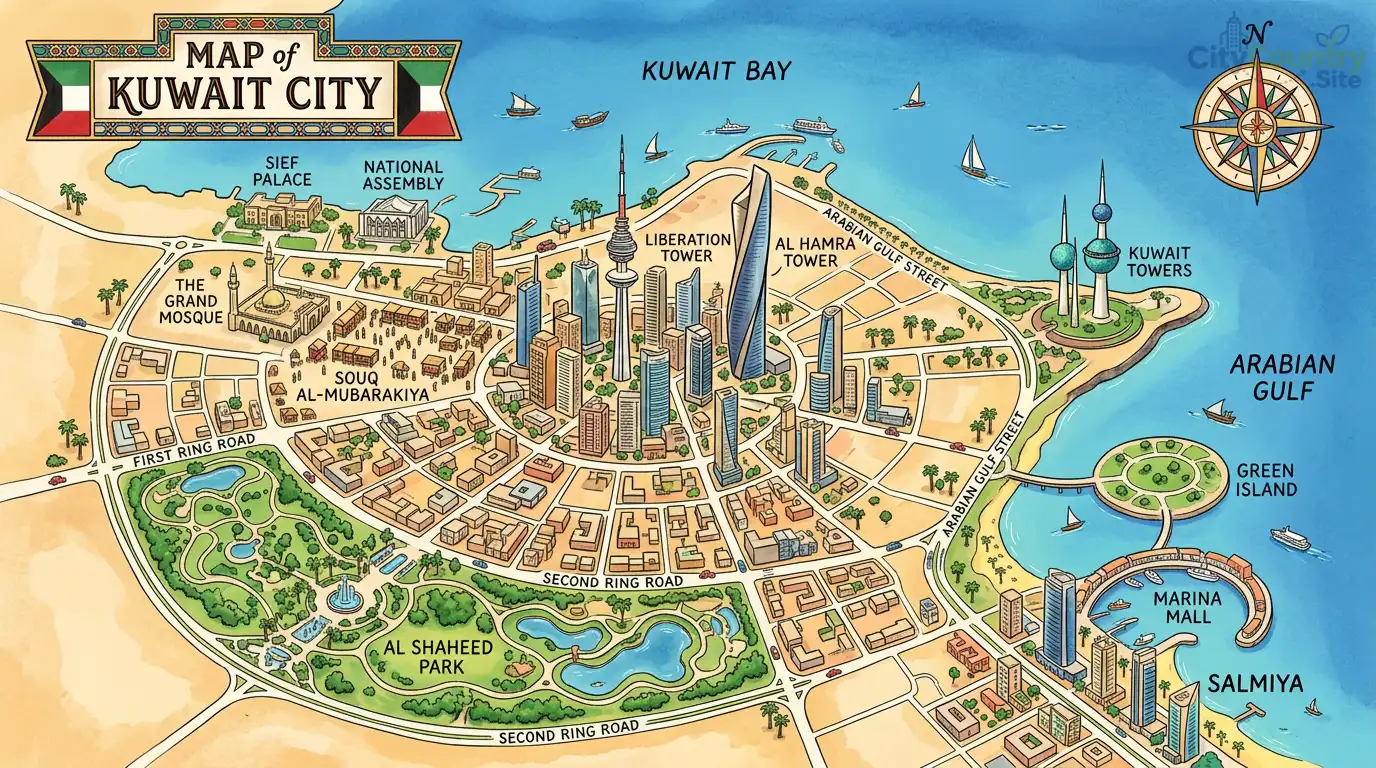
Kuwait City occupies the southern shore of Kuwait Bay — a large natural harbor on the northwestern coast of the Arabian Gulf. The terrain is almost completely flat — Kuwait is one of the flattest countries on earth, with no significant natural elevation anywhere in the country. The desert extends in all directions beyond the city limits.
The city spreads southward and westward from the original coastal settlement, with major highways creating a series of ring roads that organize the urban fabric into distinct zones. The Arabian Gulf Street (Gulf Road) runs along the entire eastern waterfront — a magnificent coastal boulevard that is Kuwaiti’s equivalent of a Corniche.
Neighborhood Comparison Table
| Area | Best For | Vibe | Price Level |
|---|---|---|---|
| Kuwait City Center (Sharq) | Towers, business, waterfront, Kuwait Towers | Modern, prestigious, financial | High–Luxury |
| Salmiya | Restaurants, cafés, malls, expatriate life | Vibrant, international, commercial | Mid |
| Hawalli | Authentic local life, markets, budget shopping | Dense, authentic, diverse | Budget–Mid |
| Rumaithiya / Bayan | Upscale residential, quiet suburbs | Affluent, quiet, Kuwaiti character | High |
| Mishref | Embassies, residential, parks | Orderly, green, quiet | Mid–High |
| Jabriya | University, hospitals, café culture | Academic, intellectual, accessible | Mid |
| Fahaheel / Abu Halifa | South Kuwait, local fishing culture, budget | Authentic, less touristic, coastal | Budget–Mid |
| Al Mubarakiya Area | Historic market, traditional heritage, old Kuwait | Atmospheric, traditional, historic | Budget–Mid |
Sharq and the waterfront districts contain Kuwait City’s most prestigious hotels, financial towers, and government buildings — the face Kuwait presents to the world. Salmiya is the city’s most internationally vibrant neighborhood — a dense commercial district of restaurants, cafés, malls, and the concentrated energy of Kuwait’s enormous expatriate communities. Al Mubarakiya area preserves the oldest market in Kuwait — a crucial visit for anyone seeking the texture of pre-oil Kuwait. Hawalli is the most authentically diverse neighborhood — Egyptian, Palestinian, Indian, and Filipino communities creating a fascinating multicultural urban fabric.
5. Kuwait Weather & Temperature Guide
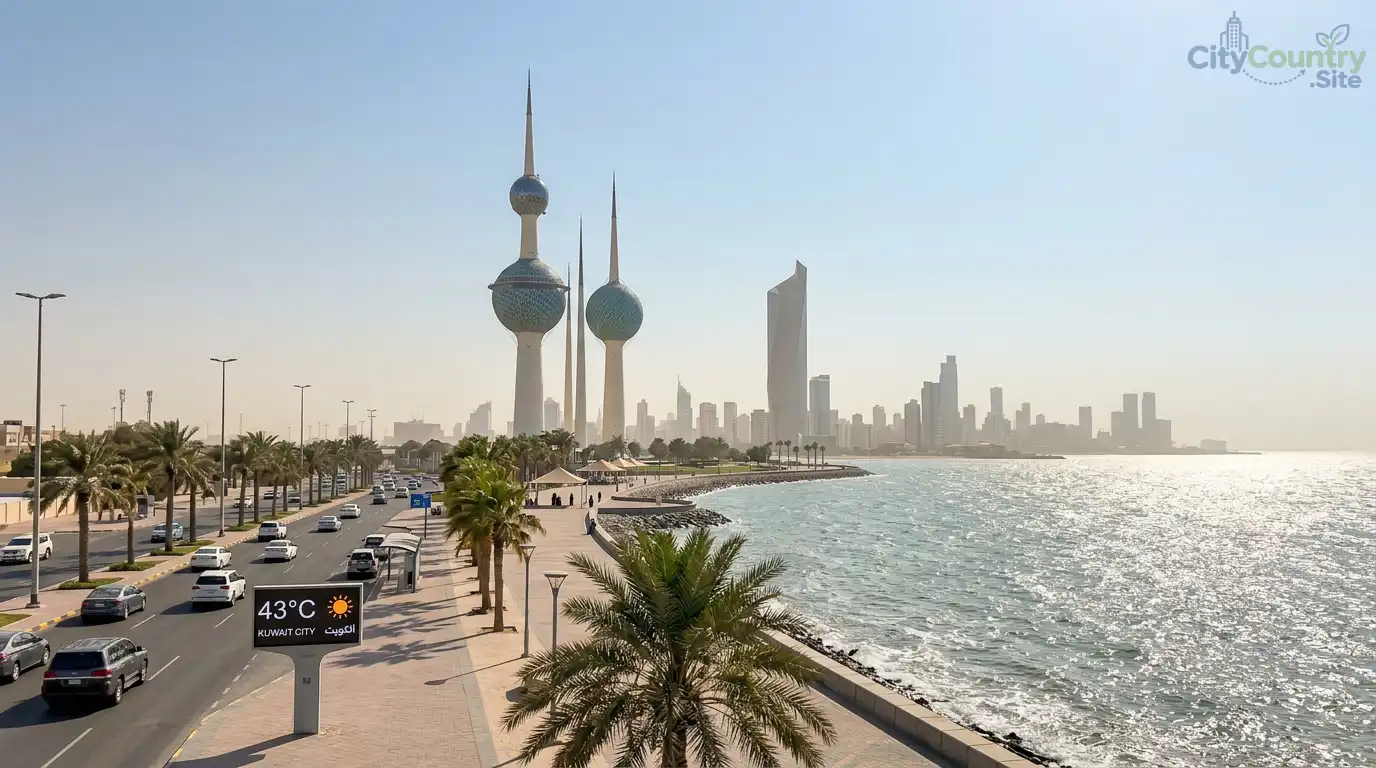
Kuwait has one of the most extreme climates of any inhabited city on earth — temperatures that can exceed 48°C in summer and drop to near-freezing in winter, with virtually no rainfall year-round and desert dust storms (shamal) that can reduce visibility to near zero.
- Cool season (winter): November to March — mild to pleasantly cool, outdoor life at its best
- Hot season (summer): May to September — extreme heat, one of the hottest places on earth
Month-by-Month Weather Table
| Month | Avg Temp (°C) | Dust / Humidity | Crowd Level | Travel Recommendation |
|---|---|---|---|---|
| January | 8–18 | Low | Medium | ⭐ Excellent — coolest, most comfortable |
| February | 9–20 | Low–Medium | Medium | ⭐ Excellent |
| March | 13–26 | Medium | Medium | ✅ Good — warming but pleasant |
| April | 20–34 | Medium–High | Medium | ✅ Good — getting warm |
| May | 27–41 | High (Shamal) | Low | ⚠️ Very hot — dust storms possible |
| June | 31–45 | High | Very Low | ⚠️ Extreme heat |
| July | 33–48 | Very High | Very Low | ⚠️ Among hottest cities on earth |
| August | 33–48 | Very High | Very Low | ⚠️ Unbearable outdoors |
| September | 28–43 | High | Low | ⚠️ Still extreme |
| October | 22–36 | Medium | Medium | ✅ Good — improving rapidly |
| November | 14–27 | Low | Medium | ⭐ Excellent — season begins |
| December | 10–20 | Low | Medium–High | ⭐ Excellent — finest weather |
December through February is Kuwait’s finest window — temperatures are genuinely cool by Gulf standards (8–20°C), the air is clear, and outdoor life becomes a pleasure. January in particular can be genuinely cold in the evenings — a warm layer is useful.
November and March are excellent shoulder months — warming or cooling around the pleasant winter core, with moderate crowds and good value.
May through September is extreme — temperatures regularly reach 48°C and the combination of heat and occasional high humidity creates conditions that genuinely threaten health for those unprepared. Outdoor activity is essentially limited to the hours before 8 AM.
💡 Did You Know? Kuwait City recorded a temperature of 53.5°C (128.3°F) in July 2021 — the highest reliably recorded temperature ever measured in Asia. This extraordinary heat is driven by Kuwait’s position at the convergence of the Gulf’s humid maritime air and the extreme radiative heat of the surrounding Arabian and Iraqi deserts. In summer, Kuwait’s air conditioning systems consume so much electricity that the country routinely operates at near-maximum national grid capacity — cooling its buildings against temperatures that would be fatal for anyone spending significant time outdoors.

6. Kuwait Airport & Getting There
Kuwait International Airport (KWI)
Kuwait International Airport (IATA: KWI) is located approximately 16 km south of the city center. A magnificent new Terminal 2 — designed by renowned architecture firm Foster + Partners and opened in phases from 2024 — represents a dramatic upgrade from the old terminal, with a sweeping, light-filled structure inspired by the desert landscape and capable of handling 25 million passengers annually.
The airport is the hub of Kuwait Airways — the national carrier — and serves an extensive range of international destinations. Key connections include London, Frankfurt, Paris, Istanbul, Dubai, Abu Dhabi, Doha, Riyadh, Cairo, Beirut, Karachi, Mumbai, Delhi, Manila, Bangkok, and many other destinations. Airlines including Kuwait Airways, flydubai, Air Arabia, British Airways, Lufthansa, Turkish Airlines, Emirates, and many others serve Kuwait.
Getting from KWI to the City Center:
| Transport Option | Duration | Cost (Approx.) | Notes |
|---|---|---|---|
| Taxi (metered) | 20–30 min | KWD 5–8 (~$16–26) | Official taxis; agree on meter before departure |
| Uber / Careem | 20–30 min | KWD 3–6 (~$10–20) | Most reliable and transparent |
| Hotel transfer (pre-booked) | 25–35 min | KWD 8–15 (~$26–49) | Most comfortable; pre-arrange |
| Public bus (no. 501, 504) | 45–60 min | KWD 0.250 (~$0.80) | Very cheap; limited luggage space |
Getting to Kuwait from Neighboring Countries:
| Origin | Transport | Duration | Cost (Approx.) |
|---|---|---|---|
| Dubai, UAE | Flight | 1 hour 30 min | $80–200 |
| Doha, Qatar | Flight | 1 hour | $80–180 |
| Riyadh, Saudi Arabia | Flight | 1 hour 30 min | $80–200 |
| Bahrain | Flight | 1 hour | $80–180 |
| Beirut, Lebanon | Flight | 2 hours 30 min | $100–250 |
| Cairo, Egypt | Flight | 3 hours | $100–250 |
💡 Did You Know? The new Kuwait International Airport Terminal 2 — designed by Foster + Partners and completed in phases from 2024 — is designed in the form of a vast undulating canopy inspired by the desert sand dunes of Kuwait. At full capacity, it will be one of the largest airport terminals in the Middle East. The design brief specifically requested that the building reflect Kuwaiti cultural identity — the result is a structure that is simultaneously contemporary and deeply rooted in the visual vocabulary of the Arabian desert landscape.
7. Getting Around Kuwait City
Kuwait City is an almost entirely car-dependent city — designed around the private vehicle in the same way that Los Angeles was, with wide multi-lane highways connecting neighborhoods that are too spread out for comfortable walking between them.
Uber and Careem are the essential tools for visitors — both operate extensively throughout Kuwait City with reliable service and transparent USD-equivalent pricing. A typical cross-city journey costs KWD 2–5 (~$6.50–16). Always use these apps for fair pricing.
Taxis — officially metered but often negotiated — are widely available. Agree on the fare before departing. A typical city ride costs KWD 3–6 (~$10–20).
Public Buses operate throughout the city at very low cost (KWD 0.150–0.250) but routes can be confusing for first-time visitors and coverage of tourist areas is limited.
Walking is practical and pleasant along the Gulf Road waterfront and in the Salmiya commercial strip during cooler months (November–March). Between neighborhoods and in summer, the distances and heat make walking between areas essentially impossible.
Car Rental is available at the airport and throughout the city — international companies including Avis, Hertz, Budget, and local operators all operate. Driving is on the right side of the road. Kuwaiti road etiquette can be aggressive by Western standards; exercise consistent patience and defensive driving.

8. Kuwait Top Attractions & Best Places
Top Attractions Table
| Attraction | Type | Entry Fee | Best Time | Time Needed |
|---|---|---|---|---|
| Kuwait Towers | Iconic landmark / views | KWD 3 (~$10) | Morning / Sunset | 1.5–2 hours |
| Grand Mosque of Kuwait | Sacred mosque / architecture | Free (non-Muslims by arrangement) | Morning | 1.5–2 hours |
| Tareq Rajab Museum of Islamic Calligraphy | Private Islamic art museum | KWD 2 (~$6.50) | Morning | 1.5–2 hours |
| Al Mubarakiya Market | Historic traditional market | Free | Morning | 1.5–2 hours |
| Mirror House | Unique private art installation | KWD 2 (~$6.50) | Morning | 1–1.5 hours |
| Sadu House | Traditional Bedouin weaving / heritage | KWD 1 (~$3.25) | Morning | 1 hour |
| Scientific Center of Kuwait | Science museum / aquarium | KWD 3–5 | Morning | 2–3 hours |
| Al Shaheed Park | Urban park / art / culture | Free | Morning / Evening | 2 hours |
| National Museum of Kuwait | National history / archaeology | KWD 1 (~$3.25) | Morning | 2 hours |
| Failaka Island | Archaeological island / heritage | Ferry + entry fee | Full day | Full day |
| Sheikh Abdullah Al Salem Cultural Centre | World-class museum complex | KWD 5–10 | Morning | Full day |
| Seif Palace (exterior) | Royal palace / architecture | Exterior viewing | Morning | 30 min |
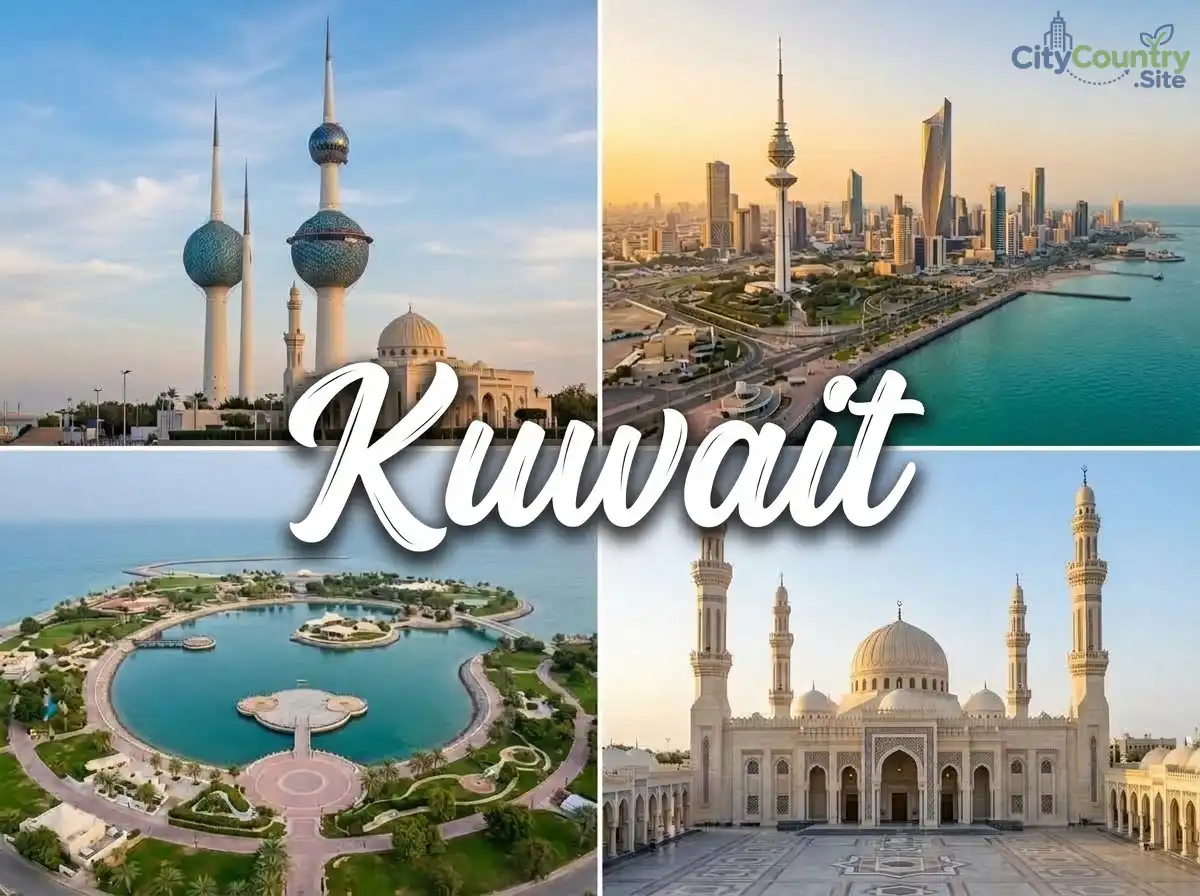
Kuwait Towers are the defining symbol of Kuwait City — three slender towers of different heights rising from the Kuwait Bay waterfront, their distinctive globe-shaped elements clad in blue-green ceramic tiles that shimmer like the Gulf’s own water. Built between 1975 and 1979, the towers were designed by a Swedish firm but are entirely Kuwaiti in their cultural resonance — a symbol of Kuwait’s oil-era confidence and aspirations. The main tower contains a revolving restaurant and observation sphere at 123 metres — offering the finest panoramic view over the city, the Bay, and the flat desert horizon in every direction. The towers survived the Iraqi occupation (Iraqi forces used them as a military observation post) and remain the most recognizable image of Kuwait to the world.
The Sheikh Abdullah Al Salem Cultural Centre — opened in 2018 and expanded subsequently — is one of the most ambitious museum complexes in the Arab world. Comprising seven interconnected museums covering natural history, science, space exploration, Arabic Islamic science history, Arabic language, and fine arts in a vast, beautifully designed campus, it represents Kuwait’s determination to position itself as a center of knowledge and culture rather than merely oil wealth. The Natural History Museum contains outstanding displays; the Space Museum is extraordinary; and the Museum of Arabic Science — documenting Arab contributions to mathematics, astronomy, medicine, and navigation — is the finest of its kind in the Gulf. Allocate a full day.
The Tareq Rajab Museum — housed in the basement of the private home of the late Kuwaiti diplomat and archaeologist Tareq Rajab in Jabriya — contains one of the world’s finest private collections of Islamic art, jewelry, ceramics, and calligraphy. The collection is extraordinary in its breadth and quality — covering centuries of Islamic artistic production from Spain to Central Asia. Entry is by ticket and the experience is intimate and genuinely moving. A world-class private museum that most visitors to Kuwait never find.
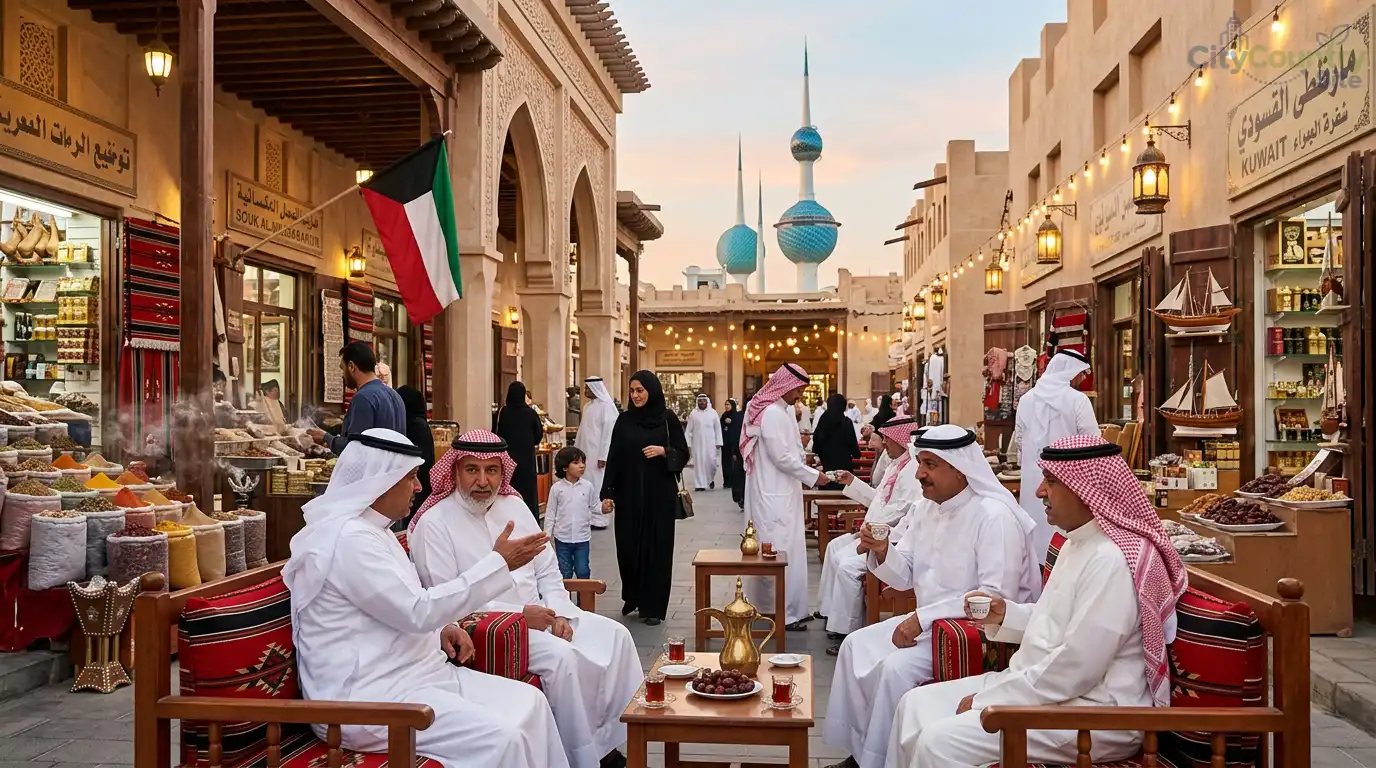
Al Mubarakiya Market is the oldest surviving traditional market in Kuwait — a beautifully restored complex of covered alleys in the heart of old Kuwait City selling spices, traditional fabrics, perfumes, Kuwaiti coffee sets, traditional crafts, dried fruits, and dates. This is where pre-oil Kuwait’s commercial life was concentrated — merchants trading goods that arrived by dhow from India, East Africa, and the wider Gulf. Walking through Mubarakiya in the morning, past stalls of saffron, dried limes, cardamom, and frankincense, is the closest available experience to the Kuwait that existed before oil transformed everything.
The Mirror House is one of Kuwait City’s most extraordinary and least-known attractions — the private home of artist Lidia Al Qattan, covered from floor to ceiling — inside and out — with hundreds of thousands of mirror fragments creating a spectacular mosaic environment of infinite reflection. Every wall, every surface, every item of furniture in this extraordinary home is encrusted with colored mirrors in intricate patterns. It is simultaneously overwhelming, beautiful, and utterly unique. Open for visits by appointment.
Sadu House celebrates and preserves traditional Bedouin weaving (sadu) — one of Kuwait’s most ancient and important craft traditions. The beautifully restored historic building near the old waterfront houses both a museum of traditional Bedouin textiles and a workshop where Kuwaiti craftswomen continue practicing the geometric weaving patterns passed down for generations. The vivid geometric designs of sadu weaving are among the most distinctive visual arts of the Arabian Peninsula.
💡 Did You Know? The Kuwait Towers were built in a period of extraordinary Kuwaiti optimism and cultural confidence — 1975 to 1979 — funded by the oil wealth that had transformed the country in barely two decades. They were inspired partly by the form of traditional Kuwaiti water towers — the buri — that had stored fresh water in the days before desalination. The ceramic tiles covering the globes were designed to reflect the color of the Gulf itself, changing from blue-green to silver depending on the angle of the light. When Iraqi forces occupied Kuwait in 1990, they used the main tower as a military lookout — a desecration that Kuwaitis have never forgotten.

9. Kuwait Food & Cuisine Guide
Kuwait’s food scene is one of the most diverse and genuinely excellent in the Gulf — a fact consistently underappreciated by the wider travel world. Traditional Kuwaiti cuisine is deeply distinctive and extraordinarily flavorful. The city’s enormous and long-established communities of Egyptian, Lebanese, Palestinian, Indian, Pakistani, and Filipino residents have each brought their own culinary traditions, creating a food landscape of remarkable breadth.
Must-Try Dishes in Kuwait City
Machboos (Machbus) — Kuwait’s undisputed national dish and, in the opinion of many serious food travelers, the finest version of the Gulf’s spiced rice-and-meat preparation. Long-grain basmati rice slow-cooked in a deeply flavored broth of lamb or chicken (or fish — the Kuwaiti seafood version is particularly outstanding), dried limes (loomi), rose water, and a complex blend of Gulf spices (cardamom, coriander, cumin, black lime, dried rose petals, and many others that vary by family recipe). The distinctive sour-floral character of the dried lime transforms the dish completely — creating something unlike any other rice preparation in the world. Served with tomato sauce (dakous), a fried onion garnish, and yogurt.
Murabyan — A more distinctively Kuwaiti preparation than machboos — rice cooked with shrimp or fish in a broth flavored with onions, tomatoes, and a particular Kuwaiti spice blend that gives it a uniquely deep and slightly sweet flavor. One of Kuwait’s finest traditional seafood dishes.
Gabout — A uniquely Kuwaiti dish with no direct equivalent elsewhere in the Gulf — a thick, gelatinous porridge made from wheat flour dumplings simmered in a rich lamb or chicken broth with potatoes, onions, and Gulf spices until the dumplings absorb the broth and create a dense, deeply satisfying one-pot meal. Traditional winter comfort food of the Kuwaiti pearl diving community — eaten in enormous quantities on cold evenings.
Jireesh — Cracked wheat slow-cooked with meat (usually lamb) and onions until completely broken down into a smooth, thick consistency — a Kuwaiti version of harees that is deeply nourishing and distinctively Kuwaiti in its preparation. Served with clarified butter (samn) and dried limes.
Saloona — A rich stew of meat (lamb or chicken) with vegetables — typically potatoes, carrots, tomatoes, and okra — slow-cooked with Gulf spices and served with rice. The everyday domestic Kuwaiti meal — what families eat at home on a weekday evening — honest, nourishing, and deeply satisfying.
Margoog Samak — A Kuwaiti fish version of the Gulf stew — fresh Gulf fish (hammour, safi, or zubaidi) cooked with vegetables and broken flatbread in a saffron-scented broth until everything merges into a thick, rich, extraordinary one-pot preparation. One of the finest fish dishes in the Gulf.
Khabees — One of Kuwait’s most distinctive traditional sweets — a dense, fudge-like confection of dates, butter, and flour scented with cardamom and saffron. Ancient, intensely flavored, completely unlike any Western confection. Available at traditional Kuwaiti cafés and sweet shops throughout the city.
Qahwa with Dates — Kuwaiti coffee is the definitive version of Gulf coffee — pale golden, flavored with cardamom and saffron, served in small handle-less cups called finjan alongside a selection of the finest Medjool dates. The ritual of serving and receiving Kuwaiti coffee — the host circling with the dallah (long-spouted copper coffee pot), the guest’s cup refilled as long as they hold it out — is the cornerstone of Kuwaiti social culture and the most authentic single experience available to any visitor.
Best Restaurants and Food Spots
Freej Swaileh (multiple locations) — The most celebrated traditional Kuwaiti restaurant in the country — a beautifully designed space recreating the atmosphere of an old Kuwaiti neighborhood (freej), serving outstanding authentic machboos, murabyan, gabout, and traditional Kuwaiti sweets. The atmosphere is as important as the food — decorated with traditional Kuwaiti household objects, fishing equipment, and pearl diving memorabilia. KWD 4–10 (~$13–32) per person.
Mais Alghanim (Sharq) — Kuwaiti’s most iconic seafood restaurant — a massive, beautifully located waterfront establishment serving outstanding Gulf seafood including grilled hammour, fried zubaidi, and exceptional machboos samak (fish machboos). Book well in advance for waterfront seating. KWD 5–12 (~$16–39).
The Sultan Center Food Hall — The finest gourmet food hall in Kuwait — an extraordinary selection of Lebanese, Indian, Japanese, Italian, and Kuwaiti food options in a beautifully designed setting. One of the best food halls in the Gulf.
Al Boom Restaurant — An excellent traditional Kuwaiti restaurant in a boat-shaped building on the waterfront — serving outstanding machboos, murabyan, and fresh Gulf seafood in a setting with beautiful views over Kuwait Bay. KWD 4–9.
Saffron (Salmiya) — Outstanding contemporary Middle Eastern cuisine with a strong Kuwaiti ingredient emphasis — inventive, beautifully presented, and genuinely excellent. One of Kuwait City’s finest modern restaurants. KWD 6–15 (~$20–49).
Shawarma Restaurants (Salmiya and Hawalli) — Kuwait’s Egyptian and Lebanese communities have brought outstanding shawarma culture to the city. The best shawarma in Kuwait — generously spiced chicken or lamb, wrapped in fresh flatbread with garlic sauce, pickles, and vegetables — is found at the small, busy counter restaurants of Salmiya and Hawalli for barely KWD 0.500–1.000 (~$1.60–3.25). Essential street food.
Butters Restaurant (Salmiya) — A celebrated restaurant serving creative modern cuisine with strong Kuwaiti influences — beautiful presentations, outstanding ingredients, and genuinely innovative cooking. One of Kuwait’s finest contemporary dining experiences. KWD 8–18 (~$26–58).
💡 Did You Know? Kuwait has the highest per capita consumption of fast food in the world — a fact that coexists, paradoxically, with one of the world’s finest traditional cuisines. The extraordinary proliferation of American fast food chains (McDonald’s, KFC, Pizza Hut, Burger King) in Kuwait — driven by oil wealth, car culture, and the preferences of a young, highly mobile population — has made Kuwait the fastest food per capita nation on earth. Yet the traditional machboos grandmother makes for the family on a Friday afternoon remains, in the view of most Kuwaitis, incomparably superior to anything a fast food restaurant can produce.
10. Kuwait Accommodation Guide
Kuwait City has a well-developed luxury hotel sector but fewer budget options than most Gulf capitals — reflecting Kuwait’s generally high cost of living and the relatively limited international tourism infrastructure.
Best Areas to Stay:
- Sharq / Waterfront: Best for luxury, Gulf Road views, proximity to Kuwait Towers, and the finest hotels
- Salmiya: Best for mid-range options, restaurant access, and the most internationally vibrant atmosphere
- Fintas / Fahaheel (south): Best for those wanting a quieter, more local experience
- Jabriya: Good mid-range options near hospitals, universities, and the Tareq Rajab Museum
Accommodation Price Ranges (2026)
| Category | Price/Night (USD) | Examples |
|---|---|---|
| Budget Hotel / Apartment | $40–80 | Various apartment hotels in Hawalli and Salmiya |
| Mid-Range Hotel | $90–160 | Ramada Hotel Kuwait, Holiday Inn Kuwait, Ibis Kuwait |
| Upscale Hotel | $160–280 | Crowne Plaza Kuwait, Radisson Blu Kuwait |
| Luxury Hotel | $280–600+ | Four Seasons Kuwait, JW Marriott Kuwait, Kempinski Hotel Mall of the Emirates |
The Four Seasons Kuwait — in the magnificent Burj Alshaya complex on the Gulf Road — is consistently the finest hotel in the country. The design is extraordinary — vast public spaces, exceptional Gulf views, a magnificent pool, and the Four Seasons’ characteristic service perfection. Rates: approximately $350–700 per night.
The JW Marriott Kuwait City is an outstanding upscale option in the heart of Sharq — beautiful rooms, excellent restaurants, a rooftop pool with city views, and very strong service. Rates: approximately $200–380 per night.
Crowne Plaza Kuwait — located at the Al Hamra complex near the Salmiya area — offers excellent mid-to-upscale comfort with good facilities and a more modest price point than the top tier. Rates: approximately $130–220 per night.
11. Best Time to Visit Kuwait City
December through February is Kuwait’s finest season for visitors — the brief window when the Gulf’s most extreme climate becomes genuinely pleasant. January is the coolest month — temperatures can drop to 8°C at night with maximums of around 18°C — genuinely cool by Gulf standards and perfect for outdoor exploration, walking the waterfront, and visiting markets.
November is an excellent arrival month — the summer heat has broken, the air is clear, and the city feels refreshed and alive after months of enforced indoor life.
March is transitional — still very comfortable in the first half, warming noticeably by the end. Spring flowers appear briefly in the desert and the light is beautiful.
October is a good arrival point — temperatures dropping rapidly from summer extremes to comfortable levels. The city comes alive after the summer lull.
April is acceptable but warming — maximum temperatures approach 34°C by midday. Morning and evening outdoor activity remains practical.
May through September should be avoided by all but the most heat-tolerant travelers — temperatures that can exceed 48°C make outdoor activity genuinely dangerous during daylight hours.
Key Festivals & Events in Kuwait City
- National Day (February 25) — Kuwait’s National Day, celebrating independence from Britain in 1961. Celebrated with extraordinary enthusiasm — fireworks, decorated cars, water spraying (a uniquely Kuwaiti tradition where celebrants spray passing vehicles with colored foam and water), and massive public gatherings along Gulf Road
- Liberation Day (February 26) — The anniversary of liberation from Iraqi occupation in 1991 — celebrated with equal or greater enthusiasm than National Day. The two consecutive days of celebration create the most spectacular public event of the Kuwaiti year
- Quran Recitation Competition (annual, dates vary) — A major international competition attracting reciters from across the Muslim world, reflecting Kuwait’s deep religious tradition
- Kuwait International Book Fair (November) — One of the largest book fairs in the Arab world — held annually since 1976, attracting publishers from across the region and world
12. Kuwait Shopping Guide
Kuwait City is a serious shopping destination — one of the finest in the Gulf — with a combination of excellent traditional markets, extraordinary luxury malls, and a growing selection of Kuwaiti designer boutiques.
What to Buy:
Traditional Kuwaiti Gold and Jewelry — Kuwait’s gold souq in Mubarakiya is one of the finest in the Gulf — traditional Arabian gold jewelry in 21-carat and 22-carat gold, as well as silver Bedouin pieces. The designs reflect Kuwait’s Bedouin heritage and Gulf maritime trading history. Prices are competitive and quality is generally high.
Kuwaiti Dates — Kuwait imports and sells extraordinary dates from Saudi Arabia, Iran, and Iraq — Medjool, Ajwa, Khalas, and many other varieties. The finest dates — beautifully packaged in traditional wooden and decorated boxes — make excellent gifts. Available throughout the souq and in specialist date shops.
Sadu Weavings — Traditional Bedouin geometric weavings from the Sadu House craft cooperative — cushion covers, bags, and decorative textiles in the distinctive black, white, orange, and red patterns of Arabian Bedouin weaving.
Frankincense and Oud — Kuwait’s traditional perfume culture is sophisticated and deep — excellent frankincense, oud chips, and blended Gulf perfumes are available throughout Mubarakiya’s incense alleyways.
Kuwaiti Dallah (Coffee Pot) — The distinctive long-spouted copper or silver coffee pot used for serving Kuwaiti qahwa is one of the most beautiful and culturally resonant objects in Gulf material culture. Available in various sizes and quality levels throughout the souq and craft shops.
Contemporary Kuwaiti Design — A growing number of young Kuwaiti designers produce outstanding fashion, jewelry, homeware, and accessories reflecting both Kuwaiti heritage and contemporary global design influence.
Where to Shop:
Al Mubarakiya Market — Kuwait’s most atmospheric and authentic shopping destination — a beautifully restored traditional market selling spices, dates, dried fruits, gold jewelry, traditional fabrics, perfumes, and Kuwaiti crafts. The gold alley, spice alley, and traditional coffee shop section are all essential visits. Best in the morning (9 AM–12 PM) and early evening.
The Avenues Mall — Kuwait’s largest and most celebrated shopping mall — an extraordinary complex covering over 1.6 million square metres that is one of the largest malls in the world. International luxury brands, Kuwaiti designer boutiques, a massive food court, entertainment facilities, and an extraordinary architectural design that includes an indoor canal and Venetian-style walkways. Budget at least half a day to explore properly.
Al Hamra Luxury Mall — An upscale luxury retail environment at the base of the Al Hamra Tower — international luxury brands in a beautifully designed, intimate setting.
Marina Mall (Salmiya) — A waterfront mall on the Gulf with good retail options and excellent waterfront dining.

13. Kuwait Nightlife & Entertainment
Kuwait is an alcohol-free country — no alcohol is sold or served anywhere in Kuwait, with no exceptions. This is not merely a law but a reflection of deeply held Islamic values. Nightlife therefore differs fundamentally from Dubai or Beirut — but Kuwait City has developed a rich, alternative after-dark culture built around food, coffee, traditional social spaces, and entertainment venues of genuine quality.
The Diwaniya Culture:
The most authentically Kuwaiti evening experience available to visitors is the Diwaniya — a traditional Kuwaiti social gathering, held in dedicated reception rooms attached to Kuwaiti family homes, where men gather in the evenings to drink coffee, eat dates, discuss politics and current affairs, and maintain the bonds of Kuwaiti social community. The Diwaniya is the cornerstone of Kuwaiti civic life — the place where decisions are made, relationships are built, and the pulse of Kuwaiti society is taken. Being invited to a Diwaniya by a Kuwaiti acquaintance is one of the most genuine and privileged cultural experiences available in the country.
Cafés and Coffee Culture:
Kuwait has developed one of the Gulf’s finest specialty coffee cultures — driven by a young, educated population that has embraced third-wave coffee with enormous enthusiasm.
Mokha & Co. — One of Kuwait’s finest specialty coffee roasters and cafés — outstanding single-origin coffees from Yemen, Ethiopia, and Latin America, beautifully prepared and served in a stylish setting.
Coffee Room — A beloved Kuwaiti café institution — warm atmosphere, excellent coffee, outstanding traditional Kuwaiti sweets, and a genuinely local social atmosphere.
Gahwa (Kuwaiti Coffee Shops) — Traditional Kuwaiti coffee shops throughout Mubarakiya and the older neighborhoods serve gahwa (the traditional Gulf coffee) with dates in settings of genuine cultural authenticity. The finest Kuwaiti coffee experience is found in these simple, unassuming establishments.
Entertainment and Cultural Venues:
The Scientific Center of Kuwait (Salmiya) — A superb entertainment and educational complex combining one of the Middle East’s finest aquariums (featuring a magnificent Gulf marine environment), an IMAX cinema, and a discovery center. Outstanding for families and genuinely impressive even for adults. Evening visits are particularly atmospheric.
Al Shaheed Park — A beautifully designed large urban park in the heart of Kuwait City — opened in 2015 on the site of the former British Embassy compound — with walking paths, public art installations, a contemporary art museum, and magnificent views of the Kuwait Towers and Gulf. A beloved evening destination for families and young couples walking, cycling, and enjoying the outdoor air during cooler months.
Marina Crescent (Salmiya) — A beautifully developed waterfront promenade with restaurants, cafés, shisha establishments, and the general conviviality of a Gulf evening by the water. The finest free evening experience in Kuwait City.
The Avenues Praza — The outdoor component of The Avenues Mall — a lively, beautifully designed street-level retail and restaurant environment that becomes a social hub in the evenings.
14. Hidden Gems & Local Secrets
Failaka Island — An island in Kuwait Bay accessible by a 40-minute ferry from the Ras Al Julai’a port — containing extraordinary archaeological remains from the Greek Ikaros settlement (4th–3rd century BCE), the Dilmun Bronze Age culture, and more recently the ruins of the town that was evacuated and destroyed during the Iraqi occupation of 1990. The combination of 4,000 years of archaeology and the haunting abandoned buildings of the Iraqi-era ghost town is unlike anything else in Kuwait. A full day trip and completely worth the effort.
The Old Kuwait Towers (Water Towers) — Beyond the famous Kuwait Towers, the city is scattered with dozens of older, smaller municipal water towers from the 1950s to 1970s — each individually designed in distinctive shapes that reflect the optimism and architectural ambition of early oil-era Kuwait. Several neighborhoods, including Salmiya and Rumaithiya, have their own distinctive towers that form important local landmarks completely unknown to most visitors.
Mubarakiya at Night — While the market is most active in the morning, returning to Al Mubarakiya after 8 PM during winter months reveals a completely different atmosphere — the incense and coffee shops glowing warmly, families strolling between stalls, the smell of bakhoor (incense wood) drifting through the alleyways, and a social warmth that is entirely authentic and unhurried.
The Bait Lothan Arts Center (Salmiya) — A beautiful, undervisited arts center in Salmiya dedicated to promoting Kuwaiti visual arts — a gallery, craft workshops, and educational programs in a well-maintained cultural space. The permanent collection includes outstanding Kuwaiti painting and the gallery hosts regular exhibitions of emerging Kuwaiti artists.
Kuwait’s Friday Market (Suq Al Jum’a) — A massive, sprawling Friday morning flea market on the industrial outskirts of the city — one of the largest informal markets in the Gulf, selling everything from vintage electronics and second-hand clothing to traditional Bedouin objects, exotic birds, and freshly caught fish. Completely unpolished, entirely authentic, and a fascinating window into Kuwait’s diverse population.
Seif Palace Waterfront at Dawn — The beautiful Seif Palace — Kuwait’s ceremonial royal palace on the waterfront, its distinctive blue-tiled clock tower visible from across the bay — is most beautiful in the early morning light, when the palace glows gold against the blue of the Gulf. The adjacent old waterfront area, with its remaining dhows and fishing boats, is one of the most atmospheric spots in Kuwait City at this hour.
15. Day Trips from Kuwait City
Kuwait is a small country — barely 17,818 square kilometres — meaning that most of the country’s attractions are accessible within an hour or two of the capital.
Day Trips Table
| Destination | Distance | Travel Time | Method | Highlights |
|---|---|---|---|---|
| Failaka Island | 20 km (by sea) | 40 min by ferry | Ferry from Ras Al Julai’a | Greek ruins, Bronze Age archaeology, Iraqi occupation ghost town |
| Al Ahmadi | 40 km south | 40 min | Car | Kuwait Oil Company heritage, Kuwait’s oil history, model oil town |
| Fahaheel Old Town | 30 km south | 30 min | Car | Old fishing village, traditional dhow building, authentic old Kuwait |
| Doha Village | 35 km northwest | 35 min | Car | Traditional fishing village, excellent seafood, old Kuwaiti character |
| Kabd Desert | 60 km west | 1 hour | Car / 4WD | Desert landscape, camel sightings, traditional desert camps |
| Al Khiran | 130 km south | 1.5 hrs | Car | Beautiful coastal lagoons, flamingos, desert meeting sea |
| Mutlaa Ridge | 45 km northwest | 45 min | Car | Highest point in Kuwait, panoramic desert views, Highway of Death |
| Wafra Agricultural Area | 100 km south | 1.5 hrs | Car | Kuwait’s farming district, strawberry farms (winter), greenery |
Failaka Island is without question the finest day trip from Kuwait City — and one of the most historically extraordinary destinations in the entire Gulf. The Greek Ikaros ruins — including the foundations of a Greek temple, a gymnasium, and residential structures — represent one of the easternmost Greek colonial settlements ever found. The Bronze Age Dilmun remains predate the Greek period by 1,500 years. And the abandoned Kuwaiti village — evacuated and looted by Iraqi forces in 1990 and never rebuilt — stands as a haunting monument to the occupation, its empty streets and damaged buildings frozen in time. The ferry journey itself — crossing Kuwait Bay with the city’s skyline behind you and the island ahead — is beautiful.
Al Ahmadi is Kuwait’s oil heritage town — a beautifully preserved model community built by the Kuwait Oil Company (KOC) in the 1940s–1950s to house its workers in a meticulously planned township of neat bungalows, sports facilities, and company amenities. The Kuwait Oil Company Museum in Al Ahmadi tells the story of Kuwait’s transformation from pearl fishing village to oil giant with genuine historical depth.
Doha Village (not to be confused with Qatar’s capital) is a traditional fishing village on Kuwait Bay’s northern shore — one of the few places in Kuwait where the pre-oil maritime character of the country is still partially visible. Traditional wooden dhow boats are still built and repaired here. The fish market is exceptional in the early morning. The area has several excellent seafood restaurants.
16. Kuwait Local Culture, Customs & Etiquette
Kuwait is a conservative Muslim society but simultaneously one of the Gulf’s most socially engaged and intellectually active communities. Understanding Kuwaiti culture — and particularly the extraordinary institution of the Diwaniya — is essential for any meaningful visit.
Islam: Kuwait is a Sunni Muslim majority state with a significant Shia Muslim minority (approximately 20–30% of Kuwaiti nationals). Islam pervades daily life — the five daily prayers (salat) are observed widely; Ramadan transforms the city’s rhythms entirely; and religious values underpin the social customs and legal framework. The Grand Mosque is the center of Kuwait’s religious life and welcomes respectful non-Muslim visitors by prior arrangement.
The Diwaniya: The Diwaniya is Kuwait’s most distinctive social institution — a tradition of regular evening gatherings at which Kuwaiti men receive guests, discuss affairs, and maintain social bonds. The Diwaniya is simultaneously a social club, a political salon, a family tradition, and a cornerstone of Kuwaiti civic identity. Every Kuwaiti family of means maintains a Diwaniya room. Being invited to attend a Diwaniya is a genuine honor and one of the most authentic Kuwaiti experiences available to a visitor. At a Diwaniya, you will be served Kuwaiti coffee and dates immediately upon arrival; tea and snacks will follow; food may be offered depending on the time and formality of the gathering.
No Alcohol: Kuwait has been completely dry since 1964 — no alcohol is produced, sold, or consumed legally anywhere in the country, with no exceptions for hotels, restaurants, or private clubs. This is a core aspect of Kuwaiti legal and cultural identity and visitors must fully respect it. Attempting to bring alcohol into Kuwait through customs is a serious criminal offense.
Dress Code: More conservative than Beirut or Amman. In malls, restaurants, and commercial areas, Western dress is generally accepted. At religious sites, very modest dress is required — full coverage for both men and women. The Grand Mosque requires women to wear an abaya (available at the entrance). On the beach and in hotel pools, swimwear is acceptable.
Photography: Always ask permission before photographing individuals — particularly Kuwaiti women. Never photograph military installations, government buildings, or royal palaces without explicit permission. The general city, market, and waterfront are freely photographable.
Ramadan: During the holy month, eating, drinking, and smoking in public during daylight hours is illegal for both Muslims and non-Muslims. Restaurants are closed during the day; the city transforms after sunset into a scene of extraordinary social and gastronomic vibrancy.
Tipping:
- Restaurants: 10–15% tip is standard and meaningful
- Taxis and Uber: rounding up is appreciated
- Hotel staff: KWD 0.500–1 (~$1.60–3.25) per service
- Tour guides: KWD 5–10 (~$16–32) per day
Dos and Don’ts:
- ✅ Do accept Kuwaiti coffee and dates when offered — refusing is culturally impolite
- ✅ Do dress modestly throughout the city — particularly in traditional neighborhoods
- ✅ Do show genuine interest in Kuwait’s pearl diving heritage — Kuwaitis are deeply proud of this tradition
- ✅ Do use your right hand for eating and social exchanges
- ❌ Don’t bring alcohol into Kuwait — it is a serious criminal offense
- ❌ Don’t discuss the Iraqi occupation casually — it is a matter of profound personal trauma for many Kuwaitis
- ❌ Don’t photograph Kuwaiti women without explicit permission
- ❌ Don’t display physical affection between unmarried couples in public
17. Safety & Travel Tips
Kuwait City is one of the safest capital cities in the world for tourists — extremely low crime, an efficient police force, and a deeply stable political environment make it genuinely secure.
Safe Areas: The entire city — Sharq, Salmiya, the waterfront, Mubarakiya, and all tourist areas — is very safe at all hours. Kuwait has essentially no areas that are unsafe for tourists.
Main Practical Concerns:
- Summer heat is the primary genuine physical danger — temperatures exceeding 48°C are life-threatening for those unprepared; stay hydrated and minimize outdoor exposure between 10 AM and 6 PM in summer
- Traffic — Kuwait’s road fatality rate is above the regional average, driven by high speeds and aggressive driving culture; drive or ride defensively
- Dust storms (Shamal) — Spring and early summer bring occasional fierce sandstorms that can reduce visibility to near zero; stay indoors and off roads during Shamal events
Emergency Numbers:
- Police: 112
- Ambulance: 112
- Fire: 112 (unified emergency number)
- Ministry of Interior: 1800-POLICE
Health Tips:
- Drink only bottled water — Kuwait’s tap water is desalinated and technically safe but bottled water is universally preferred
- Medical facilities in Kuwait are excellent — Mubarak Al Kabir Hospital and several private hospitals provide high-quality care
- Dehydration is a year-round risk given Kuwait’s extreme dryness — drink water constantly
- Travel insurance with medical coverage is recommended
18. Kuwait Budget Tour
Daily Cost Table
| Category | Budget Traveler | Mid-Range | Luxury |
|---|---|---|---|
| Accommodation | $40–80 (apartment hotel) | $100–220 (hotel) | $280–600+ (luxury hotel) |
| Food | $10–20 (shawarma, local restaurants) | $35–80 (restaurant meals) | $90–200+ (fine dining) |
| Transport | $5–12 (Careem, buses) | $20–45 (Careem, taxis) | $60–120 (private car) |
| Activities | $5–20 (towers, museums, market) | $25–60 (guided tours, Cultural Centre) | $70–200+ (private guide, experiences) |
| Total/Day | ~$60–132 | ~$180–405 | ~$500–1,120+ |
Kuwait is expensive by global standards — the Kuwaiti Dinar’s extraordinary value (1 KWD = $3.25) can be initially shocking until the conversion becomes intuitive. Budget travelers who choose apartment hotels and eat at the excellent local restaurants of Salmiya and Hawalli can manage at $60–80 per day excluding accommodation. Luxury travelers will find Kuwait’s top hotels and restaurants providing genuinely world-class experiences at prices that are actually competitive with Dubai and Doha.
19. Practical City Information
Visa & Entry: Kuwait has significantly expanded its visa accessibility in recent years as part of its tourism development strategy. Citizens of GCC countries (Saudi Arabia, UAE, Bahrain, Qatar, Oman) enter without visa. Citizens of many Western countries including EU member states, USA, UK, Canada, Australia, and Japan can now obtain visa on arrival or e-visa — check the Kuwait Ministry of Interior website (moi.gov.kw) for current eligible nationalities and requirements, as the policy continues evolving. Citizens of many other nationalities must apply for a visa in advance through a Kuwaiti embassy.
Currency: The Kuwaiti Dinar (KWD) — at approximately 1 KWD = 3.25 USD — is the world’s most valuable currency by exchange rate. It is divided into 1,000 fils. ATMs dispensing KWD are widely available throughout the city. Credit cards are accepted at hotels, malls, and most established restaurants. Carry KWD cash for markets, taxis, and smaller vendors. No foreign currency is accepted in shops — exchange at banks or official exchange offices.
Vaccinations: No mandatory vaccinations for most travelers. Recommended: Hepatitis A, Typhoid, Tetanus. Routine immunizations.
Emergency Contacts:
- All emergencies: 112
- Kuwait Tourism Office: 1844400
SIM Cards and Internet: Available at the airport and throughout the city. Zain Kuwait, Ooredoo Kuwait, and STC Kuwait are the three operators. A tourist SIM with 10–20 GB of data costs approximately KWD 3–5 (~$10–16). 5G coverage is available throughout Kuwait City. Wi-Fi is available at all hotels, malls, and most cafés.
Power: Kuwait uses Type B and G plugs — both American flat-pin and UK three-pin square sockets are common. Voltage: 240V, 50Hz. Bring a universal adapter.
Alcohol: Kuwait is completely alcohol-free. No alcohol is available anywhere in the country — not in hotels, clubs, restaurants, duty-free shops, or private establishments. This is a core legal and cultural reality of Kuwait; do not attempt to bring alcohol through customs.
20. How to Be a Responsible Traveler in Kuwait City
Engage with the Occupation History Respectfully: The Iraqi occupation of 1990–1991 is not a historical footnote in Kuwait — it is a living trauma that affected every Kuwaiti family. Approach the subject with genuine respect and a willingness to listen. Visit the Liberation Tower, understand the significance of Liberation Day (February 26), and engage with Kuwaiti perspectives on sovereignty and security with the seriousness they deserve.
Support Kuwaiti Cultural Institutions: The Sheikh Abdullah Al Salem Cultural Centre, the Sadu House, the Bait Lothan Arts Center, and the Tareq Rajab Museum all deserve visitor engagement and support. Paying entry fees, buying from their shops, and attending their events directly supports Kuwait’s investment in cultural life beyond oil.
Buy from Kuwaiti Artisans: The Sadu House cooperative produces outstanding traditional Bedouin weavings made by Kuwaiti craftswomen. Buying these products directly supports the preservation of a cultural tradition that is central to Kuwaiti heritage and the livelihoods of the women who practice it.
Water Conservation: Kuwait’s water comes entirely from desalination — one of the most energy-intensive processes in the world. Be genuinely conscious of water use throughout your stay.
Respect the Alcohol-Free Environment: Kuwait’s prohibition is not a cultural curiosity but a deeply held societal value. Respect it fully — not merely as a legal requirement but as genuine respect for the values of your hosts.
Environmental Awareness of the Desert: If visiting Kuwait’s desert areas, stay on established tracks, carry all waste out with you, and never disturb desert wildlife. Kuwait’s desert ecosystem is fragile and the environmental impact of off-road driving outside established areas is significant.
21. Travel Media: Documentaries, Books & Channels
Books:
- The Arab of the Future by Riad Sattouf — Broader Gulf context
- Kuwait: The Inside Story by Zahra Freeth and Victor Winstone — A detailed account of Kuwait’s transformation from pearl diving village to oil state, by two authors with deep personal connections to the country
- The Rape of Kuwait by Jean Sasson — A vivid and sometimes harrowing account of the Iraqi occupation told through the experiences of Kuwaiti survivors
- Seven Pillars of Wisdom by T.E. Lawrence — Broader Arabian Peninsula context for understanding the region Kuwait belongs to
Documentaries and Films:
- Various BBC, Al Jazeera English, and CNN documentaries on the Gulf War (1990–91) provide essential historical context for understanding modern Kuwait
- Kuwait Through the Lens — Various documentary productions by Kuwaiti filmmakers available through the Kuwait National Cinema Company
YouTube Channels:
- Mark Wiens — Excellent Kuwait food content
- Nas Daily — Several Kuwait-focused episodes
- Kuwait Tourism — Official tourism board content
- The Kuwaiti Show — Local lifestyle and culture content
22. Kuwait City vs. Similar Cities
| Feature | Kuwait City | Doha (Qatar) | Manama (Bahrain) |
|---|---|---|---|
| Cultural authenticity | ⭐⭐⭐⭐⭐ Deep traditional heritage | ⭐⭐⭐⭐ Very good | ⭐⭐⭐⭐ Very good |
| Museum quality | ⭐⭐⭐⭐⭐ Sheikh Abdullah Centre outstanding | ⭐⭐⭐⭐⭐ MIA + NMoQ | ⭐⭐⭐ Good |
| Food scene | ⭐⭐⭐⭐⭐ Gulf’s most underrated | ⭐⭐⭐⭐ Very good | ⭐⭐⭐⭐ Very good |
| Nightlife | ⭐ Alcohol-free; café culture | ⭐⭐⭐ Moderate | ⭐⭐⭐⭐ Good |
| Architecture | ⭐⭐⭐ Good | ⭐⭐⭐⭐⭐ Exceptional | ⭐⭐⭐ Moderate |
| Shopping | ⭐⭐⭐⭐⭐ Largest malls in region | ⭐⭐⭐⭐ Very good | ⭐⭐⭐⭐ Good |
| Safety | ⭐⭐⭐⭐⭐ Exceptionally safe | ⭐⭐⭐⭐⭐ Exceptionally safe | ⭐⭐⭐⭐⭐ Exceptionally safe |
| Day trip options | ⭐⭐⭐ Limited within Kuwait | ⭐⭐⭐ Moderate | ⭐⭐⭐⭐ Good |
Choose Kuwait City if you want the Gulf’s most authentic traditional culture — the finest machboos in the Arab world, extraordinary museum collections, the unforgettable Diwaniya social tradition, a pearl diving heritage of genuine historical depth, and the warmest and most generous personal hospitality available anywhere on the Arabian Peninsula.
23. Kuwait City Travel Tips
- Visit between December and February — summer heat is extreme and potentially dangerous
- The Kuwaiti Dinar (1 KWD = $3.25) is the world’s most valuable currency — calculate carefully before purchases
- No alcohol is available anywhere in Kuwait — this is absolute; do not attempt to bring any through customs
- Download Careem before arriving — the most reliable ride-hailing option in Kuwait City
- The Sheikh Abdullah Al Salem Cultural Centre requires a full day — book tickets in advance online
- Freej Swaileh for traditional Kuwaiti machboos is an essential meal — book in advance
- Visit Al Mubarakiya in the morning for the freshest goods and most atmospheric experience
- Failaka Island requires planning — check current ferry schedules at Ras Al Julai’a port well in advance
- National Day (February 25) and Liberation Day (February 26) — book hotels months in advance; the celebrations are spectacular but accommodation fills completely
- Kuwaiti coffee with dates is the most culturally authentic experience available — accept it every time it is offered
- The Avenues Mall is genuinely extraordinary — allow at least half a day if shopping interests you
- Dress modestly throughout the city — not merely at religious sites
💡 Did You Know? Kuwait was the first Gulf state to establish a parliament — the National Assembly (Majlis Al Umma) — in 1963, just two years after independence. While the Assembly has been suspended several times by the ruling Emir, it has consistently been restored — reflecting a genuine Kuwaiti tradition of consultative governance that predates oil and is embedded in the Diwaniya culture itself. Kuwait’s parliamentary tradition makes it constitutionally and politically distinct from most of its Gulf neighbors and has produced some of the Arab world’s most vigorous and independent parliamentary debates.
24. Is Kuwait City Worth Visiting?
Yes — for the right traveler, Kuwait City is genuinely fascinating and consistently underrated. It will not dazzle you with architectural spectacle or overwhelm you with UNESCO sites or offer the kind of photogenic grandeur that fills Instagram feeds. What it offers instead is something rarer and more rewarding: an extraordinarily authentic encounter with one of the Gulf’s most distinctive traditional cultures, the warmest personal hospitality available anywhere in Arabia, food of genuinely world-class quality, and the particular fascination of a city whose extraordinary story — from pearl diving village to one of the world’s wealthiest nations, through invasion and liberation and recovery — is told with genuine intelligence and pride in its excellent museums and cultural centers.
Kuwait City is best suited for:
- Cultural and history enthusiasts — The Sheikh Abdullah Al Salem Cultural Centre, the Tareq Rajab Museum, the pearl diving heritage, and the Failaka Island archaeology represent an extraordinary concentration of cultural depth
- Food lovers — Kuwaiti cuisine — particularly machboos, murabyan, and gabout — is among the Gulf’s finest traditional food cultures and is largely unknown outside the country
- Business and conference travelers — Kuwait City’s five-star hotel infrastructure, convention facilities, and business environment are excellent
- Gulf culture enthusiasts — For those genuinely interested in understanding traditional Gulf Arab culture rather than merely observing its modernized surface, Kuwait provides the most authentic encounter available in the region
- Travelers seeking the less-visited — Kuwait receives a fraction of the international tourist numbers of Dubai or Doha; the result is an authenticity and a quality of personal encounter that more heavily visited Gulf cities cannot provide
- Shopping enthusiasts — The Avenues Mall is among the finest shopping environments in the world, and Al Mubarakiya provides the Gulf’s most authentic traditional market experience
Less suited for travelers seeking vibrant nightlife (the country is alcohol-free), extreme architectural spectacle, or beach holiday environments. Kuwait’s beaches exist but are modest compared to the region’s resort-focused alternatives.
The verdict: Give Kuwait City three full days minimum — four is better. Spend a morning at Al Mubarakiya, an afternoon at the Kuwait Towers and waterfront, an evening tasting machboos at Freej Swaileh. Devote a full day to the Sheikh Abdullah Al Salem Cultural Centre. Make the day trip to Failaka Island. Walk Marina Crescent at night with a Kuwaiti coffee in hand. Accept every invitation to drink qahwa and eat dates. And listen — carefully — to the stories that Kuwaitis tell about who they were before oil and who they became after it. Those stories are extraordinary.
25. Frequently Asked Questions About Kuwait City
Q1: Is Kuwait City safe for tourists?
Kuwait City is one of the safest capital cities in the world for tourists. The country has extremely low violent crime rates, an efficient police force, and a deeply stable political and social environment. The main practical safety concern is the extreme summer heat — which is genuinely dangerous — rather than human threat. The country’s safety record is consistently excellent and visitors report feeling completely secure throughout their stay.
Q2: Do I need a visa to visit Kuwait?
Visa requirements depend on your nationality and are evolving. GCC citizens enter without visa. Citizens of many Western countries — EU, USA, UK, Canada, Australia, Japan, and others — can now obtain visa on arrival or e-visa. Citizens of other nationalities typically need an advance visa from a Kuwaiti embassy. Check the Kuwait Ministry of Interior website (moi.gov.kw) for the most current requirements for your specific nationality before booking travel.
Q3: Is there really no alcohol in Kuwait?
Correct — Kuwait has been completely alcohol-free since 1964. No alcohol is available anywhere in the country — not in hotels, restaurants, airport duty-free, or clubs. There are no exceptions of any kind. Bringing alcohol through customs is a serious criminal offense that can result in arrest and deportation. This is a fundamental aspect of Kuwaiti culture and law and must be fully respected by all visitors.
Q4: What is machboos and where is the best place to eat it?
Machboos is Kuwait’s national dish — long-grain basmati rice slow-cooked in a richly spiced broth with lamb, chicken, or fish, flavored with dried limes, rose water, saffron, and a complex blend of Gulf spices. It is widely considered the finest version of the Gulf’s spiced rice preparation. The best machboos in Kuwait City is served at Freej Swaileh — book in advance — or at Al Boom Restaurant on the waterfront. Friday family lunch gatherings in Kuwaiti homes serve the finest machboos of all; if you are invited to attend one, accept immediately.
Q5: What is the Kuwaiti Dinar and how much is it worth?
The Kuwaiti Dinar (KWD) is the world’s most valuable currency by exchange rate — 1 KWD is worth approximately 3.25 USD as of 2026. It is divided into 1,000 fils. Prices appear lower than they are in USD terms until the conversion is made — always multiply KWD prices by approximately 3.25 to get the USD equivalent. ATMs dispensing KWD are widely available; credit cards are accepted at major establishments. Always carry some KWD cash for markets, taxis, and smaller vendors.
Q6: What is the Diwaniya and can visitors attend one?
The Diwaniya is Kuwait’s most distinctive social institution — a regular evening gathering held in a dedicated reception room where Kuwaiti men receive guests, drink coffee, eat dates, and discuss current affairs. It is the cornerstone of Kuwaiti civic and social life. Visitors cannot attend a Diwaniya without an invitation from a Kuwaiti host. If you develop any acquaintance with Kuwaitis during your visit — at the Cultural Centre, through a hotel staff member, or through any social encounter — an invitation to attend a Diwaniya is the most culturally significant and authentic Kuwaiti experience available. Accept immediately and enthusiastically.
Q7: What is the best day trip from Kuwait City?
Failaka Island — accessible by a 40-minute ferry from Ras Al Julai’a — is the finest day trip. The combination of Greek ruins from the 4th century BCE, Bronze Age Dilmun archaeological remains, and the haunting abandoned village that was looted and destroyed during the 1990 Iraqi occupation creates one of the most historically layered and emotionally powerful sites in the entire Gulf. Check current ferry schedules before planning the trip and plan for a full day.
Q8: What is the Sheikh Abdullah Al Salem Cultural Centre and why is it significant?
The Sheikh Abdullah Al Salem Cultural Centre is one of the most ambitious museum complexes in the Arab world — seven interconnected museums covering natural history, science, space, Islamic science, Arabic language, and fine arts. It represents Kuwait’s determination to invest in knowledge and culture as seriously as it invests in oil infrastructure. The Space Museum and Natural History Museum are particularly outstanding. Allow a full day and book tickets online in advance.
Q9: When are National Day and Liberation Day and what are they like?
National Day (February 25) marks Kuwait’s independence from Britain in 1961. Liberation Day (February 26) marks liberation from Iraqi occupation in 1991. The two consecutive days of national celebration are the most spectacular public event of the Kuwaiti year — streets are draped in Kuwait’s red, white, green, and black colors; cars are decorated; water spraying (Kuwaitis spray colored foam and water at each other’s vehicles from truck-mounted tanks) creates a uniquely joyful chaos; and the Gulf Road waterfront becomes an extraordinary gathering of the entire Kuwaiti nation. If your travel dates allow, this is the finest single time to visit Kuwait. Book accommodation months in advance — the country fills completely.
Q10: Is Kuwait City good for families with children?
Kuwait City is an excellent family destination — exceptionally safe, very family-oriented in its culture, and with outstanding facilities for children. The Scientific Center (aquarium, IMAX, discovery center) is world-class for families. Failaka Island is genuinely exciting for older children interested in archaeology. Al Shaheed Park provides excellent outdoor space. And the Kuwaiti cultural warmth toward children — families are genuinely central to Kuwaiti social life — ensures that traveling with children in Kuwait produces consistently positive interactions with local people.
26. Sources & References
This article was researched using information from the following trusted sources:
- Lonely Planet Kuwait — lonelyplanet.com
- TripAdvisor Kuwait City — tripadvisor.com
- Booking.com Kuwait Hotels — booking.com
- Wikipedia — Kuwait City — en.wikipedia.org
- Kuwait Tourism — visitkuwait.com
- Numbeo — Cost of Living Kuwait City — numbeo.com
- Google Maps — maps.google.com
- Wikitravel Kuwait City — wikitravel.org
- Skyscanner Kuwait Flights — skyscanner.com
- World Travel Guide — worldtravelguide.net
- Kuwait Ministry of Interior — moi.gov.kw
- Sheikh Abdullah Al Salem Cultural Centre — albaniancc.com
- Kuwait National Museum — knm.org.kw
- Condé Nast Traveller Gulf — cntraveller.com
- UNESCO Kuwait — whc.unesco.org
27. Kuwait Travel Guide Images