
Facts About Beirut
| Category | Details |
|---|---|
| Country | Lebanon |
| Region / Province | Beirut Governorate |
| Official Language | Arabic; French and English very widely spoken |
| Currency | Lebanese Pound (LBP) — severely devalued; USD universally accepted; 1 USD ≈ 89,500 LBP (2026, market rate) |
| Best Time to Visit | April to June; September to November |
| Time Zone | Eastern European Time (EET) — UTC+2 (UTC+3 in summer) |
| Weather | Mediterranean climate — hot dry summers, mild wet winters |
| Temperature | 10°C – 33°C (50°F – 91°F) depending on season |
| Map | Located on a peninsula on Lebanon’s central Mediterranean coast, flanked by the Lebanon Mountains to the east |
| Airport | Rafic Hariri International Airport (BEY) — 9 km south of the city center |
| Top Tourist Places | National Museum of Beirut, Pigeon Rocks, Corniche, Sursock Museum, Beirut Souks, Hamra Street, Gemmayzeh, Mar Mikhael |
| Avg. Trip Cost/Day | Budget: $40–70 / Mid-range: $100–200 / Luxury: $250–600+ |
| Nearest Major Airport | Rafic Hariri International Airport (BEY) — Lebanon’s only international airport |
| Population | Approx. 2.4 million (greater Beirut, 2026); Lebanon’s total population approx. 5 million |
| Famous For | The “Paris of the Middle East,” extraordinary resilience through repeated catastrophe, the Arab world’s finest nightlife and restaurant scene, remarkable ancient history beneath a modern Mediterranean city, and a quality of human warmth and intellectual brilliance that is entirely, defiantly Lebanese |
2. Beirut City Overview & Background
Important Travel Notice (2026): Lebanon has experienced significant political instability, economic crisis, and security challenges since 2019. The country is recovering from the catastrophic August 4, 2020 Beirut port explosion — one of the largest non-nuclear explosions in history — and ongoing economic collapse. Security conditions have improved significantly since the ceasefire of late 2024, and Beirut is rebuilding with characteristic Lebanese determination. However, check your government’s current travel advisory before planning any visit, as conditions can change rapidly. This guide provides accurate information for those who choose to visit while acknowledging the complexity of the situation.
Beirut is a city unlike any other on earth — and that is not a claim made carelessly. No other city on the planet has been built and destroyed and rebuilt and destroyed again quite so many times, with quite so much style, and with quite so much stubborn, magnificent, infuriating refusal to simply give up. The Lebanese do not merely survive their catastrophes. They open rooftop bars on the ruins. They start restaurants in the rubble. They throw parties in buildings with no facades. And somehow — impossibly, defiantly — the result is one of the most vibrantly alive cities in the world.
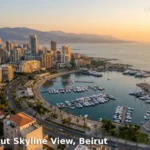
Lebanon’s capital sits on a triangular peninsula on the eastern Mediterranean coast, with the Mediterranean Sea to the west and north and the dramatic Lebanon Mountains rising immediately to the east — visible on clear days from virtually anywhere in the city, snow-capped from December through March, their presence a constant reminder that this city exists at the meeting point of sea and mountain, of Orient and Occident, of ancient civilization and contemporary chaos.
Beirut is simultaneously the Arab world’s most cosmopolitan city and its most tormented. It has been continuously inhabited for over 5,000 years. It has been destroyed and rebuilt so many times that archaeological excavations beneath the downtown district reveal layer upon layer of Phoenician, Greek, Roman, Byzantine, Crusader, Ottoman, and modern Lebanese civilization — a compressed vertical history of the entire Mediterranean world.
What makes Beirut extraordinary for travelers is not just its history or its food or its nightlife — though all three are genuinely world-class — but the quality of its people. Beirutis are among the most educated, most multilingual, most culturally sophisticated, and most stubbornly optimistic people on earth. The combination of French colonial elegance, Arab intellectual tradition, Phoenician mercantile energy, and Mediterranean sensual pleasure creates a human type that is entirely unique — and that makes every conversation, every meal, every evening in Beirut an experience of unusual depth and unusual pleasure.
The city is rebuilding once again after the horrors of the port explosion, the economic collapse, and years of political dysfunction. Buildings that were shattered in August 2020 are slowly being repaired. Neighborhoods that emptied are slowly refilling. Restaurants that seemed permanently closed are reopening. The Lebanese, as they always do, are getting on with it. Traveling to Beirut in 2026 is an act of solidarity as much as tourism — a decision to spend your money and your attention with people who have earned both.
“Beirut is the city that refuses to die. Every time the world writes it off, it reinvents itself with more style than before. I have never been anywhere that makes me feel more alive.”
— Anthony Bourdain, Parts Unknown, Lebanon episode
3. Beirut History Timeline
5,000–3,000 BCE — The natural harbor of the Beirut peninsula is settled by Canaanite/Phoenician communities. The city becomes known as Berytus — one of the earliest Phoenician trading settlements on the eastern Mediterranean coast. The Phoenicians, from their Lebanese coastal cities, develop the world’s first widely used alphabet and become the greatest maritime traders of the ancient world.
15th century BCE — Berytus is mentioned in the Amarna Letters — correspondence between Egyptian pharaohs and Canaanite city rulers. The city is already established as a significant coastal settlement within the broader Phoenician trading network.
8th–4th centuries BCE — Berytus exists within the wider context of Phoenician civilization — the era of Carthage’s founding, of Phoenician ships reaching Britain and West Africa, and of the alphabet that will eventually become the foundation of all Western writing systems.
64 BCE — Roman forces under Pompey incorporate Lebanon into the Roman province of Syria. Berytus (Roman name) becomes a Roman colony — Colonia Iulia Augusta Felix Berytensis — and one of the most prosperous cities in the eastern Roman Empire.
1st–4th centuries CE — Roman Berytus reaches its zenith. The city is renowned throughout the empire for its famous law school — one of the ancient world’s greatest centers of legal education, producing many of the most important jurists of Roman law. The Roman law compiled and codified at Berytus continues to influence legal systems throughout the world today.
551 CE — A catastrophic earthquake and tsunami destroys much of Berytus, killing approximately 30,000 people and effectively ending the city’s Roman law school and its classical golden age. The city enters a period of reduced significance.
635 CE — Arab Muslim forces capture Berytus as part of the rapid Islamic expansion following the death of the Prophet Muhammad. The city becomes Beirut under Arab governance and begins integrating into the broader Islamic cultural world while maintaining its Mediterranean trading character.
1110 CE — Crusader forces under Baldwin I of Jerusalem capture Beirut and hold it for over a century. The city becomes an important Crusader port and trading center.
1291 CE — Mamluk forces expel the remaining Crusaders from the Levant. Beirut comes under Mamluk Egyptian control.
1516 — The Ottoman Empire under Sultan Selim I incorporates Lebanon into the Ottoman system. Beirut remains a significant but relatively modest port town during the early Ottoman period.
17th–18th centuries — The Druze Ma’an dynasty and later the Shihab dynasty govern Mount Lebanon as autonomous princes within the Ottoman system. Beirut grows as the primary port for the Lebanese mountains’ silk trade. European merchants — particularly French, English, and Venetian — establish trading consulates.
1832–1840 — Egyptian forces under Ibrahim Pasha briefly occupy Lebanon and Beirut, introducing significant administrative reforms and opening the city to European influence. The French establish particularly strong cultural connections during this period.
1860 — Sectarian massacres between Druze and Christian communities in Mount Lebanon shock Europe. France intervenes militarily and establishes an autonomous Christian province (Mutasarrifate) of Mount Lebanon within the Ottoman Empire — an arrangement that begins the complex relationship between France and Lebanon.
Late 19th–early 20th centuries — Beirut grows dramatically as a commercial, intellectual, and cultural center. The American University of Beirut (founded 1866) and the Université Saint-Joseph (1875) make Beirut the Arab world’s leading center of modern education. The city develops a sophisticated urban culture combining Arab, Ottoman, French, and American influences.
1920 — Following World War I and the collapse of the Ottoman Empire, the League of Nations grants France a mandate over Lebanon and Syria. France creates the state of Greater Lebanon in 1920, incorporating Beirut as its capital. French colonial rule introduces extensive administrative, architectural, and cultural French influence.
1943 — Lebanon achieves independence from France. Beirut becomes the capital of the new Lebanese Republic. The National Pact — an unwritten agreement distributing political power among religious communities — forms the basis of Lebanon’s confessional political system.
1950s–1970s — Beirut enters its legendary golden era — the “Paris of the Middle East.” The city becomes the Arab world’s banking, cultural, media, and entertainment center. International airlines make Beirut a regional hub. Hotels, casinos, theaters, and universities attract visitors from across the Arab world and beyond. The city’s cosmopolitan sophistication is unmatched in the region.
1975–1990 — The catastrophic Lebanese Civil War destroys the city’s golden age. Fifteen years of brutal conflict between numerous sectarian militias — with Israeli and Syrian military interventions — kills approximately 150,000 people, displaces millions, and reduces entire neighborhoods to rubble. The Green Line dividing Muslim West Beirut from Christian East Beirut becomes one of the most infamous divides in modern history.
1982 — Israeli forces invade Lebanon and besiege Beirut. The Sabra and Shatila massacres — in which Lebanese Christian Phalangist militias slaughter hundreds of Palestinian civilians in refugee camps — shock the world. US, French, and Italian peacekeeping forces arrive.
1990 — The Taif Agreement ends the Civil War. The painful process of national reconciliation and physical reconstruction begins. Solidere — a controversial urban reconstruction company — undertakes the rebuilding of Downtown Beirut.
2005 — Former Prime Minister Rafic Hariri is assassinated in a massive car bomb on the Corniche. The killing triggers the Cedar Revolution — massive pro-independence demonstrations that force Syrian forces to withdraw from Lebanon after 29 years of occupation.
2006 — Israel-Hezbollah War — 34 days of devastating conflict that destroys bridges, infrastructure, and kills approximately 1,200 Lebanese civilians. Beirut’s southern suburbs and much of southern Lebanon are devastated. The country rebuilds — again.
2019 — Lebanon’s economic crisis explodes. The Lebanese pound collapses. Banks freeze depositors’ savings. Massive anti-government protests fill Beirut’s streets. The system enters a state of near-total dysfunction.
August 4, 2020 — The Beirut port explosion — caused by the detonation of 2,750 tonnes of improperly stored ammonium nitrate — devastates the port, kills over 200 people, injures more than 6,000, leaves approximately 300,000 people homeless, and causes billions of dollars in damage to Beirut’s neighborhoods including Gemmayzeh, Mar Mikhael, and Achrafieh. It is one of the largest non-nuclear explosions in human history.
2020–2023 — Lebanon’s compound crises — economic collapse, COVID-19, political dysfunction, the explosion’s aftermath — push the country to the edge of state failure. Hundreds of thousands of Lebanese emigrate.
2024 — A ceasefire agreement ending the latest conflict between Hezbollah and Israel takes effect. Lebanon begins negotiating a new political reality. International reconstruction assistance begins arriving. Beirut begins its latest — remarkable — recovery.
2025–2026 — Beirut rebuilds with characteristic resilience. Neighborhoods shattered in 2020 are partially restored. New restaurants, galleries, and cultural spaces open in renovated buildings. International visitors begin returning. The Lebanese, as always, insist that Beirut’s best days are ahead of it.

4. Beirut Geography & Neighborhoods
Beirut occupies a triangular peninsula jutting into the Mediterranean Sea from Lebanon’s central coast. The city sits on a relatively flat coastal plain that rises sharply toward the Lebanon Mountain range — the Jabal Lubnan — immediately to the east. On a clear day, the mountains are close enough to feel almost touchable from the city streets.
The city is divided by a complex geography of hills, valleys, and former frontlines into neighborhoods of strongly individual character — each with its own religious demographic, architectural style, and social atmosphere. Understanding Beirut’s neighborhoods is essential to understanding Beirut.
Neighborhood Comparison Table
| Area | Best For | Vibe | Price Level |
|---|---|---|---|
| Downtown (Beirut Central District) | History, rebuilt souqs, colonial architecture, landmarks | Grand, partly restored, mixed | Mid–High |
| Gemmayzeh | Cafés, galleries, nightlife, Ottoman architecture | Artistic, vibrant, recovering from 2020 explosion | Mid |
| Mar Mikhael | Bars, restaurants, creative studios, alternative scene | Hip, young, resilient | Mid |
| Hamra | Universities, bookshops, cafés, intellectual life | Intellectual, bustling, West Beirut character | Budget–Mid |
| Achrafieh | Upscale residences, fine dining, French character | Elegant, French-influenced, sophisticated | Mid–High |
| Verdun | Shopping, residences, malls, family-oriented | Commercial, residential, mixed | Mid |
| Raouché / Manara | Pigeon Rocks, sea views, Corniche | Scenic, residential, tourist-friendly | Mid |
| Bourj Hammoud | Armenian quarter, market, authentic diversity | Dense, vibrant, culturally specific | Budget |
| Badaro | Boutique cafés, galleries, residential charm | Quiet, charming, artistic | Mid |
Downtown (Beirut Central District) is the historic core — dramatically rebuilt by Solidere after the Civil War on the bones of the ancient city, its grand French Mandate-era buildings and Roman ruins (visible in open archaeological sites) creating a somewhat surreal urban environment that is simultaneously beautiful and controversial. Gemmayzeh and Mar Mikhael — adjacent neighborhoods stretching along the port road — are the creative and nightlife heart of contemporary Beirut, where the 2020 explosion caused devastating damage that is still partially visible but where the community has rebuilt with extraordinary determination. Hamra is the intellectual neighborhood of West Beirut — the American University of Beirut, the finest bookshops in the Arab world, political cafés, and the energy of a neighborhood that has been at the center of Lebanese intellectual life for 150 years.
5. Beirut Weather & Temperature Guide
Beirut has a classic Mediterranean climate — one of the most pleasant in the Middle East — with warm, dry summers and mild, wet winters. The city’s coastal position keeps temperatures moderate by Levantine standards, and the proximity of the snow-capped mountains creates dramatic seasonal contrasts visible from the city itself.
- Spring (March–May): Mild, flowers blooming, gradually warming — the finest season
- Summer (June–September): Hot, dry, sunny, Mediterranean at its most beautiful
- Autumn (October–November): Cooling, clear, beautiful light
- Winter (December–February): Cool to mild, rainy, occasionally cold
Month-by-Month Weather Table
| Month | Avg Temp (°C) | Rainfall | Crowd Level | Travel Recommendation |
|---|---|---|---|---|
| January | 10–17 | High | Low | ✅ Good — mild, rainy, atmospheric |
| February | 10–17 | High | Low | ✅ Good — almond blossom in mountains |
| March | 12–20 | Medium | Medium | ⭐ Excellent — spring beginning |
| April | 15–23 | Low | High | ⭐ Excellent — perfect weather |
| May | 18–27 | Very Low | High | ⭐ Excellent — warm and beautiful |
| June | 22–30 | Negligible | Medium–High | ✅ Good — summer begins |
| July | 24–32 | Negligible | High | ✅ Good — hot, lively, diaspora returns |
| August | 25–33 | Negligible | Very High | ✅ Good — peak summer |
| September | 23–31 | Very Low | High | ⭐ Excellent — golden September |
| October | 19–27 | Low | High | ⭐ Excellent — superb autumn |
| November | 15–22 | Medium | Medium | ✅ Good — quieter, pleasant |
| December | 11–18 | High | Low–Medium | ✅ Good — festive and atmospheric |
April through June and September through October are Beirut’s finest months for visitors — Mediterranean at its most beautiful, with clear skies, warm days, cool evenings, and the city fully alive with outdoor culture. September is particularly special — the summer heat is easing, the diaspora visitors are still present, and the city’s cafés and restaurants are at their most vibrant.
July and August are peak summer months — hot (32–33°C), humid, but full of energy. The Lebanese diaspora from the Gulf, Europe, and the Americas returns home, and the city’s social scene reaches its annual crescendo. Nightlife, beach clubs, and restaurant reservations are at their most competitive.
Winter (December–February) is Beirut’s most authentically local season — fewer tourists, atmospheric rainy evenings in old cafés, and the extraordinary sight of the snow-capped Lebanon Mountains above a Mediterranean city.
💡 Did You Know? Lebanon is one of the few countries in the world where you can ski in the morning and swim in the Mediterranean in the afternoon on the same day. The Lebanon Mountains’ ski resorts — Faraya, Mzaar, The Cedars — are within 45–90 minutes of Beirut by car, receiving reliable snowfall from December through March. The combination of a ski holiday and a Mediterranean beach holiday in a single day is a uniquely Lebanese pleasure that visitors find hard to believe until they experience it.

6. Beirut Airport & Getting There
Rafic Hariri International Airport (BEY)
Rafic Hariri International Airport (IATA: BEY) is named after the assassinated former Prime Minister whose death in 2005 triggered the Cedar Revolution. Located approximately 9 km south of the city center in the Khalde area, the airport is Lebanon’s only international airport — a position that makes it simultaneously a vulnerability and an essential lifeline for the country.
The airport has faced significant operational challenges during Lebanon’s economic crisis and the 2024 conflict period, but has remained open throughout most of Lebanon’s recent difficulties — a testament to its importance as the country’s primary connection to the world. Middle East Airlines (MEA) — Lebanon’s national carrier — maintains a surprisingly resilient operation. International connections include Dubai, Abu Dhabi, Doha, Istanbul, Paris CDG, London Heathrow, Frankfurt, Milan, Cairo, Amman, Nicosia, and numerous other European and Middle Eastern destinations.
Getting from BEY to the City Center:
| Transport Option | Duration | Cost (Approx.) | Notes |
|---|---|---|---|
| Taxi (metered) | 15–25 min | $20–35 (USD) | Always negotiate in USD; agree before departure |
| Ride-hailing (InDriver / Bolt) | 15–25 min | $10–20 | Most reliable pricing; app-based |
| Service taxi (shared) | 20–35 min | $3–5 per person | Traditional shared taxi; cheap but complicated |
| Hotel transfer (pre-booked) | 20–30 min | $30–50 | Most comfortable; pre-arrange |
Note on Currency: Lebanon’s currency crisis means that virtually all commercial transactions — including taxis, hotels, and restaurants — now operate in US dollars. Always carry USD cash in Lebanon; Lebanese Pounds are of minimal practical value for most transactions.
Getting to Beirut from Neighboring Countries:
| Origin | Transport | Duration | Cost (Approx.) |
|---|---|---|---|
| Amman, Jordan | Flight | 1 hour | $80–180 |
| Dubai, UAE | Flight | 3 hours | $100–280 |
| Istanbul, Turkey | Flight | 2 hours 30 min | $100–250 |
| Cairo, Egypt | Flight | 1 hour 30 min | $80–200 |
| Nicosia, Cyprus | Flight | 50 min | $80–180 |
| Damascus, Syria | Road | Currently inadvisable | — |
💡 Did You Know? Middle East Airlines (MEA) — Lebanon’s national carrier — is one of the oldest airlines in the Arab world, founded in 1945 and now majority-owned by Banque du Liban (Lebanon’s central bank). Despite Lebanon’s catastrophic economic crisis and the repeated difficulties the country has faced, MEA has continued operating throughout, maintaining Beirut’s connection to the world with a determination that mirrors the Lebanese spirit itself. The airline’s distinctive cedar tree logo — from Lebanon’s national symbol — is one of the most recognizable in Middle Eastern aviation.
7. Getting Around Beirut
Beirut is a relatively compact city but its complete lack of a functioning metro system — despite the Civil War era Metro that was built but never completed — and its notoriously chaotic traffic make navigation a genuine challenge.
Ride-Hailing (InDriver and Bolt) are the most recommended options for visitors. Both apps operate in Beirut with reasonable reliability and transparent pricing in USD. Uber has had inconsistent availability in Lebanon — check current status on arrival. A typical city ride costs $3–8 USD.
Service Taxis (Servees) — old Mercedes sedans running fixed-price shared routes throughout the city — are Beirut’s traditional and cheapest transport option. Recognizable by their red license plates, they pick up and drop off passengers along fixed routes for approximately $0.50–2 per person. Confusing for first-time visitors but cheap and very locally authentic.
Regular Taxis — also red-plated — serve the entire city on negotiated fares. Always agree on the USD price before departing. A typical city ride costs $5–15.
Walking is excellent and highly recommended in specific areas — the Corniche, Gemmayzeh, Mar Mikhael, Hamra, and Downtown are all very walkable. The hilly terrain and the broken sidewalks in some neighborhoods require care; the summer heat limits afternoon walking. In spring and autumn, Beirut is one of the finest walking cities in the Middle East.
Car Rental is available but driving in Beirut requires significant confidence — the traffic culture is aggressive, signage is inadequate, and finding parking is an art form. For day trips to the mountains and coast, a rental car or hired driver is very useful.
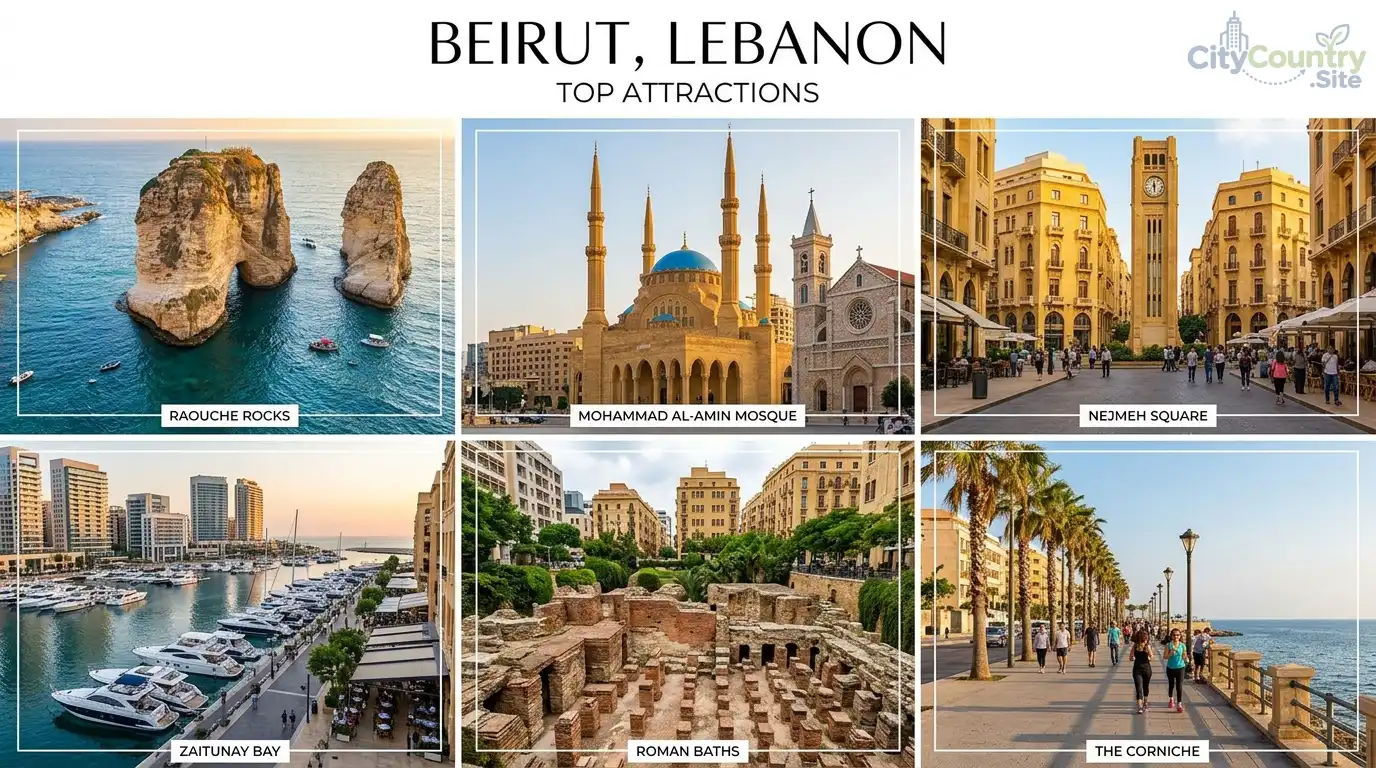
8. Top Attractions & Must-See Places in Beirut
Top Attractions Table
| Attraction | Type | Entry Fee | Best Time | Time Needed |
|---|---|---|---|---|
| National Museum of Beirut | National archaeological museum | $5 USD | Morning | 2–3 hours |
| Pigeon Rocks (Raouché) | Natural coastal rock formation | Free | Sunset | 1 hour |
| Corniche Promenade | Waterfront promenade | Free | Morning / Sunset | 1–2 hours |
| Sursock Museum | Contemporary and Islamic art | $5 USD | Morning | 1.5–2 hours |
| Gemmayzeh and Mar Mikhael | Heritage neighborhoods / cafés | Free | Afternoon–Evening | 2–4 hours |
| Roman Bath Ruins (Downtown) | Roman ruins / open archaeological site | Free (visible from street) | Morning | 30 min |
| Place de l’Étoile (Nejmeh Square) | Historic French Mandate district | Free | Morning | 45 min |
| Hamra Street and surroundings | Intellectual neighborhood / bookshops | Free | Afternoon | 2 hours |
| Bourj Hammoud (Armenian Quarter) | Cultural neighborhood / market | Free | Morning | 1.5 hours |
| American University of Beirut (AUB) | Historic campus / green space / museum | Free (campus open) | Morning | 1.5 hours |
| Jeita Grotto (Day Trip) | UNESCO-nominated cave system | $15–20 USD | Morning | 2–3 hours |
| Byblos (Day Trip) | Oldest continuously inhabited city | $5 USD | Morning | Half day |
The National Museum of Beirut is Lebanon’s most important cultural institution and one of the finest archaeological museums in the Middle East. Housed in a beautifully maintained 1942 building in the Mathaf area, the collection spans Lebanese history from prehistoric to Ottoman times — Phoenician sarcophagi, Roman mosaics, Bronze Age gold jewelry, and extraordinary carved ivory pieces from the ancient royal palace at Sidon. The museum’s own history is extraordinary — during the Civil War, the museum staff encased many of the most fragile pieces in concrete to protect them from shelling. The concrete was removed after the war to reveal the artifacts intact. This story of preservation — of choosing cultural heritage over convenience — says everything about Lebanese civilizational identity.
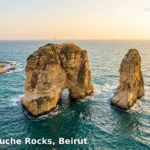
Pigeon Rocks (Raouché) are Beirut’s most iconic natural landmark — two enormous natural rock arches rising from the Mediterranean just offshore near the Raouché neighborhood. At sunset, the rocks turn from gray to orange to deep red against a sky of fading gold and violet, with the Mediterranean crashing beneath them and the entire city glowing behind. Every Beiruti has watched the sun set here hundreds of times. Every visitor watches it once and understands immediately why.
The Corniche — Beirut’s Mediterranean waterfront promenade stretching from the Raouché rocks to the St. George Bay — is the social spine of the city. On any morning from 6 AM, it fills with joggers, elderly men playing backgammon on its benches, fishermen casting lines into the sea below, families eating manakish from a nearby bakery, and the full cross-section of Beirut’s remarkable social diversity moving together along the seawall. The view — the Mediterranean glittering to the horizon, the mountains rising behind the city — is one of the most beautiful in the Arab world.
Gemmayzeh and Mar Mikhael are the neighborhoods where Beirut’s creative, artistic, and nightlife culture has concentrated for the past fifteen years. The streets of these adjacent districts — lined with 19th and early 20th-century French Mandate-era buildings, many now partially restored after the 2020 explosion — house some of the finest cafés, galleries, bars, and restaurants in the city. Walking these streets in the afternoon and evening — past buildings whose facades were blown out in 2020 and are being painstakingly restored, past new murals painted on damaged walls, past restaurants operating in partially repaired buildings with deliberately exposed structural damage as a form of testimony — is simultaneously moving and inspiring. This is Beirut’s resilience made physical.
The Sursock Museum — housed in a magnificent 1912 Ottoman-era villa in Achrafieh — is one of the finest museums of modern and contemporary art in the Arab world. The building itself was severely damaged in the 2020 port explosion, which blew out windows, damaged the interior, and shattered objects in the collection. The museum has been meticulously restored and reopened — its scars partly visible, partly healed, entirely resonant — as an act of cultural defiance. The collection of Lebanese and Arab contemporary art is outstanding.
The American University of Beirut campus is one of the most beautiful urban university campuses anywhere in the world — a magnificent hillside of limestone buildings, ancient trees, and Mediterranean views established in 1866 by American Protestant missionaries. The campus has been a seedbed of Arab intellectual and political life for 160 years; its graduates include presidents, prime ministers, Nobel laureates, and leaders of virtually every significant movement in modern Arab history. Walking the campus — the historic College Hall, the archaeological museum, the garden terraces looking out over the sea — is to walk through the intellectual history of the modern Arab world.
💡 Did You Know? The Beirut port explosion of August 4, 2020 was so powerful that it was heard in Cyprus, 240 km away, registered as a 3.3 magnitude earthquake on seismographs across the region, and was visible from space on satellite imagery. The pressure wave shattered windows across the entire city and was felt as far away as Turkey and Israel. The explosion released energy equivalent to approximately 1–1.5 kilotons of TNT — making it one of the most powerful accidental explosions ever recorded. The fact that any of Beirut’s historic architecture survived is itself remarkable.

9. Beirut Food & Cuisine Guide
Lebanese cuisine is one of the greatest culinary traditions in the world — and Beirut is where it reaches its absolute finest expression. This is not merely regional boosterism. The combination of exceptional local ingredients (Lebanon’s olive oil, citrus, herbs, and mountain vegetables are outstanding), centuries of culinary sophistication rooted in the ancient Phoenician trading culture, French colonial influence that added wine and patisserie to the tradition, and the competitive intensity of a restaurant culture where dining out is essentially a national sport — produces food of consistent, extraordinary quality.
Must-Try Dishes in Beirut
Meze — Lebanese meze is the greatest expression of communal dining in the Mediterranean world. Fifteen, twenty, thirty small dishes arriving in waves — hummus, mutabbal (smoky eggplant), kibbeh (ground lamb in bulgur wheat), fattoush (herb salad with pomegranate molasses), labneh (thick yogurt with olive oil), warak enab (stuffed vine leaves), shanklish (aged spiced cheese), arayes (meat-stuffed flatbread), liver, kishk (dried yogurt with bulgur), and on and on until the table disappears beneath dishes and the conversation rises above them. Meze is not a starter. It is the meal. It is the point.
Kibbeh — Lebanon’s most celebrated dish in its many forms — ground lamb or beef mixed with bulgur wheat, onions, and spices. Eaten raw as kibbeh nayyeh (Lebanon’s answer to steak tartare) — raw lamb ground to a smooth paste with bulgur and spices, served with olive oil, mint, and flatbread — or fried as torpedo-shaped croquettes with a pine nut and meat filling, or baked in trays with layers of meat and onions. In all its forms it is extraordinary. Kibbeh nayyeh is a particular act of courage and reward for the adventurous eater.
Fattoush — A salad of fresh vegetables, herbs, and toasted flatbread (khubz) dressed with pomegranate molasses, sumac, and lemon. Lebanon’s greatest everyday salad — brighter, more complex, and more satisfying than any green salad in the Western tradition.
Tabbouleh — The original version — not the parsley-sprinkled bulgur wheat of Western supermarkets but the real Lebanese tabbouleh, which is primarily a herb dish: an enormous quantity of very finely chopped flat-leaf parsley with a small amount of fine bulgur wheat, tomatoes, spring onions, lemon juice, and olive oil. Bright green, intensely herbal, refreshing beyond belief. The finest version must be eaten within minutes of preparation.
Manakish — Lebanon’s answer to pizza — flatbread topped with za’atar (wild thyme, sumac, sesame, and olive oil), cheese, or meat, then baked in a stone oven. Eaten for breakfast throughout Lebanon, purchased from street bakeries that produce them continuously from dawn. The smell of za’atar manakish baking is the olfactory signature of a Lebanese morning.
Kafta — Ground lamb or beef mixed with onions, parsley, and spices, then grilled on skewers over charcoal. Simple, perfect, deeply satisfying. Served with flatbread, fresh vegetables, and tahini sauce throughout Beirut’s grills and restaurants.
Lebanese Wine — Lebanon produces outstanding wines from the Bekaa Valley — one of the oldest wine-producing regions on earth, where vines have grown since Phoenician times. The finest Lebanese producers — Château Musar (the most celebrated), Château Ksara, Massaya, Domaine Wardy — produce wines of genuine international quality from indigenous and international grape varieties. Drinking a glass of Château Musar at a Beirut restaurant, overlooking the Mediterranean, is one of the most civilized pleasures available in the Arab world.
Arak — The anise-flavored distilled spirit of the Levant — clear until water and ice are added, when it turns an opaque white. Drunk at length, over many small glasses, alongside meze. The ritual of adding water to arak, watching it cloud, adding ice, drinking slowly — this is the rhythm of a long Lebanese lunch, and it is incomparable.
Best Restaurants and Food Spots
Mayrig (Bourj Hammoud) — The finest Armenian restaurant in Beirut — a beautifully managed restaurant celebrating the Armenian community’s extraordinary culinary heritage with exceptional dishes like manti (tiny lamb dumplings in yogurt and tomato sauce), mujaddara (lentils and rice), and outstanding mezze. $15–35 USD per person.
Em Sherif — Consistently one of Beirut’s finest restaurants — a grand, beautifully decorated space serving exceptional traditional Lebanese cuisine with perfect execution. The meze spread is extraordinary; the kibbeh nayyeh is among the finest in the city. $30–60 per person.
Tawlet (Mar Mikhael) — A remarkable and pioneering concept — a daily-changing menu prepared by home cooks from different Lebanese regions and communities. Each week a different cook brings the recipes and techniques of a different Lebanese village or tradition. Outstanding quality, deep cultural value, affordable. $15–25 per person.
Baron (Gemmayzeh) — One of Beirut’s most beloved neighborhood restaurants — a warm, unpretentious space serving outstanding traditional Lebanese home cooking at very reasonable prices. $10–20 per person.
Salam Kabab (Hamra) — The finest traditional grill restaurant in Hamra — outstanding kafta, mixed grills, and mezze in a genuinely local setting without tourist markup. $8–15 per person.
Bread Republic (multiple locations) — Beirut’s finest artisan bakery — extraordinary pastries, breads, and café culture in multiple convenient locations. Outstanding croissants (the French influence runs deep in Lebanon’s best bakeries) and excellent coffee.
Abu Hassan (Corniche) — Legendary hummus stall on the Corniche — open from early morning and sold out by midday. The hummus is extraordinary: warm, silky, drizzled with the finest olive oil. Arriving at 8 AM with bread and eating hummus while watching the Mediterranean is one of Beirut’s great morning rituals.
💡 Did You Know? Lebanon holds the somewhat bittersweet distinction of having attempted to claim the world record for the largest hummus dish multiple times — in 2008 (producing a 2,000 kg hummus) and again in 2010 (producing an extraordinary 10,452 kg dish in a satellite dish in Fanar). The record attempts — made during periods of intense rivalry with Israel over culinary heritage claims — reflect both Lebanese pride in their culinary tradition and the complicated politics of food heritage in the Levant, where hummus, falafel, and tabbouleh have all been claimed as cultural property by multiple national traditions.
10. Beirut Accommodation Guide
Beirut’s accommodation scene has adapted significantly to the economic crisis — with most hotels now pricing in USD and a polarized market between budget options and high-end international properties.
Best Areas to Stay:
- Gemmayzeh / Mar Mikhael: Best for atmosphere, cultural immersion, nightlife proximity, and the creative energy of Beirut’s most resilient neighborhoods
- Hamra: Best for intellectual atmosphere, university proximity, good budget options, and West Beirut character
- Achrafieh: Best for upscale comfort, French-influenced elegance, and excellent restaurants
- Raouché / Manara: Best for sea views, Corniche access, and a quieter residential atmosphere
- Downtown: Best for grand architecture and central location — though the area remains partly incomplete
Accommodation Price Ranges (2026)
| Category | Price/Night (USD) | Examples |
|---|---|---|
| Budget Hostel / Guesthouse | $20–50 | Talal Hotel, various Hamra guesthouses |
| Mid-Range Hotel | $60–130 | Marble Tower Hotel, Albergo Hotel (some rooms) |
| Upscale Boutique Hotel | $130–250 | Albergo Hotel, Smallville Hotel, Villa Clara |
| Luxury Hotel | $250–600+ | Le Gray Beirut, Four Seasons Beirut, Phoenicia Hotel |
Albergo Hotel in Achrafieh is consistently one of the most celebrated boutique hotels in the Arab world — a beautifully restored 1930s building with individually decorated Art Deco rooms, an outstanding rooftop restaurant, and service of exceptional warmth. Rates: approximately $150–300 per night.
Le Gray Beirut in Downtown — designed by renowned architect Gordon Campbell-Gray — is the city’s most stylish luxury property, with remarkable architecture, outstanding views, and a rooftop pool that is one of the finest urban pool experiences in the Middle East. Rates: approximately $250–500 per night.
The Phoenicia Hotel is Beirut’s most historically significant luxury property — opened in 1961 during the golden era, closed during the Civil War, rebuilt and reopened in 2000. Its poolside terrace, overlooking St. George Bay and the Mediterranean, is where Beirut’s beautiful people have gathered for generations. Rates: approximately $200–450 per night.
11. Best Time to Visit Beirut
April through June and September through October are the finest seasons — Mediterranean weather at its most perfect, with warm days, cool evenings, low humidity, and the full cultural and social life of the city operating at peak energy.
April is perhaps the single finest month — wildflowers are blooming in the mountains visible from the city, temperatures are ideal (18–23°C), the streets are lively with outdoor café culture, and the Lebanese diaspora has not yet descended for the summer peak.
September is the finest autumn month — the summer heat is easing but the Mediterranean is still warm enough for swimming, the restaurants are at their most inventive (summer menus transitioning to autumn), and a golden quality of light makes every corner of the city look photographable.
July and August are peak season — hot, intensely social, expensive, and full of the extraordinary energy of the Lebanese diaspora returning home. Hotels book out well in advance; the best restaurants require reservations weeks ahead. The nightlife is at its most spectacular but the heat can be oppressive between noon and 4 PM.
Winter (December–February) offers a quiet, authentic, more affordable Beirut. Atmospheric rainy evenings in old Hamra cafés, excellent restaurant availability without reservations, and the extraordinary visual drama of snow on the mountains above the Mediterranean city.
Key Festivals & Events in Beirut
- Beirut International Film Festival (BIFF) (October) — One of the Arab world’s finest film festivals, showcasing Lebanese, Arab, and international cinema
- Beirut Art Fair (September/October) — A growing contemporary art fair attracting galleries from across the region and internationally
- Al Bustan International Festival (February–March) — A beloved classical music and performing arts festival in the mountain town of Beit Mery, 15 km from Beirut
- Baalbek International Festival (July–August) — Legendary international arts festival held in the extraordinary Roman temple complex at Baalbek in the Bekaa Valley — one of the world’s most spectacular performance venues
- Beirut Marathon (November) — Annual marathon attracting international runners through the city’s streets
- Christmas Season (December) — Despite the economic difficulties, Beirut’s Christmas season — particularly in the Christian neighborhoods of Achrafieh and Gemmayzeh — is extraordinarily beautiful, with elaborate street lighting, church services, and the particular festive quality of a cosmopolitan Mediterranean city celebrating the holidays
12. Beirut Shopping Guide
Beirut’s shopping scene — once the most sophisticated in the Arab world — has contracted significantly during the economic crisis but maintains genuine quality in specific categories.
What to Buy:
Lebanese Artisan Products — The economic crisis has paradoxically sparked a renaissance of local artisan production as Lebanese producers substitute imported goods with locally made alternatives. Excellent olive oil, za’atar, grape molasses (dibs al-inab), artisanal wine, and specialty food products are available throughout the city.
Lebanese Cedar Wood Products — Artisanal items made from cedar wood — Lebanon’s national symbol — including small decorative pieces, scented candles, and handcrafted objects.
Contemporary Lebanese Design — Beirut’s design community — always strong — has produced an extraordinary flowering of creativity during the crisis years. Jewelry, ceramics, textiles, and home goods by Lebanese designers are available in boutique shops throughout Gemmayzeh, Mar Mikhael, and Achrafieh.
Antiques and Vintage — Beirut has excellent antique shops and vintage markets — remnants of the city’s days as the Arab world’s luxury trading hub. The Flea Market (Souk el Ahad) in Bourj Hammoud on Sunday mornings is one of the finest markets in the city.
Armenian Crafts (Bourj Hammoud) — The Armenian quarter produces outstanding handmade jewelry, ceramics, and textiles reflecting the Armenian craft tradition.
Lebanese Wine — Bottles of Château Musar, Château Ksara, or Massaya — available at specialist wine shops throughout the city at prices still significantly below international retail — make exceptional gifts.
Where to Shop:
Souk el Ahad (Sunday Market, Bourj Hammoud) — Beirut’s finest market experience — a sprawling Sunday morning flea market selling antiques, vintage clothing, books, jewelry, electronics, and extraordinary miscellany. Arrive by 9 AM. Completely local, completely authentic, completely wonderful.
Saifi Village (Downtown) — A beautifully designed urban arts and boutique district within the Downtown reconstruction — excellent Lebanese designer boutiques, galleries, and craft shops in a pleasant, walkable setting.
ABC Mall (Achrafieh and Dbayeh) — Lebanon’s finest department store chain — Lebanese and international brands, excellent food halls, and reliable quality. One of the few shopping experiences that has maintained consistent standards through the economic crisis.
Hamra Street — The traditional commercial street of West Beirut, lined with bookshops, cafés, clothing stores, and pharmacies. The Antoine Bookshop on Hamra — one of Lebanon’s finest — is a mandatory stop for any bookish visitor.

13. Beirut Nightlife & Entertainment
Beirut’s nightlife is legendary — widely regarded as the finest in the Arab world and competitive with any major European city. The combination of Lebanese joie de vivre, Mediterranean sensuality, French cultural influence, and a population that treats pleasure as a philosophical obligation produces a nightlife culture of extraordinary quality.
Live Music:
Metro Al Madina (Hamra) — One of Beirut’s most beloved and historically significant cultural venues — a theater, concert hall, and café that has been a center of Lebanese artistic and political life for generations. Regular performances of Lebanese music, comedy, theater, and alternative arts in a beautiful Art Deco setting.
Music Hall (Downtown) — A spectacular multi-stage entertainment complex featuring live performances of Lebanese, Arabic, and international music nightly — one of the most lavish entertainment venues in the Arab world.
Zico House (Hamra) — An independent cultural space hosting regular concerts, film screenings, art exhibitions, and political events. The heartbeat of Beirut’s alternative cultural scene.
Bars and Rooftops:
Ferdinand (Mar Mikhael) — One of the finest bars in Beirut — a warm, well-stocked neighborhood bar with excellent cocktails and the genuine community atmosphere of a Mar Mikhael evening. One of the city’s most beloved gathering places.
The Mayflower Hotel Bar (Hamra) — A legendary institution of Hamra’s golden age — where foreign correspondents, Arab intellectuals, and CIA operatives have allegedly shared tables for decades. Historic, atmospheric, and with genuinely excellent cocktails.
Skybar (Antelias) — One of the most spectacular rooftop club experiences in the Arab world — an outdoor club perched above Beirut with views of the city and Mediterranean. Peak season (June–August) brings international DJs and the full Lebanese summer social scene.
Clubs:
The Grand Factory — Beirut’s most celebrated club for electronic and techno music — an industrial-scale venue in the port area that has hosted some of the world’s finest DJs and been featured in international nightlife rankings.
Centrale — An architecturally extraordinary club-restaurant in a renovated Ottoman building in Downtown — one of the most visually dramatic nightlife spaces in the Middle East.
Ociel (Mar Mikhael) — A smaller, more intimate club with excellent music programming and a genuinely mixed, creative crowd — the antithesis of the big commercial clubs.
14. Hidden Gems & Local Secrets
Sursock Street (Achrafieh) — The quiet, beautiful street leading up to the Sursock Museum is lined with some of the finest Ottoman-era villas in Beirut — extraordinary architecture that survived the Civil War (mostly) and the port explosion (partially). Walking up this street in the late afternoon, with the golden light on the honey-colored stone of the old villas, is one of Beirut’s most beautiful and least-visited experiences.
The Egg (Downtown) — The abandoned Beirut City Centre — a cinema complex whose distinctive egg-shaped auditorium has stood as a Civil War ruin since 1975 — is one of the most extraordinary urban ruins in the world. Visible from the Downtown area, it has been simultaneously protected and neglected for 50 years. Its future remains uncertain; its presence as a monument to the Civil War’s destruction is uniquely powerful.
Tyre Street Archaeological Layers (Downtown) — Throughout the Downtown reconstruction, archaeologists have excavated and left partially visible the accumulated ruins of Phoenician, Hellenistic, Roman, Byzantine, and medieval layers beneath the modern city. Several of these open archaeological sites — visible behind fences or through glass floors in new buildings — can be viewed for free and represent the most accessible multi-period archaeology in the Arab world.
Barbar (Hamra) — Beirut’s most famous 24-hour fast food institution — not a tourist attraction but an essential local experience. Open continuously since 1979 — through every war, invasion, explosion, and economic collapse — Barbar serves outstanding shawarma, falafel, manakish, and fresh juices at all hours. Going at 3 AM after a night out is as essential a Beirut experience as visiting the National Museum.
Port Silos Memorial — The partially destroyed grain silos from the port explosion — some still standing, others collapsed in August 2022 — have become an impromptu memorial and symbol of August 4, 2020. Viewed from the Gemmayzeh waterfront road, particularly at sunset when the damaged concrete glows warm in the light, they are simultaneously mournful and strangely beautiful.
Bourj Hammoud Morning Walk — The Armenian quarter is at its most alive in the early morning — a dense, colorful market district of jewelry shops, fabric stores, food stalls, and the particular energy of a community that survived genocide and built a new life. Walking Bourj Hammoud’s main street before 9 AM, when the market vendors are setting up, is one of Beirut’s most authentic and least-touristed experiences.
15. Day Trips from Beirut
Lebanon is a tiny country — barely 10,452 square kilometers — meaning that virtually every significant attraction is accessible within one to two hours of Beirut.
Day Trips Table
| Destination | Distance | Travel Time | Method | Highlights |
|---|---|---|---|---|
| Byblos (Jbeil) | 37 km north | 45 min | Car / Bus | World’s oldest continuously inhabited city; Phoenician, Roman, Crusader ruins |
| Jeita Grotto | 21 km north | 30 min | Car / Tour | Spectacular limestone cave system; upper and lower grottos |
| Harissa and Jounieh | 25 km north | 35 min | Car / Cable car | Our Lady of Lebanon statue; Jounieh Bay views; Casino du Liban |
| Baalbek | 86 km northeast | 1.5 hrs | Car / Bus | Most spectacular Roman temple complex in the world |
| Sidon (Saida) | 40 km south | 1 hour | Car / Bus | Sea Castle, souq, soap museum, Old City |
| Tyre (Sur) | 83 km south | 1.5 hrs | Car | UNESCO Phoenician and Roman ruins; beautiful beaches |
| Cedars of God (Bsharri) | 120 km north | 2 hours | Car | Ancient cedar forest; Gibran Museum; stunning mountain scenery |
| Faraya / Mzaar (winter) | 50 km northeast | 1 hour | Car | Lebanon’s premier ski resort; skiing and snowboarding |
Baalbek is Lebanon’s — and arguably the Middle East’s — most extraordinary ancient site. The Temple of Jupiter — the largest Roman temple ever built — its six remaining Corinthian columns rising 22 metres from a podium 7 metres high, constructed from stones weighing up to 800 tonnes that were somehow transported and raised in the 1st–3rd centuries CE — is a sight that reduces most visitors to silence. The adjacent Temple of Bacchus is the best-preserved Roman temple outside of Rome itself. The Baalbek International Festival — held in the temple complex in July and August — has since 1956 presented some of the world’s greatest performers (from Ella Fitzgerald to Fairuz to Plácido Domingo) against this extraordinary backdrop.
Byblos (Jbeil) is the oldest continuously inhabited city on earth — occupied for at least 7,000 years, and the city that gave the world the word “Bible” (from Byblos, through which papyrus was traded and books were transmitted). The site preserves Neolithic, Chalcolithic, Bronze Age, Phoenician, Persian, Hellenistic, Roman, Crusader, and Ottoman layers simultaneously, all within walking distance of each other in a beautiful small fishing port with excellent fish restaurants on the harbor.
Jeita Grotto is Lebanon’s most visited natural attraction and one of the most beautiful cave systems in the world — 9 km of limestone caves through which an underground river flows. The upper cave (walk-through) contains extraordinary stalactite and stalagmite formations of staggering scale; the lower cave (boat ride on the underground river) is otherworldly in its beauty.
16. Beirut Local Culture, Customs & Etiquette
Beirut is the Arab world’s most culturally complex city — a place where eighteen officially recognized religious communities coexist within a tiny country, where French and Arabic are spoken interchangeably in the same sentence, and where the social norms can vary dramatically from one neighborhood to the next.
The Confessional System: Lebanon’s political and social structure is organized around its 18 recognized religious communities — Maronite Christian, Greek Orthodox, Sunni Muslim, Shia Muslim, Druze, Greek Catholic, Armenian, Alawite, and many others. This confessional system shapes everything from political representation to neighborhood demographics to social customs. Understanding it — even partially — dramatically enriches the experience of Beirut.
Trilingualism: Beirutis are among the most multilingual people on earth. Most educated Lebanese speak Arabic, French, and English fluently — often switching between all three within a single sentence. This linguistic code-switching is not showing off; it reflects the genuinely trilingual character of Lebanese thought. Visitors who speak any of these languages will find immediate welcome.
Social Warmth: Lebanese hospitality is renowned throughout the Arab world and beyond. Being invited to share a meal or a coffee is a genuine cultural gift. Lebanese people — particularly in Beirut — are extraordinarily sociable, extremely well-read, and deeply interested in conversation about politics, history, culture, and the world. Conversations in Beirut cafés routinely turn into hours-long exchanges of extraordinary intelligence and passion.
Religious Sensitivity: While Beirut is the Arab world’s most religiously diverse and tolerant city, it remains a deeply religious society across all communities. Dress modestly when visiting mosques or churches; be aware of the religious geography of different neighborhoods; and exercise genuine sensitivity about sectarian politics — these are not academic subjects in Lebanon but matters of personal, family, and communal life.
Dress Code: More relaxed than most Arab capitals. In Hamra, Gemmayzeh, Mar Mikhael, and Achrafieh — Western dress is entirely normal. In more conservative Shia or Sunni neighborhoods, modest dress is appropriate. At religious sites, cover shoulders and knees.
Tipping:
- Restaurants: 10–15% tip is standard and important in the current economic crisis
- Taxis: round up generously — USD tips are particularly meaningful
- Hotel staff: $2–5 per service in USD
- Guides: $15–25 per day for excellent guiding
Dos and Don’ts:
- ✅ Do engage in politics — Beirutis discuss politics with extraordinary passion and welcome genuine curiosity
- ✅ Do accept invitations to share meals — Lebanese hospitality should always be accepted
- ✅ Do try arak with your meze — it is the correct accompaniment and deeply embedded in Lebanese food culture
- ✅ Do visit both Hamra (West Beirut) and Gemmayzeh/Achrafieh (East Beirut) — the city only makes sense when experienced across its diversity
- ❌ Don’t make casual jokes about the Civil War, sectarian tensions, or Hezbollah — these are matters of profound personal and family grief for many Lebanese
- ❌ Don’t pretend the economic crisis and the port explosion did not happen — acknowledging them is a sign of respect
- ❌ Don’t photograph military checkpoints or personnel
17. Safety & Travel Tips
Important Context (2026): Beirut’s security situation has improved significantly since the ceasefire of late 2024, but Lebanon’s political environment remains complex and can change rapidly. Always consult your government’s current travel advisory before visiting.
Safe Areas for Tourists: Hamra, Gemmayzeh, Mar Mikhael, Achrafieh, Raouché, Corniche, Downtown, and Badaro are all generally safe for visitors during normal conditions. The southern suburbs (Dahiyeh) — associated with Hezbollah — and areas near the southern border should be avoided.
Main Practical Concerns:
- Electricity supply — Lebanon’s power crisis means the national grid provides only a few hours of electricity per day. Generators and solar panels fill the gap at most hotels and restaurants; be aware that power cuts are a daily reality
- Cash economy — Lebanon now operates almost entirely in USD cash — carry sufficient cash at all times as ATMs can be unreliable and card payment infrastructure is inconsistent
- Traffic — Beirut’s traffic is genuinely chaotic; pedestrian crossings are suggestions rather than instructions; drive (or walk) with appropriate awareness
Emergency Numbers:
- Police: 112 or 999
- Ambulance: 140
- Fire: 175
- Red Cross Lebanon: 1786
Health Tips:
- Medical facilities in Beirut are excellent — Lebanese doctors and hospitals are among the finest in the region; the American University of Beirut Medical Center (AUBMC) is world-class
- Tap water quality is inconsistent — drink bottled water throughout Lebanon
- The economic crisis has caused some medicine shortages — bring adequate supplies of any regular medications
- Travel insurance with medical evacuation coverage is essential
18. Beirut Budget Tour
Daily Cost Table
| Category | Budget Traveler | Mid-Range | Luxury |
|---|---|---|---|
| Accommodation | $20–50 (guesthouse) | $80–180 (hotel) | $250–600+ (luxury hotel) |
| Food | $10–20 (manakish, local restaurants) | $30–70 (restaurant meals) | $80–200+ (fine dining) |
| Transport | $5–10 (servees, shared taxis) | $15–30 (taxis, InDriver) | $50–100 (private car) |
| Activities | $5–15 (museum, Corniche, walking) | $20–50 (guided tours) | $60–150+ (private guide, experiences) |
| Total/Day | ~$40–95 | ~$145–330 | ~$440–1,050+ |
Beirut is more affordable than before the economic crisis in USD terms — the collapse of the Lebanese Pound has meant that USD-denominated prices are now significantly lower than they were in 2018–2019. Food at local restaurants is genuinely cheap; accommodation at the budget level is very affordable. The main expense driver is the best restaurants and luxury hotels, which price in USD at international rates.
19. Practical City Information
Visa & Entry: Lebanon offers visa on arrival for citizens of most Western nations — EU member states, USA, UK, Canada, Australia, and many others — free of charge for a 30-day stay, extendable. Citizens of some Arab League countries also enter without visa. Israeli passport holders and those with Israeli stamps in their passports cannot enter Lebanon — the countries remain technically at war. Check the Lebanese Directorate General of General Security (gsn.gov.lb) for current requirements.
Currency: Lebanon operates as a de facto dollarized economy — virtually all significant transactions are conducted in USD cash. The Lebanese Pound is technically the official currency but is of minimal practical value for most tourist transactions. Always carry USD in small denominations ($1, $5, $10, $20). Some establishments accept credit cards; many do not — confirm before ordering. ATMs may dispense either USD or Lebanese Pounds — verify before withdrawing.
Electricity: Lebanon’s power crisis means the national grid typically provides 2–6 hours of electricity per day. Hotels, restaurants, and most businesses operate on private generators during outages. Be prepared for noise from generators throughout the city. Charge devices when power is available.
Vaccinations: No mandatory vaccinations for most travelers. Recommended: Hepatitis A, Typhoid, Tetanus. Routine immunizations.
Emergency Contacts:
- Police: 112 / 999
- Ambulance: 140
- Lebanese Red Cross: 1786
- AUBMC Hospital: 01-350000
SIM Cards and Internet: Available at the airport and throughout the city. Touch and Alfa are Lebanon’s two mobile operators. A tourist SIM with data costs approximately $10–20 USD. Internet speeds are reasonable in cafés and hotels despite the general infrastructure challenges. Mobile data coverage is good throughout Beirut.
Power: Lebanon uses Type C and Type A plugs — European two-pin and American flat-pin sockets both exist. Voltage: 220V, 50Hz. Bring a universal adapter.
20. How to Be a Responsible Traveler in Beirut
Spend Your Dollars Consciously: In Lebanon’s USD cash economy, where you spend your money matters enormously. Eating at locally owned restaurants, staying at Lebanese-owned guesthouses, hiring local guides, and buying from Lebanese artisans and producers puts money directly into the hands of people who have been economically devastated by the crisis.
Support Explosion Recovery Organizations: Several organizations continue working on the recovery from the August 4, 2020 port explosion. Beit el Baraka (restoring damaged homes), the Balamand University architectural preservation project, and various NGOs working on psychological support for affected communities can be supported through donations or by buying goods from social enterprises they support.
Engage with the Sursock Museum — and similar cultural institutions — by paying the entry fee, buying from the museum shop, and attending events. These institutions represent Lebanon’s cultural survival and deserve visitor support in the most direct form available.
Acknowledge the Pain — without making it the only subject. Lebanese people are tired of being defined entirely by their country’s crises. They are also entirely capable of discussing them with extraordinary intelligence and nuance when given the space to do so. Follow their lead.
Environmental Awareness: Lebanon’s coastline and mountains face significant environmental pressure from waste management failures. Never litter — and if you see litter in natural areas, consider picking it up. The Lebanese environmental NGO Our Forests works on conservation issues and deserves support.
Wadi and Mountain Responsibility: Lebanon’s magnificent mountain wadis and cedar forests are irreplaceable. Stay on marked trails, never light fires, carry out all rubbish, and support nature reserves.
21. Travel Media: Documentaries, Books & Channels
Books:
- Pity the Nation by Robert Fisk — The definitive journalist’s account of Lebanon’s Civil War and its aftermath, by the longtime Beirut correspondent of The Independent. Essential reading for understanding modern Lebanon
- The Rock of Tanios by Amin Maalouf — A beautifully written novel set in the Lebanese mountains in the 19th century, by Lebanon’s greatest living novelist and Académie Française member
- De Niro’s Game by Rawi Hage — A powerful, poetic novel set in the Beirut of the Civil War — internationally acclaimed and deeply Lebanese in its voice
- A Perfect Occupation by Emma Daly — On Lebanon and the region
- The Weight of Paradise: Art and Nature in the Nymphs’ Garden — Various volumes on Lebanese cultural heritage
Documentaries and Films:
- Caramel (2007) — A beautiful, internationally acclaimed Lebanese film directed by Nadine Labaki, set in a Beirut beauty salon. The finest introduction to contemporary Beirut’s human texture available in cinema
- Where Do We Go Now? (2011) — Another Nadine Labaki masterpiece — a fable about Lebanese women preventing sectarian conflict in a mountain village. Extraordinary
- Anthony Bourdain: Parts Unknown, Lebanon — Two episodes (2006 and 2015) filmed by Bourdain in Lebanon — among the finest pieces of travel television ever made. Essential viewing before visiting
- Incendies (2010) — Denis Villeneuve’s devastating film based on a Lebanese play, dealing with the Civil War’s impact across generations
YouTube Channels:
- Mark Wiens — Excellent Beirut food content
- Lost LeBlancs — Beirut and Lebanon travel content
- Nas Daily (Lebanese-founded) — Several Lebanon and Beirut focused videos
- Ministry of Tourism Lebanon — Official destination content
22. Beirut vs. Similar Cities
| Feature | Beirut | Amman (Jordan) | Istanbul (Turkey) |
|---|---|---|---|
| Historical depth | ⭐⭐⭐⭐⭐ 5,000 years continuously inhabited | ⭐⭐⭐⭐⭐ 9,000 years | ⭐⭐⭐⭐⭐ Ancient through Byzantine |
| Food scene | ⭐⭐⭐⭐⭐ Arab world’s finest | ⭐⭐⭐⭐⭐ Outstanding | ⭐⭐⭐⭐⭐ World-class |
| Nightlife | ⭐⭐⭐⭐⭐ Arab world’s best | ⭐⭐⭐⭐ Very good | ⭐⭐⭐⭐⭐ Outstanding |
| Safety / stability | ⭐⭐⭐ Complex (see notice) | ⭐⭐⭐⭐⭐ Very safe | ⭐⭐⭐⭐ Generally safe |
| Infrastructure | ⭐⭐ Severely challenged | ⭐⭐⭐⭐ Good | ⭐⭐⭐⭐⭐ Excellent |
| Affordability (USD) | ⭐⭐⭐⭐ Good value post-crisis | ⭐⭐⭐⭐ Good value | ⭐⭐⭐ Moderate |
| Cultural scene | ⭐⭐⭐⭐⭐ Outstanding | ⭐⭐⭐⭐ Very good | ⭐⭐⭐⭐⭐ Outstanding |
| Unique character | ⭐⭐⭐⭐⭐ Completely unique globally | ⭐⭐⭐⭐ Very distinctive | ⭐⭐⭐⭐⭐ Unique globally |
Choose Beirut if you want the Arab world’s most culturally complex, intellectually stimulating, gastronomically extraordinary, and nightlife-rich city — and if you are willing to engage with a destination that is simultaneously magnificent and damaged, vibrant and fragile, and that will reward your curiosity and your spending with an experience unlike anywhere else on earth.
23. Beirut City Travel Tips
- Always carry USD cash in small denominations — Lebanon is a cash economy and $50 bills are hard to break
- Check your government’s current travel advisory before booking and before departing
- Electricity cuts are daily — charge all devices whenever power is available
- Download InDriver before arriving — the most reliable ride-hailing option in Beirut
- The Corniche at dawn (6–8 AM) is one of the Middle East’s finest free morning experiences
- Go to Barbar in Hamra at any hour for the finest shawarma and manakish available at 3 AM
- Tabbouleh and kibbeh nayyeh are best eaten at the restaurant that makes them fresh — ask when they were prepared
- Visit both sides of the city — Hamra and Gemmayzeh/Achrafieh tell completely different stories
- The port silos viewed from Gemmayzeh waterfront at sunset are an important act of witness
- Baalbek is the finest day trip in the Levant — go early and allow a full day
- Restaurant reservations are essential at the best places in peak season — book at least a week ahead in July–August
- Lebanese wine — particularly Château Musar — is extraordinary and available at a fraction of international export prices
💡 Did You Know? Lebanon has the largest diaspora relative to its domestic population of any country on earth — an estimated 14–18 million Lebanese and people of Lebanese descent live outside Lebanon, compared to approximately 5 million living in the country itself. This diaspora — spread across the Gulf states, Brazil (over 7 million Lebanese-Brazilians, making Brazil home to the largest Lebanese community outside Lebanon), the USA, Australia, France, Senegal, and virtually every other country — sends remittances that have been a lifeline during Lebanon’s economic crisis and maintains a global Lebanese cultural presence entirely disproportionate to the country’s size.
24. Is Beirut Worth Visiting?
Yes — with full awareness of the complexity, and with more genuine conviction than for almost any other city in this series of travel guides. Beirut is not an easy destination. The infrastructure is challenging. The political situation is complex. The visible damage from the 2020 explosion and years of economic collapse is real and sometimes heartbreaking. Your government’s travel advisory may counsel caution.
And yet. No city in the world offers quite this combination: the finest food in the Arab world, a nightlife scene of genuine international caliber, 5,000 years of accumulated civilizational history visible in the streets, a coastal Mediterranean setting of extraordinary beauty, and a population of such warmth, intelligence, resilience, and fundamental human vitality that spending time among them is one of the genuinely enriching experiences available to a curious traveler.
Beirut has been destroyed and rebuilt so many times that resilience is not a quality it has developed — it is a quality it has become. The city’s ability to continue creating beauty, pleasure, and meaning in the face of repeated catastrophe is not a tourist attraction. It is a lesson.
Beirut is best suited for:
- Adventurous, experienced travelers who are comfortable with infrastructure challenges and a complex security context
- Food and culture lovers — the Lebanese culinary tradition and Beirut’s cultural institutions are among the finest available in the Arab world
- Nightlife enthusiasts — Beirut’s nightlife is genuinely among the top five in the world for quality and variety
- History enthusiasts — 5,000 years of visible, accessible history from Phoenician through Roman through Arab through Crusader through Ottoman through French Mandate
- Photographers — the combination of damaged and restored architecture, extraordinary street life, mountain and sea backdrops, and the visual texture of a city in recovery produces images of unusual power
- Journalists, researchers, and policy professionals — Beirut remains the Arab world’s most important city for understanding the region’s politics and human dimensions
Less suited for first-time Middle East travelers, those uncomfortable with infrastructure instability, travelers requiring reliable electrical supply and consistent internet, or families with young children given the current infrastructure challenges.
The verdict: If conditions allow at the time of your travel — consult the advisory, make an informed decision, and go. Go and eat the hummus at Hashem and the kibbeh nayyeh at Em Sherif. Go and walk the Corniche at dawn and watch the sunrise over the Mediterranean with the mountains turning pink behind the city. Go and sit in a bar in Gemmayzeh with a glass of Lebanese wine and talk until 2 AM with a Beiruti who has survived things you cannot imagine and is still, impossibly, laughing. Go. Beirut deserves you. And you deserve Beirut.
25. Frequently Asked Questions About Beirut
Q1: Is Beirut safe to visit in 2026?
Safety conditions in Beirut have improved significantly following the ceasefire of late 2024, and the main tourist areas — Hamra, Gemmayzeh, Mar Mikhael, Achrafieh, the Corniche, and Downtown — are generally safe for visitors during normal conditions. However, Lebanon’s political situation remains complex and can change rapidly. Always check your government’s most current travel advisory before booking and before departing. The US State Department, UK FCO, and Australian DFAT all maintain regularly updated Lebanon advisories. Travel insurance with emergency evacuation coverage is essential.
Q2: Do I need a visa to visit Lebanon?
Citizens of most Western nations — EU member states, USA, UK, Canada, Australia, and many others — receive a free visa on arrival at Rafic Hariri Airport, valid for 30 days. Israeli passport holders or those with Israeli stamps cannot enter Lebanon. Those who have visited Israel (even without a stamp — for example via land borders or on Israeli domestic documents) should research carefully before traveling, as immigration officers may inquire. Check the Lebanese Directorate General of General Security (gsn.gov.lb) for current requirements for your specific nationality.
Q3: What currency should I use in Beirut?
US dollars in cash are the effective currency of Lebanon. Virtually all significant transactions — hotels, restaurants, taxis, shops — now operate in USD. Always carry sufficient USD in small denominations ($1, $5, $10, $20 bills). Lebanese Pounds exist but are of minimal practical value for most tourist transactions. Credit card acceptance is inconsistent — always confirm before ordering or booking. ATMs exist but can be unreliable — carry more cash than you think you need.
Q4: What is the port explosion and how does it affect visiting Beirut today?
The August 4, 2020 Beirut port explosion — caused by improperly stored ammonium nitrate — was one of the largest non-nuclear explosions in history. It killed over 200 people, injured more than 6,000, and devastated the port area and surrounding neighborhoods including Gemmayzeh, Mar Mikhael, and Achrafieh. In 2026, recovery is ongoing — many buildings have been restored, some are still damaged, and the port silos remain as a memorial. Visiting these neighborhoods now is both moving and inspiring — you witness both the damage and the extraordinary human determination to rebuild. The experience is important and the communities welcome visitors who spend their money and their attention there.
Q5: What is Lebanese meze and how do I order it correctly?
Lebanese meze is a parade of small shared dishes — typically 15–30 or more — that constitute a complete meal rather than an appetizer course. Ordering meze correctly means: choosing a restaurant with a strong meze reputation, sitting down and allowing the dishes to arrive in waves over 1.5–2 hours, ordering arak or Lebanese wine as accompaniment, and expecting the meal to be a social event rather than a quick refueling. Begin with hummus, fattoush, and labneh; progress through kibbeh, warak enab, and grilled vegetables; move toward meats and fish. Never rush meze. It is not food; it is a way of spending time.
Q6: What is Baalbek and how do I visit it from Beirut?
Baalbek — 86 km northeast of Beirut in the Bekaa Valley — contains the most spectacular Roman temple complex in the world. The Temple of Jupiter (6 remaining columns of what was the largest Roman temple ever built) and the perfectly preserved Temple of Bacchus are among the most extraordinary ancient structures on earth. The drive from Beirut takes approximately 1.5 hours through the Bekaa Valley. Day trips are easily arranged through Beirut tour operators. Check current security conditions in the Bekaa Valley area before visiting, as the situation can be more complex than Beirut itself.
Q7: What is the best Lebanese wine to try in Beirut?
Lebanon’s finest wine is Château Musar — produced in the Bekaa Valley from indigenous Cinsault, Carignan, and Cabernet Sauvignon grapes by the legendary Hochar family. The wine — which continued to be produced throughout the Civil War without missing a vintage — is internationally considered one of the world’s most distinctive and complex red wines. Available throughout Beirut’s wine shops and restaurants at prices significantly below international export prices. Also excellent: Château Ksara, Massaya, Domaine Wardy, and Ixsir.
Q8: How do I get from Beirut to Baalbek?
The most convenient option for independent travelers is to hire a driver for the day through your hotel — approximately $80–120 USD for a full day round trip including waiting time. Public buses serve Baalbek from the Cola intersection in South Beirut, but schedules are infrequent and the journey takes 2+ hours. Several tour operators in Hamra and Gemmayzeh offer organized day trips to Baalbek with guiding included for approximately $50–80 per person. Always check current security conditions before visiting the Bekaa Valley.
Q9: Where should I eat my first meal in Beirut?
Go immediately to Hashem Restaurant in Downtown (open from 4 AM) for hummus, falafel, and fresh flatbread — one of the great cheap meals available anywhere. If arriving in the evening, head to Gemmayzeh or Mar Mikhael and find a table at any busy restaurant serving meze — order a spread of cold dishes to start, arak to drink, and follow the waiter’s recommendations. Your first Beirut meze meal will define the rest of the trip.
Q10: Is Lebanese food really the finest in the Arab world?
This is genuinely debated — Amman, Damascus (before the war), Cairo, and Tunis all have passionate advocates. But Beirut’s particular combination of ingredient quality (Lebanese olive oil, mountain herbs, and citrus are exceptional), culinary sophistication rooted in ancient Phoenician trading culture, French colonial influence (which added wine, pastry, and technique), and the competitive intensity of a restaurant market where eating out is a national religion — produces food of consistent extraordinary quality that most visitors, on honest reflection, concede is at least among the finest they have eaten in the region.
26. Sources & References
This article was researched using information from the following trusted sources:
- Lonely Planet Lebanon — lonelyplanet.com
- TripAdvisor Beirut — tripadvisor.com
- Booking.com Beirut Hotels — booking.com
- Wikipedia — Beirut — en.wikipedia.org
- Lebanon Ministry of Tourism — mot.gov.lb
- Numbeo — Cost of Living Beirut — numbeo.com
- Google Maps — maps.google.com
- Wikitravel Beirut — wikitravel.org
- Skyscanner Lebanon Flights — skyscanner.com
- World Travel Guide — worldtravelguide.net
- Lebanese Directorate General of General Security — gsn.gov.lb
- National Museum of Beirut — nationalmuseum.org.lb
- Sursock Museum — sursock.museum
- Condé Nast Traveller Lebanon — cntraveller.com
- UNESCO Lebanon — whc.unesco.org
27. Beirut Travel Guide Images