
1. Facts About Kampala
| Category | Detail |
|---|---|
| Country | Uganda, East Africa |
| Region / Province | Central Region (Kampala Capital City Authority — a federal district) |
| Official Languages | English and Swahili; Luganda widely spoken in Kampala and the Buganda Kingdom |
| Currency | Ugandan Shilling (UGX) — approx. $1 USD = UGX 3,700–3,900 (2026); USD accepted in hotels and larger businesses |
| Best Time to Visit | December to February; June to August (both dry seasons) |
| Time Zone | East Africa Time (EAT) — UTC+3 |
| Weather | Equatorial highland climate; moderate and relatively comfortable year-round; two rainy seasons |
| Average Temperature | 19°C–29°C (66°F–84°F); rarely extreme; pleasant year-round |
| Map | Southern Uganda, on the northern shores of Lake Victoria; approx. 0.3°N, 32.6°E |
| Main Airport | Entebbe International Airport (IATA: EBB) — 40 km southwest of Kampala city centre |
| Top Tourist Places | Uganda Museum, Kasubi Tombs (UNESCO), Gaddafi National Mosque, Kabaka’s Palace, Nakasero Market, Ndere Cultural Centre, Owino Market, Namirembe Cathedral, Baha’i Temple |
| Average Trip Cost Per Day | Budget: $25–50 / Mid-range: $70–150 / Luxury: $200–400+ |
| Nearest Major Airport | Entebbe International Airport (EBB) — Uganda’s only international airport |
| Population | Approximately 3.8–4.5 million (city and metropolitan area, 2025 estimates); Uganda’s capital and largest city |
| Famous For | City of Seven Hills; gateway to Uganda’s gorilla trekking; Pearl of Africa; extraordinary nightlife; Buganda Kingdom heritage; source of the Nile |
2. Kampala City Overview and Background
There is a moment — usually on the first morning, when you step out of your guesthouse onto the hill and look across the valleys to the next ridge — when you understand why they call it the City of Seven Hills. Kampala does not spread flat across a plain like most African capitals. It climbs, dips, and rises again in wave after wave of densely settled hillside, each ridge crowned with a mosque, a cathedral, a palace, or a market, the valleys between them filling with traffic and commerce and the extraordinary bustle of one of Africa’s fastest-growing cities.
Kampala is the capital and largest city of Uganda, sitting on the northern shore of Lake Victoria — the largest lake in Africa and the world’s second-largest freshwater lake — in the heart of the East African plateau. With a population approaching 4 to 4.5 million people in the greater metropolitan area, it is a city of energy, ambition, contradiction, and remarkable character.
Uganda was famously described by Winston Churchill in 1908 as “the Pearl of Africa” — and while Churchill was referring to the entire country, nowhere embodies that description more than Kampala. The city is extraordinarily green for a capital of this size — the hills are lush with trees, the valleys carry rivers and wetlands, and the constant warm equatorial rain keeps everything in a state of vivid, almost overwhelming verdure. It is a city that smells of earth and rain and charcoal smoke and roasting matoke — the green banana that is the staple food of Buganda — all at once.
Kampala is the seat of the Buganda Kingdom, the most powerful of Uganda’s traditional kingdoms and one of the most sophisticated pre-colonial African political systems. The Buganda people — whose language, Luganda, you will hear constantly in the streets — have inhabited this region for centuries and their cultural presence permeates every aspect of the city: in the music, the food, the social customs, the royal tombs on the hilltops, and the extraordinary ceremonial dress of the kingdom’s officials.
It is also, paradoxically, one of Africa’s great party cities. Kampala’s nightlife has a reputation across the continent — rooftop bars, live music venues, and clubs that stay open until well after dawn have made the city a destination in its own right for travellers who want to experience the creativity, joy, and social exuberance of urban East Africa at its most uninhibited.
But above everything, Kampala is the gateway to Uganda’s extraordinary natural and wildlife experiences — gorilla trekking in Bwindi Impenetrable Forest, chimpanzee tracking in Kibale, the spectacular whitewater of the Nile at Jinja, and the vast wildlife reserves of Queen Elizabeth and Murchison Falls. For most visitors, the city is the beginning of something larger. For those who pause and look, it is also extraordinary in itself.
“Uganda is the most beautiful country I have ever seen. And Kampala, this city on its impossible hills, is proof of what Africa can become.” — Various interpretations of Winston Churchill’s 1908 Pearl of Africa description, updated by modern observers
3. Kampala History Timeline
Pre-14th century: The Buganda Kingdom — one of the most sophisticated pre-colonial African states — begins to take shape on the northern shores of Lake Victoria. The kingdom develops a complex hierarchical system with a Kabaka (king) at its centre, a system of appointed chiefs, a standing army, and a distinct cultural tradition that will define the region for centuries.
Late 1800s: The area that will become Kampala is the personal hunting ground of Kabaka Mutesa I, the 31st Kabaka of Buganda. The name “Kampala” derives from a Luganda word describing the land of the impala — antelope that grazed on the hills.
1890: The Imperial British East Africa Company under Captain Frederick Lugard establishes a fort on Nakasero Hill, beginning the formal colonial presence in the area. This fort becomes the nucleus of the future city.
1893: The British East Africa Protectorate formally extends over Uganda. Kampala begins to develop rapidly as a colonial administrative centre alongside the existing Buganda royal capital at Mengo Hill.
1900: The Uganda Agreement — signed between the British and the Buganda Kingdom — formalises Buganda’s semi-autonomous status within the protectorate and shapes the political geography of the region.
1905–1920s: Kampala grows as a commercial town, attracting South Asian traders and merchants who establish businesses along what is now Kampala Road. The railway connection to Mombasa on the Kenyan coast transforms trade.
1954: Kampala receives municipal status as a town.
9th October 1962: Uganda gains independence from Britain. Kampala becomes the capital of the new nation, with Apollo Milton Obote as Prime Minister.
1966: Prime Minister Obote launches a constitutional coup, attacking the Lubiri (Kabaka’s Palace) and forcing the Kabaka of Buganda, Mutesa II, into exile. The Buganda Kingdom is temporarily abolished.
1971: General Idi Amin Dada seizes power in a military coup. His brutal eight-year rule results in the deaths of an estimated 300,000 to 500,000 Ugandans and the expulsion of Uganda’s entire Asian business community. Kampala’s economy is devastated.
1979: Amin is overthrown with Tanzanian military assistance. A period of civil conflict follows.
1986: Yoweri Museveni and the National Resistance Movement (NRM) capture Kampala, ending years of civil war. Uganda enters a period of sustained economic recovery and infrastructure development that transforms the city.
1993: The Buganda Kingdom is formally restored, with the coronation of Kabaka Ronald Muwenda Mutebi II. The restoration energises Buganda cultural identity throughout Kampala.
2010: The Kampala bombings — coordinated attacks on civilians watching the FIFA World Cup final — kill 74 people and injure many more. Al-Shabaab claims responsibility.
2010s–2026: Kampala undergoes rapid urban expansion. The city’s population grows dramatically. New hotels, shopping malls, and infrastructure transform the skyline. The Uganda Museum is redeveloped. Kampala establishes itself as one of East Africa’s most vibrant and creatively dynamic cities, with a booming arts, music, and food scene.
4. Kampala Geography and Neighborhoods
Kampala is built across a series of hills separated by swampy valleys, with elevations ranging from about 1,100 to 1,300 metres above sea level. This topography is not just a visual feature — it fundamentally shapes the city’s layout, its traffic patterns, and its distinctive character.
The city spreads across the original Seven Hills — Mengo, Rubaga, Namirembe, Kampala, Nakasero, Nsambya, and Kololo — and has now expanded far beyond them in every direction, absorbing what were once separate towns and rural areas. Lake Victoria lies to the south.
Understanding Kampala’s neighbourhoods is essential for planning effectively. The city does not have a single tourist zone — attractions, accommodation, and social life are spread across several distinct areas.
Neighborhood Comparison Table
| Neighborhood | Best For | Vibe | Price Level |
|---|---|---|---|
| Kololo | Upscale restaurants, embassies, luxury hotels | Leafy, quiet, diplomatic | High |
| Nakasero | Business centre, mid-range hotels, restaurants | Dense, central, commercial | Mid to high |
| Kabalagala (Ggaba Road) | Nightlife, bars, budget restaurants | Lively, social, diverse | Budget to mid |
| Ntinda | Residential, expat community, local restaurants | Quiet, suburban, comfortable | Mid |
| Wandegeya | University area, budget food, local markets | Young, busy, authentic | Budget |
| Mengo | Buganda royal sites, local life, history | Historic, residential | Budget to mid |
| Nsambya | Guesthouses, budget accommodation, local | Working-class, authentic, busy | Budget |
| Muyenga | Expats, lake views, upscale living | Peaceful, hilly, residential | High |
Kololo is the diplomatic quarter of Kampala — embassies, international organisations, the finest restaurants, and a collection of upscale hotels sit on a well-shaded hillside that feels like a different city from the commercial bustle below. This is where most first-time tourists base themselves.
Nakasero is the commercial and business heart — the CBD, government offices, the central market, and a dense concentration of hotels and restaurants. It is also where Nakasero Market — one of the city’s finest food markets — operates daily.
Kabalagala, along the Ggaba Road south of the city centre, is Kampala’s nightlife hub. An extraordinary concentration of bars, clubs, rooftop terraces, and restaurants makes this the place to be after dark.
Wandegeya, adjacent to Makerere University (the oldest and most prestigious university in East Africa), is the student neighbourhood — cheap food, lively markets, intellectual energy, and a youthful vitality that is very different from the diplomatic calm of Kololo.
5. Kampala Weather and Best Time to Visit
Kampala enjoys a remarkably pleasant equatorial highland climate — consistently warm but rarely hot, with cooling breezes and green landscapes year-round. Its position right on the equator means it has no real summer or winter, but rather alternating wet and dry seasons shaped by the Intertropical Convergence Zone.
The city has two rainy seasons — the long rains (March to May) and the short rains (October to November) — and two dry seasons that represent the best windows for visiting.
Month-by-Month Weather Table
| Month | Avg Temp (°C) | Rainfall | Crowd Level | Recommendation |
|---|---|---|---|---|
| January | 20–29°C | Low | Medium-High | Excellent — dry, sunny, warm |
| February | 20–30°C | Very Low | High | Excellent — warmest and driest; great for gorilla trekking |
| March | 19–28°C | High | Medium | Fair — long rains begin; unpredictable |
| April | 18–26°C | Very High | Low | Poor — heaviest rains; muddy roads in rural areas |
| May | 19–27°C | High | Low | Fair — rains tapering; lower prices |
| June | 19–27°C | Low | Medium-High | Very good — first dry season; comfortable |
| July | 19–27°C | Low | High | Excellent — peak dry season; best gorilla trekking |
| August | 19–27°C | Low | High | Excellent — dry and pleasant; busy |
| September | 19–28°C | Low–Medium | Medium | Very good — transitional; still largely dry |
| October | 19–27°C | Medium–High | Medium | Fair — short rains begin |
| November | 19–26°C | High | Low–Medium | Fair — second rainy season |
| December | 19–28°C | Low–Medium | Medium-High | Good to very good — rains ease; festive season |
The best times to visit Kampala and Uganda are the December to February dry season and the June to September dry season. Both windows offer dry roads, comfortable temperatures, and the best conditions for gorilla and chimpanzee trekking permits. July and August are particularly popular with international travellers and gorilla trek permits sell out months in advance during these months.
April is the wettest month and the most challenging for road travel to Uganda’s national parks, though Kampala itself remains functional and the very low tourist numbers mean dramatically reduced prices for accommodation and permits.
Did You Know? Kampala sits almost exactly on the equator — just 0.3 degrees north of 0° latitude. Despite this, the city’s altitude of approximately 1,190 metres keeps temperatures pleasantly mild year-round, never reaching the scorching heat of many equatorial lowland cities.
6. Kampala Airport and Getting There
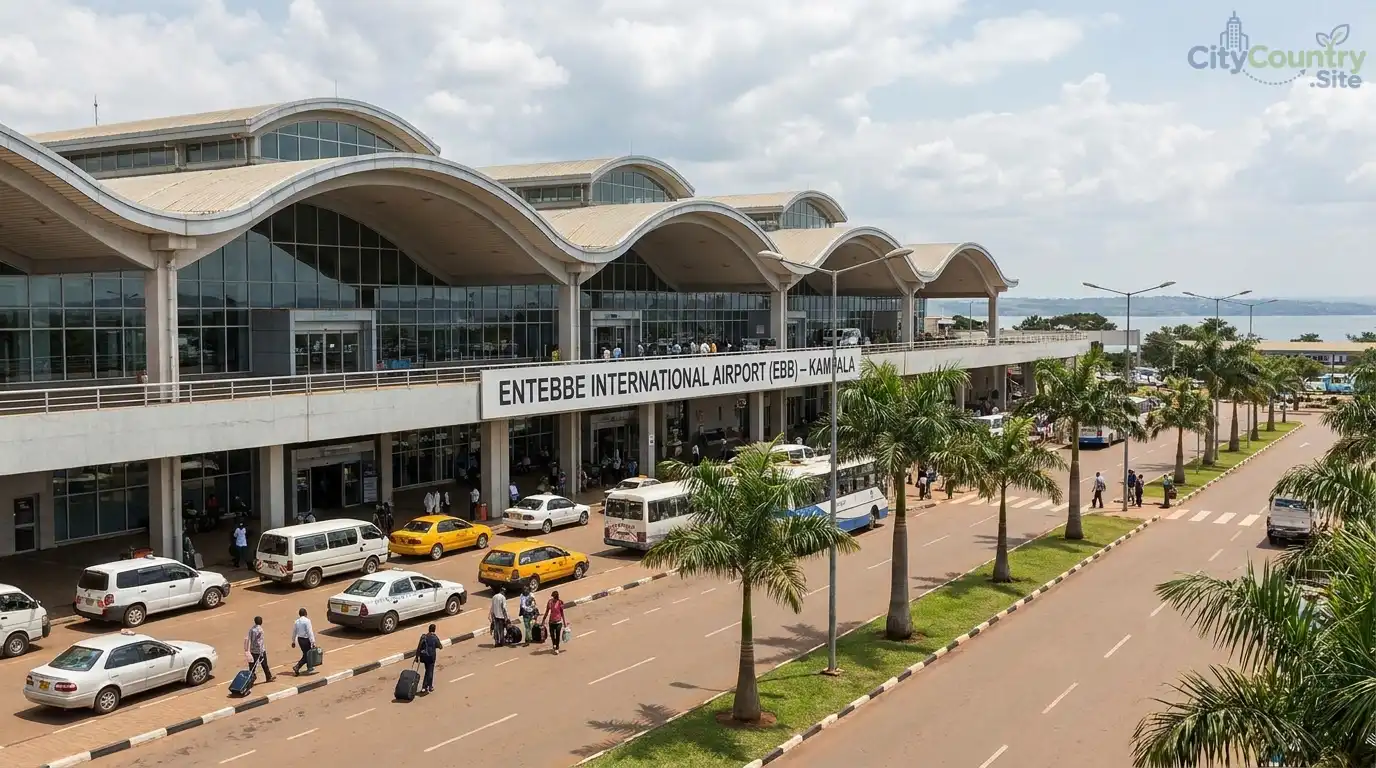
Entebbe International Airport (EBB)
Entebbe International Airport (IATA: EBB) is Uganda’s only international airport and the country’s primary gateway. It is located in the town of Entebbe, approximately 40 kilometres southwest of Kampala city centre on the shores of Lake Victoria. This is further from the city than most travellers expect — allow 45 minutes to 1.5 hours for the journey depending on traffic.
The airport handles all international arrivals and departures, with a domestic terminal serving internal Uganda routes. A major expansion project completed in recent years has significantly improved the facilities.
Airlines serving Entebbe include: Ethiopian Airlines, Kenya Airways, Qatar Airways, Turkish Airlines, Emirates, KLM, RwandAir, Air Tanzania, Flydubai, and Uganda Airlines (the national carrier, relaunched in 2019).
Key flight times to Kampala (Entebbe):
- London Heathrow to Entebbe: approximately 9–10 hours (direct with some carriers; usually one stop)
- New York to Entebbe: approximately 16–18 hours (at least one connection)
- Dubai to Entebbe: approximately 5 hours (direct with Emirates or Flydubai)
- Nairobi, Kenya to Entebbe: approximately 1 hour
- Addis Ababa to Entebbe: approximately 2 hours
Important note on Entebbe Airport history: Entebbe Airport was the site of the famous 1976 Entebbe Raid, when Israeli special forces conducted a dramatic rescue of 102 hostages from an Air France plane hijacked by Palestinian and German militants. The operation, in which all hostages (bar three who were killed in crossfire and one who remained in hospital in Uganda) were rescued in under 90 minutes, became one of the most celebrated special operations missions in history and the subject of multiple films.
Airport to Kampala City Centre
| Transport Method | Cost (approx.) | Travel Time | Notes |
|---|---|---|---|
| Special hire taxi | UGX 80,000–150,000 ($22–41) | 45–90 min | Negotiate before departure; no meters |
| Hotel shuttle | Free to UGX 50,000 ($14) | 45–90 min | Pre-arrange with accommodation |
| Bolt ride-hailing | UGX 50,000–90,000 ($14–25) | 45–90 min | Reliable; download before arrival |
| Uber | UGX 60,000–100,000 ($16–27) | 45–90 min | Available and reliable in Uganda |
| Shared taxi / matatu | UGX 5,000–8,000 ($1.40–2.20) | 60–120 min | Cheapest; goes to Kampala Old Taxi Park |
Pro tip: Download Bolt before landing — it is widely used in Kampala, pricing is transparent, and it is significantly cheaper than negotiating with airport taxi drivers. Traffic on the Entebbe-Kampala Expressway (opened 2018) has dramatically cut journey times during off-peak hours but peak hour congestion can still be severe.
7. Kampala Top Attractions and Popular Places
Top Attractions Table
| Attraction | Type | Entry Fee (approx.) | Best Time to Visit | Time Needed |
|---|---|---|---|---|
| Uganda Museum | National museum | UGX 15,000–20,000 ($4–5.50) | Morning | 2–3 hours |
| Kasubi Tombs (UNESCO) | Royal tombs / cultural heritage | UGX 20,000 ($5.50) | Morning | 1.5–2 hours |
| Gaddafi National Mosque (Uganda National Mosque) | Mosque / panoramic views | UGX 10,000 (non-Muslims) | Morning | 1–1.5 hours |
| Kabaka’s Palace and Lubiri | Royal palace / Buganda Kingdom | UGX 20,000 ($5.50) | Morning | 2 hours |
| Ndere Cultural Centre | Cultural performances | UGX 35,000–50,000 ($10–14) | Friday and Saturday evenings | 2–3 hours |
| Namirembe Cathedral | Historic cathedral / views | Free | Anytime | 45 min–1 hour |
| Rubaga Cathedral | Historic cathedral / history | Free | Morning | 45 min |
| Baha’i Temple (Mother Temple of Africa) | Unique religious architecture | Free | Anytime | 45 min–1 hour |
| Owino Market (St Balikuddembe Market) | Enormous local market | Free | Weekday mornings | 1.5–2 hours |
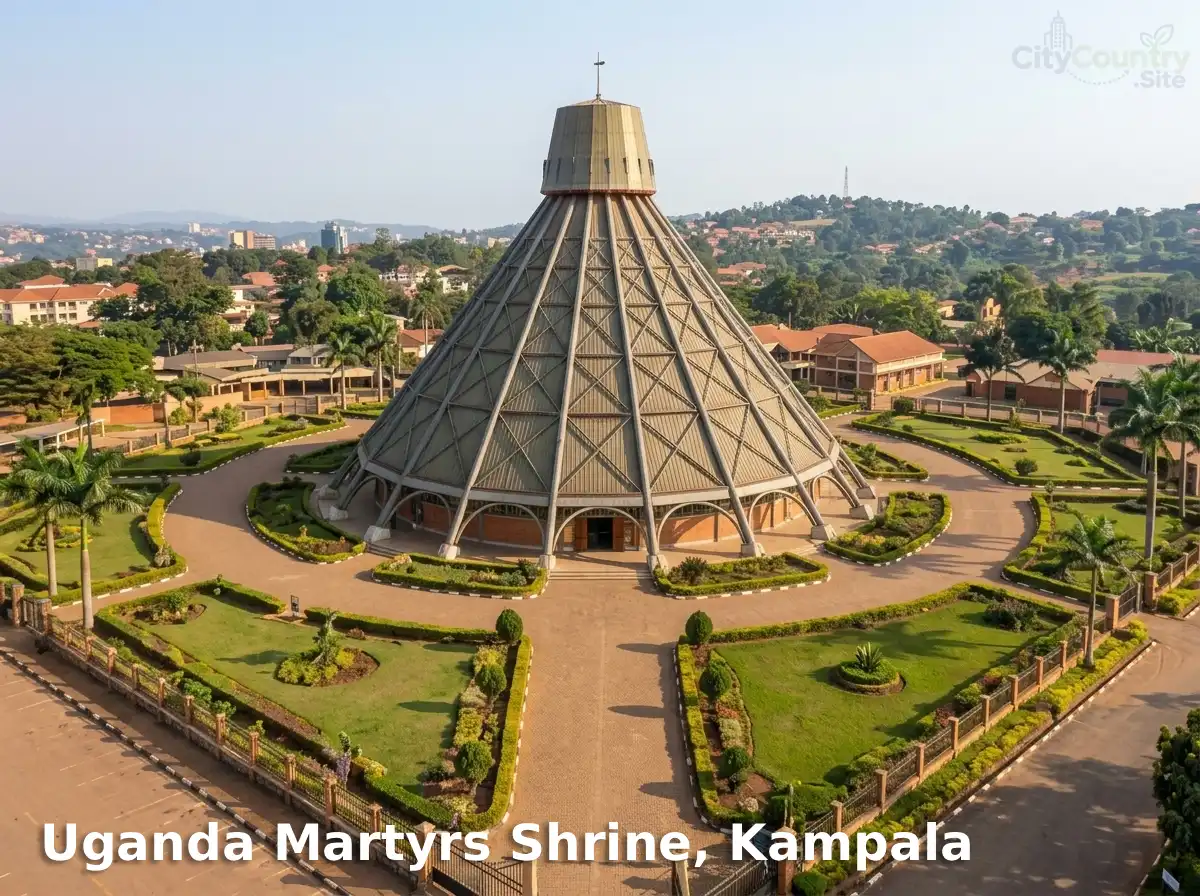
| Uganda Martyrs Shrine (Namugongo) | National pilgrimage site | Free (donations) | Anytime | 1–2 hours |
| Ngamba Island Chimpanzee Sanctuary | Wildlife / boat trip | $100–150 USD (boat + entry) | Morning | Full day |
| Nakasero Market | Food market | Free | Morning | 1 hour |
The Uganda Museum on Kitante Road is the oldest museum in East Africa, founded in 1908. Its collection spans prehistoric archaeological finds, traditional Ugandan musical instruments (including extraordinary examples from many of the country’s 56 ethnic groups), colonial-era artefacts, and exhibits on Uganda’s natural history and ecology. The instrument collection alone is world-class.
The Kasubi Tombs are the most sacred site in Buganda and one of the most culturally significant places in Uganda. A UNESCO World Heritage Site, the tombs are the burial place of four Kabakas (kings) of Buganda — enormous circular thatched structures of extraordinary architectural complexity, built entirely from organic materials without a single nail. The site suffered a devastating fire in 2010 that destroyed the main tomb building, and ongoing restoration has brought it back to near-full splendour. Visiting requires modest dress and guides are available on site.
The Gaddafi National Mosque — also called the Uganda National Mosque — sits on the highest hill in Kampala’s old town, dominating the skyline. Built with Libyan funding under Idi Amin and completed after his fall, it is the largest mosque in sub-Saharan Africa, accommodating over 15,000 worshippers. Non-Muslim visitors are warmly welcomed with provided robes for modesty. The minaret offers the finest panoramic view of Kampala available from any public vantage point — climb it on a clear morning and the city spreads out in every direction across its hills. Extraordinary.
The Ndere Cultural Centre is one of the finest cultural performance venues in Africa. Every Friday and Saturday evening, the Ndere Troupe performs a programme of traditional dances, music, and storytelling from Uganda’s many ethnic groups — Buganda, Acholi, Bakiga, Banyankole, and more — in a purpose-built theatre with excellent acoustics. It is one of the most joyful, vibrant, and accessible cultural experiences in East Africa, equally enjoyed by children and adults. Book in advance.
The Baha’i Temple (officially the Baha’i House of Worship for Africa) sits on a hilltop in the Kikaya area of Kampala and is one of only eight Baha’i Houses of Worship in the entire world. Its lotus flower-inspired architecture, built in the 1960s, is surprisingly beautiful and the peaceful, manicured gardens surrounding it offer a genuine oasis of calm from the city’s intensity. Open to visitors of all faiths, free of charge.
Did You Know? Kampala is the fastest-growing city in East Africa and one of the fastest-growing urban centres on the entire African continent. Its population is projected to exceed 6 million by 2030, driven by one of the highest birth rates in the world and significant internal migration from rural Uganda.
8. Kampala Food and Cuisine Guide
Kampala’s food scene has undergone an extraordinary transformation in the past decade, evolving from a relatively limited selection of traditional Ugandan food and basic international options into one of the most diverse and exciting dining cities in East Africa.
But at its heart, Kampala food is still deeply Ugandan — and Ugandan food is defined by the extraordinary agricultural richness of a country that sits on the equator with fertile volcanic soil, two rainy seasons, and Lake Victoria providing year-round fresh fish.
Must-try dishes in Kampala:
Matoke — The most important food in Buganda culture and the staple dish of central Uganda. Green bananas (a specific cooking variety) are peeled, wrapped in banana leaves, and steamed for hours until they become a soft, starchy, slightly savoury mash. Eaten with groundnut stew, meat, beans, or fish. It is comforting, filling, and quietly delicious in the way that all truly great staple foods are.
Rolex — This is Uganda’s most beloved street food and one of Africa’s great food inventions. Not the watch. A Rolex is a chapati (flat fried bread) rolled around a filling of omelette (eggs fried with onion, tomato, and cabbage), and the name comes from “Rolled Eggs.” Cheap, filling, freshly made, and absolutely delicious. Found on street corners throughout Kampala from early morning to late night.
Groundnut Stew (Peanut Sauce) — A rich, thick stew made from ground peanuts, tomatoes, onions, and spices, cooked slowly and served over rice, matoke, or posho (maize porridge). It is Uganda’s most universally consumed sauce and one of the great pleasures of the local table.
Posho (Ugali) — Stiff white maize porridge, the East African staple eaten at most local meals. Simple, filling, and designed to carry the flavour of whatever stew or sauce accompanies it.
Tilapia and Nile Perch — With Lake Victoria on Kampala’s doorstep, freshwater fish is central to the local diet. Whole tilapia grilled over charcoal with tomatoes, onions, and chilli, or Nile perch (one of the world’s largest freshwater fish) stewed in groundnut sauce — both are extraordinary.
Muchomo (Roasted Meat) — Skewered meat — goat, chicken, or beef — roasted over charcoal and served with kachumbari (fresh tomato-onion salsa). The Ugandan version of the East African nyama choma tradition, found at roadside stalls and restaurants throughout the city.
Waragi — Uganda’s traditional spirit, made from banana or cassava, a grape-like fruit called munanasi, or millet. The commercial version is gin-like; local home-distilled versions vary wildly. Uganda Waragi, the commercial bottled version, is smooth and inexpensive — a genuinely interesting local spirit.
Where to Eat in Kampala
For traditional Ugandan food: Café Javas is Uganda’s most beloved local restaurant chain — friendly, reliable, excellent matoke, posho, and stew at very reasonable prices. Ndere Cultural Centre restaurant serves traditional food before the evening cultural show. Mama’s Kitchen in various locations offers home-style Ugandan cooking.
For rolex and street food: Any roadside stall along Kampala Road, Entebbe Road, or around the university campus in Wandegeya. A rolex costs between UGX 2,000–5,000 ($0.55–1.40) — one of the world’s great cheap meals.
For upscale dining: The Lawns and Cassia Lodge Restaurant in Munyonyo offer lakeside fine dining. Khana Khazana is excellent for Indian cuisine — reflecting Kampala’s significant Indian community. Tapas Bar and various restaurants in Kololo offer international cuisine for the diplomatic crowd.
For coffee: Uganda grows extraordinary coffee — one of the world’s finest arabica varieties. 1000 Cups Coffee and various specialty coffee shops in Kololo and Nakasero celebrate Ugandan coffee culture at its modern best.
Did You Know? Uganda is one of the world’s finest coffee-producing nations, growing some of the highest-quality arabica and robusta beans on the continent. Ugandan arabica is grown in the highlands of Mount Elgon and produces a richly flavoured cup comparable to the finest Ethiopian coffee. When you drink coffee in Kampala, you are drinking something exceptional.
9. Kampala Accommodation Guide
Kampala offers a genuinely wide range of accommodation, from bare-bones backpacker guesthouses to internationally-operated five-star hotels.
Best Neighborhoods to Stay:
- Kololo: Best for first-time visitors wanting comfort, safety, restaurant access, and proximity to Nakasero attractions
- Nakasero: Best for central location and business travel
- Kabalagala: Best for nightlife proximity and budget options
- Muyenga / Munyonyo: Best for lakeside luxury and quieter surroundings
Budget Options (UGX 50,000–150,000 / approximately $14–41 per night): Red Chilli Hideaway is Kampala’s most famous and beloved backpacker hostel — a long-running institution with a social garden, camping, dorms, and private rooms, consistently well-reviewed for its community atmosphere and helpful staff who assist with gorilla permit bookings. Backpackers Hostel Uganda in Nsambya is another reliable budget option. Most budget guesthouses include breakfast and reliable Wi-Fi.
Mid-Range Options (UGX 200,000–600,000 / approximately $55–165 per night): Sheraton Kampala Hotel — while technically at the upper end of this bracket — remains one of the city’s most iconic hotels, set in large gardens with a beautiful pool and a reputation that stretches back to independence. Hotel Africana, Emin Pasha Hotel in Nakasero, and Protea Hotel by Marriott all offer solid mid-range comfort, pools, and reliable service.
Luxury Options (UGX 700,000–2,500,000+ / approximately $190–680 per night): Kampala Serena Hotel is the city’s finest hotel — a beautifully designed property with an excellent pool, multiple restaurants, a casino, and impeccable service in the Kololo area. Speke Resort Munyonyo on Lake Victoria offers a full resort experience with multiple pools, conference facilities, lakeside gardens, and water sports. The Brovad Sands Lodge provides a quieter, boutique luxury experience.
10. Getting Around the City
Kampala’s notorious traffic is one of the city’s defining features — and its greatest frustration. The narrow roads threading between the hills were never designed for a city of this size and density, and rush hour congestion can turn a 5-kilometre journey into a 45-minute ordeal.
Bolt and Uber are both widely used in Kampala and are the strongly recommended transport options for tourists. Both apps work reliably, pricing is transparent, and drivers are generally professional. A typical city trip costs UGX 5,000–25,000 ($1.40–7) depending on distance and traffic.
Boda-bodas — motorcycle taxis — are the most common and fastest way to navigate Kampala’s traffic. They weave between vehicles with breathtaking efficiency and charge UGX 2,000–10,000 ($0.55–2.75) for most city trips. They are genuinely useful and widely used by residents. However, boda-boda accidents are one of the leading causes of injury in Uganda — if you choose to use them, wear a helmet (drivers are legally required to carry a passenger helmet) and be aware of the risk.
Special hire taxis (private unmarked cars) are available throughout the city. Always agree on a price before getting in — there are no meters. Tourist rates are typically higher than local rates; use Bolt or Uber to avoid negotiation.
Matatus (minibus taxis) are shared minivans that run fixed routes across the entire city for as little as UGX 1,000–2,000 ($0.28–0.55). They operate from the major taxi parks — Old Taxi Park and New Taxi Park in the city centre — and are the way the vast majority of Kampalans get around. Genuinely very cheap, culturally immersive, and useful once you understand the route system.
Walking is possible in Kololo, around Nakasero Hill, and in the quieter residential areas. The city centre and market areas are best navigated by vehicle due to traffic, crowding, and uneven pavements.
11. Kampala Local Culture, Customs and Etiquette
Kampala is a city of remarkable cultural complexity — a metropolis where the traditions of the ancient Buganda Kingdom coexist with East African modernity, colonial legacies, Christian and Islamic religious observance, and the influences of Uganda’s 56 officially recognised ethnic groups.
The Buganda Kingdom matters deeply. Mentioning the Kabaka (king) of Buganda with respect, being aware of Buganda cultural sites (Kasubi Tombs, Kabaka’s Palace, Mengo), and showing interest in Buganda history will open many conversations warmly. The Buganda people are immensely proud of their heritage and deeply hospitable to visitors who show genuine interest.
Greetings are important and extended. In Luganda, “Oli otya?” (How are you?) and the response “Bulungi” (Fine/Good) will earn immediate warmth. More practically, English is universally spoken in Kampala’s tourist-facing businesses and most social interactions. Even a simple “Webale” (Thank you in Luganda) is met with genuine delight.
Religious respect. Uganda is a deeply Christian nation — approximately 85% of the population identifies as Christian, with around 12% Muslim and small percentages following traditional or other faiths. Sunday church attendance is widespread and sincere. Respectful behaviour near places of worship — quiet voices, covered dress — is always appropriate.
Dress codes. Kampala is relatively relaxed about dress by the standards of more conservative East African capitals. However, dressing modestly — covered shoulders and knees in markets, at cultural sites, and at religious buildings — is always appreciated. The Gaddafi National Mosque requires that all visitors, including non-Muslims, wear provided full robes and head coverings for women.
Photography. Always ask before photographing individuals, particularly at markets, at cultural sites, and in the boda-boda taxi parks. Ugandans are generally hospitable about photographs but the respect of asking is what matters.
Tipping. In restaurants, 10% of the bill for good service is appreciated. For hotel porters, UGX 3,000–5,000 ($0.80–1.40) per bag is appropriate. For gorilla trek guides and park rangers (day trip context), $10–20 USD per guide per day is standard. For boda-boda drivers, rounding up the fare is a kind gesture.
12. Safety and Travel Tips
Kampala is, for East Africa, a reasonably safe city for tourists in the areas commonly visited. The Ugandan people are fundamentally warm and honest, and the city has significantly improved its security infrastructure since the 2010 bombings.
Generally safe areas: Kololo, Nakasero Hill, the area around the Serena Hotel, Muyenga, and all the major hotel and restaurant districts.
Exercise more caution: Old Taxi Park and New Taxi Park areas (very crowded and known for pickpocketing), Owino Market in dense crowds, Kabalagala late at night for solo travellers, and any poorly-lit streets after dark.
Common issues to watch for:
- Pickpocketing in crowded markets and taxi parks — keep phones and wallets in front pockets or a front-facing bag
- Boda-boda theft — phone snatching from pedestrians by motorcycle-mounted thieves; do not use your phone while walking on busy main roads
- Overcharging for unmetered taxis — use Bolt or agree on the price before departure
- Petrol station ATM skimming — use ATMs inside banks or shopping malls rather than standalone ATMs
Health tips:
- Malaria is present in Kampala — take anti-malarial medication and use DEET repellent at dawn and dusk, particularly near wetland areas
- Yellow Fever vaccination is required for entry to Uganda — carry your certificate at all times
- Drink only bottled or purified water
- Hepatitis A and Typhoid vaccinations are strongly recommended
- If planning gorilla trekking, no photography or close contact if you have respiratory illness symptoms — gorillas share 98% of human DNA and are vulnerable to human respiratory diseases
Emergency numbers in Uganda:
- Police: 999
- Ambulance: 911 or 0800190888
- Fire: 999
- Uganda Tourism Police: +256 414 346 990
Did You Know? Uganda is home to more than half the world’s remaining mountain gorilla population. There are approximately 1,000 mountain gorillas alive today — a conservation success story, as the species was predicted to be extinct by the year 2000 in the 1980s. Gorilla trekking permits in Bwindi Impenetrable National Park cost $700 USD per person and are considered among the most profound wildlife experiences available anywhere on Earth.
13. Kampala Budget Tour
Daily Budget Table
| Category | Budget Traveler | Mid-Range Traveler | Luxury Traveler |
|---|---|---|---|
| Accommodation | UGX 50,000–150,000 ($14–41) | UGX 250,000–600,000 ($68–163) | UGX 700,000–2,500,000 ($190–680) |
| Food | UGX 15,000–40,000 ($4–11) | UGX 70,000–200,000 ($19–54) | UGX 250,000–700,000 ($68–190) |
| Transport | UGX 5,000–20,000 ($1.40–5.40) | UGX 30,000–100,000 ($8–27) | UGX 150,000–400,000 ($41–109) |
| Activities | UGX 15,000–50,000 ($4–14) | UGX 80,000–300,000 ($22–82) | UGX 400,000–1,500,000 ($109–408) |
| Total Per Day | approximately $23–71 | approximately $117–326 | approximately $408–1,387 |
Kampala is one of the most affordable East African capitals for budget travellers. Eating local food, staying in a hostel, using boda-bodas and matatus, and visiting lower-cost attractions, a thoughtful budget traveller can experience Kampala richly for under $40 per day.
Mid-range travellers in comfortable hotels with restaurant meals and Bolt taxis should budget $100–200 per day. Luxury travel — five-star hotels, fine dining, private transfers — runs $300–600 per day in the city, rising dramatically when gorilla trekking permits are added.
Important note on gorilla trekking permits: The $700 USD gorilla permit for Bwindi is a major single-day cost that sits outside normal daily budgeting. Factor this separately when planning the wider Uganda trip.
14. Hidden Gems and Local Secrets
Wandegeya Market Food Stalls — The street food corridor around Makerere University in Wandegeya is where the best and cheapest rolex in Kampala is found. Students and lecturers queue at the same stalls. Go at lunchtime, order a double rolex with extra egg, and eat it standing up. It costs almost nothing and is genuinely superb.
Murchison Falls Viewing From Kampala — Many visitors don’t realise that a spectacular waterfall viewing trip to the smaller Ssezibwa Falls, about 35 km east of Kampala, requires no overnight stay and is one of the most beautiful short trips from the city. Almost no tourists go here.
The Batik Workshops of Mengo — In the lanes around Mengo Hill (the Buganda royal area), several small workshops produce traditional Ugandan batik cloth using wax-resist dyeing techniques. You can watch the process, commission custom pieces, and buy directly from the artisan at a fraction of the prices charged in hotel gift shops.
Ntinda Market on a Weekend Morning — The residential Ntinda neighbourhood’s weekend market is where Kampala’s middle class shops. Less chaotic than Owino, less touristy than Nakasero, and with genuinely excellent fresh produce, craft items, and rolex stalls. A wonderful Saturday morning outing.
Buganda Kingdom Radio (CBS FM) — Not a physical place but a cultural experience. Tuning your hotel room television or phone to CBS FM (93.3) and listening to Luganda-language radio in the morning gives a remarkable sense of the living Buganda cultural world that most tourists never access.
Makerere University Art Gallery — The Art Gallery at Uganda’s oldest and most prestigious university houses a remarkable collection of Ugandan contemporary and traditional art. Completely free to visit, almost entirely unknown to tourists, and genuinely excellent.
Munyonyo Lakeside Walk at Sunset — The shores of Lake Victoria at Munyonyo, about 12 km from the city centre, offer a peaceful lakeside walk at sunset that is a world away from Kampala’s traffic intensity. Several lakeside restaurants make this an ideal evening excursion.
15. Day Trips from Kampala
Day Trips Table
| Destination | Distance | Travel Time | Best Method | Highlights |
|---|---|---|---|---|
| Entebbe | ~40 km south | 45–90 min | Car / taxi / matatu | Uganda Wildlife Education Centre; Entebbe Botanical Gardens; Lake Victoria beach |
| Jinja | ~80 km east | 2–2.5 hours | Car / bus | Source of the Nile; world-class whitewater rafting; bungee jumping |
| Ssese Islands (Lake Victoria) | ~3 hours (ferry from Bukakata) | 3–4 hours total | Car to pier + ferry | Quiet islands; hiking; beach; great birding |
| Ziwa Rhino Sanctuary | ~176 km north | 3 hours | Car / guided tour | Only place to see white rhinos in Uganda; walking safaris |
| Mabira Forest Reserve | ~60 km east | 1.5 hours | Car or bus (on Jinja road) | Rainforest canopy walk; birding; butterfly watching; hiking |
| Ssezibwa Falls | ~35 km east | 45 min | Car / boda-boda | Sacred waterfall site; swimming; beautiful forested setting |
| Ngamba Island Chimpanzee Sanctuary | ~23 km (boat from Entebbe) | 45 min + 30 min boat | Car to Entebbe + boat | Wild-living chimpanzee population; boat trip on Lake Victoria |
Jinja — the town at the Source of the Nile — is arguably the finest day trip from any East African capital. The point where the Nile River begins its 6,650-kilometre journey to the Mediterranean Sea is just 2.5 hours east of Kampala, and the town of Jinja has developed around it an extraordinary adventure sports industry. Grade 5 whitewater rafting on the Nile is considered among the finest in Africa. There is also kayaking, bungee jumping over the river, and Nile Special beer — brewed in Jinja since 1955 and named for the river. It is an absolutely unmissable day or overnight trip.
Entebbe is the closest and most accessible day trip — the airport town is also a genuinely pleasant lakeside settlement with the excellent Uganda Wildlife Education Centre (effectively a well-managed zoo-sanctuary for rescued wildlife, including chimpanzees, lions, and Uganda’s famous shoebill stork — one of the world’s most extraordinary birds). The Entebbe Botanical Gardens, established in 1902, are a beautiful, shaded, birding-rich escape from the city.
Ziwa Rhino Sanctuary is the only place in Uganda where you can see white rhinos — reintroduced to the country after they were hunted to extinction during the Amin era. Walking safaris on foot with rangers through the sanctuary’s savanna grassland to track and observe rhinos in near-wild conditions is a deeply memorable experience.
16. Shopping Guide for Kampala Trip
Kampala’s shopping ranges from the extraordinary intensity of Owino Market — one of the largest second-hand clothing markets in Africa — to the boutique craft shops of Kololo.
Owino Market (officially St Balikuddembe Market) in the city centre is one of the most extraordinary markets in East Africa. Stretching across multiple city blocks and handling enormous volumes of second-hand imported clothing alongside fresh produce, electronics, textiles, and hardware, it is a place of staggering scale and energy. Go with a local guide if possible, wear non-valuable clothing, and keep valuables in a front-facing bag.
Nakasero Market is Kampala’s finest fresh produce market — beautifully arranged stalls of fruit, vegetables, fresh herbs, spices, and flowers. A morning visit is one of the most sensory and pleasant experiences the city offers.
The Uganda Crafts 2000 shop on Buganda Road and craft shops along Kampala Road and in Kololo sell traditional Ugandan crafts including bark cloth (Uganda’s extraordinary ancient textile made from the Mutuba fig tree), batik fabrics, Ugandan woodcarvings, raffia baskets, and traditional jewellery.
Garden City Mall, Acacia Mall, and Lugogo Mall are modern shopping centres with international brands, supermarkets, pharmacies, and food courts. Garden City in Nakasero is particularly well-located for tourists staying in the area.
What to buy in Kampala:
- Bark cloth — Uganda’s UNESCO-inscribed traditional textile, made from pounded Mutuba fig tree bark; ancient, unique, and beautiful
- Ugandan coffee beans — extraordinary quality arabica and robusta; one of the finest coffee souvenirs in Africa
- Batik and kitenge fabric — brightly coloured wax-print cloth for clothing and decoration
- Raffia and sisal baskets — handwoven by women’s cooperatives across Uganda; excellent quality and ethically sourced
- Ugandan Waragi — the national spirit; the bottled commercial version makes an unusual and genuinely interesting gift
- Matooke-themed crafts — banana-fibre woven items, miniature banana-leaf carvings
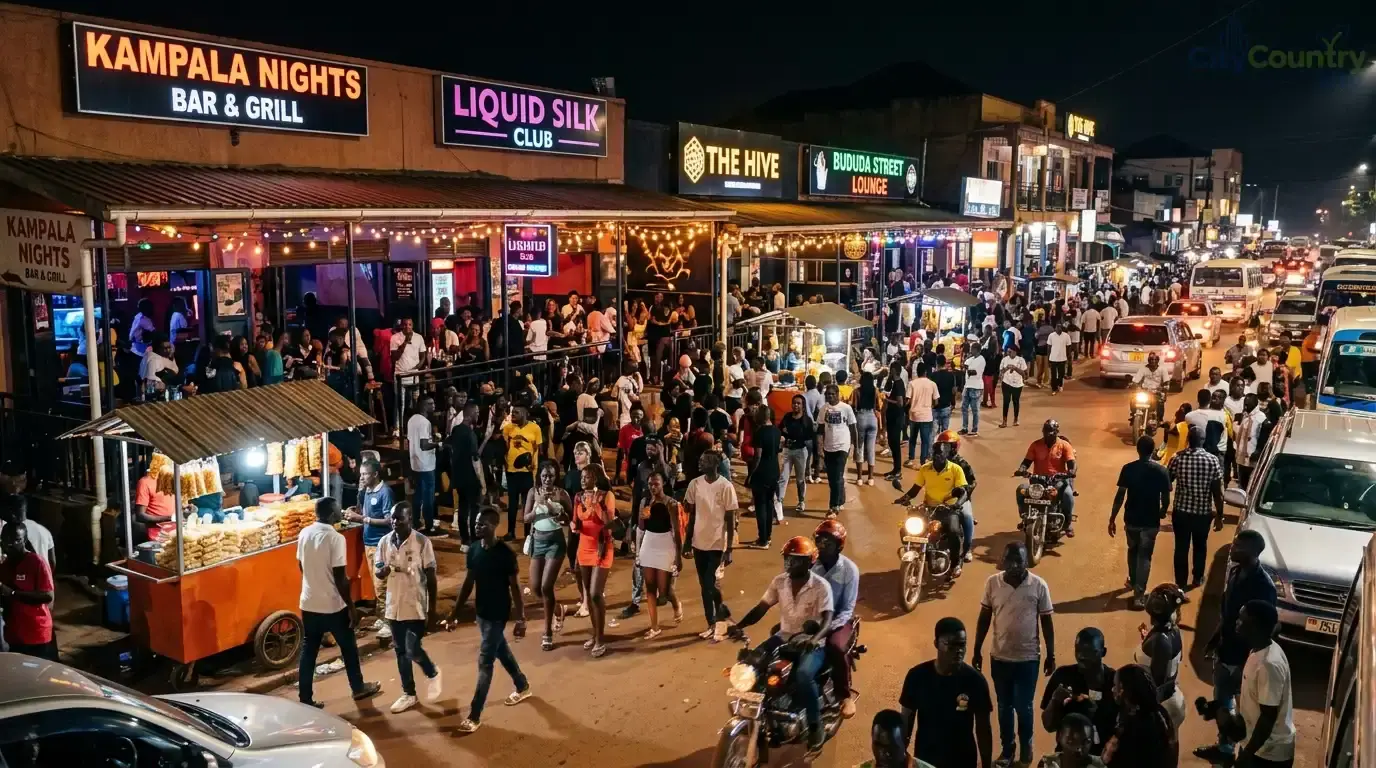
17. Kampala Nightlife and Entertainment
Kampala has a well-earned reputation as one of East Africa’s great nightlife cities — arguably the finest on the continent outside Lagos. The city’s abundance of live music, its eclectic and inventive bar culture, and the extraordinary energy of its young population create a nightlife scene that operates at a completely different frequency from more conservative neighbouring capitals.
Afrobeats, Afropop, and Ugandan Afrobeats (locally called Afro-Beat) dominate the music landscape, alongside ragga dancehall (very popular in Uganda), gospel music (the city’s Sunday church culture spills remarkably directly into mainstream music), and a small but vibrant jazz and roots music scene.
Kabalagala (along Ggaba Road) is the nightlife epicentre — a dense strip of bars, clubs, terraces, and rooftops running south from the city centre. Liquid Silk, various rooftop bars, and clubs operating under names that change with the seasons all cluster here. Expect to find things warming up around 10–11pm and continuing until dawn on weekends.
The Ndere Cultural Centre (Friday and Saturday evenings) is the single finest paid cultural entertainment experience in Kampala — traditional dance, music, and storytelling from across Uganda’s ethnic groups in a purpose-built venue. This is Kampala culture at its most intentional and most beautiful.
Cassia Lodge in Munyonyo is a lakeside bar and restaurant with a beautiful terrace — one of the finest places for a sunset drink in the city.
Bubbles O’Leary’s — an Irish-themed bar that has somehow become a genuine Kampala institution, popular with expats, tourists, and locals alike, with good live music and a cheerful atmosphere.
Club Guvnor is Kampala’s most famous club — a large multi-level venue that has defined the city’s clubbing culture for many years, drawing major Ugandan and East African artists for performances.
Gospel concerts — on any given Sunday evening, enormous outdoor gospel concerts take place across Kampala’s hillside churches, drawing tens of thousands of worshippers in what is simultaneously a religious event and a spectacular live music experience. Attending respectfully as a visitor is entirely possible.
18. Practical City Information
Visas and Entry Requirements
Most foreign nationals require a visa to enter Uganda. As of 2026, Uganda operates an e-visa system at immigration.go.ug for most nationalities, with fees of approximately $50 USD for a single-entry tourist visa. Apply at least 2 weeks before travel. East African Community citizens (Kenya, Tanzania, Rwanda, Burundi, South Sudan, DRC, Somalia) may enter visa-free or with simplified procedures — verify current requirements.
The East African Tourist Visa (covering Uganda, Kenya, and Tanzania jointly for 90 days) is a valuable option for multi-country travellers — available for approximately $100 USD and a significant saving over separate visas.
Health and Vaccinations
Required:
- Yellow Fever vaccination certificate — mandatory for entry; carry with you at all times
Strongly recommended:
- Malaria prophylaxis — risk present in Kampala; consult doctor 4–6 weeks before travel
- Hepatitis A and B
- Typhoid
- Meningitis (ACWY)
- Rabies — particularly if trekking or working with animals
Emergency Contacts
- Police: 999
- Ambulance: 911 or 0800 190 888
- Fire: 999
- Uganda Tourism Emergency Line: +256 414 346 990
SIM Cards and Internet
Major operators are MTN Uganda and Airtel Uganda. Both have excellent coverage in Kampala and most major towns. Tourist SIM cards are available at Entebbe Airport and throughout the city. Bring your passport for registration. Mobile data costs approximately UGX 15,000–30,000 ($4–8) for 5–10GB. Wi-Fi is reliable in most hotels, major cafes, and shopping malls.
Power
Uganda uses Type G sockets — the standard British three-pin plug. Voltage is 240V, 50Hz. Power outages are not uncommon — most mid-range and luxury hotels have backup generators. Bring a universal adaptor.
Drinking Water
Tap water in Kampala is not reliably safe to drink for visitors unaccustomed to the local system. Buy sealed bottled water (widely available at approximately UGX 2,000–4,000 per 500ml) or use a water filter. Hotels and better restaurants use filtered or boiled water for cooking.
Tipping Customs
- Restaurants: 10% for good service
- Hotel porters: UGX 3,000–5,000 ($0.80–1.40) per service
- Tour guides: $10–20 USD per day (more for specialised guides)
- Gorilla trek rangers and guides: $20 USD per person per trek is the widely accepted standard
- Boda-boda drivers: rounding up the fare by UGX 1,000–2,000 is appreciated
19. How to Be a Responsible Traveler in Kampala
Book gorilla permits through official channels. Gorilla trekking permits ($700 USD) must be booked through the Uganda Wildlife Authority (UWA) — directly or through a licensed operator. Revenue from permits directly funds mountain gorilla conservation and local community programmes. Never book through unlicensed agencies or try to arrange informal treks.
Support locally-owned businesses. Eat at Ugandan-owned restaurants, stay in locally-owned guesthouses, buy crafts from cooperative artisan markets where producers receive fair compensation. The economic development of Uganda depends significantly on tourism money remaining in Ugandan hands.
Buy bark cloth and batik from the artisans. Uganda’s extraordinary bark cloth tradition was inscribed by UNESCO in 2005 as an Intangible Cultural Heritage of Humanity — one of the most remarkable traditional textiles in the world. When you buy bark cloth from the Mengo workshops directly, you support a living tradition that is genuinely at risk of being diluted by mass production.
Be sensitive about photographing poverty. Kampala has significant areas of genuine poverty. Taking photographs in informal settlements, of street children, or of people in obvious difficulty without permission and without genuine journalistic or documentary purpose is ethically problematic. Ask yourself who benefits from the photograph.
Cultural sensitivity around the LGBTQ+ situation. Uganda has extremely severe anti-LGBTQ legislation in force as of 2026, including criminal penalties for same-sex relationships. LGBTQ travellers should exercise extreme caution and discretion. Public displays of same-sex affection carry real legal risk.
Reduce plastic. Carry a reusable water bottle with a filter. Kampala’s informal waste management system is under enormous pressure from plastic pollution, particularly around the wetland areas that buffer the city’s hills.
20. Films, Books and Travel Resources Featuring Kampala and Uganda
Books:
- The Last King of Scotland by Giles Foden — a novel set during the Idi Amin era in Uganda, much of it in Kampala. Made into a 2006 film starring Forest Whitaker as Amin, which won the Academy Award for Best Actor.
- Abyssinian Chronicles by Moses Isegawa — a sweeping Ugandan novel spanning the Obote and Amin eras, considered one of the finest works of African fiction.
- A Week in the Life of Cornelius Makinde by Dele Charming — touches on urban Ugandan life.
- The Pearl of Africa by various travel writers — Churchill’s famous description has inspired a body of travel literature on Uganda.
Films:
- The Last King of Scotland (2006) — partially filmed in Uganda, providing vivid imagery of the country and era.
- Queen of Katwe (2016) — a Disney film about a Ugandan chess prodigy from the Katwe slum area of Kampala; filmed on location.
YouTube channels:
- Nas Daily (Uganda and Kampala content)
- African Backpacker (Kampala and Uganda travel vlogs)
- Lost with Lana (Uganda travel coverage)
Internal linking suggestions:
- You may also like: Top 10 Things to Do in Entebbe, Uganda
- Read next: Best Budget Hotels in Kampala, Uganda (2026 Guide)
- Related: Uganda Travel Guide for First-Time Visitors
- Explore: Bwindi Impenetrable Forest — Uganda’s Gorilla Trekking Guide
21. Kampala vs. Similar Cities
| City | Best For | Why Choose Kampala Instead |
|---|---|---|
| Nairobi, Kenya | Safari gateway; modern infrastructure; business | Kampala offers warmer social atmosphere; extraordinary nightlife; more authentic local culture; gorilla trekking access unavailable from Nairobi |
| Kigali, Rwanda | Clean, very organised, modern | Kampala is livelier, more complex, more culturally layered; significantly more affordable; Uganda’s wildlife circuit is incomparable |
| Addis Ababa, Ethiopia | Ancient civilisation; unique cuisine; history | Kampala offers warmer weather; Lake Victoria access; gorilla trekking uniqueness; more energetic and accessible nightlife for Western visitors |
22. Kampala City Travel Tips
- Download Bolt before arriving in Kampala — it is the safest, most transparent, and most affordable transport option for tourists
- Book gorilla trekking permits months in advance (especially for June to August and December to February) — they sell out far ahead
- Visit the Gaddafi National Mosque minaret for the best panoramic view of Kampala — best at 9–10am on a clear day
- Attend Ndere Cultural Centre on a Friday or Saturday evening — it is genuinely one of East Africa’s great cultural experiences
- Try a Rolex from a street vendor in Wandegeya — it is one of Africa’s greatest cheap meals
- Do not use your phone visibly while walking on busy main roads — motorcycle phone snatching is a real risk
- Keep your Yellow Fever certificate with you at all times — it may be checked at the airport and at national park gates
- The Entebbe-Kampala Expressway has dramatically cut travel time from the airport — use it via a Bolt or pre-arranged transfer
- Kampala’s traffic is at its worst between 7–9am and 4–7pm — plan museum and market visits outside these windows
- Ugandan arabica coffee is one of the finest in Africa — buy beans from a specialty coffee shop rather than a supermarket to take home something truly exceptional
23. Is Kampala Worth Visiting? Final Verdict
Yes. Emphatically and enthusiastically yes — but with one crucial caveat: Kampala is not a city that presents itself immediately. It takes a day or two to find your footing on the hills, to navigate the traffic, to locate the rolex stall and the cultural performance venue and the mosque minaret view. But once you find your footing, you will find a city of extraordinary vitality, warmth, and depth.
Kampala’s greatest assets are its people — among the warmest, most genuinely hospitable, and most cheerfully engaged urban populations in East Africa — and its extraordinary position as the gateway to Uganda’s unmatched natural and wildlife experiences.
The gorillas of Bwindi. The source of the Nile at Jinja. The chimpanzees of Kibale. The shoebill stork in the wetlands. The spectacular waterfalls of Murchison. All accessible from this one remarkably pleasant, relatively affordable, increasingly sophisticated city on its impossible, beautiful hills.
Who is Kampala best suited for?
Wildlife and nature lovers will find the city the ideal base for what many consider the world’s finest wildlife circuit — gorilla trekking, chimpanzee tracking, and big game safaris all within a few hours. Adventure travellers will find Jinja’s Nile rapids among the finest whitewater in the world. Culture and history enthusiasts will find the Buganda Kingdom’s living traditions unlike anything in East Africa. Food lovers will discover a cuisine that is deeply underrated on the global stage and a coffee culture that is world-class. Night owls will find one of Africa’s most exuberant and creative nightlife scenes. Budget travellers will find extraordinary value. And anyone who watches the Queen of Katwe before they arrive will walk through the Katwe neighbourhood of Kampala with an emotional context that transforms the experience.
Come to Kampala. The Pearl of Africa is waiting.
24. Frequently Asked Questions About Kampala
Q1: Is Kampala safe for tourists in 2026?
Kampala is generally safe for tourists in the main visitor areas — Kololo, Nakasero, and the hotel and restaurant districts. The main risks are petty theft (pickpocketing in crowded markets and taxi parks) and phone snatching by motorcycle-mounted thieves on busy roads. Violent crime against tourists is uncommon. Use Bolt rather than street taxis, be aware of your surroundings in markets, do not display expensive phones or jewellery on busy streets, and keep to well-lit areas after dark.
Q2: How do I book gorilla trekking permits from Kampala?
Gorilla trekking permits ($700 USD per person) for Bwindi Impenetrable National Park are issued by the Uganda Wildlife Authority (UWA) — book online at ugandawildlife.org or through a licensed Ugandan tour operator. Permits for peak months (July to August, December to February) sell out many months in advance. Most Kampala-based travel agents and guesthouses (including Red Chilli Hideaway) can assist with permit procurement as part of a tour package.
Q3: What is the best time to visit Kampala and Uganda?
The two dry seasons offer the best travel conditions: June to September and December to February. Both windows provide dry roads (essential for reaching national parks), comfortable temperatures, and the best wildlife viewing conditions. July and August are the most popular international travel months. April is the wettest and most challenging.
Q4: Do I need a visa to visit Uganda?
Most nationalities require a visa. Uganda’s e-visa is available at immigration.go.ug for approximately $50 USD for a single-entry tourist visa. Apply at least 2 weeks before travel. The East African Tourist Visa covering Uganda, Kenya, and Tanzania is available for approximately $100 USD. Citizens of East African Community member states may enter with simplified procedures.
Q5: What vaccinations do I need for Uganda?
Yellow Fever vaccination is mandatory — you must carry your certificate and may be checked at the airport. Strongly recommended vaccines include Hepatitis A and B, Typhoid, Malaria prophylaxis (consult your doctor), and Meningitis. If trekking or working with animals, Rabies vaccination is also recommended. See a travel health clinic 6 weeks before departure.
Q6: How far is Entebbe Airport from Kampala city centre?
Entebbe Airport is approximately 40 kilometres southwest of Kampala city centre, in the separate town of Entebbe on the shores of Lake Victoria. The journey takes 45 minutes to 1.5 hours depending on traffic, significantly helped by the Entebbe-Kampala Expressway. Use Bolt or a pre-arranged hotel transfer for the most reliable and cost-effective journey.
Q7: What language do people speak in Kampala?
English is the official language of Uganda and is spoken fluently by most educated Kampalans, in all tourist-facing businesses, hotels, and restaurants. Luganda is the most widely spoken local language in Kampala — the language of the Buganda Kingdom and the de facto lingua franca of the city. Swahili is understood by many but less dominant in Uganda than in Kenya or Tanzania. Learning a few Luganda phrases — Oli otya? (How are you?), Bulungi (Fine), Webale (Thank you) — is warmly received.
Q8: Can I combine a Kampala visit with gorilla trekking in Bwindi?
Absolutely, and it is the most popular itinerary for Uganda visitors. The standard approach is to spend 1–2 days in Kampala seeing the city, then fly or drive to Bwindi Impenetrable National Park (approximately 8 hours by road or 1 hour by domestic flight to Kihihi) for gorilla trekking. After trekking, many travellers continue to other national parks or return to Kampala for their international flight. A minimum Uganda trip of 5–7 days allows Kampala plus gorilla trekking comfortably.
25. Sources & References
- Lonely Planet Uganda https://www.lonelyplanet.com/uganda/kampala
- TripAdvisor Kampala https://www.tripadvisor.com/Tourism-g293756-Kampala_Central_Region-Vacations.html
- Booking.com Kampala hotels https://www.booking.com/city/ug/kampala.html
- Wikipedia — Kampala https://en.wikipedia.org/wiki/Kampala
- Uganda Tourism Board https://www.utb.go.ug
- Uganda Wildlife Authority https://ugandawildlife.org
- Numbeo Cost of Living — Kampala https://www.numbeo.com/cost-of-living/in/Kampala
- BudgetYourTrip.com — Kampala https://www.budgetyourtrip.com/uganda/kampala
- Google Maps — Kampala https://maps.google.com
- Wikitravel Uganda https://wikitravel.org/en/Uganda
- World Travel Guide — Uganda https://www.worldtravelguide.net/guides/africa/uganda
- Skyscanner — Entebbe flights https://www.skyscanner.net
- Entebbe International Airport official information https://www.caa.go.ug
- UK FCDO Uganda Travel Advisory 2026 https://www.gov.uk/foreign-travel-advice/uganda
- GoTripzi Kampala Cost Guide https://www.gotripzi.com/city-guides/kampala-cost-of-travel
26. Kampala Travel Guide Images