
1. Facts About Zanzibar
| Category | Detail |
|---|---|
| Country | Tanzania (semi-autonomous region), East Africa |
| Region / Province | Zanzibar Archipelago — comprising Unguja (main island, commonly called Zanzibar) and Pemba Island |
| Official Languages | Swahili (Kiswahili); English widely used in tourism and education |
| Currency | Tanzanian Shilling (TZS) — approx. $1 USD = TZS 2,500–2,600 (2026); USD widely accepted in tourist areas |
| Best Time to Visit | June to October (long dry season); December to February (short dry season) |
| Time Zone | East Africa Time (EAT) — UTC+3 |
| Weather | Tropical coastal; warm and humid year-round with two rainy seasons |
| Average Temperature | 24°C–31°C (75°F–88°F) year-round; Indian Ocean breeze moderates humidity |
| Map | Indian Ocean, approximately 35 km off the coast of Tanzania; 6.1°S, 39.3°E |
| Main Airport | Abeid Amani Karume International Airport (IATA: ZNZ) — 7 km from Stone Town |
| Top Tourist Places | Stone Town (UNESCO), Nungwi Beach, Kendwa Beach, Prison Island, Jozani Forest, Paje Beach, Mnemba Atoll, Spice Farms, Palace Museum, Old Fort |
| Average Trip Cost Per Day | Budget: $40–70 / Mid-range: $100–200 / Luxury: $300–700+ |
| Nearest Major Airport | Abeid Amani Karume International Airport (ZNZ); Julius Nyerere International Airport (DAR) in Dar es Salaam for major international connections |
| Population | Approximately 1.9 million (Zanzibar Archipelago, 2025 estimates) |
| Famous For | Pristine white-sand beaches; UNESCO World Heritage Stone Town; the global spice trade; birthplace of Freddie Mercury; Arabian Nights architecture; Indian Ocean diving and snorkelling |
2. Zanzibar City and Island Overview and Background
Close your eyes for a moment and imagine this: narrow stone lanes barely wide enough for two people to pass, their walls rising three storeys on each side, filtering the blazing sun to a single ribbon of gold above. The scent of cloves, cardamom, and grilled lobster drifting through the air simultaneously. The sound of the call to prayer from a mosque that has stood since the 14th century, overlaid with the distant thump of Swahili taarab music from a rooftop bar. The Indian Ocean — impossibly blue, impossibly warm — visible at the end of every lane.
This is Zanzibar. And no description ever quite does it justice.
Zanzibar is one of those places that exists slightly apart from ordinary reality — a destination so loaded with history, beauty, culture, and sensory richness that it can feel almost overwhelming on arrival. The main island — Unguja, though universally referred to as Zanzibar — sits approximately 35 kilometres off the coast of mainland Tanzania in the Indian Ocean, connected to the rest of the world by a busy domestic airport and the ferry from Dar es Salaam. Its central historic town, Stone Town, is a UNESCO World Heritage Site and one of the most remarkably preserved medieval Swahili port cities in the world.
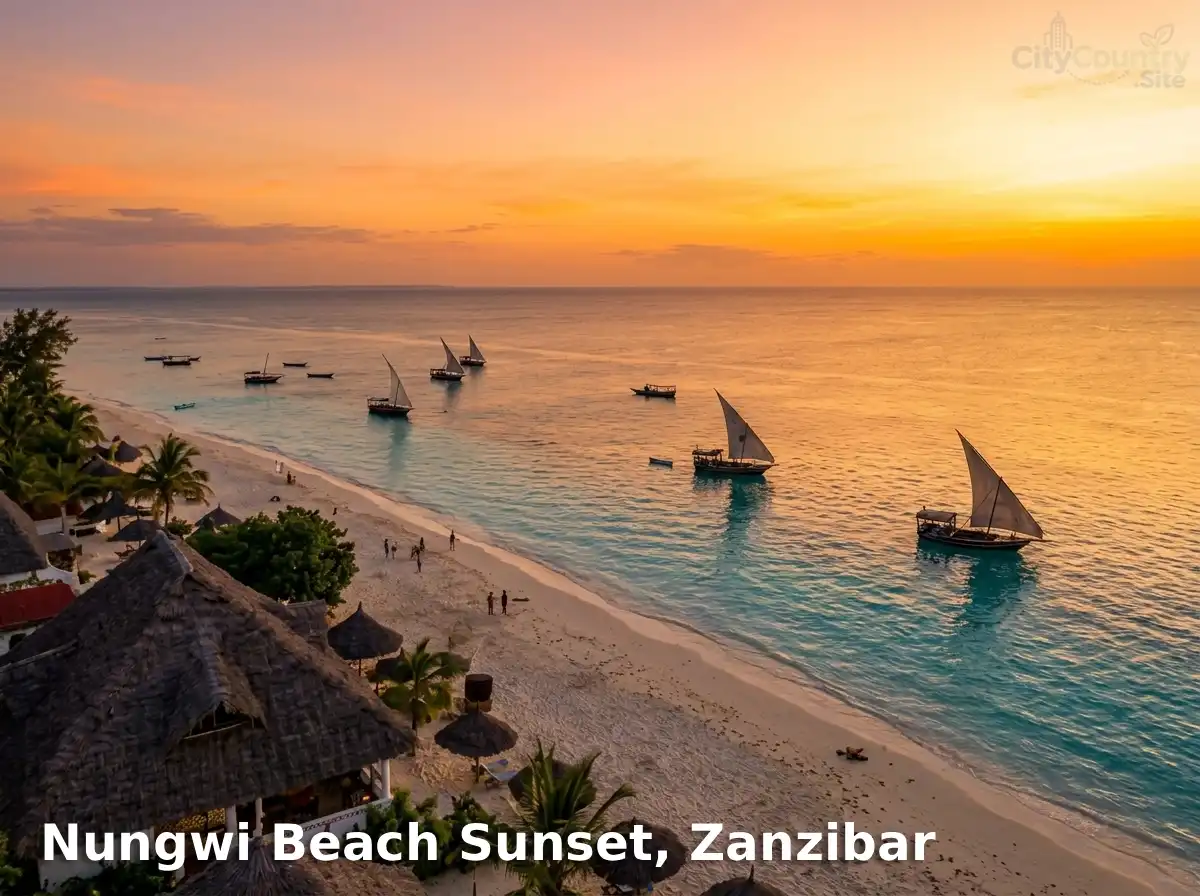
But Zanzibar is far more than Stone Town alone. The island stretches approximately 85 kilometres from north to south and 35 kilometres east to west, encompassing a staggering variety of landscapes and experiences within a single destination. In the north, Nungwi and Kendwa offer powder-white beaches and some of the finest sunset views in East Africa. In the east, Paje and Matemwe attract kitesurfers and snorkellers drawn by the turquoise shallows and the warm breeze. In the centre of the island, the Jozani Forest shelters the world’s only population of the endangered Kirk’s red colobus monkey. And everywhere — in the soil, in the cooking, in the markets — the ghost of the spice trade lingers.
Zanzibar was, for centuries, one of the most economically important places on Earth. As the centre of the Indian Ocean clove trade and a critical node of the Arab slave trade, the island accumulated extraordinary wealth, cultural influence, and architectural heritage. Arab, Persian, Indian, Portuguese, Omani, and British influences all left their mark on Stone Town’s buildings, its cuisine, its music, and its people. The result is a civilisation that is entirely unique — Swahili at its core, but layered with centuries of cross-cultural encounter.
The island also carries a darker history. For hundreds of years, Zanzibar was the largest slave market in East Africa. Hundreds of thousands of enslaved Africans passed through the Zanzibar Slave Market — now the site of an Anglican cathedral — before being shipped to Arabia, India, and the Americas. Understanding this history is not separate from the pleasure of visiting Zanzibar; it is essential to understanding what this place truly is.
And then there is the other thing Zanzibar is famous for — something that will surprise many first-time visitors who didn’t know it. Freddie Mercury, the legendary lead singer of Queen, was born here on 5th September 1946. His family home still stands in Stone Town. The man who wrote Bohemian Rhapsody and sang to 72,000 people at Live Aid spent his early childhood in these very lanes.
“Zanzibar is the most beautiful island in the world. The most beautiful. I have never seen anything like it and I never will again.” — Attributed to various 19th-century European travellers arriving by dhow
3. Zanzibar History Timeline
7th–8th centuries: Arab and Persian traders establish the first permanent settlements on Unguja (Zanzibar) island, trading with Bantu-speaking coastal peoples. The foundations of Swahili civilisation begin to take shape along this coastline.
10th–14th centuries: Zanzibar develops as a significant stop on the Indian Ocean trade routes connecting Arabia, Persia, India, and the East African coast. Islam becomes the dominant religion. A Shirazi (Persian) dynasty rules the island.
1499: Portuguese explorer Vasco da Gama arrives on his pioneering voyage around Africa to India. The Portuguese establish a dominant presence along the East African coast and control Zanzibar for much of the next two centuries.
1698: The Omani Sultanate defeats the Portuguese and takes control of Zanzibar, beginning over 200 years of Omani Arab rule that profoundly shapes the island’s architecture, culture, religion, and political identity.
1840: Sultan Seyyid Said of Oman moves his capital from Muscat to Zanzibar, making the island the centre of an Omani commercial empire spanning the Indian Ocean. Zanzibar becomes the world’s largest producer of cloves and the hub of the East African slave trade. Stone Town reaches the peak of its wealth and architectural development.
1873: Under British pressure, Sultan Barghash signs the Treaty of 1873, formally abolishing the slave trade in Zanzibar. The slave market is closed. An Anglican cathedral — Christ Church Cathedral — is built on its site in deliberate symbolic act.
1890: Zanzibar becomes a British Protectorate under the Heligoland-Zanzibar Treaty, trading German recognition of British influence in East Africa for British recognition of German control over Heligoland.
27th August 1896: The Anglo-Zanzibar War — the shortest war in recorded history, lasting between 38 and 45 minutes — takes place when the British navy bombards the palace of Sultan Khalid bin Barghash, who had declared himself Sultan without British approval. The Sultan surrenders almost immediately.
1913: Farrokh Bulsara — later known as Freddie Mercury — is born in Stone Town on 5th September 1946 (not 1913; see note below). (Note: the Mercury birth year is correctly 1946, as noted in the Overview section.)
10th December 1963: Zanzibar becomes independent from Britain as a constitutional monarchy.
12th January 1964: The Zanzibar Revolution — a violent uprising led by the Afro-Shirazi Party — overthrows the Arab Sultanate. Thousands die in the violence. The Sultan flees into exile.
26th April 1964: Zanzibar merges with mainland Tanganyika to form the United Republic of Tanzania, retaining significant internal autonomy under a semi-autonomous government called the Revolutionary Government of Zanzibar.
2000: Stone Town is inscribed as a UNESCO World Heritage Site, recognising its extraordinary historical and architectural significance.
2000s–2026: Zanzibar’s tourism industry grows exponentially, transforming from a backpacker curiosity to one of Africa’s most sought-after luxury destinations. The island receives over 600,000 international visitors annually by the mid-2020s, driving significant economic development but also raising questions about sustainability and cultural preservation.
4. Zanzibar Geography and Neighborhoods
Zanzibar’s main island — Unguja — is relatively flat in the east and slightly elevated in the west, where the old coral limestone forms a central ridge. The island is fringed by coral reefs and white sand beaches that vary significantly in character from north to south and east to west.
The northern beaches tend to have calmer, clearer water year-round (less affected by tidal variation). The eastern beaches are more exposed to the open ocean and better for watersports. The western coast, where Stone Town sits, faces mainland Tanzania across the Zanzibar Channel.
Understanding the island’s different zones is essential for planning — it is too large to do everything from a single base.
Neighborhood and Zone Comparison Table
| Area | Best For | Vibe | Price Level |
|---|---|---|---|
| Stone Town | History, culture, architecture, food | Ancient, atmospheric, labyrinthine | Mid to high |
| Nungwi | Beach, snorkelling, sunset bars, nightlife | Lively, social, resort | Mid to high |
| Kendwa | Quieter beach, romantic, full-moon parties | Relaxed, beautiful, intimate | Mid to high |
| Paje | Kitesurfing, backpacker scene, ocean breezes | Youthful, active, laid-back | Budget to mid |
| Matemwe | Quiet, upscale, Mnemba Atoll diving access | Tranquil, exclusive, remote | High to luxury |
| Jambiani | Local village feel, slow travel, snorkelling | Authentic, quiet, traditional | Budget to mid |
| Kizimkazi | Dolphin watching, spice farm access, quiet south | Rural, natural, unhurried | Budget |
| Bwejuu | Seaweed farming villages, unspoilt east coast | Traditional, very quiet | Budget |
Stone Town is the historic and cultural heart of Zanzibar — a living, breathing medieval city of extraordinary character. Its warren of narrow lanes, ornate carved wooden doors, mosques, Hindu temples, Arab trading houses, and seafront palaces is entirely unlike anything else in East Africa. It demands at least 2–3 full days of unhurried exploration.
Nungwi, at the island’s northern tip, is Zanzibar’s most popular and most developed beach resort area. It has the most restaurants, bars, water sports operators, and nightlife. The beach is beautiful and the water is calm year-round, though it can feel crowded at peak season. It is the social hub of the island.
Paje, on the east coast, is a favourite among kitesurfers and younger travellers. The wide, windswept beach has consistent trade winds, shallow lagoon sections, and a cheerful, inexpensive village atmosphere.
Matemwe is the island’s most discreet luxury zone, with a small number of high-end resorts offering some of the finest diving access in the Indian Ocean via nearby Mnemba Atoll.
5. Zanzibar Weather and Best Time to Visit
Zanzibar has a classic tropical coastal climate — warm, humid, and shaped by the Indian Ocean monsoon system. The island enjoys comfortable temperatures year-round, but the timing of the two rainy seasons is critical to trip planning.
The long rains (Masika) run from March to May — heavy afternoon downpours, rough seas, and limited beach activity. The short rains (Vuli) run from November into December — generally lighter and less disruptive but still unpredictable.
Month-by-Month Weather Table
| Month | Avg Temp (°C) | Rainfall | Sea Conditions | Crowd Level | Recommendation |
|---|---|---|---|---|---|
| January | 26–31°C | Low | Calm and clear | High | Excellent — peak season, book ahead |
| February | 27–32°C | Very Low | Excellent | Very High | Excellent — best diving visibility; very busy |
| March | 26–30°C | High | Choppy | Low | Fair — long rains begin; lower prices |
| April | 24–28°C | Very High | Rough | Very Low | Poor — peak long rains; many resorts close |
| May | 24–28°C | High | Improving | Low | Fair — rains tapering; some great deals |
| June | 24–28°C | Very Low | Calm | Medium | Excellent — dry season begins; cool breezes |
| July | 23–27°C | Very Low | Calm | Medium-High | Excellent — best overall month |
| August | 23–28°C | Very Low | Calm and clear | High | Excellent — peak dry season |
| September | 24–29°C | Low | Calm | Medium-High | Very good — still dry and comfortable |
| October | 25–30°C | Low–Medium | Mostly calm | Medium | Good — shoulder season, transitional |
| November | 26–30°C | Medium–High | Variable | Low–Medium | Fair — short rains begin |
| December | 26–31°C | Medium | Improving | High | Good to very good — festive season; rains ease late month |
The best time to visit Zanzibar is between June and October, with July and August offering the most consistently comfortable weather, calmest seas, and best diving visibility. This is also Tanzania’s busiest wildlife season on the mainland, making this window ideal for combining a Zanzibar beach holiday with a Serengeti safari.
January and February are also excellent — the short dry season peaks with brilliant sunshine and warm temperatures, though February is the hottest month and accommodation prices peak significantly.
Avoid April for a first visit — this is the wettest month, when heavy daily rains frequently ground flights, close beach activities, and leave roads in poor condition. However, accommodation prices drop dramatically and the island is almost entirely tourist-free.
Did You Know? Zanzibar once controlled up to 90% of the world’s clove production. The clove tree was introduced to the island from Moluccas (modern Indonesia) in the early 19th century on the orders of the Omani Sultan. At its peak, the scent of cloves was reportedly strong enough to detect Zanzibar from aboard ships still miles offshore.

6. Zanzibar Airport and Getting There
Abeid Amani Karume International Airport (ZNZ)
Abeid Amani Karume International Airport (IATA: ZNZ) is Zanzibar’s main gateway, located approximately 7 kilometres south of Stone Town. It handles both international flights (primarily from the Middle East, Europe, and other African cities) and domestic connections from mainland Tanzania.
The airport underwent significant expansion in recent years and now handles several direct international routes alongside its busy domestic traffic. However, most long-haul travellers fly into Julius Nyerere International Airport (DAR) in Dar es Salaam and then connect to Zanzibar by short domestic flight (approximately 20 minutes) or fast ferry (approximately 2 hours).
Airlines serving Zanzibar directly include: Ethiopian Airlines (via Addis Ababa), Qatar Airways (seasonal direct from Doha), Turkish Airlines (seasonal direct from Istanbul), Oman Air, Condor, Eurowings, various charter airlines from Europe in peak season, and Precision Air, Flightlink, and Air Tanzania for domestic connections.
Key flight times to Zanzibar:
- London to Zanzibar: approximately 10–12 hours (usually one stop via Doha, Nairobi, or Addis)
- Dubai to Zanzibar: approximately 5–6 hours (direct or one stop)
- Nairobi, Kenya to Zanzibar: approximately 1 hour 15 minutes
- Dar es Salaam to Zanzibar: approximately 20 minutes (multiple daily flights)
Ferry from Dar es Salaam
The fast ferry from Dar es Salaam (operated by Azam Marine and Kilimanjaro Fast Ferries from Kivukoni Ferry Terminal) is a popular and affordable way to reach Zanzibar. The crossing takes approximately 2 hours. Tourist fares are approximately $35–50 USD return. Ferries depart multiple times daily. Book at least a day ahead during peak season (July to August, December to January) as they fill quickly.
Note on ferry safety: The crossing can be rough, particularly during transitional seasons. Choose the better-quality operators (Azam Marine is generally considered the most reliable), take sea-sickness medication if you are susceptible, and choose morning crossings which tend to be calmer.
Airport to Stone Town
| Transport Method | Cost (approx.) | Travel Time | Notes |
|---|---|---|---|
| Official taxi | TZS 20,000–35,000 ($8–14) | 15–20 min | Fixed rate available at designated taxi rank |
| Bolt / ride-hailing | TZS 15,000–25,000 ($6–10) | 15–20 min | Available and reliable in Zanzibar |
| Hotel shuttle | Free to $10 | 20–30 min | Pre-arrange with accommodation |
| Dala-dala (local minibus) | TZS 500–1,000 ($0.20–0.40) | 30–45 min | Available from airport road; not ideal with luggage |
7. Top Attractions and Best Places in Zanzibar
Top Attractions Table
| Attraction | Type | Entry Fee (approx.) | Best Time to Visit | Time Needed |
|---|---|---|---|---|
| Stone Town UNESCO Historic District | Historic city district | Free to wander | Morning or evening | 2–3 full days |
| Nungwi Beach | Beach / swimming / snorkelling | Free | Any time | Half to full day |
| Prison Island (Changuu Island) | Island / giant tortoises / snorkelling | $5–10 USD boat + island fee | Morning | Half day |
| Jozani Chwaka Bay National Park | Wildlife / forest / red colobus monkeys | $10–12 USD | Morning | 2–3 hours |
| Mnemba Atoll | Diving / snorkelling | Tour dependent ($50–150+) | Morning | Full day |
| Christ Church Cathedral and Slave Chambers | Historic site / memorial | TZS 5,000 ($2–3) | Morning | 1–2 hours |
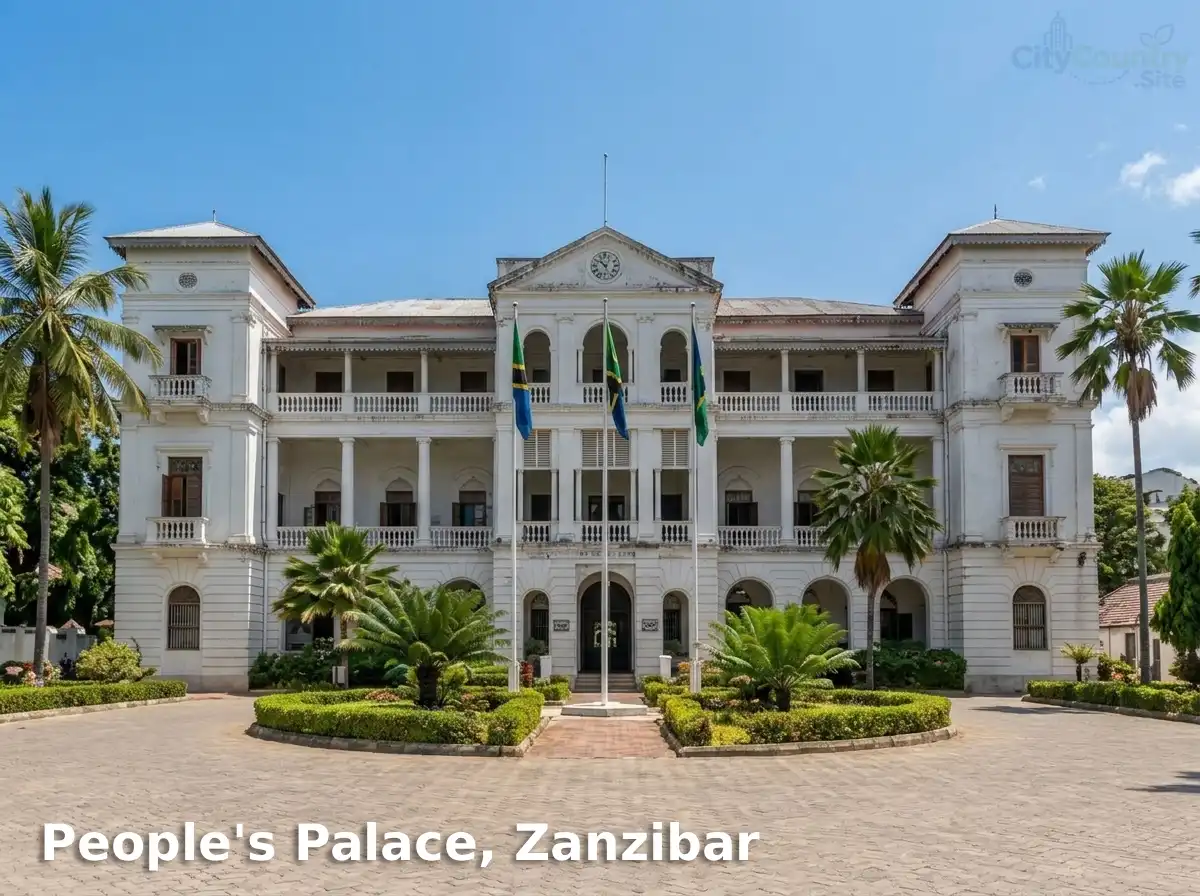
| Palace Museum (Beit el-Sahel) | Museum / history | TZS 3,000–5,000 ($1.50–2.50) | Morning | 1–1.5 hours |
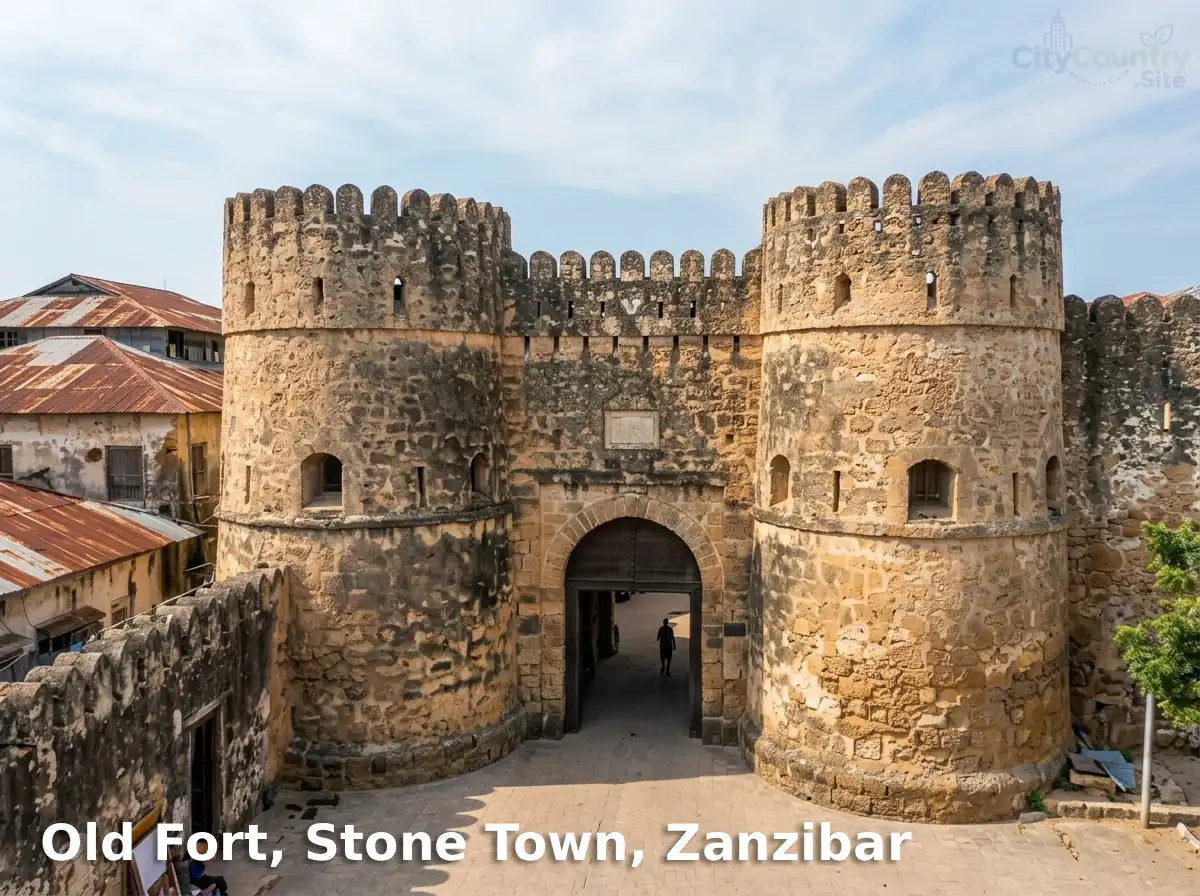
| Old Fort (Ngome Kongwe) | Historic fort / cultural venue | TZS 3,000–5,000 ($1.50–2.50) | Anytime | 1 hour |
| Spice Farm Tour | Cultural / agricultural | $15–25 USD guided | Morning | 2–3 hours |
| Paje Beach | Beach / kitesurfing | Free | Any time | Half to full day |
| Freddie Mercury House | Birthplace / cultural landmark | Small donation appreciated | Anytime | 30 min |
| Forodhani Gardens (Night Food Market) | Street food market | Free (food costs vary) | Evening from 6pm | 1–2 hours |
Stone Town is Zanzibar’s greatest attraction and a place that genuinely warrants days of slow, unhurried exploration. No map fully captures it — the lanes shift and double back on themselves in ways that defeat navigation apps. Get deliberately lost. Duck into a coffee house through a carved door. Sit in the shade of a centuries-old building and watch life flow past. The architecture is a visual encyclopaedia of Zanzibar’s history — Persian arches, Indian wooden balconies, Omani carved doors, British colonial institutions, and simple Swahili coral-stone houses all standing within metres of each other.
The carved wooden doors of Stone Town are its most photographed feature — over 500 individual doors, each one different, carved from African teak with geometric patterns, brass bolts, floral motifs, and fish or chain designs that encode the status, origin, and religion of the family inside. Scholars have written entire books about them.
Prison Island (Changuu Island) is one of the most charming half-day trips from Stone Town — a tiny coral island a short boat ride offshore, home to a population of massive Aldabra giant tortoises, some of which are over 200 years old. You can hand-feed them, walk among them, and then snorkel in the crystal-clear water off the island’s sandbar. Boats depart from Stone Town waterfront throughout the morning.
Jozani Chwaka Bay National Park is the island’s only national park and home to the globally endangered Kirk’s red colobus monkey — found nowhere else on Earth. Walking through the forest with these extraordinary rust-and-black primates moving overhead and occasionally posing at eye level is one of the most delightful wildlife experiences in Tanzania. The park also includes a mangrove boardwalk through a rare coastal mangrove ecosystem.
The Christ Church Cathedral and Slave Chambers is one of the most emotionally affecting sites in East Africa. Built deliberately on the site of the old Zanzibar slave market — the largest in the Indian Ocean world — the cathedral was consecrated in 1873, the same year the slave trade was abolished. In the chambers below the cathedral, the original slave holding cells survive intact. Crouching in these low, narrow, dark stone rooms where hundreds of human beings were held before being auctioned is a profoundly sobering experience. It is essential.
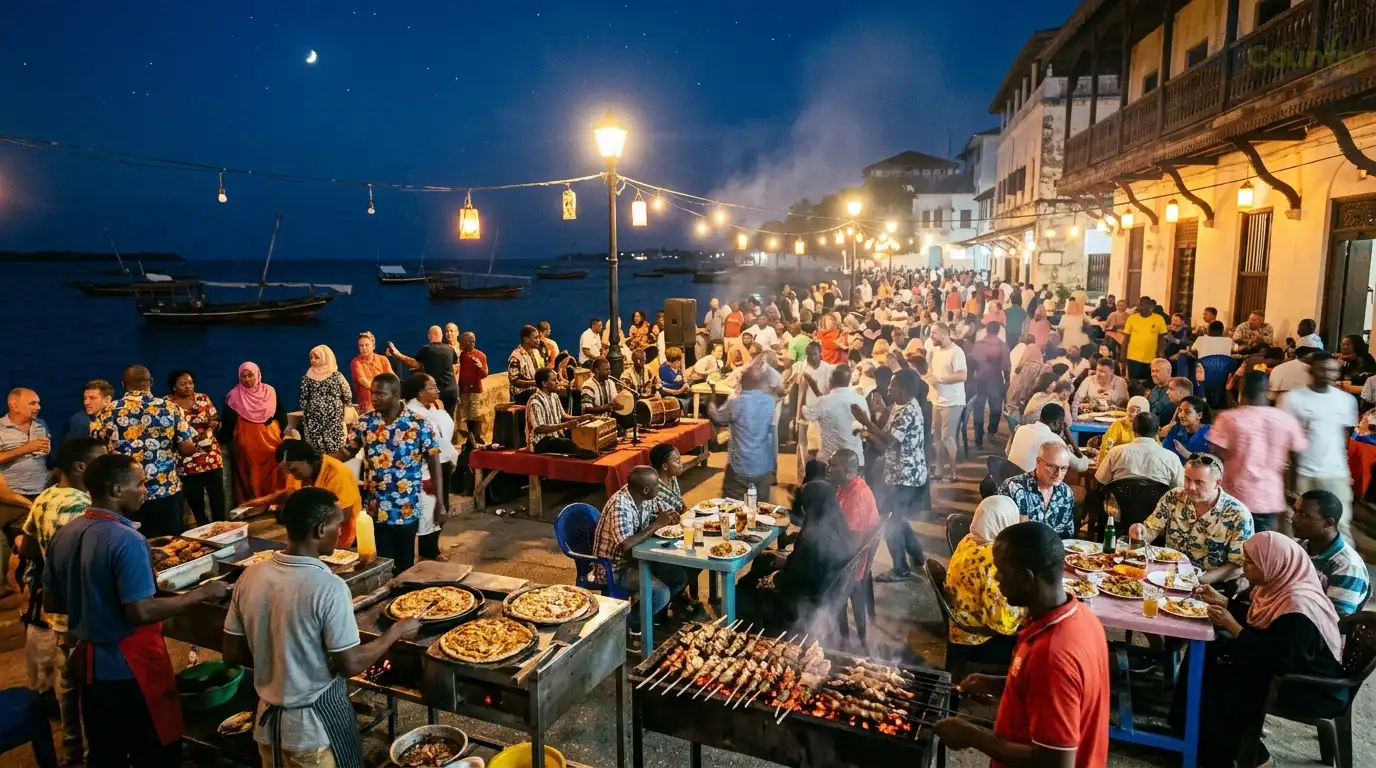
Forodhani Gardens Night Market on the Stone Town waterfront is one of the great free evening food experiences in Africa. From around 6pm every evening, the seafront gardens fill with vendors grilling lobster, octopus, kingfish, Zanzibar pizza, sugarcane juice, and all manner of local snacks over open charcoal fires. The atmosphere — warm sea air, the dhow harbour glittering with lights, the smell of charcoal and spice — is genuinely magical.
Did You Know? Freddie Mercury — born Farrokh Bulsara in Stone Town on 5th September 1946 — is Zanzibar’s most globally famous son. The house where his family lived in Stone Town (now converted to a restaurant and small museum, Mercury’s Restaurant) is on Kenyatta Road. The question of whether to more prominently commemorate his legacy on the island — given his sexuality and the conservative nature of Zanzibari society — remains a sensitive cultural conversation.
8. Zanzibar Food and Cuisine Guide
Zanzibar’s cuisine is one of the most distinctive and extraordinary in all of East Africa — a centuries-old fusion of Swahili, Arab, Indian, and Persian cooking traditions built on the extraordinary natural resources of the Indian Ocean and the island’s own spice-rich soil.
Must-try dishes on Zanzibar:
Zanzibar Pizza — Nothing like the Italian version. A thin crepe-like dough folded around a filling of egg, minced meat (or vegetarian options), cheese, onion, and chilli, then fried on a flat griddle until golden. Found all over Stone Town but best experienced at Forodhani Gardens in the evening. Watch one being assembled and cooked in front of you — it is street food theatre.
Urojo (Zanzibar Mix) — A deeply flavoured, thick soup-like dish made with a tangy tamarind-spiced broth, potato, cassava, bhajia (fried lentil fritters), coconut chutney, boiled egg, and crispy bits. One of Zanzibar’s most unique local dishes — nothing quite like it exists anywhere else. Find it at local street stalls in Stone Town.
Grilled Seafood — With the Indian Ocean on every side, the seafood in Zanzibar is extraordinary. Lobster, crayfish, octopus, kingfish, tuna, and red snapper appear on menus across the island at prices that would be considered incredibly cheap in any Western country. The evening grills at Forodhani Gardens offer the most atmospheric version of this experience.
Pilau — Fragrant spiced rice cooked with cardamom, cloves, cinnamon, and black pepper, served with meat or vegetable stew. This is the Swahili coast’s great everyday celebratory dish, and Zanzibar’s version — seasoned with locally grown spices — is exceptionally good.
Biryani — Zanzibar’s Indian Ocean biryani is a slow-cooked, deeply spiced affair quite different from South Asian versions. It absorbs the island’s spice legacy fully. A Friday institution in many Zanzibari households.
Mchuzi wa Pweza — Octopus curry in coconut milk, gently spiced with turmeric, ginger, and tomatoes. The definitive Zanzibar seafood dish and one of the finest things you will eat on the island.
Kashata — Small, hard sweets made from coconut and sugar, sometimes spiced with cardamom. A traditional Swahili confection sold at markets throughout Stone Town.
Spiced Tea (Chai ya Tangawizi) — Ginger tea brewed with cloves, cinnamon, cardamom, and fresh ginger. Served in tiny cups at every café and street corner. It is the most comforting, warming, perfectly spiced thing you will drink.
Where to Eat in Zanzibar
Forodhani Gardens Night Market is the essential evening food experience — free to enter, charcoal-grilled everything, cold fresh juice, and a harbour backdrop that could not be more atmospheric.
Lukmaan Restaurant in Stone Town is an institution for traditional Zanzibari food — Urojo, biryani, pilau, and fresh juices in an unpretentious, crowded, deeply local setting. Prices are extraordinarily reasonable.
The Emerson Spice Hotel Rooftop Restaurant is Stone Town’s most celebrated fine-dining experience — a rooftop table overlooking the old city at sunset, accompanied by Zanzibari tasting menus and live taarab music. Book weeks in advance.
Matemwe Lodge Restaurant and various resort restaurants along the north and east coast offer high-end fresh seafood dinners in beautiful beachside settings.
For breakfast and coffee: Stone Town’s many small cafes and the Old Fort Cultural Centre café are good options.
Did You Know? Zanzibar gives its name to one of the world’s most beloved music genres — Taarab — a hauntingly beautiful fusion of African, Arab, and Indian musical elements, originally performed at Sultanic courts and now the island’s most emblematic musical tradition. Live taarab performances can still be found at Stone Town’s cultural centres and hotels.
9. Zanzibar Accommodation Guide
Zanzibar offers one of the most extraordinary ranges of accommodation in Africa — from simple backpacker guesthouses in Stone Town to barefoot luxury eco-resorts on private island atolls.
Best Areas to Stay:
For history, culture, and Stone Town exploration: Stone Town itself — sleep inside the living UNESCO World Heritage Site.
For beach and nightlife: Nungwi in the north — the island’s most social and developed beach resort.
For romance and quieter luxury: Kendwa or Matemwe — beautiful, quieter, and upscale.
For budget beach travel: Paje or Jambiani on the east coast.
Budget Options (TZS 50,000–150,000 / approximately $20–60 per night):
Stone Town has numerous atmospheric guesthouses housed in old coral-stone buildings — small rooms, shared courtyards, roof terraces with harbour views, and character that no purpose-built hotel can replicate. Flamingo Guest House, The Haven Guest House, and various similar small properties in the Stone Town lanes offer clean budget rooms. Budget bungalows in Paje and Jambiani on the east coast also offer genuine value.
Mid-Range Options (TZS 200,000–700,000 / approximately $80–280 per night):
Zanzibar Palace Hotel in Stone Town is a beautifully restored 19th-century building with enormous carved beds, intricate tilework, and a rooftop pool. Dhow Palace Hotel in Stone Town offers similar character at similar prices. On the beaches, mid-range boutique resorts in Nungwi and Kendwa offer pool, breakfast, and beach service from around $100–200 per night.
Luxury Options (TZS 700,000–5,000,000+ / approximately $280–2,000+ per night):
Emerson Spice Hotel in Stone Town is among the finest boutique hotels in Africa — only a handful of rooms, extraordinary antique furniture, a legendary rooftop restaurant, and an immersive historic atmosphere. Baraza Resort and Spa on the southeast coast, The Residence Zanzibar, and &Beyond Mnemba Island are among the finest luxury properties in the Indian Ocean. Mnemba Island — a tiny private island accessible only to guests of the lodge — consistently ranks as one of the top ten luxury accommodation experiences in Africa.
10. Getting Around the Island
Zanzibar’s main island is small enough to be navigated relatively easily, but large enough that getting between Stone Town and the beach areas requires some planning.
Dalla-dallas (shared minibuses) are the backbone of local transport, running routes connecting Stone Town to most major villages and beach areas across the island. They are very cheap — TZS 1,000–3,000 ($0.40–1.20) per trip — run throughout daylight hours, and are genuinely authentic travel. They require knowing the route designations, which is easy to learn from hotel staff.
Shared taxis and private taxis are available from Stone Town to most destinations. A taxi to Nungwi costs approximately $25–40 USD one way. A full-day hired car with driver costs approximately $50–80 USD and is the most flexible and comfortable way to explore the whole island.
Bolt works on Zanzibar and is increasingly used, particularly around Stone Town and in the beach resort areas. Download before arriving.
Scooter and bicycle hire is available throughout Stone Town and in all the major beach areas. Renting a scooter for a day ($10–20 USD) is the most enjoyable and flexible way to explore the island independently. The roads are manageable, traffic is light outside Stone Town, and the landscapes between the villages are gorgeous. Bring your licence and drive carefully — roads are narrow and pedestrian traffic constant.
Walking is the only sensible way to explore Stone Town itself. The lanes are too narrow and too fascinating for any vehicle. Set aside at least half a day simply to walk without purpose, letting the city reveal itself.
11. Zanzibar Local Culture, Customs and Etiquette
Zanzibar is a deeply Muslim island society, and understanding this cultural context is not optional for respectful visitors — it is essential.
Dress modestly everywhere outside beach areas. This is the single most important cultural requirement for visiting Zanzibar. In Stone Town, markets, villages, and anywhere away from designated beach zones, both men and women should cover their shoulders and knees. Women should carry a light shawl or scarf at all times. Walking through Stone Town in a bikini top and short shorts is not just culturally insensitive — it causes genuine offence and reflects poorly on visitors. It takes seconds to cover up and earns enormous goodwill.
Ramadan is observed seriously. During Ramadan (dates shift annually), the island’s Muslim majority fast from dawn to dusk. Eating, drinking, or smoking visibly in public areas during daylight hours during Ramadan is deeply disrespectful. Many restaurants in Stone Town and villages will be closed until after sunset.
The right hand. Passing money, food, or objects with the left hand is impolite. Use your right hand or both hands.
Public displays of affection between couples — including same-sex couples — should be kept minimal in public, particularly in and around Stone Town. Same-sex relationships are illegal in Tanzania and deeply contrary to prevailing social norms on the island.
Greetings are important. The standard Swahili greeting — “Habari?” / response: “Nzuri” (Good) — or simply “Jambo” (Hello) — opens every interaction positively. “Asante sana” (Thank you very much) and “Karibu” (Welcome / You are welcome) will take you further in Zanzibar than any amount of money.
Photography in Stone Town and villages. Always ask before photographing individuals. Most people are gracious about saying yes, but the act of asking matters deeply. Never photograph women in niqab without explicit permission.
Tipping. In restaurants, 10% of the bill for good service is appreciated. For hotel staff such as porters, TZS 2,000–5,000 ($0.80–2) per service is appropriate. For tour guides, $10–15 USD per day is standard. For spice farm and Jozani Forest guides, $5–10 USD at the end of the tour is very much appreciated. Never feel pressured to tip for services you did not request or want.
12. Safety and Travel Tips
Zanzibar is, by East African standards, a safe and welcoming destination for tourists. Violent crime against visitors is uncommon, and the island’s dependence on tourism has created a culture of hospitality and engagement with foreign visitors.
Generally safe areas: Stone Town (by day and in the early evening), all the main beach resort areas, ferry terminal, airport zone.
Exercise more caution: Walking alone in poorly-lit Stone Town lanes late at night, isolated beach areas after dark, and around the ferry terminal during busy arrival periods (bag snatching can occur in the crowd).
Common issues to watch for:
- “Beach boys” — persistent young men offering tours, transport, drugs, or companionship on beaches and in Stone Town. A firm but polite “La, asante” (No, thank you) is the correct response. Do not engage, do not show aggression, and do not follow anyone to see something they recommend if you did not ask.
- Unofficial tour guides who attach themselves in Stone Town and then demand payment
- Overcharging for boat trips and tours — always agree on prices before departure, with all costs itemised
- Drug approaches — drug offers, particularly on beaches, are common. Drug laws in Tanzania are severe.
Health tips:
- Malaria is present on Zanzibar — take anti-malarial medication and use DEET insect repellent at dawn and dusk
- Drink only bottled or purified water throughout the island
- Strong sunscreen is essential, particularly on boat trips and beaches where the reflection off white sand and blue water intensifies exposure
- Sea urchins are present on many reefs — wear reef shoes for snorkelling close to rocky areas
Emergency numbers in Zanzibar:
- Police: 112 or 999
- Zanzibar Police Tourism Department: +255 24 223 3333
- Zanzibar Emergency (general): 112
13. Zanzibar’s Budget Trip
Daily Budget Table
| Category | Budget Traveler | Mid-Range Traveler | Luxury Traveler |
|---|---|---|---|
| Accommodation | $20–50 (guesthouse) | $80–200 (boutique hotel or beach resort) | $300–2,000+ (luxury resort or private island) |
| Food | $10–20 (street food and local restaurants) | $30–70 (mix of restaurants) | $100–300+ (resort dining and fine dining) |
| Transport | $5–10 (dalla-dallas and walking) | $15–40 (taxis and scooter hire) | $50–150 (private car and transfers) |
| Activities | $10–25 (public beach, forest entry, Stone Town) | $40–100 (tours, snorkelling, spice farm) | $150–500+ (diving, private tours, Mnemba) |
| Total Per Day | approximately $45–105 | approximately $165–410 | approximately $600–2,950+ |
Zanzibar can be done very affordably by travelling from Stone Town, eating at local restaurants and Forodhani Gardens, using dalla-dallas for transport, and choosing free beach access over resort facilities. Budget travellers who plan ahead can have a genuinely extraordinary experience for $50–70 per day.
Mid-range travellers staying in a comfortable Stone Town hotel or beach boutique resort, taking organised tours, and eating at a mix of local and tourist restaurants should budget $150–250 per day. Luxury travel on the island — particularly at Mnemba Island or Baraza Resort — is among the most expensive in East Africa, with all-inclusive packages starting at $500–700 per person per day.
14. Hidden Gems and Local Secrets
Kizimkazi Dolphins at Dawn — The standard dolphin tour in Kizimkazi has become crowded and commercially intensive. Go instead at 6am before the crowds arrive, with a small local operator willing to observe the dolphins from a respectful distance. The bottlenose and spinner dolphins that inhabit these waters are best experienced quietly and gently.
Matemwe Village at Low Tide — When the tide goes out on the east coast, it exposes kilometres of shallow tidal flats where local women harvest seaweed (a major Zanzibar crop sold to international cosmetics companies). Walking out into these flats at dawn, with the women working in the golden light, the sky reflected in the shallow water, and the smell of the ocean everywhere, is one of the most quietly beautiful experiences the island offers.
Kidichi and Kizimbani Spice Farms (Independent Visit) — Rather than taking a standard group spice farm tour, visit independently and hire a local farmer directly as your guide. You will see exactly the same extraordinary range of spices, vanilla, ylang-ylang, lemongrass, and exotic fruits — but with far more personal interaction, more time, and much lower cost.
The Hamamni Persian Baths in Stone Town — Built in the 1870s by Sultan Barghash, these are the oldest public baths on the East African coast. They are largely overlooked by tourists despite being one of the most architecturally beautiful and historically significant sites in Stone Town. Entry is minimal.
Mangapwani Slave Caves — About 20 kilometres north of Stone Town, these natural coral caves served as a secret holding site for enslaved people after the official abolition of the slave trade in 1873. The caves are rarely visited, free to enter (small guide tip appreciated), and profoundly sobering — a place where the human reality of slavery is felt more immediately than almost anywhere else on the island.
Nungwi Natural Aquarium — A naturally formed tidal pool behind the fishing village at Nungwi’s western end, managed by local fishermen who keep sea turtles in the pool as part of a turtle conservation programme. It is free or minimal entry and genuinely wonderful — an initiative worth supporting rather than commercialised tourist entertainment.
Did You Know? Zanzibar was the site of the shortest war in recorded history — the Anglo-Zanzibar War of 1896, which lasted between 38 and 45 minutes. When the British navy opened fire on the palace of the self-declared Sultan at 9:02am, resistance collapsed by approximately 9:40am. It has never been surpassed in brevity.
15. Day Trips from Zanzibar
Day Trips Table
| Destination | Distance | Travel Time | Best Method | Highlights |
|---|---|---|---|---|
| Prison Island (Changuu) | ~5 km offshore | 20–30 min boat | Organised boat trip from Stone Town | Giant tortoises; snorkelling; historic ruins |
| Mnemba Atoll | ~3 km off Matemwe coast | 40 min by boat | Day tour from Matemwe or Nungwi | World-class snorkelling and diving |
| Jozani Forest | ~35 km southeast | 45 min–1 hour | Car, taxi, or dalla-dalla | Kirk’s red colobus monkey; mangrove boardwalk |
| Kizimkazi | ~55 km south | 1.5 hours | Car or taxi | Dolphin watching; ancient mosque (oldest in East Africa) |
| Spice Farms (Kidichi / Kizimbani) | ~10 km east of Stone Town | 30 min | Guided tour or taxi | Cloves, cardamom, cinnamon, vanilla; hands-on tasting |
| Dar es Salaam, mainland Tanzania | ~75 km across Zanzibar Channel | 2 hours | Fast ferry | City exploration; National Museum; Kariakoo Market |
| Pemba Island | ~80 km north | 45 min flight / 3+ hrs ferry | Domestic flight or ferry | Pristine diving; quieter Swahili culture; largely unexplored |
Pemba Island — the other major island of the Zanzibar Archipelago — deserves special mention as a destination in itself. Far less developed than Unguja (Zanzibar), Pemba offers some of the finest wall diving in the Indian Ocean, densely forested hillsides, traditional Swahili communities almost entirely unaffected by mass tourism, and an atmosphere of genuine, unhurried peace. It remains largely off the beaten tourist path in 2026, making it one of East Africa’s most remarkable hidden destinations.
Kizimkazi contains the Kizimkazi Dimbani Mosque — one of the oldest mosques in East Africa, with inscriptions dating to 1107 AD during the Shirazi period of Zanzibar’s history. It is still in active use and can be visited with a guide (modest dress required). The combination of dolphin watching at dawn, the ancient mosque, and the quiet south coast makes Kizimkazi a full and deeply rewarding day.
16. Shopping Guide for Zanzibar
Shopping in Zanzibar ranges from the chaotic pleasure of Darajani Market in Stone Town to the boutique craft shops lining the old city’s lanes.
Darajani Market is Stone Town’s main covered market, trading in fresh produce, dried fish, spices, flowers, and household goods. Come in the morning for the full sensory experience — this is where Zanzibaris shop, not tourists, and the atmosphere is entirely authentic.
Stone Town’s craft lanes — particularly around Gizenga Street and Hurumzi Street — are lined with small shops selling Zanzibar chests (elaborately carved wooden chests with brass studding, a centuries-old Swahili tradition), kangas, batik fabrics, silver jewellery, hand-painted ceramics, carved wooden items, and taarab music recordings.
The Old Fort Cultural Centre has a craft market in its courtyard, where local artisans sell directly. Quality is generally higher and prices more fair than the lane shops.
What to buy in Zanzibar:
- Zanzibar chest — a traditional carved and brass-studded wooden chest, one of the island’s great craft traditions; heavy to carry but extraordinary as an investment piece
- Spices — fresh cloves, cinnamon sticks, vanilla pods, cardamom, and turmeric direct from the spice market; extraordinarily high quality at very low prices
- Kangas and kitenges — printed Swahili fabrics with proverb borders; beautiful, lightweight, and versatile
- Hand-carved items — dhow models, wooden animals, decorative panels
- Silver jewellery — Swahili-tradition silver work including Omani-style pendants and Zanzibar crosses
- Coconut oil and locally produced beauty products — the island’s natural resources are reflected in its artisan beauty products
- Taarab music recordings — original Zanzibar taarab from local record shops in Stone Town
17. Zanzibar Nightlife and Entertainment
Zanzibar’s nightlife is concentrated primarily in Stone Town, Nungwi, and Kendwa, with each offering a quite different character.
Stone Town evenings are cultural rather than club-oriented. The Forodhani Gardens Night Market from 6pm is the great communal evening gathering — the entire seafront comes alive with grills, vendors, tourists, and locals sharing the warm ocean air and eating extraordinarily well for very little money.
The Old Fort Cultural Centre hosts a live taarab music performance most evenings in its open-air courtyard — one of the finest and most atmospheric cultural entertainment experiences anywhere in East Africa. Entry is free or minimal charge.
Mercury’s Restaurant (in the building associated with Freddie Mercury’s family) is a lively bar and restaurant on Stone Town’s waterfront — consistently popular for drinks with a sea view.
Emerson Spice Hotel Rooftop — the most romantic evening in Stone Town — a rooftop dinner above the old city with taarab music and a sunset view across the rooftops and harbour. Book weeks in advance during peak season.
Nungwi is the island’s nightlife hub. Various beach bars, clubs, and sunset-watching spots line the beach, with Kendwa Rocks hosting its famous full moon beach party every month — an institution on the backpacker and mid-range traveller circuit that draws large crowds.
Paje on the east coast has a growing young traveller nightlife scene, centred around beach bars and the kitesurfing community.
Zanzibar’s nightlife, with the exception of Kendwa and Nungwi resort areas, is not late-night club culture — it is sunset drinks, seafront dinners, live traditional music, and warm evenings by the ocean. Which is, frankly, rather better.
18. Practical City Information
Visas and Entry Requirements
As part of Tanzania, Zanzibar falls under Tanzanian visa requirements. Citizens of most countries require a visa. The East African Tourist Visa covering Tanzania, Kenya, and Uganda (90 days) is available online and at the border. Standard Tanzania e-visa is processed at immigration.go.tz for approximately $50 USD. Apply at least 10–14 days before travel. Some nationalities may enter visa-free — verify with the Tanzanian embassy before departure.
Note that Zanzibar’s immigration authorities sometimes request a separate entry registration at the airport, even for holders of valid Tanzania visas. This is a formality but requires a short queue on arrival.
Health and Vaccinations
- Malaria — risk present on Zanzibar; anti-malarial medication strongly recommended
- Yellow Fever — certificate required if arriving from endemic countries; carry with you
- Hepatitis A and B — strongly recommended
- Typhoid — strongly recommended
- Rabies — recommended if planning outdoor or rural activities
Emergency Contacts
- Police: 112 or 999
- Zanzibar Police Tourism Line: +255 24 223 3333
- Zanzibar Ministry of Health Emergency: +255 24 223 2840
SIM Cards and Internet
Vodacom Tanzania and Airtel Tanzania both have coverage on Zanzibar. SIM cards are available at the airport, in Stone Town, and in beach resort areas. Bring your passport for registration. Mobile data is affordable: approximately TZS 5,000–15,000 ($2–6) for 3–5GB. Wi-Fi is available in virtually all hotels, guesthouses, and most restaurants and cafes on the island.
Power
Tanzania uses Type D and Type G sockets — the standard British three-pin plug. Voltage is 230V, 50Hz. Bring a universal adaptor. Power outages are not uncommon outside Stone Town; most hotels and guesthouses have backup generators.
Drinking Water
Tap water on Zanzibar is not safe to drink. Buy sealed bottled water — available everywhere for approximately TZS 1,000–2,000 per 500ml. Carry a reusable bottle with a filter to reduce plastic waste. Most guesthouses and restaurants use purified water for cooking and ice.
Tipping Customs
- Restaurants: 10% for good service
- Hotel porters: TZS 2,000–5,000 ($0.80–2) per service
- Tour and forest guides: $10–15 USD per day
- Spice farm guides: $5–10 USD
- Boat trip crews: TZS 5,000–10,000 ($2–4)
19. How to Be a Responsible Traveler in Zanzibar
Dress with cultural respect. This bears repeating because it is the single most impactful thing a tourist can do. Stone Town is a living Muslim community, not a theme park. Covering up in the city and villages requires almost zero inconvenience and demonstrates the basic respect that makes the relationship between Zanzibar and its visitors sustainable.
Support local artisans and business. Buy spices from Darajani Market rather than resort gift shops. Eat dinner at Lukmaan Restaurant in Stone Town rather than always at your hotel. Hire a local guide through the Old Fort Cultural Centre rather than through a large agency. These choices keep tourist money in Zanzibari hands.
Reef and marine environment. Zanzibar’s coral reefs are under significant pressure from climate change, rising sea temperatures, and tourist activity. Never touch coral. Never stand on reef. Choose snorkelling operators who brief clients properly on reef etiquette. Do not buy coral, shells, or any sea creature products as souvenirs — their trade is illegal and harmful.
Sea turtle conservation. Several species of sea turtle nest on Zanzibar’s beaches. If you encounter a nesting or resting turtle, keep your distance, do not use flash photography, and do not attempt to touch or ride the animal (a practice that occasionally occurs and is deeply harmful).
Dolphin tour responsibility. The Kizimkazi dolphin tours have come under increasing criticism for aggressive boat behaviour that stresses the dolphin pods. Choose operators who follow responsible wildlife-watching guidelines — approaching slowly, switching off engines, allowing dolphins to choose whether to interact. If a tour operator demands you jump into the water immediately upon spotting dolphins, that operator is not behaving responsibly.
Plastic. Zanzibar’s beaches and reefs are affected by plastic pollution. Carry a reusable water bottle, refuse single-use plastic bags, and take any litter you generate back to a proper waste point.
20. Films, Books and Travel Resources Featuring Zanzibar
Books essential for Zanzibar visitors:
- Paradise by Abdulrazak Gurnah — the Nobel Prize-winning Zanzibari author’s masterpiece, set in colonial Swahili East Africa. Reading it before you visit transforms your understanding of everything you will see.
- The Arabian Nights — not specifically Zanzibar but the Arab literary tradition so deeply embedded in Stone Town’s culture and architecture
- In an Antique Land by Amitav Ghosh — a remarkable work of historical detective fiction about medieval Indian Ocean trade, with deep resonance for understanding what Zanzibar was and is
- Zanzibar Chest by Aidan Hartley — East African memoir with significant Zanzibar content
YouTube channels with Zanzibar content:
- Kara and Nate (comprehensive Zanzibar travel content)
- Lost LeBlancs (Zanzibar beach and Stone Town vlogs)
- Mark Wiens (Zanzibar food guide)
- Nas Daily (short-form Zanzibar features)
Documentaries:
- Various BBC and National Geographic Indian Ocean documentaries cover Zanzibar’s history and ecology
- Zanzibar: Island of Music (available on streaming platforms) — focuses on taarab music traditions
Travel blogs and resources:
- Lonely Planet Zanzibar online
- The Zanzibar Tourism Board (zanzibartourism.go.tz)
- Nomadic Matt’s Zanzibar Guide
Internal linking suggestions:
- You may also like: Top 10 Things to Do in Dar es Salaam, Tanzania
- Read next: Best Budget Hotels in Zanzibar (2026 Guide)
- Related: Tanzania Travel Guide for First-Time Visitors
- Explore: Serengeti National Park — Tanzania’s Greatest Wildlife Experience
21. Zanzibar vs. Similar Destinations
| Destination | Best for | Why Choose Zanzibar Instead |
|---|---|---|
| Maldives | Ultimate luxury water-villa isolation; diving | Zanzibar offers incomparably richer cultural experience; Stone Town is a UNESCO city with no equivalent in the Maldives; significantly lower prices |
| Mauritius | Luxury resort infrastructure; water sports; Indian Ocean beaches | Zanzibar has far deeper history, more authentic culture, more extraordinary food, and a Swahili civilisation that Mauritius cannot match |
| Seychelles | Natural beauty; exclusivity; pristine ocean | Zanzibar is dramatically more affordable; culturally richer; historically profound; accessible to a much wider range of travellers |
22. Zanzibar City Travel Tips
- Stone Town requires at least 2 full days of exploration — do not rush it
- Dress modestly in Stone Town, markets, and villages — cover shoulders and knees
- Visit Forodhani Gardens Night Market every evening you are in Stone Town — it is free and extraordinary
- Book Emerson Spice Hotel rooftop dinner weeks in advance during peak season
- Take sea-sickness medication on the Dar es Salaam ferry if you are susceptible; morning crossings are generally calmer
- Visit Jozani Forest in the morning when the red colobus monkeys are most active
- Hire a scooter for a day to explore the island independently — it is the finest way to see it
- Go to Kizimkazi at 6am rather than 9am to see dolphins before the crowded tour boats arrive
- Bargain respectfully in Stone Town’s craft shops — a 20–30% reduction from the first price is usually achievable without difficulty
- Carry your Yellow Fever vaccination certificate — you may be asked for it at Zanzibar airport immigration
23. Is Zanzibar Worth Visiting? Final Verdict
Yes. Unequivocally, enthusiastically, unconditionally yes.
Zanzibar is one of the world’s truly irreplaceable destinations. There is nowhere else quite like Stone Town — a medieval Indian Ocean port city still lived in, still evolving, still carrying the weight and beauty of its extraordinary history in every carved door and coral stone wall. There is no other island in Africa that combines this quality of beach, this depth of culture, this richness of food and music and architectural heritage, this extraordinary array of marine life, and this level of accessibility within a single destination.
It has challenges. The beach boys can be relentless. The tourist industry has created some pressure and inauthenticity in heavily visited areas. Parts of the island are changing faster than is comfortable for those who love what it was. These are real concerns.
But the core of what makes Zanzibar remarkable — the old city, the reefs, the spices, the food, the taarab music drifting from a courtyard at dusk, the carved doors, the giant tortoises, the monks in the forest, the dhows at sunset — all of it remains intact. And all of it is extraordinary.
Who is Zanzibar best suited for?
History and architecture lovers will find Stone Town endlessly absorbing. Beach and ocean enthusiasts will find beaches and reefs among the finest in the Indian Ocean. Divers will find Mnemba Atoll world-class. Food lovers will encounter one of Africa’s most distinctive and undiscovered cuisines. Couples seeking romance will find one of Africa’s most atmospheric destinations. Budget travellers will find genuine value alongside extraordinary luxury options. And anyone who has read Abdulrazak Gurnah’s Nobel Prize-winning novels will find themselves walking through the living world those books describe.
Come with time. Come with cultural respect. Come with an appetite. Zanzibar will give back everything you bring to it, and considerably more.
24. Frequently Asked Questions About Zanzibar
Q1: Is Zanzibar safe for tourists in 2026?
Zanzibar is generally safe for tourists in all the main visitor areas — Stone Town, Nungwi, Paje, Kendwa, and the national park and day trip zones. The main risks are opportunistic petty theft, persistent beach boys, and occasional bag snatching near the ferry terminal. Violent crime against tourists is uncommon. The key precautions are: dress modestly in Stone Town, do not walk alone on isolated beaches after dark, do not engage with drug offers, and use reliable operators for boat trips and tours.
Q2: Do I need a visa to enter Zanzibar?
Zanzibar is part of Tanzania, so standard Tanzanian visa requirements apply. Most nationalities require a Tanzania e-visa (approximately $50 USD, available at immigration.go.tz). Zanzibar also conducts its own arrival immigration process at the airport and ferry terminal, separate from mainland Tanzania procedures — have your passport and visa documentation ready. Citizens of some nations may enter visa-free — check with the Tanzanian embassy before travel.
Q3: What is the best way to get to Zanzibar from the UK or USA?
Most long-haul travellers fly to Julius Nyerere International Airport (DAR) in Dar es Salaam and connect to Zanzibar by short domestic flight (20 minutes) or fast ferry (2 hours). Direct flights from Europe to Zanzibar (ZNZ airport) exist seasonally with Turkish Airlines, Condor, and charter operators. From the USA, connections typically go via Doha, Nairobi, or Addis Ababa.
Q4: How many days should I spend in Zanzibar?
At minimum, allow 5 days — 2 days in Stone Town and 3 days at a beach area. Ideally, 7–10 days gives you time to explore Stone Town fully, experience at least two different beach zones, take the key day trips (Jozani Forest, Prison Island, spice farms), and do a diving or snorkelling trip to Mnemba Atoll. For a once-in-a-lifetime visit, give it two weeks.
Q5: What vaccinations do I need for Zanzibar?
Malaria prophylaxis is strongly recommended — Zanzibar is a malarial destination. Yellow Fever certificate is required if arriving from endemic countries. Recommended vaccinations include Hepatitis A and B, Typhoid, and if engaging in outdoor activities, Rabies. Consult a travel health clinic at least 6 weeks before departure.
Q6: Is Zanzibar suitable for families with children?
Absolutely yes. Prison Island’s giant tortoises are universally loved by children. Jozani Forest’s red colobus monkeys are extraordinary for children and adults alike. The calm, shallow beach water at Nungwi and Kendwa is ideal for children to swim safely. The Forodhani night market is a wonderful family evening. The island is welcoming, the food is generally accessible, and the beach areas offer great family resort facilities.
Q7: What is the best beach in Zanzibar?
It depends entirely on what you want. Nungwi offers the most facilities, nightlife, and year-round calm water. Kendwa is slightly quieter and more romantic. Paje has the best kitesurfing and a younger social atmosphere. Matemwe is the most discreet and exclusive. Jambiani is the most authentically local. For first-time visitors who want a single base for beach and Stone Town access, Nungwi or Kendwa are the most practical choices.
Q8: Should I visit Zanzibar as a standalone trip or combine it with a Tanzania safari?
The combination is extraordinary and highly recommended. The classic Tanzania itinerary — Serengeti or Ngorongoro safari followed by Zanzibar beach recovery — is one of the world’s great travel combinations. The contrast between the vast open wildlife plains and the intimate, perfumed, ancient beauty of Zanzibar amplifies both experiences dramatically. Allow at least 4 days on safari and 5–7 days in Zanzibar for a trip that will remain genuinely unforgettable.
25. Sources & References
- Lonely Planet Zanzibar (lonelyplanet.com/tanzania/zanzibar)
- TripAdvisor Zanzibar (tripadvisor.com)
- Booking.com Zanzibar properties
- Wikipedia — Zanzibar, Stone Town, Anglo-Zanzibar War, Freddie Mercury
- Zanzibar Tourism Board (zanzibartourism.go.tz)
- Numbeo Cost of Living — Zanzibar / Tanzania
- BudgetYourTrip.com — Zanzibar
- Google Maps — Zanzibar Island
- Wikitravel — Zanzibar
- World Travel Guide — Tanzania and Zanzibar
- Skyscanner — Zanzibar flight data
- Julius Nyerere Airport / Abeid Amani Karume Airport official information
- UNESCO World Heritage — Stone Town of Zanzibar
- AirportInformation.com (ZNZ)
- UK FCDO Tanzania Travel Advisory (2026)
- Nomadic Matt Travel Blog — Zanzibar Guide
26. Zanzibar Travel Guide Images