1. Facts About Riga
| Category | Details |
|---|---|
| Country | Latvia |
| Region / Province | Riga Planning Region |
| Official Language | Latvian; Russian widely spoken; English increasingly common |
| Currency | Euro (€) — Latvia has used the Euro since 2014 |
| Best Time to Visit | May to September (warm season); December for Christmas markets |
| Time Zone | Eastern European Time (EET) — UTC+2 (UTC+3 in summer) |
| Weather | Humid continental climate — cold winters, warm summers, beautiful spring and autumn |
| Temperature | -8°C – 26°C (18°F – 79°F) depending on season |
| Map | Located on the Gulf of Riga at the mouth of the Daugava River, on Latvia’s western coast |
| Airport | Riga International Airport (RIX) — 13 km southwest of the city center |
| Top Tourist Places | Riga Old Town (UNESCO), Art Nouveau District, Central Market, Freedom Monument, Latvian National Museum of Art, Jūrmala Beach, Sigulda |
| Avg. Trip Cost/Day | Budget: $45–75 / Mid-range: $100–190 / Luxury: $220–450+ |
| Nearest Major Airport | Riga International Airport (RIX) — Latvia’s primary international gateway and the Baltic’s busiest airport |
| Population | Approx. 630,000 (city, 2026); Latvia’s total population approx. 1.85 million |
| Famous For | The largest collection of Art Nouveau architecture in the world, a UNESCO-listed medieval old town, the Baltic’s most vibrant nightlife scene, one of Europe’s finest central markets housed in repurposed WWI Zeppelin hangars, the extraordinary pine-forested beach resort of Jūrmala, and a cultural renaissance that is rapidly placing Riga among Europe’s most exciting and most underrated destinations |
2. Riga City Overview & Background
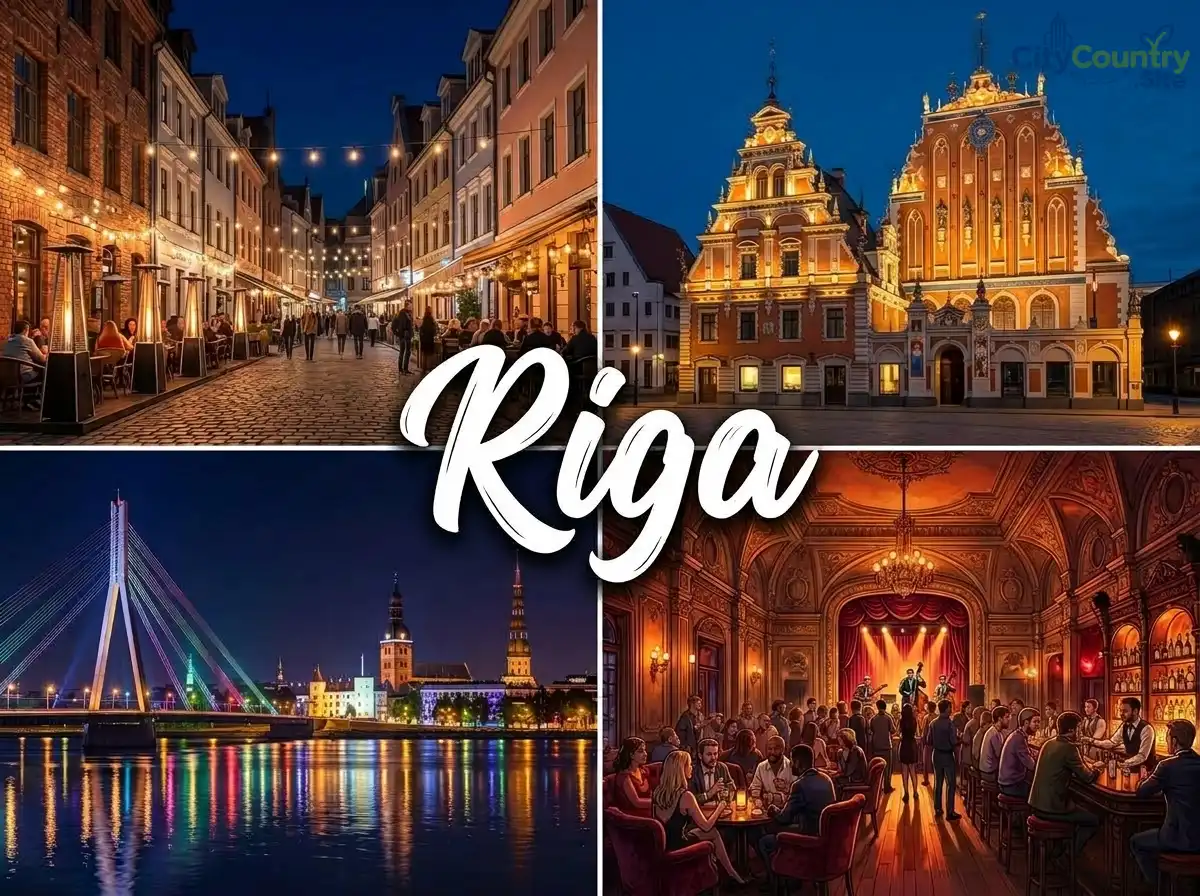
Riga announces itself dramatically. Coming in from the airport on the elevated motorway, the city spreads across the flatlands of the Daugava River delta — a skyline of church spires and television towers against the wide Baltic sky — and then suddenly the old town appears below, its medieval silhouette intact, and beyond it the extraordinary streets of the Art Nouveau district, row upon row of ornate facades decorated with mythological figures, geometric patterns, floral motifs, and screaming faces that constitute the most spectacular concentration of Art Nouveau architecture on earth.
Latvia’s capital is the largest city in the Baltic states — twice the size of Tallinn, significantly larger than Vilnius — and it carries that scale with an urban energy that its smaller Baltic neighbors cannot quite match. Riga feels like a real European capital: bustling, diverse, occasionally chaotic, possessed of a nightlife reputation that draws visitors from across Northern and Eastern Europe, with a food scene undergoing a genuine renaissance, and with more architectural riches than most visitors realize when they first arrive.
The city sits at the mouth of the Daugava River where it meets the Gulf of Riga — a position that has made it one of the most strategically important ports in the Baltic for over 800 years. Founded by the German bishop Albert of Riga in 1201, it grew rapidly into one of the most significant trading cities of the Hanseatic League — a commercial center whose medieval wealth is still visible in the extraordinary architecture of the old town. Then came successive centuries of Swedish rule, Russian Imperial governance, brief independence, Soviet occupation, and finally the remarkable national awakening that led to the Singing Revolution and independence in 1991.
What distinguishes Riga from its Baltic neighbors most dramatically is the Art Nouveau district — approximately one-third of all buildings in the city center date from the Art Nouveau period (roughly 1896–1913), creating a cityscape of extraordinary visual richness. The German-Latvian architect Mikhail Eisenstein — father of the great film director Sergei Eisenstein, who was born in Riga — designed some of the most extraordinary of these facades, their elaborate ornamentation, mythological figures, and dramatic proportions constituting a unique architectural world that is genuinely unlike anything else in Europe.
For contemporary travelers, Riga offers a particularly compelling combination: medieval grandeur in the UNESCO Old Town; architectural spectacle in the Art Nouveau district; one of Northern Europe’s most vibrant nightlife scenes; a food revolution building around exceptional local ingredients; the extraordinary Central Market in the repurposed Zeppelin hangars; and the pine-forested beach resort of Jūrmala just 25 km away — all at prices that are among the most affordable in the European Union.
“Riga is the most underrated city in Europe. It has everything that makes Prague or Vienna or Amsterdam extraordinary — the architecture, the food, the nightlife, the cultural depth — and it has them without the crowds and at a fraction of the cost. This will not last.”
— Anonymous travel journalist, Condé Nast Traveller Europe, 2025
3. Riga History Timeline
Pre-1201 — The confluence of the Daugava River and the Gulf of Riga has been a trading and fishing site for Baltic and Livonian tribal peoples for thousands of years. The Livs — a Finno-Ugric people closely related to the Estonians — inhabit the river delta area. Evidence of prehistoric settlement along the Daugava dates to at least the Bronze Age.
1201 — Bishop Albert of Buxhoeveden founds the city of Riga on the Daugava River delta — establishing it as the base for the Teutonic Christianization of the Baltic tribes. Albert establishes the Livonian Brothers of the Sword (later merged with the Teutonic Knights) as a crusading military order to enforce Christianity on the pagan Baltic peoples.
1202 — The Riga Cathedral (Dome Cathedral) is founded — beginning construction of what will become the largest medieval church in the Baltic states. The cathedral’s construction proceeds over centuries, incorporating Romanesque, Gothic, and Baroque elements.
1211 — The Riga Castle is constructed — establishing the military-administrative center of the German crusader presence on the Daugava.
1282 — Riga joins the Hanseatic League — the great medieval merchant confederation. Membership transforms Riga into one of the most important trading cities in the Baltic — a major node in the commerce between Western Europe and the Russian interior. The city’s medieval wealth, visible in the extraordinary old town, dates primarily from the Hanseatic period.
13th–16th centuries — Riga’s Hanseatic golden age. The city grows wealthy handling trade in furs, wax, hemp, timber, and grain from the Russian interior against cloth, salt, and manufactured goods from the west. The great merchant warehouses (rigas) along the Daugava give the city part of its commercial character. The Three Brothers (Trīs Brāļi) complex of medieval houses — among the finest surviving Gothic/Renaissance merchant houses in the Baltic — is built during this period.
1521 — The Protestant Reformation reaches Riga. The city embraces Lutheranism rapidly, as it had previously embraced Catholicism under German colonial pressure. The great Dom Cathedral is converted to Lutheran use — beginning its identity as a Lutheran cathedral that it maintains to the present day.
1561 — The collapse of the Livonian Confederation under pressure from Ivan the Terrible’s invasion brings a period of competition between Poland-Lithuania, Sweden, and Russia for control of the Latvian territory. Riga passes to Polish-Lithuanian Commonwealth control.
1621 — Swedish forces under Gustavus Adolphus capture Riga after a siege. The Swedish period brings significant administrative and educational reforms — the University of Tartu (founded 1632 in Estonia) serves the broader Swedish Baltic territory. Swedish rule is generally remembered as relatively benign by the standards of the era.
1710 — The Great Northern War brings Russian Imperial forces to Riga. After a siege, the city surrenders to Peter the Great’s forces. The Russian Imperial period begins — lasting over 200 years and fundamentally transforming the city’s character, demographics, and built environment.
18th century — Riga grows rapidly as a major Russian Imperial port — handling an enormous volume of the empire’s Baltic trade. The city develops a more cosmopolitan character under Russian governance — German merchant families, Russian Orthodox nobles, Jewish communities, and Latvian workers all contributing to the city’s diversity.
1857 — The old medieval city walls are demolished — their removal is a turning point in Riga’s urban development, allowing the city to expand rapidly outward. The canal promenade (Pilsētas kanāls) that replaces the moat becomes the finest green public space in the city.
1870 — The railway to St. Petersburg is completed, transforming Riga into one of the Russian Empire’s most important industrial and commercial centers. The late 19th-century industrial boom drives a population explosion — from approximately 100,000 in 1867 to 300,000 by 1900.
1896–1913 — Riga’s Art Nouveau explosion. The city’s rapid growth and prosperity coincide with the European Art Nouveau movement at its creative peak. Architects — most notably Mikhail Eisenstein (who designs the extraordinary facades on Alberta Street and Elizabetes Street), Konstantīns Pēkšēns, and Eižens Laube — produce an extraordinary concentration of Art Nouveau buildings that will eventually constitute the largest such collection in the world. The period transforms Riga’s architectural character permanently.
1905 — The Russian Revolution of 1905 — which begins partly in Riga and the Baltic region — produces significant unrest and violence. The Baltic German aristocracy and the Russian authorities respond with brutal repression; the Latvian national movement is stimulated rather than suppressed by the experience.
1914–1918 — World War I brings catastrophic damage to Riga and Latvia. German forces occupy much of Latvia; the front lines pass through Latvian territory repeatedly. Riga’s population falls dramatically as refugees flee the fighting. The city’s industrial infrastructure is largely destroyed or evacuated to Russia.
November 18, 1918 — Latvian independence is proclaimed in Riga — one of the most significant dates in Latvian history, celebrated annually as National Day. The first Republic of Latvia establishes Riga as its capital.
1918–1940 — The First Latvian Republic — twenty-two years of independence. Riga develops as a modern European capital; Latvian language and culture flourish; the economy develops with particular strength in agriculture and timber exports. The interwar period is idealized in Latvian collective memory.
1939–1940 — The Molotov-Ribbentrop Pact assigns Latvia to the Soviet sphere. Soviet occupation begins in June 1940; mass deportations follow. Approximately 15,000 Latvians are deported to Siberia in the first mass deportation of June 1941.
1941–1944 — Nazi German occupation replaces Soviet occupation. Latvia’s Jewish community — approximately 75,000 people, one of the oldest and most culturally rich Jewish communities in Europe — is almost entirely murdered in the Holocaust. The Rumbula Forest massacre (November–December 1941) — in which approximately 25,000 Riga Jews were shot over two days — is one of the largest single massacres of the Holocaust.
1944–1991 — Soviet reoccupation. Latvia becomes the Latvian Soviet Socialist Republic. Massive Russian in-migration transforms Riga’s demographic character — from approximately 75% Latvian in 1940 to barely 36% Latvian by 1989. The Soviet period brings industrialization and urbanization alongside severe suppression of Latvian language, culture, and national identity.
1987–1991 — The Latvian national awakening. The Popular Front of Latvia organizes massive demonstrations demanding independence. The Baltic Way of August 23, 1989 — the human chain of approximately 2 million people linking Tallinn, Riga, and Vilnius — is the most spectacular moment of the peaceful resistance. Latvian independence is restored on May 4, 1991 and internationally recognized following the failed Soviet coup attempt of August 1991.
1991–2004 — Latvia’s transition period — economic liberalization, monetary reform (the Latvian lats), and the rebuilding of national institutions. The Freedom Monument (Brīvības piemineklis) — which had been maintained in secret during the Soviet period when official commemoration was forbidden — becomes the central symbol of the restored republic.
2004 — Latvia joins the European Union and NATO — a watershed moment of national significance and the culmination of the post-independence project.
2014 — Latvia adopts the Euro — the last of the three Baltic states to do so, following Estonia (2011) and Lithuania (2015, slightly after Riga’s adoption).
2014 — Riga is designated European Capital of Culture — a year of extraordinary cultural programming that significantly raises the city’s international profile and stimulates lasting investment in cultural infrastructure.
2024–2026 — Riga continues developing as one of the Baltic’s most vibrant and most visited cities. The food scene is undergoing genuine transformation; the nightlife continues to attract visitors from across Northern and Eastern Europe; the Art Nouveau district attracts architecture enthusiasts from around the world; and the city’s affordability — among the lowest cost of living of any EU capital — continues to make it one of Europe’s most compelling value destinations.
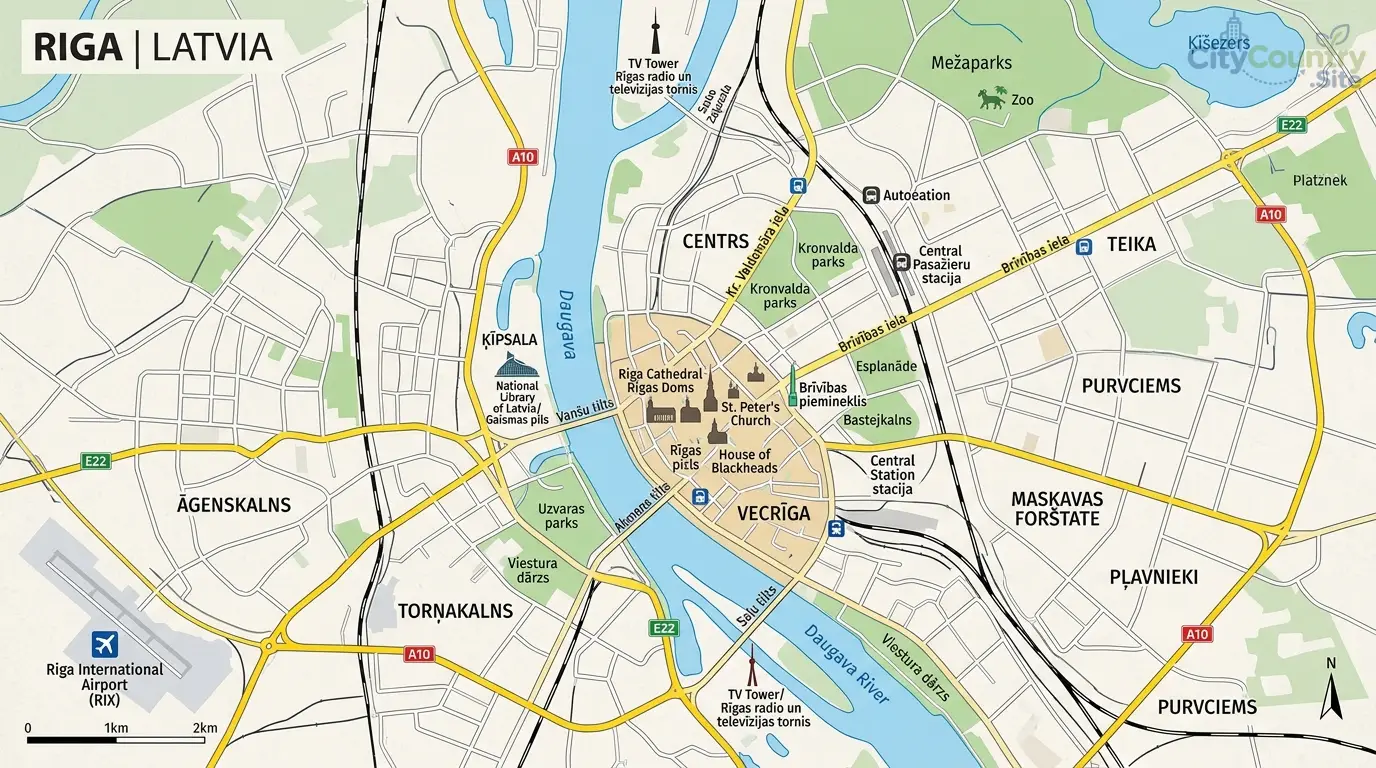
4. Riga Geography & Neighborhoods
Riga occupies a broad, flat terrain on both sides of the Daugava River — Latvia’s largest river, flowing broadly westward before meeting the Gulf of Riga. The city’s flatness — a consequence of its position on the Baltic coastal plain — contrasts dramatically with the hilly medieval old towns of Tallinn and Vilnius, giving Riga a more open, expansive urban character.
The city’s layout reflects its historical development clearly: the Old Town (Vecriga) occupies the original medieval settlement on the right bank of the Daugava, enclosed by the canal ring that replaced the medieval walls in the 19th century. Immediately north of the canal, the Art Nouveau district spreads outward — the product of the late 19th and early 20th century construction boom. Further out, the wooden house neighborhoods (Kalnciems, Āgenskalns) on the left bank of the Daugava preserve the 19th-century residential architecture of the working-class city.
Neighborhood Comparison Table
| Area | Best For | Vibe | Price Level |
|---|---|---|---|
| Old Town (Vecriga) | History, medieval architecture, restaurants, nightlife | Historic, atmospheric, tourist-friendly | Mid–High |
| Art Nouveau District (Alberta Street) | Architecture, boulevards, museums, upscale living | Grand, elegant, residential | Mid–High |
| Central Market Area | Market, local life, authentic Riga, budget food | Bustling, authentic, mixed | Budget–Mid |
| Miera Iela / Quiet Center | Independent cafés, galleries, creative scene | Hip, local, creative | Mid |
| Āgenskalns (Left Bank) | Wooden houses, local cafés, authentic residential life | Quiet, genuine, alternative | Budget–Mid |
| Kalnciems Quarter — famous street market** | Weekend market, wooden architecture, community | Friendly, local, creative | Budget–Mid |
| Andrejsala / Spīķeri Quarter | Former port industrial area converted to arts/culture | Industrial-chic, creative | Mid |
| Pārdaugava (Left Bank) | Residential, parks, local cafés, authentic | Genuine, unhurried, diverse | Budget–Mid |
The Old Town (Vecriga) is the historic and tourist heart — its medieval streets, guild halls, Hanseatic merchant houses, and the extraordinary Cathedral are concentrated in a compact area that is entirely walkable. The Art Nouveau district — concentrated along Alberta Street, Elizabetes Street, Strēlnieku Street, and surrounding boulevards — is the city’s architectural crown jewel and one of the finest architectural walking districts in Europe. Miera Iela (Peace Street) in the quiet center has emerged as Riga’s hippest café and creative district — the Latvian equivalent of Tallinn’s Kalamaja or Ljubljana’s Trnovo.

5. Riga Weather & Temperature Guide
Riga has a humid continental climate similar to Tallinn’s but slightly warmer — the Gulf of Riga moderates temperatures somewhat compared to the more northerly Estonian capital. Four clearly distinct seasons provide very different but equally valid reasons to visit.
Month-by-Month Weather Table
| Month | Avg Temp (°C) | Daylight Hours | Crowd Level | Travel Recommendation |
|---|---|---|---|---|
| January | -8–(-2) | 8 hours | Very Low | ✅ Good — cold, quiet, atmospheric |
| February | -7–0 | 10 hours | Very Low | ✅ Good — often snowiest month |
| March | -2–6 | 12 hours | Low | ✅ Good — spring beginning |
| April | 3–12 | 14 hours | Medium | ⭐ Excellent — spring blooms |
| May | 8–18 | 17 hours | High | ⭐ Excellent — long bright days |
| June | 12–22 | 19 hours | Very High | ⭐ Excellent — near-white nights |
| July | 14–24 | 18 hours | Very High | ⭐ Excellent — peak summer |
| August | 13–23 | 16 hours | High | ⭐ Excellent — golden evenings |
| September | 9–17 | 13 hours | High | ⭐ Excellent — golden autumn |
| October | 4–10 | 11 hours | Medium | ✅ Good — autumn colors |
| November | -1–4 | 8 hours | Low | ✅ Good — quiet and atmospheric |
| December | -6–(-1) | 7 hours | Medium | ⭐ Excellent — Christmas markets, snow |
June through August is Riga’s high summer — warm and lively, with extraordinarily long days (near-white nights in June), outdoor terraces in full operation, the Miera Iela café scene at its most vibrant, and the Jūrmala beach resort packed with summer visitors. The Midsummer Night (Jāņi, June 23–24) — Latvia’s most important annual celebration — involves bonfires, wreath-making, and the extraordinary Baltic summer light.
May and September are outstanding months — the extreme summer crowds have not yet arrived or have departed, the light is golden and beautiful, and the city’s cultural calendar is particularly active.
December brings Riga’s magnificent Christmas Market to the Dome Cathedral Square — one of the finest in Northern Europe, in a setting of considerable beauty.
Winter (January–February) is cold and dark — temperatures regularly below -5°C — but a snowy Riga has a Nordic beauty that is genuinely rewarding for those who embrace it. Accommodation prices are dramatically lower than in summer.
💡 Did You Know? Riga claims to have hosted the world’s first decorated Christmas tree — in 1510, according to historical records documenting a Brotherhood of Blackheads celebration in the city square in which a tree was decorated and then burned. Tallinn makes the same claim from 1441. The rivalry between the two cities over this distinction is entirely friendly and entirely in character for two medieval Hanseatic trading rivals separated by 300 km of Baltic coastline.

6. Riga Airport & Getting There
Riga International Airport (RIX)
Riga International Airport (IATA: RIX) is the Baltic states’ busiest airport — handling more international passengers than Tallinn and Vilnius combined, a consequence of Riga’s central position in the Baltic region and its role as the hub of airBaltic — Latvia’s national carrier and one of Northern Europe’s most respected regional airlines.
The airport is located approximately 13 km southwest of the city center, with excellent connections by bus and taxi. A significant terminal expansion project completed in the early 2020s has made Riga one of the better-designed regional airports in Europe.
airBaltic — headquartered in Riga — connects the city to an extraordinary range of European destinations with modern, efficient service. Additional carriers including Ryanair, Wizz Air, easyJet, Finnair, Lufthansa, Turkish Airlines, LOT Polish Airlines, and others serve Riga with connections to London, Frankfurt, Amsterdam, Paris, Brussels, Copenhagen, Stockholm, Helsinki, Warsaw, Vienna, Istanbul, and dozens of other European cities.
Getting from RIX to the City Center:
| Transport Option | Duration | Cost (Approx.) | Notes |
|---|---|---|---|
| Bus No. 22 | 30–40 min | €1.50 | Excellent, frequent, very cheap |
| Bolt / Uber | 20–30 min | €10–18 | App-based; transparent pricing |
| Taxi | 20–30 min | €15–25 | Official taxis; agree meter before departure |
| Hotel shuttle (pre-booked) | 25–35 min | €20–30 | Some hotels offer transfers |
Getting to Riga from Baltic/Nordic neighbors:
| Origin | Transport | Duration | Cost (Approx.) |
|---|---|---|---|
| Tallinn, Estonia | Bus (Lux Express) | 4–4.5 hours | €10–25 |
| Vilnius, Lithuania | Bus (Lux Express/FlixBus) | 4 hours | €10–20 |
| Helsinki, Finland | Flight | 1 hour | €50–150 |
| Stockholm, Sweden | Flight / Ferry | 1 hr / 17 hrs | €60–150 / €40–120 |
| Warsaw, Poland | Bus / Flight | 10 hrs / 1.5 hrs | €20–40 / €50–130 |
| St. Petersburg | Currently inadvisable | — | — |
The Lux Express bus service connecting Tallinn-Riga-Vilnius is one of the finest intercity bus services in Northern Europe — comfortable, on time, reasonably priced, with Wi-Fi and power outlets. Traveling the entire Baltic capital route by bus over 2–3 days is an outstanding way to experience all three cities.
💡 Did You Know? airBaltic — Latvia’s national airline — was the world’s first airline to use the Bombardier CS300 (now Airbus A220) aircraft commercially, taking delivery in 2016. The airline’s commitment to the Airbus A220 as its exclusive fleet type has made it a fascinating case study in airline strategy — a small national carrier operating one of the most modern and fuel-efficient fleets in European aviation. airBaltic also operates Riga Airport as a genuine connecting hub for the Baltic region, offering connections between dozens of European cities that would otherwise require routing through Frankfurt or Amsterdam.
7. Getting Around Riga
Riga is larger and more spread out than Tallinn or Ljubljana, making public transport and ride-hailing more important for getting between neighborhoods. Within the Old Town and Art Nouveau district, walking is entirely practical and strongly preferred.
Walking is the primary mode for the city center — the Old Town, the Art Nouveau district, the canal promenade, and Miera Iela are all walkable from each other within 20–30 minutes. The distances are manageable and the architecture rewards slow, exploratory walking.
Bolt is the primary ride-hailing app — Tallinn-founded but operating throughout the Baltic and Europe. Very reliable in Riga with transparent pricing. A typical city ride costs €5–12. Uber also operates. For getting between the old town and Āgenskalns (Left Bank) or Kalnciems, Bolt is the most convenient option.
Trams, Trolleybuses, and Buses — Riga’s public transport network is comprehensive and inexpensive (€1.50 per journey, day pass €5). The tram system is the most useful for tourists — Tram 6 connects the old town to the Art Nouveau district and beyond; several other lines provide good coverage of the central city.
City Bikes (Sixt Bike / Nextbike) — Available throughout the central city from April to October. An excellent way to explore Miera Iela, the canal promenade, and the Art Nouveau streets.
Ferry across the Daugava — A small passenger ferry crosses the Daugava River between the old town and the Āgenskalns/Pārdaugava neighborhoods — a charming and inexpensive way to experience the river and reach the left bank wooden house neighborhoods.

8. Riga Top Attractions & Best Places
Top Attractions Table
| Attraction | Type | Entry Fee | Best Time | Time Needed |
|---|---|---|---|---|
| Riga Old Town (Vecriga) | UNESCO World Heritage medieval city | Free | Morning / Evening | Full day |
| Alberta Street (Art Nouveau) | Art Nouveau architecture | Free (street) | Morning | 1–2 hours |
| Riga Central Market | Extraordinary market in Zeppelin hangars | Free | Morning (Tue–Sun) | 1.5–2 hours |
| Dome Cathedral (Riga Cathedral) | Medieval cathedral / organ concerts | €4 | Morning | 1 hour |
| Freedom Monument (Brīvības piemineklis) | National monument / symbol | Free | Any time | 30 min |
| Art Nouveau Museum | Art Nouveau interior museum | €8 | Morning | 1.5 hours |
| Latvian National Museum of Art | National art collection | €7 | Morning | 2 hours |
| Three Brothers (Trīs Brāļi) | Medieval merchant houses | Free (exterior) | Morning | 30 min |
| St. Peter’s Church Tower | Gothic church / observation tower | €9 | Morning | 1 hour |
| Museum of the Occupation of Latvia | Occupation history museum | Free (donations) | Morning | 2 hours |
| Kalnciems Quarter Market | Saturday market / wooden architecture | Free | Saturday morning | 2 hours |
| Spīķeri Quarter | Converted warehouse arts district | Free (exterior) | Afternoon | 1.5 hours |
Alberta Street (Alberta Iela) is the single most extraordinary street in the Baltic states — a continuous display of Art Nouveau facades that has no parallel anywhere in Europe. Numbers 2a, 4, 6, 8, 10, 12, 13 on Alberta Street are all designed by Mikhail Eisenstein — each a theatrical composition of mythological figures, grotesque masks, art nouveau ornament, and dramatic proportions that create an almost cinematic street experience. The variety is extraordinary: Sphinx figures at number 2a; elaborate female mascarons at number 4; writhing figures and dynamic composition at number 8. No. 12 — considered by many architectural historians the finest Art Nouveau building in the world — features a facade of such elaborate complexity and technical mastery that it requires extended examination to absorb. Walking Alberta Street slowly, looking up at each facade in sequence, is one of the most distinctive architectural experiences available in Europe.
Riga Central Market (Rīgas Centrāltirgus) is one of the finest and most extraordinary markets in Europe — both for what it sells and for the remarkable building that houses it. Five massive WWI German Zeppelin hangars — transported from the Skrunda military base after the war and repurposed as market pavilions in the 1920s — create an architectural environment of genuine industrial grandeur: vast metal-framed structures of remarkable engineering achievement, housing stalls of fresh fish, meat, dairy products, vegetables, flowers, and traditional Latvian food products. The market is a UNESCO-recognized cultural heritage site. The fish pavilion is the finest — an extraordinary display of Baltic herring, smoked eel, pike, and freshwater fish from Latvia’s rivers and lakes. The dairy pavilion offers outstanding Latvian cheese, butter, and sour cream. The meat pavilion provides a comprehensive survey of Latvian charcuterie. Arrive between 8–11 AM for the finest selection and most vibrant atmosphere.
The Dome Cathedral (Rīgas Doms) — begun in 1211 and completed over centuries — is the largest medieval church in the Baltic states and one of the finest examples of Baltic ecclesiastical architecture. The cathedral’s interior incorporates Romanesque, Gothic, and Baroque elements accumulated over 800 years of construction and modification. The organ — installed in 1884 and one of the largest in the world at the time — is still used for regular concerts. The cloister — the oldest part of the surviving structure — is a beautifully atmospheric medieval space of elegant simplicity. Regular organ concerts in the cathedral are one of Riga’s finest cultural experiences — the acoustics are extraordinary.
The Museum of the Occupation of Latvia — housed in a building near the Daugava waterfront in the old town — documents the Soviet and Nazi occupations of Latvia (1940–1941 and 1941–1944 and 1944–1991) with intelligence, precision, and emotional power. The museum was established by the Latvian exile community in the United States and maintains a perspective of uncompromising historical honesty. It is free to enter (donations appreciated) and is one of the most important museums in the Baltic states for understanding the 20th century’s impact on the region. The Šķirotava Train Station Deportation Memorial — representing the wagons in which Latvians were deported to Siberia — outside the museum is particularly moving.
St. Peter’s Church (Svētā Pētera Baznīca) — the great Gothic church whose tower has dominated the Riga skyline since the 13th century (the current tower dates from 1690) — provides the finest elevated view over the old town from its observation platform at 72 metres. The panoramic view over the red-tiled rooftops of the old town, the Daugava River, and the Gulf of Riga beyond is one of the essential Riga experiences.
The Three Brothers (Trīs Brāļi) — a row of three medieval merchant houses dating from the 15th, 16th, and 17th centuries respectively — is the finest surviving example of historical domestic architecture in Riga and one of the best-preserved medieval townhouse complexes in the entire Baltic region. The buildings’ whitewashed facades, stepped gables, and small windows facing the narrow street create an image of medieval merchant life that is entirely authentic.
💡 Did You Know? The Alberta Street Art Nouveau facades in Riga were designed primarily by Mikhail Eisenstein — the father of the great Soviet film director Sergei Eisenstein, who was born in Riga in 1898 and spent his childhood here. Sergei Eisenstein — director of Battleship Potemkin (1925), widely regarded as one of the greatest films ever made — left Riga at age 10 when his parents separated. The irony of the architect of Riga’s most celebrated bourgeois Art Nouveau buildings fathering the Soviet Union’s most celebrated film director is entirely in keeping with the extraordinary cultural complexity of Riga’s history.

9. Riga Food & Cuisine Guide
Latvian cuisine is undergoing one of the most exciting culinary transformations in Northern Europe — a movement led by a generation of young chefs who are taking the extraordinary ingredients of Latvia’s forests, farms, rivers, and coastline and applying creative cooking techniques that are producing restaurants of genuine international caliber. Riga’s food scene in 2026 is dramatically more interesting than it was even five years ago.
Must-Try Dishes in Riga
Rupjmaize (Latvian Dark Rye Bread) — The single most important food in Latvian culture — a dense, deeply flavored sourdough rye bread with a characteristic slight sourness and an almost molasses-dark crumb. Latvian rye bread has EU Protected Geographical Indication and is considered one of the finest traditional breads in Europe. Available at every bakery and virtually every Latvian restaurant, it is the foundation of the Latvian table and the most essential food souvenir.
Sklandrausis — One of the most distinctive and most delicious traditional Latvian pastries — open-topped rye pastry cases filled with sweet carrot and potato filling spiced with caraway and topped with sour cream. Uniquely Latvian, entirely unexpected, and genuinely extraordinary. Available at the Central Market and traditional bakeries throughout the city. Also has EU Protected Geographical Indication.
Grey Peas with Bacon (Pelēkie Zirņi ar Speķi) — Latvia’s most traditional and most beloved everyday dish — dried grey field peas simmered until soft, then combined with fried smoked bacon and onions. Humble, deeply satisfying, intensely Latvian. Served at virtually every traditional Latvian restaurant and particularly celebrated during the Lāčplēsis Day national holiday.
Smoked Fish — Latvia’s rivers, lakes, and Baltic coast produce extraordinary smoked fish — smoked eel, smoked sprats (sprotes), smoked bream, and smoked pike — prepared using traditional cold-smoking and hot-smoking techniques of remarkable quality. The Central Market’s fish pavilion is the finest place to explore these products. The famous Rīgas Šprotes (Riga sprats) — small smoked Baltic sprats preserved in oil — have been one of the most celebrated canned foods in the former Soviet world for over a century.
Pīrāgi (Bacon Rolls) — Small yeasted bread rolls filled with smoked bacon and onions — an Estonian and Latvian traditional pastry that is simultaneously humble and irresistible. Eaten at every celebration, social gathering, and family meal in Latvia. Available at bakeries throughout the city.
Borscht and Beetroot Preparations — Latvia’s significant Russian and Eastern European culinary influence is most visible in the excellent borscht available throughout the city — beetroot soup prepared in various traditions, always served with sour cream. The Latvian approach tends to be slightly lighter and more acidic than Russian versions.
Kefīrs and Dairy Products — Latvia produces outstanding fermented dairy products — kefir, sour cream, cottage cheese (biezpiens), and various artisan cheeses — from the country’s extensive dairy farming heritage. The dairy pavilion of the Central Market offers an extraordinary range.
Latvian Craft Beer and Black Balsam — An excellent craft brewing scene has emerged in Riga, alongside the traditional Latvian craft breweries of the countryside. Labietis in Miera Iela and several other Riga craft brewers produce outstanding ales and lagers. But the most distinctive Latvian drink is Rīgas Melnais Balzāms (Riga Black Balsam) — a bitter herbal liqueur of extraordinary complexity, made from 24 plants, flowers, roots, and berries according to a recipe dating to 1752. It is simultaneously medicinal, alcoholic, and genuinely delicious — drunk straight, mixed with blackcurrant juice, or stirred into coffee.
Best Restaurants and Food Spots
Ferma (Miera Iela) — One of Riga’s finest contemporary Latvian restaurants — a beautifully designed space serving outstanding farm-to-table cuisine built around exceptional local ingredients. The daily-changing menu reflects seasonal Latvia with intelligence and creativity. €20–40 per person.
Vincents — Riga’s most celebrated fine dining restaurant — Martins Rītiņš’s flagship has been one of the finest restaurants in the Baltic states for over two decades. Outstanding contemporary Latvian cuisine with a comprehensive wine list. €50–80 per person.
Garage (Miera Iela) — A beloved neighborhood restaurant in the Miera Iela quarter — excellent contemporary Latvian comfort food, outstanding craft beer selection, warm atmosphere. €12–22.
Lido — The iconic Latvian cafeteria chain — self-service Latvian traditional food at extraordinary prices in a large, pleasant setting. Not fine dining but the most accessible and most affordable introduction to traditional Latvian cuisine available in Riga. The Lido Atpūtas Centrs (Recreation Centre) south of the old town is a uniquely Latvian experience. €5–12 per person.
Osta (Spīķeri Quarter) — An excellent restaurant in the converted warehouse arts district — outstanding smoked fish and seafood preparations with a Baltic maritime character. €15–30.
Central Market Food Stalls — For the most authentic and affordable eating in Riga, the food stalls within and around the Central Market serve outstanding traditional Latvian food — grey peas with bacon, pīrāgi, smoked fish sandwiches, and fresh dairy products — for €3–8 per dish. The definitive Riga food experience at minimal cost.
Folkklubs Ala Pagrabs (Old Town) — A beloved folk-culture bar and restaurant in a medieval cellar — traditional Latvian food, folk music, and an extraordinarily atmospheric setting. The grey peas with bacon and the dark rye bread are the things to order. €10–20.
💡 Did You Know? Riga Black Balsam (Rīgas Melnais Balzāms) — Latvia’s most iconic drink — was first produced by a Riga pharmacist named Abraham Kunze in 1752, who created it as a medicinal preparation from 24 plants, including valerian root, ginger, peppermint, wormwood, linden flowers, and various other botanicals. When Catherine the Great was reportedly ill while passing through Riga, she was given Balsam and recovered — an association that made it enormously fashionable in Russian Imperial society. It has been continuously produced ever since, and the distinctive black ceramic bottle (designed to prevent light from degrading the botanical ingredients) is one of the most recognizable packaging designs in Eastern Europe.
10. Accommodation Guide for Riga Tour
Riga offers accommodation across all budget levels — with the advantage over Tallinn that comparable quality is generally available at somewhat lower prices, reflecting Latvia’s lower overall cost of living.
Best Areas to Stay:
- Old Town (Vecriga): Best for atmosphere, medieval character, and walking access to all historical sights — the first choice for most visitors
- Art Nouveau District: Best for those specifically interested in the architecture — waking up surrounded by the finest Art Nouveau facades in the world
- Miera Iela / Quiet Center: Best for those wanting a more local, contemporary experience — excellent cafés and restaurants, genuine neighborhood character
- Near the Central Market: Best for budget travelers and those prioritizing market access and authentic urban life
Accommodation Price Ranges (2026)
| Category | Price/Night (USD) | Examples |
|---|---|---|
| Budget Hostel | $15–40 | Riga Hostel, Cinnamon Sally, Friendly Fun Franks |
| Mid-Range Hotel / Guesthouse | $60–120 | Hotel Justus, Neiburgs Hotel, Old Town Apartment Hotels |
| Upscale Boutique Hotel | $120–220 | Neiburgs Hotel, Grand Palace Hotel, Hotel Bergs |
| Luxury Hotel | $220–450+ | Radisson Blu Latvija Hotel, Grand Palace Hotel, Pullman Riga Old Town |
Neiburgs Hotel — in a beautifully restored Art Nouveau building in the old town — is consistently Riga’s most praised boutique hotel, combining extraordinary architectural character with genuine comfort and an outstanding restaurant. Rates: approximately $140–250 per night.
Grand Palace Hotel — in a magnificent 19th-century building on the edge of the old town — is Riga’s most prestigious address, with elegant rooms, an excellent spa, and the finest traditional luxury experience available in the city. Rates: approximately $200–400 per night.
Cinnamon Sally Hostel — a beloved backpacker institution in the old town — offers excellent facilities, a warm social atmosphere, and outstanding value in a great location. Dorm beds from $15; private rooms from $40.
11. Best Time to Visit Riga
June through August is Riga’s peak season — warm, lively, with the extraordinary Baltic summer light (near-white nights in June), the Jūrmala beach resort in full operation, and the city’s outdoor café and terrace culture at its most vibrant. Midsummer (Jāņi, June 23–24) is Latvia’s most important celebration — if you can be in Latvia for Midsummer, the bonfires, singing, and extraordinary quality of the summer light are genuinely unforgettable.
May and September offer excellent conditions with somewhat lower tourist pressure and the full beauty of spring or autumn.
December brings the outstanding Christmas Market to Dome Square — one of the finest in Northern Europe, with the medieval cathedral and old town as backdrop.
Winter (January–February) is cold and dark — but a snowy Riga is genuinely beautiful, accommodation prices are dramatically lower, and the authentic local character of the city is most visible when tourist numbers are minimal.
Key Festivals and Events in Riga
- Jāņi (Midsummer, June 23–24) — Latvia’s most important national celebration — bonfires, wreath-making from flowers and ferns, singing, and the extraordinary Baltic summer night. The most important day in the Latvian cultural calendar
- Riga City Festival (June) — Annual celebration of the city’s founding — concerts, street performances, craft markets, and fireworks throughout the old town
- White Night (Baltā Nakts) Art Festival (August) — Annual overnight contemporary art festival — galleries, studios, and public spaces throughout the city open through the night with special exhibitions and performances
- Riga International Film Festival (RIGA IFF) (October) — Growing annual film festival with an excellent selection of Latvian, Baltic, and international cinema
- Latvian Song and Dance Festival (Dziesmu un Deju Svētki) (every five years) — The Latvian equivalent of the Estonian Song Festival — hundreds of thousands of singers and dancers gathering in Riga. When it falls, it is the most important cultural event in the country
- Christmas Market (December–January) — In Dome Cathedral Square — one of Europe’s finest, with a backdrop of medieval grandeur
12. Riga’s Shopping Guide
Riga’s shopping scene combines traditional Latvian craft products with an emerging contemporary design scene and excellent food market options.
What to Buy:
Latvian Linen — Latvia produces outstanding handwoven linen — one of the country’s oldest textile traditions. Beautiful tablecloths, napkins, clothing, and decorative textiles from Latvian artisans. The finest pieces come from the Līgatne and other traditional linen-producing regions.
Amber Jewelry — Baltic amber — fossilized resin from approximately 44 million years ago — is found along the Baltic coast and is worked into beautiful jewelry throughout the region. Riga has excellent amber jewelry shops, particularly in the old town. Buy from reputable dealers who can certify genuine Baltic amber (as opposed to polymer imitations).
Riga Black Balsam — The distinctive black ceramic bottle of Latvia’s iconic herbal bitter makes an outstanding and entirely unique gift. Available everywhere in the city; the finest quality from specialist spirits shops.
Latvian Rye Bread (Rupjmaize) — Vacuum-packed dark rye bread from Latvian artisan bakeries makes an excellent food souvenir — travels well and is genuinely unlike any rye bread available in most Western countries.
Latvian Honey — Latvia’s beekeeping tradition produces outstanding honey from the country’s extensive forests and meadows. Available at the Central Market from beekeepers who bring their own production.
Contemporary Latvian Design — A growing number of young Latvian designers produce excellent fashion, jewelry, homeware, and accessories. The Āgenskalns Market and Kalnciems Quarter Market feature outstanding contemporary design alongside traditional crafts.
Where to Shop:
Riga Central Market — The finest all-round market experience in the Baltic states — fresh produce, smoked fish, dairy, traditional food products, flowers, and a general market section. Tuesday–Sunday; best before noon.
Kalnciems Quarter Market (Saturday mornings) — The finest contemporary craft and design market in Riga — held in the beautiful wooden house neighborhood of Kalnciems on the Daugava’s left bank every Saturday morning from April to November. Outstanding artisan crafts, vintage objects, organic food, and the full diversity of Riga’s creative economy.
Berga Bazārs (Boutique Quarter) — A beautifully designed upscale shopping quarter in the Art Nouveau district — Latvian designer boutiques, galleries, and a lovely café in a historic courtyard setting.
Old Town Craft Shops — Various artisan craft shops throughout the old town sell amber jewelry, linen textiles, Latvian ceramics, and traditional products of varying quality — choose carefully and favor shops displaying handcraft certification.
13. Riga Nightlife & Entertainment
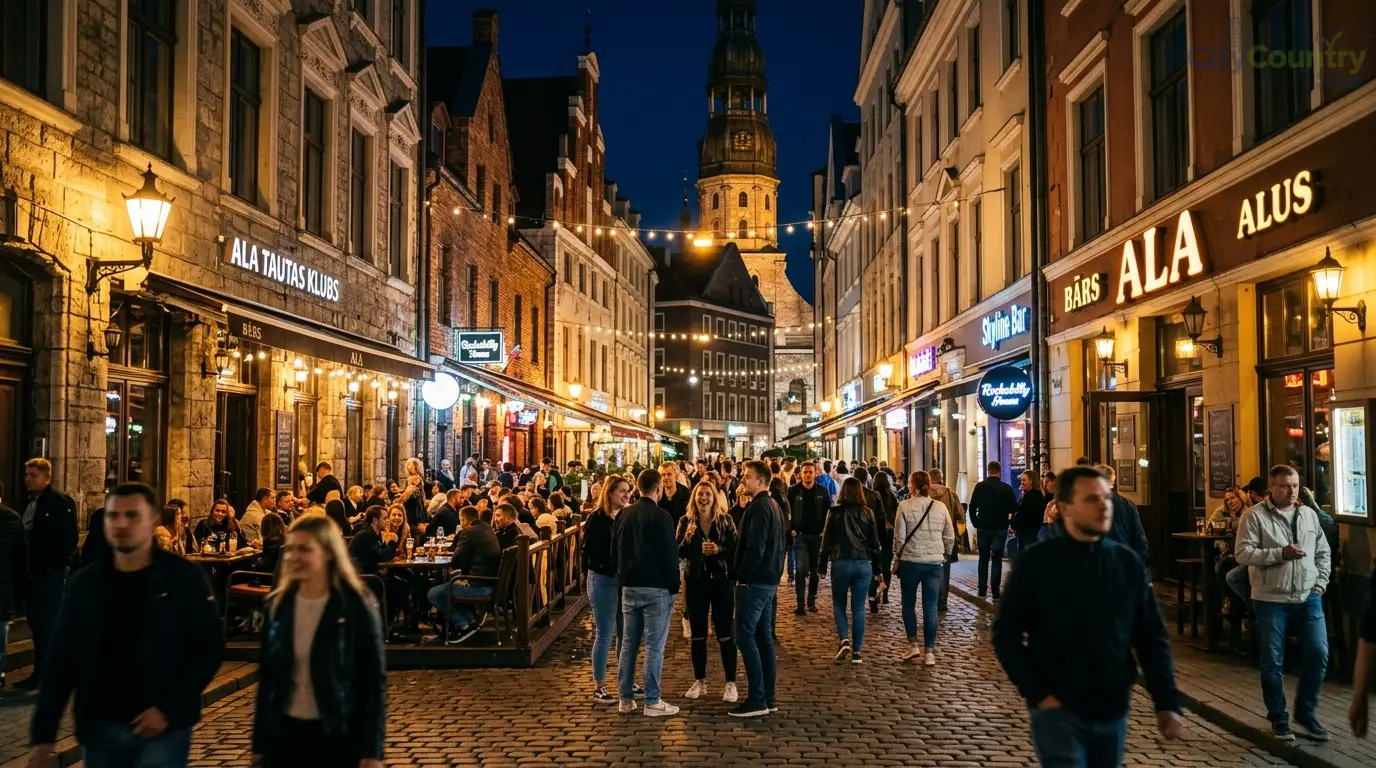
Riga has the most developed nightlife scene in the Baltic states — a consequence of the city’s size, its young population, its affordability relative to Scandinavian capitals, and a long tradition as a weekend destination for Finnish and Scandinavian visitors seeking lower prices and latitude-appropriate darkness in winter.
Live Music and Cultural Venues:
Latvian National Opera (Latvijas Nacionālā Opera) — One of the finest opera houses in Northern Europe — a beautiful 19th-century building hosting regular opera and ballet productions of outstanding quality at prices dramatically below comparable productions in Vienna or Copenhagen. The building itself is a magnificent example of late 19th-century theatre architecture.
Latvian National Symphony Orchestra (Latvijas Nacionālais Simfoniskais Orkestris) — Regular symphony concerts at the Great Guild Hall — one of the finest Hanseatic guild halls in the Baltic, now serving as a concert venue of outstanding acoustic quality.
Palladium — One of Riga’s most important live music venues — regular concerts from Latvian and international artists across all genres.
Miera Iela Cultural Scene — The Miera Iela (Peace Street) neighborhood has become Riga’s most creative evening destination — independent cafés, galleries, and cultural spaces clustered along a single street that has become the city’s answer to Tallinn’s Kalamaja.
Bars and Nightlife:
Labietis (Miera Iela) — Riga’s finest craft brewery and tap room — outstanding Latvian craft beer in an excellent neighborhood setting. The taproom is the best place in Riga to understand the extraordinary range of Latvian craft brewing.
Folkklubs Ala Pagrabs (Old Town) — One of Riga’s most beloved institutions — a folk music bar in a medieval cellar with regular live folk performances, traditional Latvian food, and an atmosphere of genuine cultural authenticity.
Kaļķu Vārti (Lime Gate Bar, Old Town) — The most atmospheric bar in the old town — occupying the medieval Powder Tower and adjacent medieval buildings. Cold beer, warm atmosphere, medieval architecture.
Rocket Bean Roastery (Multiple locations) — Riga’s finest specialty coffee chain — outstanding espresso and filter coffee, excellent breakfasts, and a welcoming environment for the city’s creative professional class.
Club Scene:
Riga’s club scene is the most developed in the Baltic region. Clup and Nabaklab are among the most respected venues for electronic music and DJ culture. The old town’s basement clubs are popular with tourist and weekend visitor crowds. Miera Iela and the Spīķeri Quarter house more locally oriented music venues.
14. Hidden Gems & Local Secrets
The Latvian Ethnographic Open Air Museum (Brīvdabas Muzejs) — About 10 km from the city center on the shore of Jugla Lake, this extraordinary open-air museum preserves authentic 18th and 19th-century Latvian farmsteads, windmills, churches, and traditional structures from all regions of Latvia, transplanted and reconstructed on a beautiful lakeside site. Over 118 individual buildings demonstrate the full diversity of traditional Latvian building culture. Almost entirely overlooked by visitors focused on the old town and Art Nouveau district, it is one of the finest ethnographic open-air museums in Northern Europe.
The Rumbula Forest Memorial — About 10 km southeast of the city center, the Rumbula Forest was the site of one of the largest single massacres of the Holocaust — where approximately 25,000 Riga Jews were shot in November and December 1941. A beautiful and deeply moving memorial designed by the sculptor Sergejs Rizs marks the mass grave site. Almost entirely overlooked by international tourists, it is one of the most important memorial sites in the Baltic region.
Āgenskalns (Left Bank) Wooden Houses — Crossing the Daugava River by the small passenger ferry to the left bank reveals a completely different Riga — quieter, greener, and full of beautiful early 20th-century wooden houses in various states of preservation and decay. Walking the streets of Āgenskalns in the morning, past flowering gardens and wooden verandas, gives a vivid sense of what Riga was before concrete and Soviet-era architecture transformed much of the urban landscape.
Jāņa Tirgus (St. John’s Market) on a Weekday Morning — The small covered market adjacent to St. John’s Church in the old town — operating since the medieval period — is the most authentic daily market in the old town, selling flowers, vegetables, and traditional food products to local residents rather than tourists. The contrast with the vast Central Market’s theatrical scale is charming.
The Dome Cathedral Organ Concerts — The Dom Cathedral’s magnificent organ — one of the largest pipe organs in the world when installed in 1884 — performs regular lunchtime and evening concerts in the extraordinary medieval acoustic environment. These concerts — available for modest admission fees — are one of the finest cultural experiences in Riga and are attended primarily by local music lovers rather than tourist crowds.
Miera Iela on a Saturday Morning — The combination of coffee at Rocket Bean, browsing the Kalnciems Quarter Market (a 15-minute walk), and returning along the canal promenade for a second coffee is the finest Saturday morning available in contemporary Riga — beloved by locals and genuinely unknown to most tourists.
15. Day Trips from Riga
Latvia’s small size — roughly the size of Ireland — means that interesting destinations are accessible from Riga within 1–3 hours by road or bus.
Day Trips Table
| Destination | Distance | Travel Time | Method | Highlights |
|---|---|---|---|---|
| Jūrmala | 25 km west | 30 min | Train / Car | Pine-forested beach resort; Art Nouveau villas; Baltic Sea |
| Sigulda | 53 km northeast | 1 hour | Train / Car | Medieval castle ruins; Gauja National Park; cable car |
| Cēsis | 90 km northeast | 1.5 hrs | Bus / Car | Best-preserved medieval town in Latvia; castle; craft breweries |
| Rundale Palace | 76 km south | 1.5 hrs | Car / Tour | Baroque palace; magnificent formal gardens |
| Cape Kolka (Slītere NP) | 160 km northwest | 2.5 hrs | Car | Meeting point of the Gulf of Riga and Baltic Sea; wild coastline |
| Latvian Open Air Ethnographic Museum | 10 km | 20 min | Bus / Car | Traditional Latvian farmsteads; Lake Jugla |
| Tartu, Estonia | 210 km north | 3.5 hrs | Bus | Estonia’s university city; museums; excellent food scene |
| Vilnius, Lithuania | 300 km south | 4 hours | Bus (Lux Express) | Lithuanian capital; extraordinary Baroque old town |
Jūrmala is Riga’s most popular day trip — a 32 km stretch of pine-forested sandy beach along the Gulf of Riga, accessible by commuter train in 30 minutes. The resort developed under Russian Imperial patronage in the 19th century, when wealthy St. Petersburg families built summer dachas here among the pines. The surviving Art Nouveau wooden villas — dozens of extraordinary examples of early 20th-century resort architecture hidden among the pine forest — are among the finest examples of wooden Art Nouveau in the world. The beach is beautiful, the pine air is extraordinary, and the combination of architectural exploration and swimming (in summer) makes it the finest easily accessible day trip from any Baltic capital.
Sigulda — in the Gauja National Park, approximately 53 km northeast of Riga — is one of Latvia’s most beautiful natural landscapes. The Gauja River valley cuts through the surrounding plain in a dramatic gorge of sandstone cliffs, mixed forest, and medieval ruins. The Sigulda Medieval Castle (13th century, now ruined), the Turaida Castle (13th century, partially restored and beautifully situated above the river), and the Krimulda Castle ruins create a medieval landscape of considerable drama. The cable car crossing the Gauja gorge provides a spectacular aerial view. In winter, Sigulda’s bobsled track (the only Olympic-standard bobsled track in the Baltic states) offers public rides.
Rundale Palace — Latvia’s most spectacular architectural monument outside Riga — is a magnificent Baroque palace designed by Bartolomeo Rastrelli (the same architect who designed the Winter Palace in St. Petersburg) and built in the 1730s–1760s for the Duke of Courland. The palace’s Golden Hall, White Hall, and Rose Garden are extraordinary — the finest Baroque interior design in the Baltic region. The surrounding formal gardens, restored to their 18th-century design, are spectacular in summer.

16. Riga Local Culture, Customs & Etiquette
Latvians share many cultural characteristics with Estonians — the northern reserve, the directness, the commitment to nature — while having their own distinct cultural identity rooted in a different linguistic and historical experience.
Latvian Identity: Latvians are Baltic peoples — neither Slavic nor Germanic, but speaking one of the oldest surviving Indo-European languages (along with Lithuanian, Latvian is the closest living relative of the ancient Proto-Indo-European language). Latvian language and culture were systematically suppressed during the Soviet period; their survival and revival is a source of enormous national pride. Make even minimal efforts with Latvian — “Labdien” (good day), “Paldies” (thank you), “Lūdzu” (please/you’re welcome) — and the response will be warm.
The Singing Tradition: Latvia, like Estonia, has a powerful choral singing tradition at the center of national identity. The Latvian Song and Dance Festival — held every five years — gathers tens of thousands of singers and dancers in Riga in the most important national cultural event. The 1987–1991 period of the Singing Revolution gives this tradition political and historical weight that is deeply felt.
Russian Community: Approximately 25% of Latvians speak Russian as their first language — a legacy of Soviet-era in-migration. The relationship between the Latvian and Russian-speaking communities is complex and sensitive, particularly given Russia’s 2022 invasion of Ukraine and Latvia’s strong support for Ukraine as a NATO and EU member. This is not a topic to engage with lightly.
Midsummer (Jāņi): Latvia’s most important national celebration — June 23–24 — is an ancient celebration of the summer solstice that predates Christianity. Bonfires, flower crowns, fern-leaf searching (a symbolic folk tradition), singing traditional Latvian folk songs (dainas), and the extraordinary quality of the midsummer light create an experience of rare cultural authenticity. If visiting Latvia around Midsummer, every effort should be made to participate in some form.
Sauna Culture: The Latvian sauna (pirts) — like the Estonian sauna — is a cultural institution of deep significance. A traditional Latvian sauna involves birch branch switching (slotot), steam bathing, and cooling in cold water or rolling in snow. Several Riga wellness centers offer traditional pirts experiences.
Tipping:
- Restaurants: 10% tip is standard and appreciated
- Taxis / Bolt: rounding up is standard
- Hotel staff: €1–2 per service
- Tour guides: €10–15 per day
Dos and Don’ts:
- ✅ Do visit the Central Market — it is one of the finest markets in Europe and the most authentic daily experience of Riga available
- ✅ Do walk the full Art Nouveau district slowly — Alberta Street deserves 1–2 hours of careful observation
- ✅ Do try Riga Black Balsam — in its traditional form (mixed with blackcurrant juice) rather than neat
- ✅ Do visit the Museum of the Occupation — it is essential for understanding what Latvia is and why independence matters
- ❌ Don’t mistake Latvians for Russians — they are an entirely distinct people with a very different history and identity
- ❌ Don’t skip Miera Iela — it is the finest expression of contemporary Riga beyond the tourist circuit
- ❌ Don’t eat only at old town tourist restaurants — the quality-to-price ratio on Miera Iela and at the Central Market is dramatically better
17. Safety & Travel Tips
Riga is a safe city for tourists by any European standard. Violent crime against visitors is uncommon. The old town is well-policed and very safe for walking at all hours.
Safe Areas: The old town, Art Nouveau district, Miera Iela, Kadriorg, and all tourist areas are safe. The Central Market area is busy but safe during daylight and early evening.
Main Practical Concerns:
- Weekend night crowds in the old town — Riga’s popularity as a weekend destination for stag and hen parties (particularly from the UK and Scandinavia) can make the old town very busy and occasionally rowdy on Friday and Saturday nights. The city has been working to manage this
- Cobblestones in winter — Ice on medieval cobblestones; wear appropriate footwear November–March
- Tourist-facing pricing — Some restaurants near the main squares charge significantly more than equivalent quality elsewhere; walk one street away for better value
Emergency Numbers:
- All emergencies: 112
- Police: 110
- Riga Tourist Information: +371 6703 7900
Health Tips:
- Medical facilities in Riga are adequate — the Pauls Stradiņš Clinical University Hospital is the main facility for serious cases
- Tap water is safe to drink
- Travel insurance is recommended
18. Riga Budget Tour
Daily Cost Table
| Category | Budget Traveler | Mid-Range | Luxury |
|---|---|---|---|
| Accommodation | $15–40 (hostel) | $70–150 (hotel) | $200–450+ (luxury hotel) |
| Food | $10–18 (market, local cafés) | $30–65 (restaurant meals) | $80–200+ (fine dining) |
| Transport | $2–6 (bus, walking, Bolt) | $10–22 (Bolt, taxis) | $40–80 (private car) |
| Activities | $5–15 (museum, tower) | $20–50 (guided tours, concerts) | $60–180+ (private guide) |
| Total/Day | ~$32–79 | ~$130–287 | ~$380–910+ |
Riga is the most affordable of the three Baltic capitals — reflecting Latvia’s somewhat lower overall cost of living compared to Estonia. Budget travelers eating at the Central Market and local cafés, staying in the excellent Riga hostels, and using public transport can have a genuinely rich experience for under $50 per day.
19. Practical City Information
Visa & Entry: Latvia is a member of the Schengen Area and the European Union. EU citizens enter with any valid national ID. Citizens of USA, UK, Canada, Australia, Japan, and many others enter visa-free for up to 90 days within a 180-day period. Standard Schengen visa requirements apply for other nationalities.
Currency: Latvia uses the Euro (€) — adopted in 2014. No currency conversion required for Eurozone visitors. Cards are accepted universally throughout Riga. Contactless payment is standard.
SIM Cards and Internet: Available at the airport. LMT, Tele2 Latvia, and Bite Latvia are the main operators. EU visitors use their home SIM without roaming charges. Tourist SIMs with data cost approximately €10–15 for non-EU visitors. Free public Wi-Fi throughout the old town and in most cafés.
Power: Latvia uses Type C and F plugs (standard European two-pin round plugs) at 230V, 50Hz.
Drinking Water: Riga’s tap water is safe to drink.
Vaccinations: No special requirements. Tick-borne encephalitis vaccine recommended for extended hiking in forested areas.
20. How to Be a Responsible Traveler in Riga
Go Beyond the Old Town: The old town is extraordinary but not representative of the full city. Miera Iela, Āgenskalns, Kalnciems, and the Central Market area deserve equal time — and your spending in these areas has more meaningful economic impact on local communities.
Visit the Occupation Museum and Rumbula Memorial: Understanding Latvia’s 20th-century history — particularly the dual occupation and the Holocaust — is not merely tourism but an act of historical respect toward a people who have suffered enormously and rebuilt extraordinary things in the aftermath.
Support the Kalnciems and Āgenskalns Markets: The Saturday markets in the wooden house neighborhoods directly support Latvian artisans, farmers, and small producers. Buying from these markets — rather than from old town souvenir shops selling mass-produced goods — has direct, meaningful economic impact.
Manage the Stag/Hen Party Issue Responsibly: Riga has worked hard to move beyond its early-2000s reputation as a cheap European party destination. The city deserves engagement as a cultural destination of depth; if you are visiting for a celebration, conduct yourself with the respect you would show in any European city.
Try Latvian Wine from Krimuldas Vīna Dārzs — Latvia’s tiny but remarkable wine region near Sigulda produces small quantities of outstanding northern wine. Supporting these pioneering producers by seeking out their wines in Riga restaurants and shops directly supports an emerging Latvian wine culture.
21. Travel Media: Documentaries, Books & Channels
Books:
- The Singing Revolution by Paavo Kivinen — A comprehensive account of the Baltic path to independence through music and peaceful resistance
- The Book Thief by Markus Zusak — While set in Germany, provides essential context for understanding the Nazi occupation period that affected Latvia so profoundly
- Between East and West: Across the Borderlands of Europe by Anne Applebaum — The finest journalistic account of Eastern Europe’s post-communist transformation, with significant Latvia and Baltic content
- Latvia: A Short History by Andrejs Plakans — The most accessible scholarly account of Latvian history in English
- The Latvians: A Short History — Various editions in English providing accessible national history
Documentaries:
- The Singing Revolution (2006) — Also covers Latvia and Lithuania alongside Estonia; essential viewing before visiting any Baltic capital
- Various BBC and Deutsche Welle documentaries on Latvia’s independence, Soviet occupation, and contemporary development
YouTube Channels:
- Rick Steves Europe — Good Riga and Latvia episodes
- Lost LeBlancs — Beautiful Riga travel content
- airBaltic — Riga destination content with good visual quality
22. Riga vs. Similar Cities
| Feature | Riga | Tallinn (Estonia) | Vilnius (Lithuania) |
|---|---|---|---|
| Art Nouveau architecture | ⭐⭐⭐⭐⭐ World’s largest collection | ⭐⭐ Limited | ⭐⭐ Limited |
| Medieval old town | ⭐⭐⭐⭐⭐ UNESCO excellent | ⭐⭐⭐⭐⭐ Best-preserved in N. Europe | ⭐⭐⭐⭐⭐ UNESCO Baroque outstanding |
| Nightlife | ⭐⭐⭐⭐⭐ Best in Baltic states | ⭐⭐⭐⭐ Very good | ⭐⭐⭐⭐ Very good |
| Food scene | ⭐⭐⭐⭐⭐ Outstanding — rapidly developing | ⭐⭐⭐⭐ Very good | ⭐⭐⭐⭐ Very good |
| Central market | ⭐⭐⭐⭐⭐ Among Europe’s finest | ⭐⭐⭐⭐ Very good | ⭐⭐⭐ Good |
| Affordability | ⭐⭐⭐⭐⭐ Most affordable Baltic capital | ⭐⭐⭐ Moderate | ⭐⭐⭐⭐ Good value |
| Day trips | ⭐⭐⭐⭐⭐ Jūrmala, Sigulda, Cēsis, Rundale | ⭐⭐⭐⭐⭐ Helsinki ferry + Lahemaa | ⭐⭐⭐⭐ Trakai, Kaunas, Curonian Spit |
| Size / urban energy | ⭐⭐⭐⭐⭐ Largest, most energetic Baltic capital | ⭐⭐⭐ Smaller and more compact | ⭐⭐⭐⭐ Good size and energy |
Choose Riga if you want the most architecturally spectacular Baltic capital — the Art Nouveau district is genuinely unique in the world — combined with the most vibrant nightlife in the region, one of Northern Europe’s finest markets, exceptional affordability, and the broadest range of day trip options including the extraordinary Jūrmala beach resort.
23. Riga City Travel Tips
- Walk Alberta Street slowly — it is the finest single street in the Baltic states and rewards extended observation
- The Central Market is best before noon — arrive by 9 AM for the finest fish pavilion selection
- Miera Iela is the finest expression of contemporary Riga — spend an afternoon and evening there
- Try Riga Black Balsam mixed with blackcurrant juice — the traditional way to drink Latvia’s most iconic beverage
- Bolt app is essential for transport — download before arriving
- The Dom Cathedral organ concerts are one of the finest and most underrated cultural experiences in Riga
- Jūrmala is easily reached by commuter train from Riga’s central station (30 minutes, €1.50)
- Kalnciems Quarter Market on Saturday morning is one of the Baltic’s finest weekly events — don’t miss it if you are in Riga on a Saturday between April and November
- The Occupation Museum is free — one of the finest and most important occupation history museums in Europe and entirely free to enter
- Winter prices for accommodation are dramatically lower than summer — Riga in the snow is beautiful
- Rupjmaize (dark rye bread) from an artisan bakery is the finest food souvenir from Latvia
- The Left Bank (Āgenskalns) wooden house neighborhood is worth the short Daugava ferry crossing
💡 Did You Know? Riga’s Art Nouveau district contains an estimated 800 Art Nouveau buildings — approximately one-third of the entire building stock of the city center — making it the largest collection of Art Nouveau architecture anywhere in the world. The period of construction (roughly 1896–1913) coincides precisely with the peak of the Art Nouveau movement globally, and Riga’s position as a rapidly growing, prosperous industrial and commercial city at exactly this moment gave its architects both the opportunity and the clients to produce buildings of extraordinary ambition and quality. The UNESCO Old Town designation specifically includes the Art Nouveau district as an integral part of the city’s outstanding universal value.
24. Is Riga Worth Visiting? — Final Verdict
Absolutely and with particular enthusiasm — Riga is the most underrated major city in Northern Europe and one of the finest value travel destinations in the European Union. The combination of world-class Art Nouveau architecture, a UNESCO-listed medieval old town, one of the finest food markets in Europe in the extraordinary Zeppelin hangars, a nightlife scene of genuine quality and variety, the Jūrmala pine-forest beach resort 30 minutes by train, and all of this at prices that are among the lowest of any EU capital — creates a destination that delivers extraordinary value at every budget level.
The city has genuine depth — historically, architecturally, and culturally — that rewards multiple visits and extended exploration. The Art Nouveau district alone is a full day’s experience for anyone with genuine architectural interest. The Central Market deserves a full morning. The Museum of the Occupation demands full engagement. The Kalnciems market, Miera Iela, and Āgenskalns provide the authentic contemporary Riga that tourist circuits miss.
Riga is best suited for:
- Architecture enthusiasts — The Art Nouveau district is unique in the world; nowhere else provides anything comparable in quality or concentration
- Food and market lovers — The Central Market in the Zeppelin hangars is one of the finest market experiences in Europe; the contemporary Latvian food scene at Ferma, Vincents, and Garage is outstanding
- Nightlife seekers — The most developed club and bar scene in the Baltic states, with the largest selection of venues across all musical genres
- Budget-conscious travelers — Among the most affordable EU capitals; high quality experiences at dramatically lower prices than Western European equivalents
- History enthusiasts — The medieval old town, the Hanseatic heritage, the extraordinary 20th-century occupation history, and the Singing Revolution narrative constitute one of the most complex and fascinating historical stories in the Baltic region
- Beach and nature lovers — Jūrmala’s pine-forest beach resort and Sigulda’s Gauja National Park canyon are both outstanding
- Those doing the Baltic capitals circuit — Riga as the middle stop between Tallinn and Vilnius on the Lux Express bus route provides the finest single day of architectural spectacle on the entire circuit
Less suited for travelers seeking Alpine landscapes (Latvia is flat), those prioritizing small-scale, intimate city experiences (Riga is the largest Baltic capital and has corresponding urban scale), or those who have no interest in engaging with 20th-century occupation history.
The verdict: Give Riga four full days minimum — five is better. Walk every street of the Art Nouveau district with proper attention. Spend a full morning at the Central Market. Take the train to Jūrmala for an afternoon. Go to the Occupation Museum with full seriousness. Have dinner on Miera Iela and stay for drinks. Take the Daugava ferry to Āgenskalns for the wooden houses. Go to a Dom Cathedral organ concert. And at some point — on a warm evening, with a glass of local craft beer, sitting on the canal promenade watching the medieval spires glow in the long Baltic evening light — you will understand completely why Riga is one of Europe’s finest undiscovered destinations. And you will want to return.
25. Frequently Asked Questions About Riga
Q1: Is Riga safe for tourists?
Yes — Riga is safe by European standards. Violent crime against tourists is uncommon. The old town, Art Nouveau district, Miera Iela, and all tourist areas are safe at all hours. The main concerns are the occasionally rowdy stag/hen party culture on weekend nights in the old town (the city is working to address this) and standard urban precautions (secure valuables in crowded areas). Solo female travelers report generally positive experiences throughout the city.
Q2: Do I need a visa to visit Latvia?
Latvia is a Schengen Area member. EU citizens enter with any valid national ID. Citizens of USA, UK, Canada, Australia, Japan, and many others enter visa-free for up to 90 days within a 180-day period. Standard Schengen requirements apply for other nationalities. Check the Latvian Office of Citizenship and Migration Affairs for current requirements.
Q3: What is Art Nouveau and why is Riga famous for it?
Art Nouveau was a decorative arts and architecture movement that flourished approximately 1890–1910 — characterized by organic forms, elaborate ornamentation, mythological and natural motifs, and a rejection of historical revival styles in favor of a new, synthesized aesthetic. Riga became the world’s capital of Art Nouveau architecture because its rapid population growth and economic prosperity between 1896 and 1913 coincided exactly with the movement’s peak, giving local architects both the opportunity and the clientele to produce buildings of extraordinary ambition. Alberta Street — with buildings designed primarily by Mikhail Eisenstein — is the finest surviving concentration of Art Nouveau architecture anywhere in the world.
Q4: What is the Central Market and what makes it special?
Riga Central Market (Rīgas Centrāltirgus) is one of Europe’s finest and most extraordinary markets — both for what it sells and for the remarkable buildings housing it. Five massive WWI Zeppelin hangars — transported from a former military base and repurposed as market pavilions in the 1920s — provide an extraordinary industrial architectural setting for stalls selling fresh fish, meat, dairy, vegetables, flowers, and traditional Latvian food products. The market is a UNESCO-recognized cultural heritage site and is the most important daily food market in the Baltic states. Arrive between 8–11 AM for the finest selection; the fish pavilion and dairy pavilion are the unmissable highlights.
Q5: What is Riga Black Balsam and should I try it?
Rīgas Melnais Balzāms (Riga Black Balsam) is a bitter herbal liqueur made from 24 plants, roots, flowers, and berries according to a recipe developed by pharmacist Abraham Kunze in 1752. It has a distinctive bitter, complex flavor — simultaneously medicinal and genuinely pleasurable. The traditional and recommended way to drink it is mixed with blackcurrant juice (currant juice tempers the bitterness beautifully) or stirred into coffee. It is available in its iconic black ceramic bottle throughout the city and makes an outstanding souvenir. Yes — you should definitely try it.
Q6: How do I get to Jūrmala and what is it like?
Jūrmala is accessible by commuter train from Riga’s central station (Rīgas Centrālā dzelzceļa stacija) — trains run approximately every 30 minutes during peak hours and the journey takes approximately 30 minutes. Ticket cost: approximately €1.50 each way. Jūrmala is a 32 km stretch of pine-forested sandy beach along the Gulf of Riga — the most popular Baltic beach resort among Latvians and regional visitors. Beyond the beach, the resort area contains extraordinary Art Nouveau wooden villas hidden among the pine trees — a complete architectural ecosystem of early 20th-century resort architecture that is virtually unknown internationally despite being one of the finest examples of wooden Art Nouveau in the world. In summer, the beach is lovely for swimming; year-round, the pine forest and architectural walking are outstanding.
Q7: What is the best day trip from Riga?
Jūrmala (30 min by train) is the most popular and most accessible. Sigulda and Gauja National Park (53 km, 1 hour) is the finest natural day trip — medieval castle ruins, sandstone canyon landscape, and excellent hiking. Rundale Palace (76 km, 1.5 hours by car) is the finest architectural day trip beyond Riga — a magnificent Baroque palace by the architect of St. Petersburg’s Winter Palace. Cēsis (90 km, 1.5 hours) is the finest medieval town in Latvia outside Riga — beautifully preserved castle, charming old town, and excellent craft breweries.
Q8: How many days should I spend in Riga?
Three full days covers the essential experiences — the old town (full day), the Art Nouveau district (half day with the Art Nouveau Museum), the Central Market, Miera Iela, and Jūrmala (half day). Four days adds the Occupation Museum, Āgenskalns, the Dom Cathedral organ concert, and more leisurely exploration. Five days allows for the Sigulda or Rundale day trip and a fully comfortable pace. For those doing the full Baltic capitals circuit (Tallinn-Riga-Vilnius), two to three days in Riga is typically the minimum.
Q9: What is Latvian food like and where should I eat?
Latvian cuisine combines Baltic, German, Russian, and Scandinavian influences — centered on excellent rye bread, smoked and pickled fish, dairy products, grey peas with bacon, and warming stews. The contemporary Latvian food scene at restaurants like Ferma, Garage, and Vincents is genuinely outstanding — young Latvian chefs are producing some of the most exciting cuisine in Northern Europe using exceptional local ingredients. For budget eating, the Central Market food stalls and Lido cafeteria chain provide outstanding value. For the most authentic traditional experience, Folkklubs Ala Pagrabs in a medieval old town cellar is excellent.
Q10: Is Riga worth visiting if I have already been to Tallinn?
Absolutely — and most visitors who do both find that Riga and Tallinn offer substantially different experiences that complement rather than duplicate each other. Tallinn has the more perfectly preserved medieval old town and the more compact, intimate character. Riga has the Art Nouveau district (which Tallinn entirely lacks), a larger and more energetic urban scale, better nightlife, a more spectacular market, and broader day trip options. The Lux Express bus between the two cities (4.5 hours) makes doing both on the same trip very practical and very rewarding.
26. Sources & References
This article was researched using information from the following trusted sources:
- Lonely Planet Latvia — lonelyplanet.com
- TripAdvisor Riga — tripadvisor.com
- Booking.com Riga Hotels — booking.com
- Wikipedia — Riga — en.wikipedia.org
- Riga Tourism Development Bureau — liveriga.com
- Numbeo — Cost of Living Riga — numbeo.com
- Google Maps — maps.google.com
- Wikitravel Riga — wikitravel.org
- Skyscanner Latvia Flights — skyscanner.com
- World Travel Guide — worldtravelguide.net
- Riga Central Market — rct.lv
- Museum of the Occupation of Latvia — miol.lv
- airBaltic — airbaltic.com
- Condé Nast Traveller Baltic — cntraveller.com
- UNESCO Riga — whc.unesco.org
27. Riga Travel Guide Images