
1. Facts About Nairobi
| Category | Details |
|---|---|
| Country | Kenya |
| Region / Province | Nairobi County (city-county) |
| Official Languages | Swahili (Kiswahili) and English |
| Currency | Kenyan Shilling (KES) — approx. 1 USD ≈ 130 KES (2026) |
| Best Time to Visit | January to March; July to October |
| Time Zone | East Africa Time (EAT) — UTC+3 |
| Weather | Subtropical highland climate — mild year-round with two rainy seasons |
| Temperature | 10°C – 28°C (50°F – 82°F) depending on season |
| Map | Located in south-central Kenya, approximately 1,795 m above sea level |
| Airport | Jomo Kenyatta International Airport (NBO) — 15 km southeast of city center |
| Top Tourist Places | Nairobi National Park, Giraffe Centre, David Sheldrick Wildlife Trust, Karen Blixen Museum, Nairobi National Museum, Bomas of Kenya |
| Avg. Trip Cost/Day | Budget: $35–60 / Mid-range: $90–180 / Luxury: $200–500+ |
| Nearest Major Airport | Jomo Kenyatta International Airport (NBO) — East Africa’s busiest hub |
| Population | Approx. 4.9 million (city); 8 million+ (metro area, 2026) |
| Famous For | The world’s only national park inside a capital city, Maasai culture, world-class long-distance running, vibrant tech scene dubbed “Silicon Savannah,” and the gateway to Africa’s greatest safari destinations |
2. Nairobi City Overview & Background
Nairobi hits you immediately and all at once. The smell of roasting maize from a street vendor. The bass line of Afrobeats thumping from a matatu — a minibus painted with portraits of international celebrities and fitted with speakers that would shame a concert hall. A Maasai warrior in full red shuka and beaded jewelry browsing a smartphone on a busy corner. A giraffe — an actual giraffe — visible over the rooftops of the suburbs to the south, grazing in the national park that begins where the city ends.
No other capital city on earth offers anything quite like this. And that extraordinary, slightly surreal quality — the seamless collision of wilderness and urban energy, tradition and fierce modernity — is exactly what makes Nairobi one of the most compelling cities in the world.
Kenya’s capital and largest city, Nairobi sits at an altitude of approximately 1,795 metres (5,889 feet) on the southern edge of the East African Plateau. It is the economic, political, and cultural hub of not just Kenya but of East Africa as a whole — home to the regional headquarters of the United Nations, hundreds of international NGOs, a booming technology sector, and a creative class of young Kenyans building companies, making music, and designing the future of the continent.
Founded barely 125 years ago as a British railway camp, Nairobi grew at astonishing speed into one of Africa’s most important cities. Today, with a metropolitan population approaching 8 million, it is a city of extraordinary contradictions — gleaming towers beside informal settlements, world-class restaurants steps from roadside food stalls, and everywhere the energy of a young, ambitious, globally connected population that is simultaneously intensely proud of its Kenyan identity and utterly at home in the wider world.
For travelers, Nairobi is no longer merely a transit hub for safari adventures in the Maasai Mara or beach holidays on the coast. It is a destination in its own right — with world-class wildlife encounters within city limits, a food scene that rivals any on the continent, a nightlife culture of genuine quality and originality, and a cultural depth that rewards extended exploration. The city has earned its place on every serious Africa traveler’s itinerary.
“Nairobi is the most exciting city in Africa right now. It has the energy of Lagos, the organization of Kigali, and a creative scene that is completely, defiantly its own.” — Anonymous travel editor, Condé Nast Traveller, 2025
3. Nairobi History Timeline
Pre-colonial era — The area of present-day Nairobi is part of the traditional lands of the Maasai people — semi-nomadic pastoralists who call the region Enkare Nairobi (“cool water” or “place of cool waters”), referring to the Nairobi River. Kikuyu agricultural communities also inhabit the surrounding highlands.
1895 — The British East Africa Protectorate is established. The British government undertakes the construction of the Uganda Railway — a massive colonial engineering project connecting the coast at Mombasa with Lake Victoria in the interior. The railway is essential for opening the East African interior to British colonial exploitation.
1899 — The Uganda Railway reaches a flat, well-watered section of the Athi Plains at mile 327. The colonial engineers establish a depot and camp here — choosing the location for practical rather than strategic reasons. The camp is named Nairobi after the Maasai name for the river. The city of Nairobi is effectively born.
1900–1905 — The Nairobi camp grows rapidly into a full colonial township. The British East Africa Protectorate headquarters moves to Nairobi from Mombasa in 1905, establishing it as the colonial administrative capital. The town is still essentially a rough frontier settlement but is developing quickly.
1907 — Nairobi officially becomes the capital of British East Africa. Colonial settlers — British, Indian railway workers, and others — begin establishing permanent residences, businesses, and institutions.
1910s–1920s — The White Highlands around Nairobi are settled by British colonial farmers. The era of aristocratic colonial Kenya — documented in Karen Blixen’s Out of Africa — begins. Nairobi develops its distinctive colonial architecture and racial segregation between European, Asian, and African communities.
1920 — Kenya becomes a formal British Crown Colony. Nairobi is the colony’s capital and growing center of commerce and administration.
1930s — Nairobi grows into a significant colonial city with a population of tens of thousands. The Norfolk Hotel (opened 1904) and other colonial institutions establish the city’s character as a cosmopolitan, if deeply unequal, settlement.
1952–1960 — The Mau Mau Uprising — a violent nationalist insurgency against British colonial rule, led primarily by Kikuyu fighters — begins in the forests around Nairobi and across the highlands. The British declare a state of emergency. Tens of thousands are killed or imprisoned. The uprising accelerates the process toward Kenyan independence.
1963 — Kenya gains independence on December 12. Jomo Kenyatta becomes the first Prime Minister and later President. Nairobi becomes the capital of the new Republic of Kenya. Independence Day — Jamhuri Day — remains one of the country’s most important national celebrations.
1970s–1980s — Nairobi grows rapidly as migration from rural Kenya and across East Africa swells the population. Kibera — one of Africa’s largest informal settlements — expands dramatically on the city’s southwestern edge. International organizations including the United Nations Environment Programme (UNEP) and UN-Habitat establish their global headquarters in Nairobi, the only African city to host UN headquarters.
1998 — The US Embassy bombing — a devastating terrorist attack by Al-Qaeda that kills 213 people and injures thousands. A defining tragedy in Nairobi’s modern history.
2000s — Nairobi begins its emergence as “Silicon Savannah” — a hub for African technology innovation. M-Pesa, the mobile money system launched by Safaricom in 2007, transforms financial services across Kenya and becomes one of the most celebrated tech innovations in African history.
2010s — Nairobi’s economy booms. New malls, hotels, office towers, and restaurants transform the skyline and consumer landscape. The tech sector attracts global investment. The creative industries — music, fashion, film, art — develop with remarkable speed.
2013 — The Westgate Shopping Mall attack, carried out by Al-Shabaab militants, kills 67 people. Another defining tragedy that deeply affects Nairobi’s sense of security.
2022 — William Ruto is elected President of Kenya after a closely contested election. Nairobi continues its development trajectory.
2024 — Mass protests against proposed tax increases in the Finance Bill bring tens of thousands to the streets of Nairobi. The government withdraws the bill. The protests demonstrate the civic energy and political engagement of Nairobi’s young population.
2025–2026 — Nairobi continues to grow as East Africa’s premier business, tech, and travel hub. The city’s creative and hospitality sectors are booming, with new restaurants, galleries, and cultural venues opening continuously.

4. Nairobi Geography & Neighborhoods
Nairobi spreads across a broad plateau in south-central Kenya, bordered by the Nairobi National Park to the south — creating the extraordinary situation of a major capital city abutting genuine wilderness. The Nairobi River and its tributaries flow through the city from north to west before draining south into the national park.
The city is divided by a clear historical geography: the CBD (Central Business District) and inner-city neighborhoods to the north and east, established during the colonial and early independence periods; and the wealthier suburban areas spreading westward and northward along the ridges. The informal settlements — including Kibera, Mathare, and others — occupy lower-lying land mostly to the west and north.
Neighborhood Comparison Table
| Area | Best For | Vibe | Price Level |
|---|---|---|---|
| Westlands | Restaurants, bars, mid-range hotels, nightlife | Cosmopolitan, lively, modern | Mid–High |
| Karen | Luxury stays, wildlife, open space, quiet elegance | Leafy, exclusive, green | High–Luxury |
| Kilimani | Young professionals, cafés, boutique hotels | Hip, walkable (in pockets), vibrant | Mid–High |
| CBD (City Center) | Budget accommodation, markets, history | Busy, gritty, authentic | Budget–Mid |
| Lavington | Quiet residential, expat community, good restaurants | Calm, green, comfortable | Mid–High |
| Gigiri / Runda | UN complex, diplomats, upscale hotels | Quiet, international, exclusive | High–Luxury |
| Eastleigh | Somali quarter, shopping, street food, budget | Bustling, authentic, dense | Budget |
| Langata | Giraffe Centre, Sheldrick Trust, Karen Blixen | Nature, residential, suburban | Mid |
Westlands is the city’s most vibrant entertainment and dining district — a dense concentration of restaurants, rooftop bars, craft beer establishments, and clubs along Westlands Road and the surrounding streets. Karen — named after Karen Blixen, who farmed here in the early 20th century — is the city’s most beautiful suburb, with wide green avenues, boutique guesthouses, and proximity to the national park and major wildlife attractions. Kilimani has emerged as Nairobi’s trendiest neighborhood for the young professional class — excellent coffee shops, gyms, yoga studios, and an energy of confident urban modernity.

5. Nairobi Weather & Temperature Guide
Nairobi’s highland position gives it one of Africa’s most comfortable urban climates. The city rarely gets extremely hot or extremely cold — temperatures hover in a very pleasant range year-round, moderated by the altitude.
There are two rainy seasons:
- Long Rains: March to May
- Short Rains: October to November
And two main dry seasons:
- Cool Dry Season: June to September
- Warm Dry Season: December to February
Month-by-Month Weather Table
| Month | Avg Temp (°C) | Rainfall | Crowd Level | Travel Recommendation |
|---|---|---|---|---|
| January | 13–27 | Low | Medium | ✅ Good — warm dry season |
| February | 14–28 | Very Low | High | ⭐ Excellent — best weather |
| March | 14–25 | Medium–High | Medium | ⚠️ Long rains beginning |
| April | 13–23 | Very High | Low | ⚠️ Heaviest rain month |
| May | 13–22 | High | Low | ⚠️ Still very wet |
| June | 12–21 | Low | Medium | ✅ Good — cool and clear |
| July | 11–20 | Very Low | High | ⭐ Excellent — great for Mara migration |
| August | 11–21 | Very Low | Very High | ⭐ Excellent — peak safari season |
| September | 13–23 | Low | High | ⭐ Excellent |
| October | 14–24 | Medium | Medium | ✅ Good — short rains beginning |
| November | 14–23 | High | Low–Medium | ⚠️ Short rainy season |
| December | 13–25 | Low–Medium | Medium–High | ✅ Good — improving |
July through October is Nairobi’s finest travel period — coinciding with the peak of the Great Wildebeest Migration in the Maasai Mara, when millions of wildebeest, zebra, and gazelle cross the Mara River in one of the world’s greatest wildlife spectacles. January and February offer the warm dry season with excellent weather and somewhat lower crowds than the July-August peak.
April and May bring the heaviest rains — roads flood, wildlife viewing is harder, and the city can feel grey and waterlogged. Not ideal but accommodation prices drop significantly.
💡 Did You Know? Nairobi is one of the few capital cities on earth where the average annual temperature never exceeds 25°C despite being located just 1.5 degrees south of the equator. This remarkable moderation is entirely due to its elevation of nearly 1,800 metres. The equatorial sun is intense, but the altitude keeps temperatures comfortable year-round — making Nairobi, climatically, one of the most pleasant capital cities on the continent.
6. Nairobi Airport & Getting There
Jomo Kenyatta International Airport (NBO)
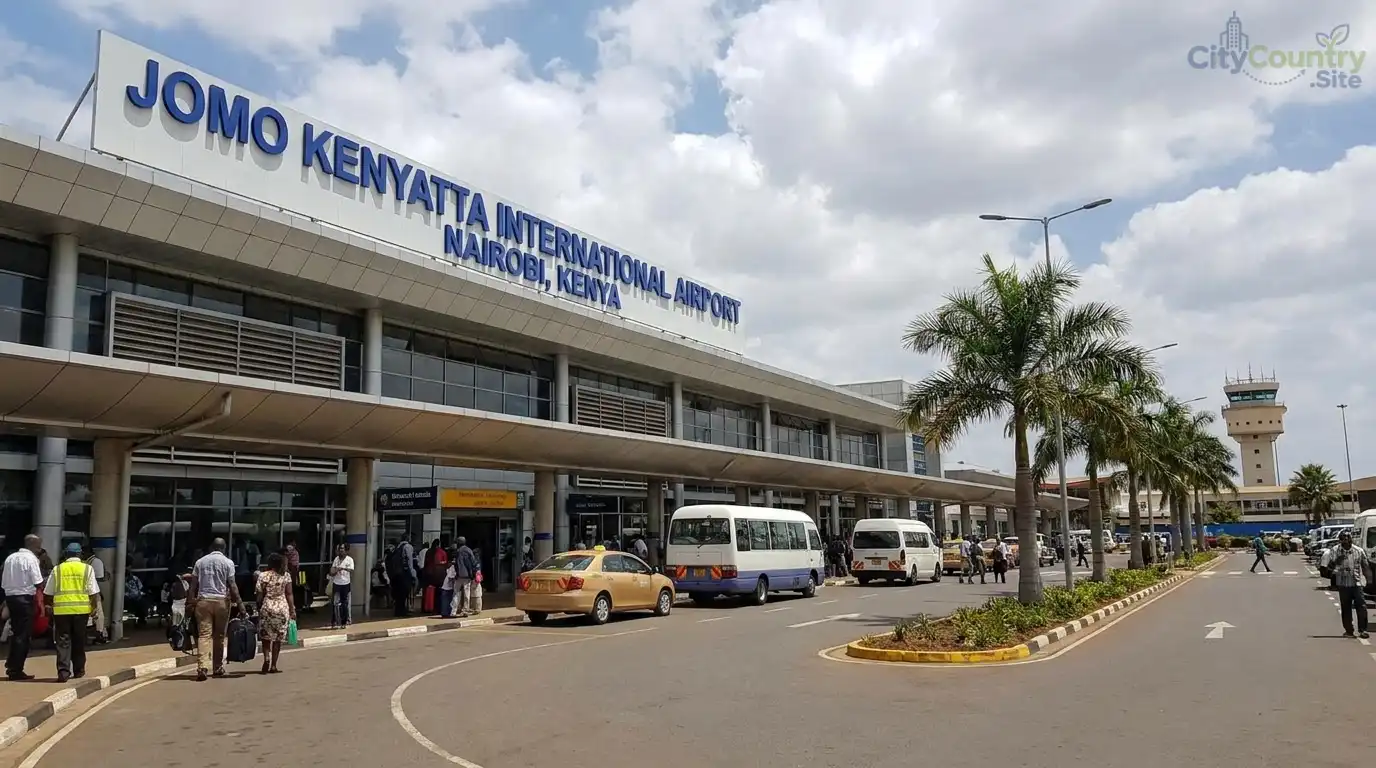
Jomo Kenyatta International Airport (IATA: NBO) is East Africa’s busiest airport and the primary international gateway for the entire region. Located approximately 15 km southeast of the city center in the Embakasi district, it handles an enormous volume of both international and domestic traffic.
The airport serves direct flights from major global hubs including London Heathrow, Amsterdam, Dubai, Doha, Istanbul, Paris, Zurich, Mumbai, Bangkok, and across Africa. Key airlines include Kenya Airways (the national carrier and regional hub operator), Ethiopian Airlines, Emirates, Qatar Airways, KLM, Lufthansa, British Airways, and Turkish Airlines.
Wilson Airport, located about 6 km from the CBD, handles domestic flights within Kenya and charter flights to safari destinations. If flying to the Maasai Mara or other Kenyan wildlife parks, your domestic connection likely departs from Wilson.
Getting from JKIA to the City Center:
| Transport Option | Duration | Cost (Approx.) | Notes |
|---|---|---|---|
| Uber / Bolt (ride-hailing) | 30–60 min | KES 1,200–2,500 (~$9–19) | Most reliable and transparent pricing |
| Kenya Airways / Airport Shuttle | 40–70 min | KES 600–900 (~$4.60–7) | Scheduled, affordable |
| Taxi (metered / negotiated) | 30–60 min | KES 2,000–4,000 (~$15–31) | Negotiate before boarding |
| Hotel shuttle | 40–70 min | Free or KES 1,000–2,000 | Pre-arrange through hotel |
| Public bus (matatu) | 60–90 min | KES 50–100 (~$0.40–0.75) | Very cheap, crowded, not recommended with luggage |
Traffic in Nairobi is notoriously heavy, particularly during morning (7–9 AM) and evening (5–8 PM) rush hours. Add 30–45 minutes to all estimates during peak hours. Many travelers arriving on late-night flights find the transfer to the city quick and smooth; those arriving in late afternoon face a different experience.
💡 Did You Know? Kenya Airways — known as “The Pride of Africa” — operates one of the most extensive route networks of any African carrier, connecting Nairobi to over 50 destinations across Africa, Europe, and Asia. Nairobi’s position as East Africa’s aviation hub means that almost all regional flights — from Rwanda, Uganda, Tanzania, Ethiopia, and beyond — pass through or connect at JKIA, making it the de facto gateway for the entire East African region.
7. Getting Around Nairobi
Navigating Nairobi requires a degree of strategic thinking — the city’s traffic can be genuinely challenging — but the range of transport options is wide.
Uber and Bolt are the essential tools for any visitor. Both apps operate extensively in Nairobi, providing transparent, metered pricing and safety features. A typical city ride costs KES 300–800 (~$2.30–6.15). This is by far the recommended way for tourists to get around — safe, accountable, and reasonably priced.
Matatus are Nairobi’s iconic privately operated minibuses — typically Toyota HiAce vans painted with vivid pop culture imagery and fitted with powerful sound systems. They serve fixed routes throughout the city for KES 30–100. Essential for understanding Nairobi’s street culture; less practical for tourists unfamiliar with routes. The SWVL app aggregates matatu routes into a bookable, bus-like system that is easier for visitors to use.
Taxis (white-painted vehicles) are available throughout the city. Negotiate the fare before getting in or insist on a meter. A typical city ride costs KES 800–2,000.
The Nairobi Commuter Rail operates a network of commuter train lines from the CBD to various suburbs — useful primarily for longer-distance commutes and not widely used by tourists.
Walking is pleasant in specific areas — Karen, Westlands, Kilimani, and parts of the CBD — but Nairobi is not a walking city in the way that many European or Asian cities are. Street safety varies significantly by area and time of day; ask your hotel for advice about walking in specific neighborhoods.
Boda bodas (motorcycle taxis) are ubiquitous and cheap but statistically the most dangerous form of transport in Kenya. Not recommended for visitors.

8. Top Attractions & Amazing Places in Nairobi
Top Attractions Table
| Attraction | Type | Entry Fee | Best Time | Time Needed |
|---|---|---|---|---|
| Nairobi National Park | Wildlife park / safari | $60 adults (~KES 7,800) | Morning (6–9 AM) | Half–Full day |
| Giraffe Centre | Wildlife sanctuary | KES 2,500 (~$19) | Morning | 1–2 hours |
| David Sheldrick Wildlife Trust | Elephant orphanage | $30 (~KES 3,900) | 11 AM feeding | 1.5 hours |
| Karen Blixen Museum | Heritage museum | KES 1,200 (~$9) | Morning | 1.5–2 hours |
| Nairobi National Museum | National museum | KES 1,200 (~$9) | Morning | 2–3 hours |
| Bomas of Kenya | Cultural village | KES 1,500 (~$11.50) | Afternoon (shows) | 2–3 hours |
| Karura Forest | Urban forest / trails | KES 600 (~$4.60) | Morning | 2–4 hours |
| Nairobi Railway Museum | Transport history | KES 500 (~$3.85) | Morning | 1–1.5 hours |
| Kenyatta International Convention Centre (KICC) | Viewpoint / architecture | Free (exterior) | Anytime | 30 min |
| Kibera Community Walk | Urban / cultural tour | $15–25 (guided) | Morning | 2–3 hours |
| Westgate Memorial | Memorial site | Free | Anytime | 30–45 min |
| Village Market | Market / cultural | Free | Morning | 2 hours |
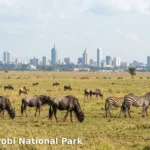
Nairobi National Park is the city’s defining miracle — a 117 square kilometre wildlife park that begins where the suburbs end, with the Nairobi skyline visible on the northern horizon behind grazing lions, rhinos, cheetahs, buffaloes, and hundreds of bird species. The park is home to over 100 mammal species and is the only place on earth where you can photograph a lion with a modern city skyline in the same frame. Morning game drives (self-drive or with a guide) are exceptional — leave at dawn when animals are most active. Entry: $60 per adult with a park vehicle hire of approximately $35–60 additional for self-drive.
The Giraffe Centre is operated by the African Fund for Endangered Species and focuses on breeding the endangered Rothschild’s giraffe. Visitors are invited to hand-feed adult giraffes from an elevated wooden platform — which means standing eye-level with these extraordinary animals and accepting their long, rough tongues on your hand as they take food pellets. It is simultaneously hilarious and deeply wonderful. One of Nairobi’s most joyful experiences, universally loved by children and adults.
The David Sheldrick Wildlife Trust is the world’s most successful orphaned elephant rescue and rehabilitation program. The daily 11 AM public visiting hour allows visitors to observe baby elephants being fed, mud-bathed, and cared for by their dedicated keepers. The elephants’ playfulness, the keepers’ devotion, and the program’s extraordinary conservation results make this one of the most moving wildlife experiences in Kenya.
The Karen Blixen Museum is the preserved farmhouse where Danish author Karen Blixen (pen name Isak Dinesen) lived and farmed from 1917 to 1931 — the period that inspired Out of Africa, one of the most celebrated memoirs of the 20th century. The house is beautifully maintained with original furniture and period objects, set in grounds that still feel remarkably like the farm Blixen described. The backdrop of the Ngong Hills visible from the veranda is unchanged from her time.
Karura Forest is one of Nairobi’s best-kept secrets for residents and one of its finest surprises for visitors — a 1,000-hectare urban forest in the northern suburbs of the city, threaded with walking, jogging, and cycling trails, waterfalls, a river, and remarkable birdlife. A world away from the urban hustle, accessible by Uber in 20 minutes from the CBD. Bring walking shoes.
💡 Did You Know? Nairobi National Park is the world’s only wildlife national park that shares a boundary with a capital city. During the pandemic lockdowns of 2020, when the park was closed to visitors and the city fell quiet, lions were photographed walking on the deserted highway near the park boundary — a moment that went viral globally and reminded the world of just how extraordinary Nairobi’s relationship with wildlife truly is.

9. Nairobi Food & Cuisine Guide
Nairobi’s food scene is genuinely world-class — arguably the finest dining environment in sub-Saharan Africa outside of Cape Town. The city combines traditional Kenyan and East African cuisine with Indian, Ethiopian, Lebanese, Japanese, Italian, and modern continental influences, reflecting its history as a cosmopolitan colonial city and its current status as a global business hub.
Must-Try Dishes in Nairobi
Nyama Choma — The undisputed king of Kenyan food culture. Slow-roasted goat or beef, cooked over an open charcoal fire until the outside is perfectly charred and the inside tender, then hacked into pieces and served with kachumbari (fresh tomato and onion salad) and ugali (maize porridge). Eaten with fingers, with cold beer, preferably with loud music nearby. This is Kenya in a meal.
Ugali — Kenya’s foundational carbohydrate — a dense, dough-like porridge made from white maize flour, cooked until it pulls away from the pot in a solid mass. Eaten at virtually every traditional Kenyan meal, torn off in pieces and used to scoop up stews, vegetables, and meat. Nutritious, filling, and utterly central to Kenyan food identity.
Sukuma Wiki — Literally “push the week” in Swahili — a simple but delicious sauté of collard greens with onions, tomatoes, and spices. One of Kenya’s most beloved everyday vegetables, named for the fact that it could “push” a family through the lean end of the week on a tight budget.
Githeri — A humble but deeply satisfying dish of boiled maize and beans, sometimes eaten plain, sometimes elaborated with tomatoes, onions, and fat. Traditional Kikuyu food that became a nationwide staple and a symbol of Kenyan everyday life.
Pilau — Richly spiced rice cooked with whole spices — cardamom, cloves, cumin, black pepper — and meat, reflecting the strong Swahili coastal and Indian influence on Kenyan cuisine. The deep brown color comes from caramelized onions. Extraordinary flavor.
Mutura — Kenyan blood sausage — goat intestine stuffed with a mixture of blood, fat, and offal, then grilled or roasted. A street food staple found at evening grills throughout Nairobi. An acquired taste that those who acquire it become passionate advocates for.
Mandazi — East African doughnuts — slightly sweet, lightly spiced with cardamom and coconut, fried until golden and puffy. The classic East African breakfast accompaniment to sweet milky tea.
Chai (Kenyan Milk Tea) — Not the spiced masala chai of India but Kenya’s own version — strong black tea brewed with full-fat milk and sugar in a single pot. Sweet, creamy, warming. The social lubricant of Kenyan daily life. Available everywhere for virtually nothing.
Best Restaurants & Food Spots
Carnivore Restaurant — Nairobi’s most famous restaurant and a genuine institution. Founded in 1980, it specializes in nyama choma on an epic scale — whole animal roasts on Maasai swords over an open pit of acacia wood. The menu has included game meats (crocodile, ostrich, camel) since its founding, though regulations have reduced the exotic game options over the years. An unmissable Nairobi experience. Dinner: KES 4,000–8,000 (~$31–62) per person.
Talisman Restaurant (Karen) — Consistently one of Nairobi’s finest dining experiences — a beautiful garden restaurant in Karen serving inventive continental and fusion cuisine with excellent local ingredients. Romantic, elegant, and thoroughly delicious. Mains: KES 2,500–5,000 (~$19–38).
Cultiva (Kilimani) — Nairobi’s most celebrated contemporary restaurant — seasonal, locally sourced, with a constantly changing menu that represents the best of modern Kenyan ingredients and international cooking technique. Mains: KES 2,000–4,500.
Mama Oliech’s — The most famous nyama choma establishment in Nairobi among discerning locals — a humble, wonderfully unpretentious roast fish and nyama choma restaurant in Hurlingham. The fried tilapia is legendary. Queues at weekends. KES 1,000–2,500 per person.
Jikoni (Westlands) — Outstanding Swahili and Indian-influenced East African cooking in a warm, intimate space. The pilau, the coastal fish dishes, and the biriyani are exceptional. KES 1,200–3,000.
Java House (multiple locations) — The coffee chain that launched Nairobi’s contemporary café culture. Reliable, comfortable, decent coffee, good breakfasts. The city’s living room for meetings, laptop sessions, and people-watching. Everywhere.
Nairobi Street Kitchen (pop-up and events) — A rotating street food market and pop-up dining event circuit that showcases Nairobi’s extraordinary variety of food cultures. Follow on social media for current locations and schedules.
💡 Did You Know? Kenya is one of the world’s top three tea-exporting nations, producing some of the finest black tea in the world from the highlands around Kericho and Nandi. Kenyan tea is prized globally for its bright, brisk, full-bodied character. Yet in Nairobi’s own cafés and restaurants, the coffee culture has exploded in recent years, with exceptional single-origin Kenyan arabica — among the most sought-after coffee in the global specialty market — now available throughout the city’s growing independent café scene.
10. Accommodation Guide for Nairobi Tour
Nairobi offers an extremely wide range of accommodation — from backpacker hostels in the CBD to some of East Africa’s finest luxury lodges in the Karen and Langata suburbs.
Best Areas to Stay:
- Westlands: Best for nightlife, restaurants, and central access to both the CBD and northern suburbs
- Karen / Langata: Best for wildlife proximity, beauty, and the finest mid-range and luxury experiences
- Kilimani: Best for the trendy café-and-restaurant scene and proximity to Westlands
- Gigiri / Runda: Best for luxury, diplomats, and proximity to the UN complex
- CBD: Best for budget travelers wanting the most central and affordable location
Accommodation Price Ranges (2026)
| Category | Price/Night (USD) | Examples |
|---|---|---|
| Budget Hostel / Guesthouse | $12–30 | Upper Hill Campsite, Milimani Backpackers, Tribal Hostel |
| Mid-Range Hotel | $60–120 | Nairobi Serena Hotel (standard rooms), Trademark Hotel, Ole-Sereni Hotel |
| Upscale Hotel | $130–220 | Radisson Blu Nairobi, Tribe Hotel, Villa Rosa Kempinski (standard) |
| Luxury Hotel | $200–500+ | Giraffe Manor, Hemingways Nairobi, The Emakoko, Four Points Sheraton |
Giraffe Manor is without question Nairobi’s — and arguably Africa’s — most extraordinary hotel experience. A boutique manor house in Langata, surrounded by the grounds of the Giraffe Centre, where resident Rothschild’s giraffes lean through the breakfast room windows to accept food from guests. Rates: approximately $600–1,200 per room per night including all meals and activities. Completely booked months in advance. Worth every cent for a once-in-a-lifetime experience.
Ole-Sereni Hotel is the finest mid-range option in Nairobi with a unique selling point: its swimming pool and terraces overlook the Nairobi National Park boundary fence, meaning guests can watch lions, cheetahs, and giraffes from the hotel grounds at sunset. Rates: approximately $130–200 per night.
11. Best Time to Visit Nairobi
July through October is the finest time to visit Nairobi and Kenya. The long dry season delivers clear skies, comfortable temperatures, and — crucially — the peak of the Great Wildebeest Migration in the Maasai Mara from July to September. This is when the world’s most spectacular wildlife event — millions of animals crossing predator-filled rivers — reaches its dramatic apex.
August is Nairobi’s busiest month for tourism — book everything well in advance. Safari camp prices in the Mara peak at this time.
January and February offer Nairobi’s warmest and driest conditions — excellent for city exploration and comfortable wildlife viewing in Nairobi National Park. The Mara is quieter and more affordable; many animals are still present after the migration period.
June is a lovely shoulder month — the long rains have typically ended, the air is fresh and clear, and crowds are building but haven’t peaked. Good value.
The long rains (March to May) bring heavy daily downpours. The landscape is brilliantly green, accommodation prices drop substantially, and the city remains fully functional. April is the wettest month and the least recommended for first-time visitors.
The short rains (October to November) are generally briefer and less intense than the long rains. October is still excellent for Nairobi itself; November wetter.
Key Festivals & Events in Nairobi
- Safari Rally Kenya (June/July) — A round of the FIA World Rally Championship, conducted on spectacularly challenging Kenyan bush roads and generating enormous national enthusiasm
- Nairobi International Trade Fair (September/October) — East Africa’s largest trade fair at the Kenyatta International Convention Centre
- Blankets and Wine (monthly, various locations) — Nairobi’s most beloved outdoor music festival — a monthly afternoon of live music, food, wine, and the best of the city’s creative class
- Jamhuri Day (December 12) — Kenya’s Independence Day, celebrated with military parades, cultural performances, and national festivity
- Nairobi Restaurant Week (various) — Annual celebration of the city’s extraordinary food scene, with participating restaurants offering special menus
- Art Nairobi — Annual contemporary art fair showcasing Kenyan and East African visual artists
- Koroga Festival — Major annual outdoor music and food festival drawing international and Kenyan artists
12. Shopping Guide
Nairobi is one of Africa’s finest shopping cities — a remarkable combination of traditional crafts, contemporary African design, international retail, and the most vibrant informal market culture on the continent.
What to Buy:
Maasai Beadwork and Jewelry — Intricate, vividly colored beaded necklaces, bracelets, earrings, and belts made using traditional Maasai techniques. Some of the most beautiful and genuinely distinctive jewelry in Africa. Buy directly from Maasai artisans or reputable craft markets.
Kikoy and Kanga Fabrics — Printed cotton textiles worn throughout East Africa. The kikoy (originally a coastal Swahili garment) and kanga (printed with Swahili proverbs) are lightweight, beautiful, and immensely useful. Excellent souvenirs and genuinely worn by Kenyans daily.
Kenyan Coffee and Tea — Single-origin Kenyan arabica coffee and Kenya’s famous highland black teas are outstanding edible souvenirs. Buy from specialty roasters or the Kenya Tea Development Agency for the finest quality.
Soapstone Carvings (Kisii Stone) — Beautiful, soft-stone sculptures in animal and abstract forms, made from soapstone quarried in western Kenya. Lightweight, unique, and genuinely handmade.
Contemporary Kenyan Art — Nairobi’s art scene has exploded in recent years. Original paintings, prints, and sculptures by Kenyan artists are available at galleries throughout the city at prices that remain accessible by international standards.
Leather Goods — Quality leather bags, sandals, and accessories made from Kenyan leather, available at markets and leather workshops.
Where to Shop:
Maasai Market (various locations, rotating days) — Nairobi’s most famous craft market, rotating between several city locations on different days of the week. Hundreds of vendors sell Maasai jewelry, wooden carvings, soapstone, paintings, fabrics, and more. Bargaining is essential and expected. A rich, lively, and often overwhelming experience in the best possible way.
Kazuri Beads (Karen) — A remarkable social enterprise established near Karen Blixen’s former farm in the 1970s, hand-making distinctive ceramic beads and jewelry employing hundreds of Nairobi women. Beautiful, ethical, and unique to Kenya.
Village Market (Gigiri) — An upscale mall with excellent local craft boutiques alongside international retail. Good for quality assured and fairly priced Kenyan goods without aggressive bargaining.
Westgate Shopping Mall (Westlands) — A symbol of Nairobi’s resilience — rebuilt and reopened after the 2013 terrorist attack, it is now a thriving mid-to-upscale mall with international and local brands.
Nakumatt / Naivas Supermarkets — For food souvenirs — packaged Kenyan coffee, tea, spices, and Kenyan snacks — local supermarkets offer the best selection at local prices.

13. Nairobi Nightlife & Entertainment
Nairobi has East Africa’s finest nightlife — a city of genuine after-dark energy, creative musicians, excellent cocktail bars, and a social culture built around music, conversation, and celebration.
Live Music:
The Alchemist (Westlands) — Nairobi’s most beloved live music venue and creative hub — an outdoor space combining bars, food trucks, a skate park, and a stage that hosts some of the city’s best acts across Afrobeats, jazz, hip-hop, and electronic music. Essential.
Blankets and Wine — The monthly outdoor music festival mentioned earlier is also Nairobi’s finest live music event — a leisurely afternoon on a lawn with excellent live performances, artisan food vendors, and the full creative energy of the city’s young professional class.
J’s Fresh Bar and Kitchen — A legendary live jazz bar in Westlands running for over two decades. Excellent musicians, cold Tusker beer, and that rare quality of a bar that feels completely authentic.
Clubs:
B-Club (Westlands) — Nairobi’s most prestigious nightclub — consistently attracting international DJs and the city’s most fashionable crowd. Long queues on weekends; arrive early or book a table.
Havana Bar (Westlands) — Long-running, high-energy venue with Latin, Afrobeats, and commercial club music. Popular with both locals and visitors.
Club Gipsy — One of the older and more eclectic Nairobi clubs — five floors of different music genres creating one of the city’s most diverse nightlife experiences.
Rooftop Bars:
Hemingways Nairobi (Karen) — A magnificent rooftop bar with views over the Ngong Hills and Karen’s green canopy. Exceptional cocktails and the quiet elegance of Nairobi’s finest suburb.
360 Bar (KICC) — The revolving bar at the top of the Kenyatta International Convention Centre offers a 360-degree view over the entire Nairobi skyline. Touristy but genuinely spectacular.
Brew Bistro (multiple locations) — Nairobi’s craft beer pioneer — excellent locally brewed beers, good food, lively atmosphere.
14. Hidden Gems & Local Secrets
Uhuru Gardens — The largest memorial park in Kenya, built on the site where independence was declared on December 12, 1963. Peaceful, historically significant, and almost entirely free of tourists. A beautiful place for a quiet morning walk.
Nairobi Railway Museum — An extraordinary and almost completely overlooked attraction — a collection of vintage locomotives, colonial-era railway equipment, and memorabilia from the building of the Uganda Railway. The carriages in which early East African settlers traveled and the engines that pulled them are preserved in a dusty, wonderfully atmospheric open-air museum. Entry: KES 500.
Kitengela Glass — An extraordinary artist’s studio and sculpture garden in Kitengela, about 30 km south of Nairobi, where master glass artist Nani Croze and a community of artists create remarkable recycled glass sculptures, mosaics, and jewelry. The studio and gardens are open to visitors and represent one of the most unusual and beautiful creative spaces in East Africa.
Ngong Road Forest — A patch of indigenous forest along Ngong Road in the city’s western suburbs, maintained as a sanctuary by the Kenya Forest Service. Beautiful morning walks, excellent birdwatching, and a sense of genuine wilderness within the city limits.
Eastleigh’s Little Mogadishu — Nairobi’s Somali quarter is a completely different sensory world from the city’s upscale suburbs — a dense, noisy, extraordinarily energetic neighborhood of Somali restaurants, qat markets, money transfer shops, and fabric stores. The food alone — particularly the canjeero (Somali sponge bread) with suqaar (spiced meat) and sweet Somali tea — justifies the trip. Safe for respectful visitors in daytime.
Sunday Mornings at Karura Forest — Karura is always good, but on Sunday mornings it becomes a Nairobi institution — hundreds of joggers, cyclists, families, and dog-walkers filling the forest trails in a display of urban communal life at its most joyful.
15. Day Trips from Nairobi
Nairobi’s position at the center of Kenya’s road and air network makes it an exceptional base for day trips and excursions. Some of the world’s finest wildlife destinations are within a few hours.
Day Trips Table
| Destination | Distance | Travel Time | Method | Highlights |
|---|---|---|---|---|
| Naivasha / Hell’s Gate | 90 km northwest | 1.5–2 hrs | Car / Bus | Lake Naivasha, cycling safari in Hell’s Gate, geothermal spa |
| Amboseli National Park | 240 km southeast | 4 hours | Car / Tour | Elephants with Kilimanjaro backdrop, world’s best elephant photography |
| Maasai Mara | 280 km southwest | 5–6 hrs (road) / 45 min (flight) | Drive or fly | Greatest wildlife migration on earth; big cats |
| Nakuru National Park | 160 km northwest | 2.5–3 hrs | Car | Lions, rhinos, flamingos on Lake Nakuru, Menengai Crater |
| Ol Pejeta Conservancy | 200 km north | 3.5 hrs | Car | Last two northern white rhinos on earth; black rhino; big cats |
| Ngong Hills | 25 km southwest | 45 min | Car / Uber | Hiking, Karen Blixen views, Maasai markets |
| Thika (Blue Posts) | 45 km northeast | 1 hour | Matatu / Car | Thika Falls, Chania Falls, colonial history |
| Fourteen Falls | 65 km northeast | 1.5 hrs | Car | Kenya’s widest waterfall, swimming, birdwatching |
Hell’s Gate National Park near Naivasha is unique in Africa — a national park where you are permitted to walk and cycle freely among wildlife including zebras, buffaloes, warthogs, and various antelope without a vehicle. The dramatic volcanic landscape — towering cliffs, geothermal steam vents, and a deep gorge — makes it visually extraordinary. Combined with a boat trip on Lake Naivasha (abundant hippos and hundreds of bird species), it makes for one of the finest day trips from Nairobi.
Amboseli National Park offers what is arguably the world’s most iconic wildlife photograph — a herd of African elephants with the perfect cone of Mount Kilimanjaro rising behind them. At 5,895 metres (19,341 feet), Kilimanjaro is the world’s highest freestanding mountain, visible from Amboseli on clear mornings with extraordinary clarity. Amboseli’s elephant population is one of the best-studied in Africa.
Ol Pejeta Conservancy is home to the last two northern white rhinos on earth — Sudan (who died in 2018) and his daughter and granddaughter — in what has become both a conservation tragedy and a symbol of the desperate urgency of wildlife protection. The conservancy also has excellent populations of black rhinos, lions, leopards, and cheetahs.
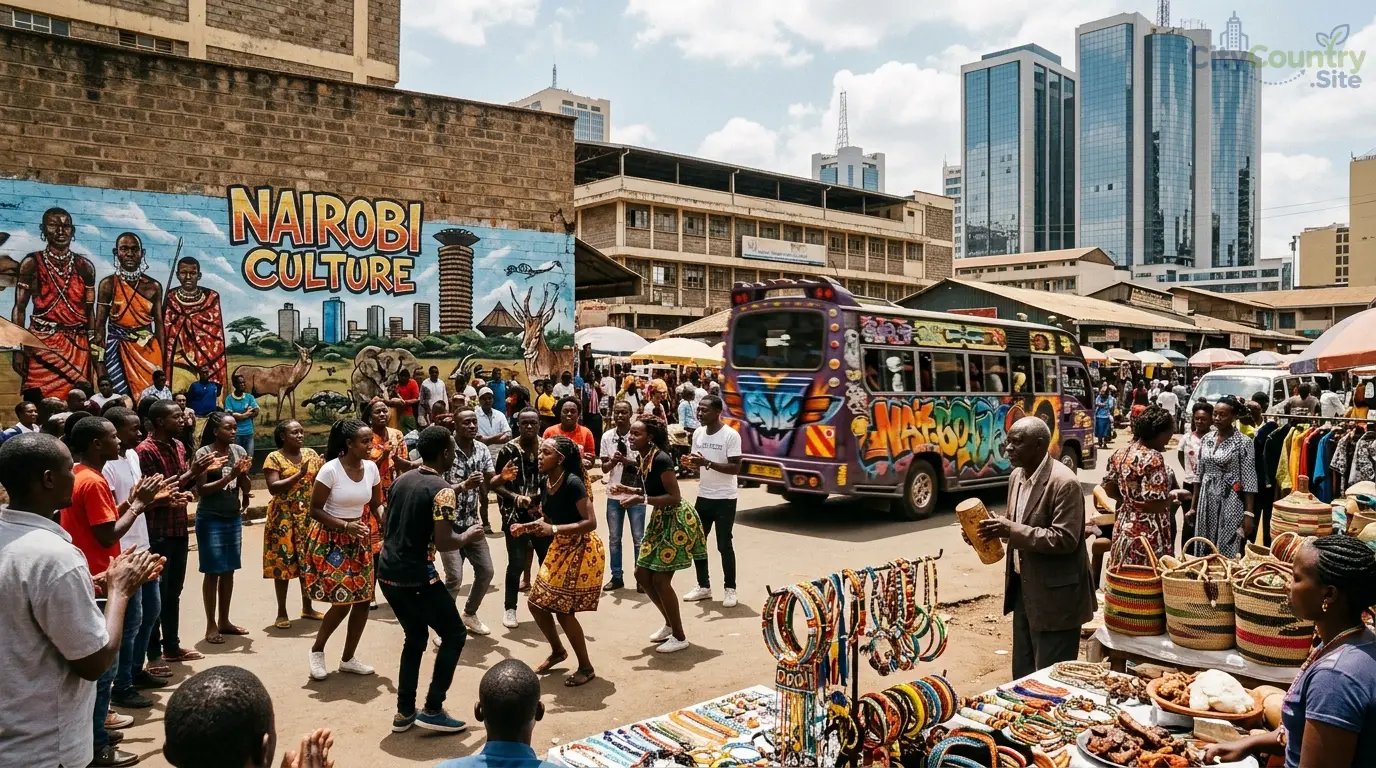
16. Nairobi Local Culture, Customs & Etiquette
Nairobi is one of Africa’s most cosmopolitan cities, home to over 40 ethnic communities from across Kenya and beyond. Its culture is a remarkable fusion of traditional Kenyan values and 21st-century global modernity.
Language: Kenya has two official languages — Swahili (Kiswahili) and English. Both are widely spoken throughout Nairobi, with English dominant in business, government, and upscale environments. Swahili is the language of everyday life and street culture. Learning a few Swahili words is warmly appreciated:
- Jambo / Hujambo — Hello
- Asante (sana) — Thank you (very much)
- Karibu — Welcome / You’re welcome
- Hakuna matata — No problem (yes, it’s a real phrase, and yes, Kenyans are amused that the world knows it from a cartoon)
Religion: Kenya is predominantly Christian (about 85%), with a significant Muslim minority (about 11%) concentrated in Nairobi’s Eastleigh neighborhood and along the coast. Both communities observe their faith with varying degrees of public expression. Respect religious observances, dress modestly near mosques and churches, and be aware that Sunday mornings bring significant church traffic and reduced commercial activity in many areas.
Dress Code: Nairobi is generally fairly relaxed about dress compared to more conservative African cities. Smart casual is appropriate for most situations. Very skimpy clothing is considered disrespectful in many neighborhoods. Business environments — including most hotels and upscale restaurants — expect neat, smart dress.
The Harambee Spirit: Kenya’s national motto — Harambee (Swahili for “pulling together”) — reflects a genuine cultural value of communal effort and mutual support that visitors frequently notice in the warmth and helpfulness of ordinary Nairobians.
Photography: Ask before photographing individuals. Particularly in Maasai communities, photography may be expected to involve a small payment — respect this custom. Never photograph police, military, or government buildings without explicit permission.
Tipping:
- Restaurants: 10% tip is standard at mid-range and upscale restaurants; some add a service charge automatically
- Safari guides: $10–20 per day for an excellent guide — significant income supplement
- Hotel porters: KES 100–200 per bag
- Taxis and Uber: rounding up is appreciated; not obligatory
- Maasai guides and cultural hosts: negotiated amounts; typically $5–15
Dos and Don’ts:
- ✅ Do greet people before launching into requests or transactions — taking a moment for social niceties is important in Kenyan culture
- ✅ Do bargain at markets — it is expected and part of the social exchange
- ✅ Do use your right hand for greetings and transactions when possible
- ❌ Don’t photograph people without permission — especially in informal settlements or traditional communities
- ❌ Don’t display expensive belongings unnecessarily in busy public areas
- ❌ Don’t drink tap water
17. Safety & Travel Tips
Nairobi has an international reputation for crime that is, in some respects, more severe than the city actually warrants for careful visitors — and in other respects, a reputation that should be taken seriously.
Safe Areas: Westlands, Karen, Kilimani, Lavington, Gigiri, and the major tourist sites are generally safe for visitors during daylight hours. Upper-end malls and hotels have excellent security.
Areas Requiring Extra Caution:
- CBD (especially after dark): Petty crime risk increases significantly after dark; avoid walking in the CBD at night
- Nairobi River environs and lower-lying areas: Higher crime risk; avoid at night
- Informal settlements: Safe with experienced local guides; not recommended for independent exploration without an established contact
Common Scams:
- Fake “friends” who strike up friendly conversation and lead you to overpriced shops or ask for money
- Taxi overcharging — always use Uber or Bolt for transparent pricing
- Fake tour operators offering drastically underpriced safari packages — these frequently involve vehicle breakdowns in the middle of parks or no-show drivers
- M-Pesa/mobile money scams — do not use unknown mobile money services or share PIN numbers
Emergency Numbers:
- Police: 999 or 112 (mobile)
- Ambulance: 999 or 0722 314 239 (AAR Healthcare — private, recommended)
- Kenya Red Cross: 1199
- Tourist Police Unit: 020-604767
Health Tips:
- Malaria is present in Nairobi at low levels (the altitude reduces mosquito populations) but increases in lower-lying suburban areas and is significant in rural Kenya — take antimalarial medication as advised by your doctor
- Drinking water: Only drink bottled or filtered water; never tap water
- High-quality private medical facilities are available in Nairobi — Aga Khan University Hospital, Nairobi Hospital, and AAR Healthcare are the recommended options for emergencies
- Comprehensive travel insurance including medical evacuation coverage is strongly recommended
18. Budget Tour of Nairobi
Daily Cost Table
| Category | Budget Traveler | Mid-Range | Luxury |
|---|---|---|---|
| Accommodation | $12–30 (hostel / guesthouse) | $70–130 (hotel) | $200–500+ (luxury hotel) |
| Food | $8–15 (matatu stops, local restaurants) | $25–55 (restaurant meals) | $60–150+ (fine dining) |
| Transport | $3–8 (matatu, occasional Uber) | $15–35 (Uber, taxis) | $50–120 (private driver) |
| Activities | $15–30 (Giraffe Centre, museum, park entry) | $40–100 (guided activities, Sheldrick Trust) | $100–500+ (luxury safari, Giraffe Manor) |
| Total/Day | ~$38–83 | ~$150–320 | ~$410–1,270+ |
Nairobi is moderately priced by global standards — more expensive than Southeast Asian cities but representing excellent value relative to European capitals. The major costs are wildlife attraction entry fees ($30–60 each) and any safari add-ons.
19. Practical City Information
Visa & Entry: Kenya operates an e-visa system for most nationalities — apply online at evisa.go.ke before travel. Standard single-entry tourist e-visa: $51.50 USD for most nationalities, valid for 90 days from issue and granting 30 days in Kenya per visit. Citizens of many East African Community countries enter visa-free. Check current requirements for your nationality before travel. Kenya also participates in the East Africa Tourist Visa — a multiple-entry visa covering Kenya, Uganda, and Rwanda for $100.
Required Documentation:
- Passport valid for at least 6 months beyond travel dates
- Proof of onward travel
- Proof of accommodation
- Sufficient funds evidence
Vaccinations: Yellow fever vaccination certificate is required if arriving from or transiting through a yellow fever endemic country. Recommended: Typhoid, Hepatitis A, Tetanus, Meningitis, Rabies (for extended rural stays). Malaria prophylaxis is recommended — consult a travel medicine specialist.
Emergency Contacts:
- Police: 999 / 112
- Ambulance (private — recommended): 0722 314 239 (AAR Healthcare)
- Kenya Tourism Federation: 020 2713348
SIM Cards & Internet: Available at JKIA on arrival and throughout the city. Safaricom is the dominant network with the best coverage across Kenya — M-Pesa is essential for local payments. Airtel Kenya is a reliable alternative. A tourist SIM with 10–20 GB of data costs approximately KES 500–1,000 (~$4–8). 4G coverage is excellent throughout Nairobi; fiber internet is widely available in hotels and cafés.
Power: Kenya uses Type G plugs (UK-standard three-pin square plugs), voltage 240V, 50Hz. UK visitors need no adapter; most other nationalities should carry a universal adapter.
Drinking Water: Tap water in Nairobi is treated but should not be drunk by visitors. Bottled water is inexpensive and widely available. Many hotels provide filtered water in rooms.
20. How to Be a Responsible Traveler in Nairobi
Wildlife Ethics: If visiting Nairobi National Park, the Giraffe Centre, or the Sheldrick Trust — follow all guide instructions regarding distance from wildlife, photography protocols, and interaction rules. Never feed wildlife except in designated feeding programs. The David Sheldrick Trust operates an excellent adoption program for orphaned elephants — consider adopting an elephant as a direct conservation contribution.
Support Community Tourism: The Kibera community walking tours organized by local social enterprises provide income for community guides and authentic insight into informal settlement life. Book through established operators like Shining Hope for Communities or the Kibera Tour Guide Association rather than approaching independently.
Buy Kenyan: The Maasai market, Kazuri Beads, and craft cooperatives employ thousands of Kenyan artisans. Purchasing from these sources — rather than from hotel lobby gift shops selling imported goods — puts money directly into the hands of makers.
Wildlife Products: Kenya imposes strict laws on wildlife products. Never buy ivory, turtle shell, rhino horn, or any other wildlife-derived product. If offered such items, report to Kenya Wildlife Service.
Plastic Usage: Kenya banned plastic bags in 2017 in one of the world’s strictest such bans. Carry a reusable bag for all shopping. Do not bring plastic bags into the country.
Responsible Safari Choices: If booking safaris or wildlife experiences from Nairobi, research operators for their commitment to conservation, community benefit, and ethical wildlife interaction. Look for operators affiliated with the Kenya Tourism Federation or Ecotourism Kenya.
Carbon Offsetting: Consider offsetting the carbon footprint of your international flight through a reputable program, ideally one that supports Kenyan conservation projects such as reforestation in the Aberdares or the Chyulu Hills.
21. Travel Media: Documentaries, Books & Channels
Books:
- Out of Africa by Karen Blixen — The classic memoir of early 20th-century Kenya, beautiful and deeply important for understanding the country’s colonial history and landscape
- A Grain of Wheat by Ngũgĩ wa Thiong’o — Kenya’s greatest novelist explores the Mau Mau independence movement and its aftermath. Essential for any visitor interested in Kenyan political and social history
- The Constant Gardener by John le Carré — A thriller set partly in Nairobi that explores pharmaceutical exploitation in Africa; later adapted into an Oscar-winning film
- I Dream of Africa by Kuki Gallmann — A memoir of life on a vast Kenyan ranch, turning to conservation after personal tragedy
- Nairobi Half Life (novelization) — Based on the award-winning Kenyan film of the same name
Documentaries & Films:
- Out of Africa (1985) — Academy Award-winning film starring Meryl Streep and Robert Redford, based on Karen Blixen’s memoir
- Nairobi Half Life (2012) — The most acclaimed Kenyan feature film ever made — a thriller set in Nairobi’s underworld that won the Kenyan Film Critics Award
- The Elephant Queen (2019, Apple TV+) — Extraordinary documentary following a matriarch elephant family in Kenya
- Virunga (2014) — Critically acclaimed documentary about conservation in the Congo/East Africa region providing regional wildlife context
YouTube Channels:
- Mark Wiens — Excellent Nairobi food content with genuine local insight
- Indigo Traveller — Well-produced Nairobi safety and culture content
- Honest Guy Travels — Kenya travel guide content
- Kenya Tourism Board — Official destination content
22. Nairobi vs. Similar Cities
| Feature | Nairobi | Johannesburg (S. Africa) | Addis Ababa (Ethiopia) |
|---|---|---|---|
| Wildlife access | ⭐⭐⭐⭐⭐ National park in city limits | ⭐⭐⭐ Good day trips | ⭐⭐⭐ Good regional parks |
| Safety | ⭐⭐⭐ Moderate (varies by area) | ⭐⭐ More challenging | ⭐⭐⭐ Moderate |
| Food scene | ⭐⭐⭐⭐⭐ East Africa’s finest | ⭐⭐⭐⭐⭐ Outstanding | ⭐⭐⭐⭐⭐ Outstanding |
| Nightlife | ⭐⭐⭐⭐⭐ East Africa’s best | ⭐⭐⭐⭐⭐ Outstanding | ⭐⭐⭐⭐ Very good |
| Cultural depth | ⭐⭐⭐⭐ Very rich — Maasai, Kikuyu, Swahili | ⭐⭐⭐⭐ Very rich | ⭐⭐⭐⭐⭐ Ancient civilization |
| Safari gateway | ⭐⭐⭐⭐⭐ Best in world | ⭐⭐⭐⭐ Kruger, Cape | ⭐⭐⭐ Good regional parks |
| Tech / innovation | ⭐⭐⭐⭐⭐ Silicon Savannah | ⭐⭐⭐⭐ Strong | ⭐⭐⭐ Growing |
| Affordability | ⭐⭐⭐ Moderate | ⭐⭐⭐ Moderate | ⭐⭐⭐⭐ Affordable |
Choose Nairobi if you want East Africa’s finest and most exciting city experience combined with unparalleled wildlife access — including the only national park inside a capital city on earth, proximity to the world’s greatest safari destination (Maasai Mara), and a creative, culinary, and nightlife scene that has no equal in the region.
23. Nairobi City Travel Tips
- Download Uber and Bolt before arriving — essential for safe, transparent pricing throughout the city
- Book the David Sheldrick Wildlife Trust visit in advance — the 11 AM session fills quickly
- The Giraffe Centre is best visited first thing in the morning before tour groups arrive
- Never walk in the CBD at night — use Uber even for short distances
- Carry Kenyan shillings for markets and small restaurants; USD and cards work in malls and hotels
- Traffic in Nairobi is serious — add 45–60 minutes to all journey times during rush hours (7–9 AM, 5–8 PM)
- The Nairobi National Park self-drive experience is exceptional — rent a 4WD from reputable agencies or book a guided drive
- Karen and Langata are worth the extra transport cost for accommodation — quieter, greener, and closer to the best wildlife experiences
- Blankets and Wine (monthly outdoor music) is the finest cultural experience Nairobi offers for a Sunday afternoon — check the schedule
- Yellow fever vaccination certificate is required if coming from endemic countries — carry it with you
- Safaricom is the essential network — get an M-Pesa SIM at the airport for seamless payments throughout Kenya
- Never buy ivory, wildlife products, or any items made from protected species — the penalties are severe and the conservation harm is real
💡 Did You Know? Nairobi is home to the United Nations Environment Programme (UNEP) Global Headquarters and UN-Habitat — making it the only city in the Global South to host the headquarters of two major United Nations agencies. This status has made Nairobi a center for international environmental diplomacy and policy, attracting thousands of international professionals and significantly shaping the city’s cosmopolitan character.
24. Is Nairobi Worth Visiting? — Final Verdict
Absolutely and enthusiastically, yes. Nairobi is one of the most exciting, complex, and rewarding cities in Africa — a place that challenges every assumption you might carry about the continent and replaces them with something far more nuanced, vibrant, and inspiring.
It is not an easy city in the way that some well-managed, tourist-polished destinations are. Traffic is challenging. Security requires awareness and street-smartness. The gap between the city’s spectacular wealth and its areas of deep poverty is visible and sometimes difficult to sit with. But these qualities are also what make Nairobi real — a genuine, working African metropolis with all the energy and contradictions that implies.
Nairobi is best suited for:
- Wildlife enthusiasts — The only capital city on earth where you can watch lions on a morning game drive and be back for lunch. Combined with the Maasai Mara day trip access, Nairobi is the world’s finest safari gateway
- Foodies — East Africa’s best restaurant scene, period. From nyama choma at a roadside grill to sophisticated contemporary Kenyan cuisine, the food will delight you
- Culture and history lovers — Karen Blixen, the Mau Mau, the independence story, Maasai culture, and the extraordinary mix of 40+ Kenyan ethnic traditions create a cultural depth that rewards serious engagement
- Technology and business travelers — Silicon Savannah is real. Nairobi’s tech scene, startup culture, and business infrastructure make it a compelling destination for professional travelers
- Night owls and music lovers — East Africa’s finest clubs, live music venues, and the extraordinary Blankets and Wine culture
- Adventurous independent travelers who research carefully, embrace the city’s complexity, and engage with it beyond the major tourist circuit
Less suited for first-time solo travelers with no prior African experience (Kigali or Cape Town offer easier introductions), families with very young children, or those seeking purely relaxing beach holidays.
The verdict: Give Nairobi a minimum of three full days — four or five is better. Add the Maasai Mara, Hell’s Gate, or Amboseli for a week of experiences that will define your understanding of Africa. Come with curiosity, open eyes, reasonable street sense, and an appetite for everything. Nairobi will exceed every expectation.
25. Frequently Asked Questions About Nairobi
Q1: Is Nairobi safe for tourists?
Nairobi has a more complex security landscape than some African capitals. Parts of the city — particularly Westlands, Karen, Kilimani, Lavington, and Gigiri — are generally safe for visitors during daylight hours. The CBD requires more awareness, particularly after dark when petty crime increases. Violent crime against tourists is relatively rare in tourist-frequented areas; petty theft and scams are the more common risks. Use Uber rather than walking, avoid the CBD at night, keep valuables secure, and follow your hotel’s specific safety advice. Many thousands of tourists visit Nairobi safely every year.
Q2: What visa do I need to visit Kenya?
Most nationalities can apply for an e-visa online at evisa.go.ke before travel. Cost: $51.50 USD for single entry, valid 30 days. Citizens of East African Community countries enter visa-free. The East Africa Tourist Visa ($100) covers Kenya, Uganda, and Rwanda on a single multiple-entry visa. Always check current requirements at time of booking.
Q3: Is there really a national park in central Nairobi?
Yes — Nairobi National Park is a genuine 117 km² wildlife reserve with its northern boundary running along the southern edge of the city. It is home to lions, cheetahs, leopards, rhinos, buffaloes, giraffes, zebras, hippos, and over 100 other mammal species. You can see the Nairobi skyline from inside the park while watching lions. It is one of the most extraordinary geographic facts about any city in the world.
Q4: What is the best time to visit Nairobi for the Great Migration?
The Great Wildebeest Migration peaks in the Maasai Mara (accessible as a day trip or short fly-out from Nairobi) between July and October, with the dramatic Mara River crossings typically occurring in July through September. For the very best migration viewing, visit in August, when crossing frequency peaks. Book Mara camps 6–12 months in advance for this period.
Q5: How do I get around Nairobi safely?
Uber and Bolt are the recommended transport options for tourists — safe, transparent pricing, and widely available. Download both apps before arriving. For daytime exploration, taxis and matatus are also options. Avoid walking in unfamiliar areas at night. Never take a tuk-tuk or boda boda (motorcycle taxi) — they are statistically the most dangerous transport options in Kenya.
Q6: Is the food safe to eat in Nairobi?
Food at established restaurants and markets is generally safe. At street food stalls, choose busy vendors with high turnover — food that is freshly cooked and hot is the safest option. Never drink tap water — use bottled or filtered water throughout your stay. A mild stomach upset is not unusual in the first day or two; carry oral rehydration salts and basic stomach medication.
Q7: Can I do a Maasai Mara safari from Nairobi as a day trip?
Technically yes — charter flights from Wilson Airport make the Mara accessible in about 45 minutes. However, a single day is genuinely not enough to appreciate the Mara. A minimum of two nights in a Mara camp is strongly recommended to maximize wildlife sightings and experience dawn and dusk game drives. Road trips to the Mara take 5–6 hours each way — possible but tiring for a day trip.
Q8: What language do people speak in Nairobi?
English and Swahili are both official languages and widely spoken. English is the language of business, education, government, and tourist interactions. Swahili (Kiswahili) is the language of everyday life. Most Nairobians also speak their ethnic mother tongue — Kikuyu, Luo, Kamba, and dozens of others. Learning basic Swahili greetings — “Jambo” (hello), “Asante” (thank you), “Karibu” (welcome) — is warmly appreciated.
Q9: Is Nairobi a good base for exploring the rest of Kenya?
Excellent. Nairobi is the hub of Kenya’s road, rail, and air network. Direct flights from Wilson Airport reach the Maasai Mara in 45 minutes, Amboseli in 45 minutes, and other wildlife parks quickly. Road trips to Nakuru (2.5 hours), Hell’s Gate and Naivasha (1.5–2 hours), and Amboseli (4 hours) are all manageable. The SGR (Standard Gauge Railway) connects Nairobi to Mombasa in under 5 hours — making a combined Nairobi and coastal beach trip very practical.
Q10: Is M-Pesa essential in Nairobi?
M-Pesa — the mobile money system operated by Safaricom — is deeply embedded in everyday Kenyan commerce. Many smaller vendors, taxi drivers, and market stalls accept M-Pesa payments. For visitors, it is useful but not absolutely essential — Uber accepts international cards, major hotels and restaurants accept cards, and cash (Kenyan shillings) works everywhere. Getting a Safaricom SIM with M-Pesa at the airport is recommended for a more seamless and locally immersive experience.
26. Sources & References
This article was researched using information from the following trusted sources:
- Lonely Planet Kenya — lonelyplanet.com
- TripAdvisor Nairobi — tripadvisor.com
- Booking.com Nairobi Hotels — booking.com
- Wikipedia — Nairobi — en.wikipedia.org
- Kenya Tourism Board — magicalkenya.com
- Numbeo — Cost of Living Nairobi — numbeo.com
- Google Maps — maps.google.com
- Wikitravel Nairobi — wikitravel.org
- Skyscanner Kenya Flights — skyscanner.com
- World Travel Guide — worldtravelguide.net
- Kenya Wildlife Service — kws.go.ke
- David Sheldrick Wildlife Trust — sheldrickwildlifetrust.org
- Nairobi National Museum — museums.or.ke
- Kenya Immigration Department — immigration.go.ke
- Condé Nast Traveller Kenya — cntraveller.com
27. Nairobi Travel Guide Images