1. Facts About Tallinn
| Category | Details |
|---|---|
| Country | Estonia |
| Region / Province | Harju County |
| Official Language | Estonian; English very widely spoken; Russian spoken by significant minority |
| Currency | Euro (€) — Estonia has used the Euro since 2011 |
| Best Time to Visit | May to September (warm season); December for Christmas markets |
| Time Zone | Eastern European Time (EET) — UTC+2 (UTC+3 in summer) |
| Weather | Humid continental climate — cold snowy winters, warm summers, beautiful spring and autumn |
| Temperature | -10°C – 25°C (14°F – 77°F) depending on season |
| Map | Located on the northern coast of Estonia on the Gulf of Finland, directly south of Helsinki |
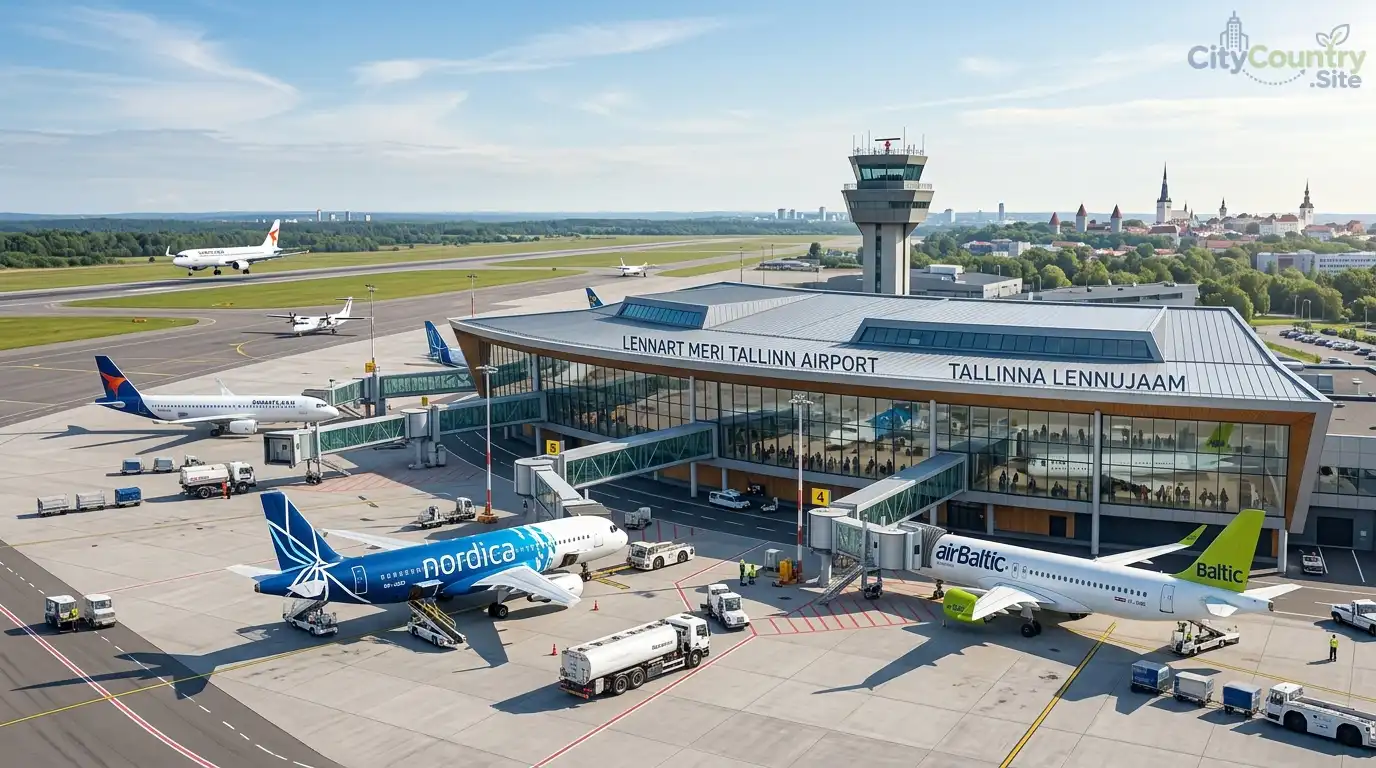
| Airport | Lennart Meri Tallinn Airport (TLL) — 4 km east of the city center |
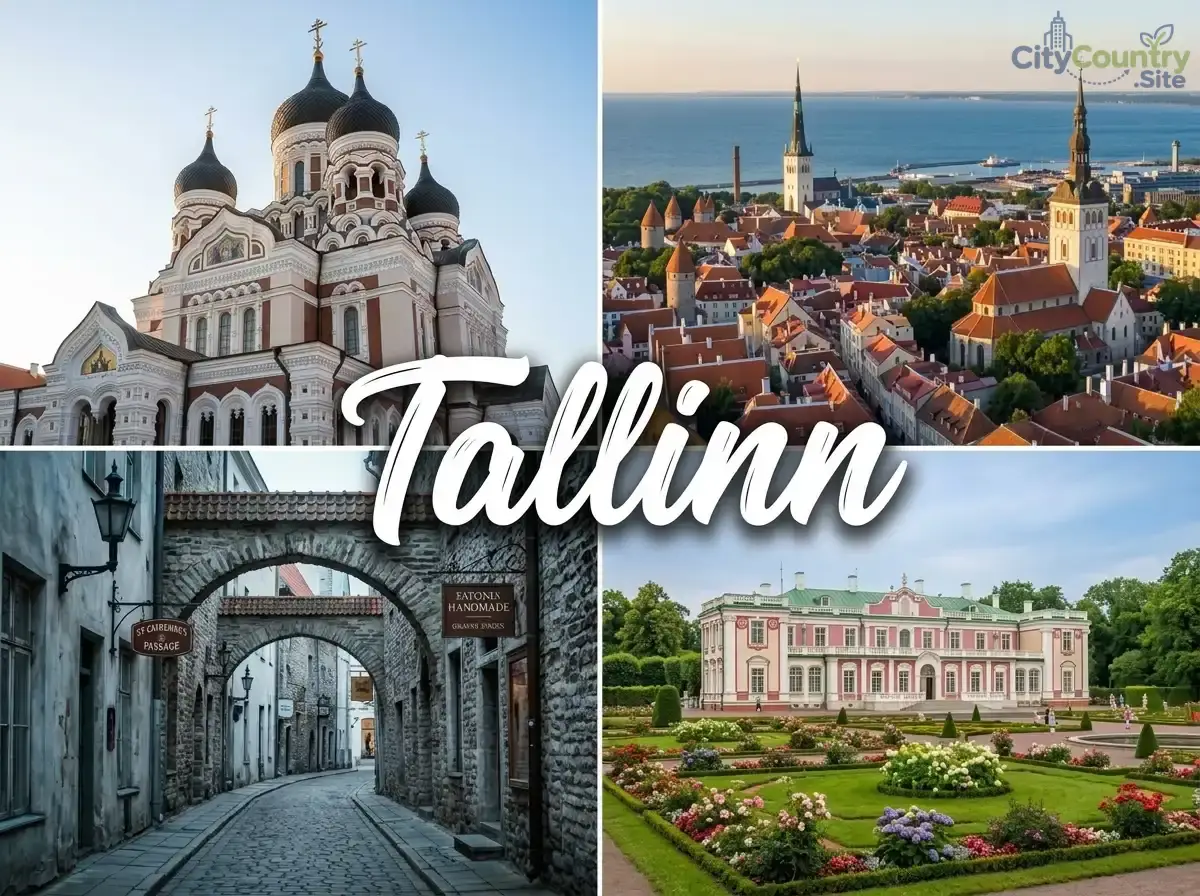
| Top Tourist Places | Tallinn Old Town (UNESCO), Toompea Hill, Alexander Nevsky Cathedral, Town Hall Square, Kiek in de Kök Tower, Telliskivi Creative City, Kadriorg Palace |
| Avg. Trip Cost/Day | Budget: $50–80 / Mid-range: $110–200 / Luxury: $230–500+ |
| Nearest Major Airport | Lennart Meri Tallinn Airport (TLL) — Estonia’s main international gateway |
| Population | Approx. 455,000 (city, 2026); Estonia’s total population approx. 1.37 million |
| Famous For | The best-preserved medieval city center in Northern Europe (UNESCO World Heritage), being the world’s most digitally advanced society per capita, the birthplace of Skype and TransferWise (Wise), extraordinary singing and choral tradition, the annual Song Festival that peacefully challenged Soviet occupation, and a quality of medieval atmospheric beauty that genuinely rivals any city in Europe |
2. Tallinn City Overview & Background
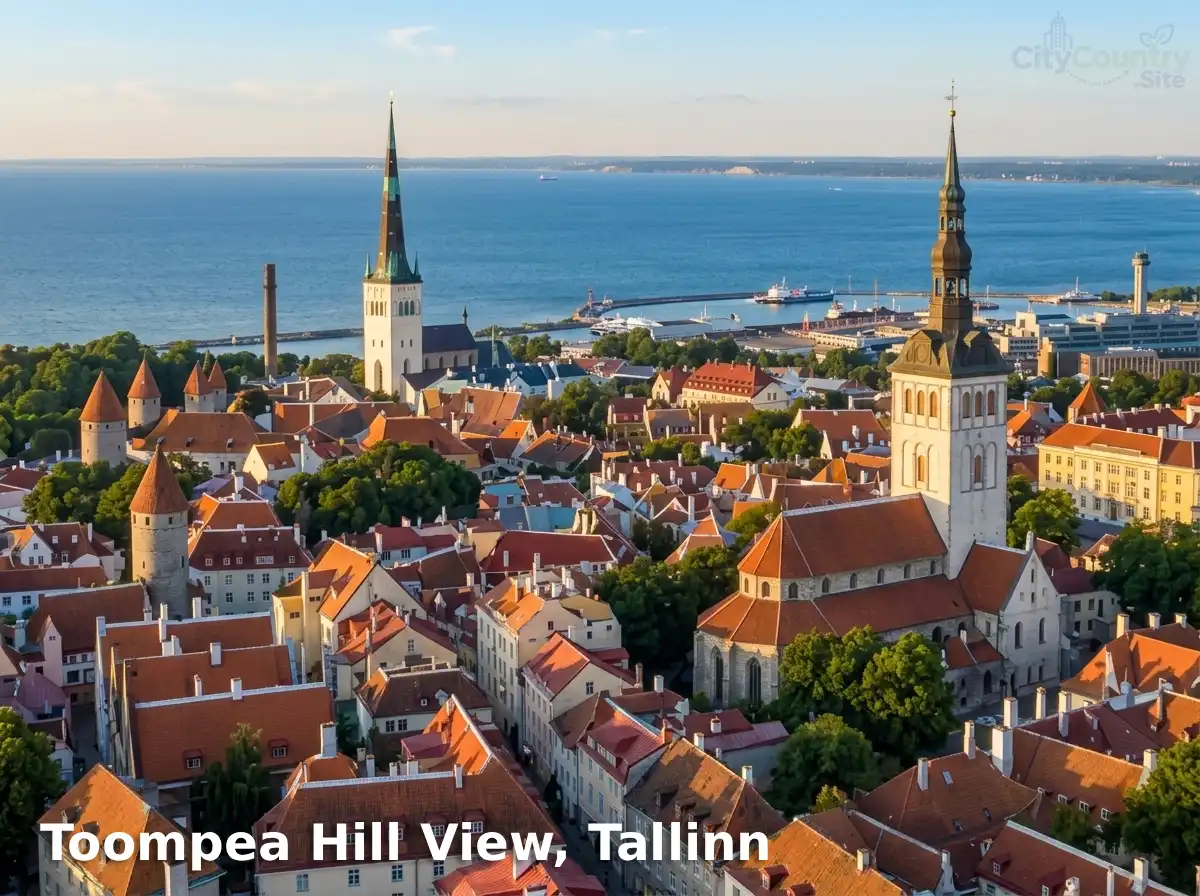
Tallinn reveals itself to arriving travelers in one of the most beautiful urban approaches in Northern Europe. Coming by ferry from Helsinki — the most romantic way to arrive — you watch the city materialize from the Gulf of Finland: first the television tower, then the spires of the medieval churches rising from the limestone cliff of Toompea Hill, then the red-tiled rooftops of the old town spreading down to the harbour, and then the entire medieval skyline shimmering above the water like something from a fairy tale that has somehow survived intact into the 21st century.
And that, precisely, is the most extraordinary thing about Tallinn. It has survived intact. The Old Town of Tallinn — enclosed within its near-complete circuit of medieval walls and towers — is the best-preserved medieval city in Northern Europe and one of the finest in all of Europe. Walking its cobbled streets, past Baroque merchants’ houses and Gothic churches and ancient apothecaries still dispensing medicines and alchemical curiosities, it is genuinely possible to feel that you have stepped into the 15th century. The scale is human — the streets are narrow and winding; the buildings are modest in height but extraordinary in architectural detail; and the whole ensemble is enclosed by walls and towers that make the medieval defensive circuit visible and comprehensible in a way that is unique in the Baltic region.
Yet Tallinn is simultaneously one of the most technologically and socially advanced societies on earth. Estonia — a nation of barely 1.37 million people — was the birthplace of Skype and TransferWise (Wise), has the world’s highest startup rate per capita, was the first country to offer legal residence to non-citizens (e-Residency), and runs essentially its entire government digitally — voting, taxes, healthcare records, company registration, and most government services have been conducted online since the early 2000s. The contrast between the medieval Old Town and the digital-first society that operates within and around it is one of the most intellectually fascinating aspects of visiting Tallinn.
Estonia’s capital sits on the southern shore of the Gulf of Finland — barely 80 km south of Helsinki, making it easily accessible by ferry from the Finnish capital and creating a natural cultural and economic linkage across the Gulf. The city faces the Baltic Sea in one of the most strategic positions in Northern Europe — a position that has made it coveted, conquered, and occupied by successive powers throughout its history.
What makes Tallinn unforgettable is the combination of medieval physical beauty, Northern European social quality, extraordinary historical complexity, and the particular warmth and dry wit of Estonian people — a warmth that is genuine but never effusive, rooted in a northern reserve that is entirely its own kind of hospitality.
“Tallinn is the most perfectly preserved medieval city I have visited in a lifetime of travel. Walking its streets is not reconstruction or heritage theatre — it is the genuine thing, which is something almost miraculous in 21st-century Europe.”
— Anonymous travel journalist, Condé Nast Traveller Northern Europe, 2024
3. Tallinn History Timeline
5000 BCE and earlier — The territory of modern Estonia has been inhabited since approximately 9000 BCE, following the retreat of the last Ice Age glaciers. Early hunter-gatherer communities give way to the ancestors of the Finno-Ugric peoples — linguistically related to Finns and Hungarians — who constitute the cultural foundation of Estonian identity. Settlements in the Tallinn Bay area date to at least the Bronze Age.
1st millennium CE — The Estonians develop as a distinct people — skilled seafarers, traders, and farmers with an oral cultural tradition of extraordinary richness. The Estonian Song tradition — the runic songs (regilaul) that will eventually fuel the 19th-century national awakening — develops during this period. Estonia remains outside the sphere of organized Christianity and feudal governance that characterizes contemporary Western Europe.
1219 — The Danish King Valdemar II invades the Estonian territory and establishes a castle on Toompea Hill — the limestone outcrop that dominates the Tallinn bay area. The Danes call the settlement Reval (or Lyndanisse in early sources). According to Danish legend, the red flag with a white cross that became the Dannebrog (Danish flag) fell from the sky during the Battle of Lyndanisse in 1219 — making Tallinn the legendary birthplace of the oldest continuously used national flag in the world.
1227 — The Livonian Brothers of the Sword — a German crusading order — take control of Reval from the Danes, establishing a German-speaking colonial merchant and noble class that will dominate Tallinn for the next 700 years.
1248 — Reval receives Lübeck city law — the legal code of the great German Hanseatic trading city — establishing its institutional framework as a merchant city of the Hanseatic League and beginning its most prosperous era.
1285 — Reval (Tallinn) joins the Hanseatic League — the great medieval merchant confederation linking trading cities from Bruges to Novgorod. Membership in the Hanse transforms Reval into one of the most prosperous trading cities in the Baltic — handling the trade between Western and Eastern Europe across the Baltic Sea.
14th–16th centuries — Reval’s golden age. The city’s merchants grow wealthy trading cloth, salt, and herring from the west against furs, wax, and honey from the Russian interior. The great merchant houses of the Old Town are built during this period; the Town Hall (Raekoda) — completed in 1404 and still standing essentially unchanged — becomes the finest Gothic town hall in Northern Europe. The city walls are expanded and strengthened; the towers that ring the old town are built.
1346 — Denmark sells Estonia to the Teutonic Knights — the German crusading military order that already controls Latvia and Lithuania. Reval falls within the Teutonic sphere of influence but maintains its Hanseatic commercial character and considerable internal self-governance.
1525 — The Protestant Reformation reaches Reval. The city embraces Lutheranism rapidly — the merchant class finds Luther’s theology congenial, and the great Catholic churches of the old town (St. Olaf’s, St. Nicholas’s, the Dominican monastery) are converted or closed. Estonia remains predominantly Lutheran to the present day.
1558–1583 — The Livonian War — in which Ivan the Terrible’s Russia, Poland-Lithuania, Sweden, and Denmark-Norway all compete for control of the former Livonian territories — devastates the region. Reval chooses Swedish suzerainty in 1561, beginning the Swedish period of Estonian history that will prove among the most benign.
1561–1710 — Swedish rule. The Swedish kings — particularly Gustavus Adolphus and his successors — invest in Reval, establishing a university at Tartu (Estonia’s second city), reforming the legal system, and developing the agricultural economy. The Swedish period is remembered as relatively good governance by the standards of the era.
1700–1721 — The Great Northern War between Sweden and Peter the Great’s Russia destroys much of Northern Europe. Reval is besieged and surrenders to Russian forces in 1710 — beginning over two centuries of Russian imperial rule. The Swedish period ends; the Baltic German merchant nobility retains its privileges under Russian administration.
18th–19th centuries — Under Russian Imperial rule, Reval (the Russian name for the city) grows as a significant Baltic port and eventually industrial center. The Baltic German merchant and noble class maintains remarkable autonomy until the late 19th century, when Russian authorities begin Russification policies — suppressing the German language and culture. The Estonian national awakening — the Ärkamisaeg — develops in parallel: Estonian-language newspapers, choral societies, and eventually political organizations emerge during the 19th century.
1869 — The first Estonian Song Festival (Laulupidu) is held at Tartu — an event of enormous national significance that establishes the choral tradition at the center of Estonian identity. The Song Festival will return regularly throughout the decades, including under Soviet occupation, when it serves as a powerful expression of national identity within the constraints of communist cultural policy.
1917–1918 — The Russian Revolution and the collapse of the Russian Empire create the conditions for Estonian independence. Estonian independence is declared on February 24, 1918 — celebrated annually as Estonia’s national holiday.
1918–1940 — The First Estonian Republic — two decades of independent democratic governance. Tallinn develops as a modern European capital; Estonian language and culture flourish; the economy develops. The period is idealized in Estonian collective memory as a golden age of national independence.
1939 — The Molotov-Ribbentrop Pact between Nazi Germany and the Soviet Union assigns Estonia to the Soviet sphere of influence. 1940 — Soviet military occupation and annexation of Estonia. The independent republic is abolished; mass deportations to Siberia begin. Approximately 10,000 Estonians are deported in the first mass deportation of June 1941.
1941–1944 — Nazi German occupation replaces Soviet occupation following Operation Barbarossa. The German occupation brings its own atrocities — including the near-total destruction of Estonia’s small Jewish community (approximately 1,000 people, virtually all murdered). Estonian Jews had lived in the country since the mid-19th century.
1944–1991 — Soviet reoccupation. Estonia becomes the Estonian Soviet Socialist Republic — with a Russian-speaking immigrant population brought in to staff the expanded industrial base, fundamentally changing the demographic character of Tallinn in particular. The Soviet period brings industrialization, urbanization, and systematic suppression of Estonian language, culture, and national identity — alongside significant Russian in-migration.
1987–1991 — The Singing Revolution. Estonian resistance to Soviet rule, stimulated by Gorbachev’s glasnost policies, takes a series of extraordinary forms — including massive outdoor song festivals in which hundreds of thousands of Estonians sing forbidden national songs collectively. The most spectacular moment is the Baltic Way of August 23, 1989 — when approximately 2 million people formed a human chain stretching 675 km from Tallinn through Riga to Vilnius, linking the three Baltic capitals in a peaceful demonstration that became one of the most powerful images of the Cold War’s end.
1991 — Estonian independence is restored on August 20, 1991, during the failed Soviet coup attempt. The international community rapidly recognizes Estonian independence. The Soviet military withdraws. Estonia begins its extraordinary transformation from Soviet republic to digital democracy.
1991–2004 — Estonia’s transition period — economic liberalization, monetary reform (the Estonian kroon), privatization, and the building of digital governance infrastructure that will make Estonia a global model. Despite significant economic hardship in the early 1990s, Estonia’s trajectory is consistently toward Western European integration.
2004 — Estonia joins the European Union and NATO on May 1 — the culmination of the post-independence project. The accession is a moment of enormous national significance and genuine popular celebration.
2011 — Estonia adopts the Euro — the first of the Baltic states to do so and a further marker of successful Western economic integration.
2007 — Skype — founded by Estonian engineers — is sold to eBay for $2.6 billion, putting Estonia on the global technology map. The same year, Estonia experiences the world’s first large-scale cyberattack on a sovereign nation — a wave of distributed denial-of-service attacks attributed to Russian actors following a controversy over the relocation of a Soviet war memorial. Estonia’s response — developing world-leading cyber defense capabilities — creates the NATO Cooperative Cyber Defence Centre of Excellence, based in Tallinn.
2024–2026 — Tallinn continues developing as Northern Europe’s most distinctive travel destination — combining medieval beauty with digital innovation, a growing food scene of genuine quality, and a cultural confidence rooted in an extraordinary national story. Tourism from across Europe and beyond grows steadily as travelers discover what those who have been coming for decades already know.
4. Tallinn Geography & Neighborhoods
Tallinn occupies a naturally strategic position on the southern coast of the Gulf of Finland — a broad limestone plateau descending to the sea, with the prominent Toompea Hill (limestone cliff rising approximately 50 metres above the surrounding terrain) providing the defensive high ground on which the medieval upper town was built.
The city’s geography creates a natural division that has shaped its social and political history: Toompea (the Upper Town) — historically the seat of the German-speaking noble and administrative class — looks down, quite literally, on the Lower Town — historically the domain of the German-speaking merchant class and, below that social layer, the Estonian craftsmen, servants, and workers who built the city but owned almost nothing within it.
Neighborhood Comparison Table
| Area | Best For | Vibe | Price Level |
|---|---|---|---|
| Old Town (Vanalinn) | History, medieval architecture, tourism, restaurants | Medieval, atmospheric, tourist-friendly | Mid–High |
| Toompea (Upper Town) | Castle, parliament, Alexander Nevsky Cathedral, views | Historic, governmental, quieter | Mid |
| Kalamaja | Hipster cafés, creative studios, wooden house architecture | Bohemian, local, creative | Budget–Mid |
| Telliskivi Creative City | Street art, markets, cafés, alternative culture | Cool, creative, youthful | Budget–Mid |
| Kadriorg | Presidential palace, art museum, park, quiet elegance | Green, elegant, residential | Mid–High |
| Noblessner | Submarine factory to marina, contemporary architecture | Industrial-chic, waterfront, new | Mid–High |
| Ülemiste City | Tech companies, business, airport proximity | Functional, modern, corporate | Mid |
| Põhja-Tallinn (North Tallinn) | Authentic local life, sea, industrial heritage | Genuine, unhurried, diverse | Budget–Mid |
The Old Town (Vanalinn) — enclosed within its near-complete medieval walls — is the historical and tourist heart of the city, divided between the Upper Town (Toompea) with its castle, parliament, and cathedrals, and the Lower Town with its merchant houses, guild halls, and the magnificent Town Hall Square. Kalamaja — the wooden house neighborhood northwest of the old town — is where Tallinn’s creative class has concentrated, with an energy that is entirely contemporary in contrast to the medieval perfection of the center. Kadriorg — the baroque palace park east of the old town — provides the city’s most elegant residential and cultural experience.
5. Tallinn Weather & Temperature Guide
Tallinn has a humid continental climate strongly influenced by the Baltic Sea and the Gulf of Finland — producing cold, dark winters of genuine Nordic character and surprisingly warm summers that make the most of the extreme northern latitude’s long days.
Month-by-Month Weather Table
| Month | Avg Temp (°C) | Daylight Hours | Crowd Level | Travel Recommendation |
|---|---|---|---|---|
| January | -10–(-2) | 7 hours | Very Low | ✅ Good — snow, atmospheric, very quiet |
| February | -9–0 | 9 hours | Very Low | ✅ Good — often snowiest month |
| March | -4–5 | 12 hours | Low | ✅ Good — spring beginning |
| April | 2–11 | 14 hours | Medium | ⭐ Excellent — spring blooms |
| May | 7–17 | 17 hours | High | ⭐ Excellent — long bright days begin |
| June | 11–22 | 19 hours | Very High | ⭐ Excellent — near-endless daylight |
| July | 13–23 | 18 hours | Very High | ⭐ Excellent — peak summer |
| August | 12–22 | 16 hours | High | ⭐ Excellent — warm, golden evenings |
| September | 8–16 | 13 hours | High | ⭐ Excellent — golden autumn |
| October | 3–9 | 11 hours | Medium | ✅ Good — autumn colors |
| November | -2–3 | 8 hours | Low | ✅ Good — atmospheric, quiet |
| December | -7–(-1) | 6 hours | Medium | ⭐ Excellent — Christmas markets, snow |
June through August is Tallinn’s high summer season — warm (up to 23°C), with extraordinarily long days (June sees the sun barely setting, with near-white nights), the medieval old town at its most vibrant, outdoor café terraces in full operation, and the city’s full cultural calendar operating. The Midsummer Night (Jaanipäev, June 23–24) is Estonia’s most important celebration — bonfires, traditional festivities, and a near-supernatural quality of summer light.
May and September are often the most beautiful months — the extreme days of high summer have mellowed slightly, the tourist pressure is lower than July–August, and the quality of light (spring green or golden autumn) makes the city particularly photogenic.
December is magical — one of the finest Christmas market cities in Northern Europe, with snow on the medieval rooftops, mulled wine in Town Hall Square, and the old town at its most fairy-tale beautiful.
Winter (January–February) is cold, dark, and genuine — temperatures can drop to -15°C, the Gulf of Finland occasionally freezes, and the city takes on a raw Nordic beauty. An acquired taste but genuinely rewarding for those who embrace it.
💡 Did You Know? Tallinn experiences extraordinary summer daylight due to its position at latitude 59.4°N — roughly equivalent to Oslo and just south of St. Petersburg. In late June, the sun barely sets — there are barely 3.5 hours between sunset and the next sunrise, creating the famous White Nights in which genuine darkness never arrives. This perpetual summer light has profound effects on energy levels, social life, and the quality of outdoor evening dining — it is one of the most distinctive experiences of visiting the Baltic in summer.
6. Tallinn Airport & Getting There
Lennart Meri Tallinn Airport (TLL)
Lennart Meri Tallinn Airport (IATA: TLL) — named after Estonia’s first post-independence president and celebrated writer and filmmaker Lennart Meri — is located approximately 4 km east of the city center — one of the shortest airport-to-city distances in Europe and a genuine practical advantage. A beautifully designed new terminal completed in recent years has made the airport an increasingly pleasant gateway.
Wizz Air, Ryanair, easyJet, Finnair, Lufthansa, Norwegian, SAS, Austrian Airlines, and several other carriers serve Tallinn with connections to London, Frankfurt, Helsinki, Stockholm, Copenhagen, Amsterdam, Brussels, Vienna, Warsaw, Riga, Vilnius, and many other European destinations. The route network has expanded significantly in recent years.
Helsinki ferry connection — the Tallinn–Helsinki ferry route (operated by Tallink, Viking Line, Eckero Line, and others) is one of the most heavily traveled ferry routes in the world. Crossing time is approximately 2 hours by fast ferry or 2.5 hours by standard ferry. Prices start from approximately €20–50 per person. This is both a practical transport option and a genuinely enjoyable travel experience in its own right — crossing the Gulf of Finland with the Tallinn medieval skyline approaching is extraordinary.
Getting from TLL to the City Center:
| Transport Option | Duration | Cost (Approx.) | Notes |
|---|---|---|---|
| Bus No. 2 (city bus) | 20–30 min | €2 | Excellent, frequent, very cheap |
| Taxi / Bolt | 10–15 min | €8–15 | App-based preferred; short distance |
| Uber | 10–15 min | €8–14 | Good availability |
| Hotel shuttle (pre-booked) | 15–20 min | €15–25 | Some hotels offer transfers |
| Walk | 35–45 min | Free | Feasible in good weather; pleasant route |
Getting to Tallinn from Baltic/Nordic neighbors:
| Origin | Transport | Duration | Cost (Approx.) |
|---|---|---|---|
| Helsinki, Finland | Fast ferry | 2 hours | €20–80 |
| Riga, Latvia | Bus (Lux Express/FlixBus) | 4–4.5 hours | €10–25 |
| Vilnius, Lithuania | Bus | 7–8 hours | €15–30 |
| St. Petersburg, Russia | Bus / Train | Currently inadvisable | — |
| Stockholm, Sweden | Ferry (overnight) | 14–16 hours | €40–120 |
💡 Did You Know? Estonia — population 1.37 million — has produced an extraordinary number of globally significant technology companies per capita. Skype (founded in Tallinn, 2003), TransferWise/Wise (founded in London by Estonians, 2011), Pipedrive (founded in Tallinn, 2010), Taxify/Bolt (founded in Tallinn, 2013), and GrabCAD are among the Estonian tech companies that have achieved global significance. Estonia has more unicorn companies per capita (billion-dollar startups) than any other European country. The Bolt ride-hailing app that most visitors use in Tallinn was founded by a 19-year-old Estonian named Markus Villig in 2013 and now operates in over 45 countries.
7. Getting Around Tallinn
Tallinn is a genuinely walkable city for its central areas — and in the compact medieval Old Town, walking is the only practical option given the narrow cobbled streets. For getting between the old town and outer neighborhoods, excellent public transport and app-based transport options are available.
Walking is the primary mode of transport in the Old Town (Vanalinn) — the medieval streets are too narrow and too picturesque for any other approach. All major attractions within the old town walls are within a 15–20 minute walk of each other. Wear comfortable shoes with good grip — the medieval cobblestones are beautiful but challenging for smooth-soled footwear, particularly in wet or icy conditions.
Bolt is Estonia’s own ride-hailing app — founded in Tallinn and operating throughout Europe and beyond. It is the primary app-based transport option in Tallinn and provides excellent, affordable service. A typical city ride costs €5–12. Uber also operates in Tallinn.
City Trams and Buses (LPP — Tallinna Linnatransport) provide comprehensive coverage throughout Tallinn. A single ticket costs €2 (purchased on board) or €1.50 (purchased via the app). Day passes (€4.50) represent excellent value for multiple journeys. Trams serve the inner city; buses extend to the suburbs.
The Old Town itself is car-free — private vehicles cannot enter the historic center, which significantly contributes to the quality of the walking experience within the walls.
City bikes (Tallinn Jalgratturite) are available throughout the city from April to October — an excellent way to explore Kalamaja, Kadriorg, and the coastal areas.
Ferries to the islands — regular passenger ferries from Tallinn’s D-terminal connect to the Estonian islands of Saaremaa and Hiiumaa — both worth day trips or longer stays for their extraordinary landscapes and traditional culture.
8. Tallinn Top Attractions & Best Places
Top Attractions Table
| Attraction | Type | Entry Fee | Best Time | Time Needed |
|---|---|---|---|---|
| Tallinn Old Town (Vanalinn) | UNESCO World Heritage medieval city | Free | Morning or Evening | Full day |
| Toompea Castle / Parliament | Medieval castle / government | Free (exterior) | Morning | 45 min |
| Alexander Nevsky Cathedral | Russian Orthodox cathedral | Free | Morning | 45 min |
| Town Hall Square (Raekoja Plats) | Medieval square / Town Hall | Free (Town Hall: €5) | Morning / Evening | 1 hour |
| Kiek in de Kök Tower and Bastion Passages | Medieval tower / tunnels museum | €10 | Morning | 1.5 hours |
| St. Olaf’s Church (Oleviste Kirik) | Gothic church / observation tower | €5 | Morning | 1 hour |
| Kadriorg Palace and Park | Baroque palace / art museum / park | €8–12 | Morning | 2–3 hours |
| Telliskivi Creative City | Urban creative hub / market / cafés | Free | Afternoon | 2 hours |
| Estonian Open Air Museum (Rocca al Mare) | Traditional architecture / history | €12 | Morning | 3–4 hours |
| Seaplane Harbour Museum (Lennusadam) | Maritime history / submarines | €15 | Morning | 2–3 hours |
| KUMU Art Museum | Contemporary Estonian art | €12 | Morning | 2 hours |
| Kalamaja Neighbourhood Walk | Wooden architecture / street art | Free | Afternoon | 1.5–2 hours |
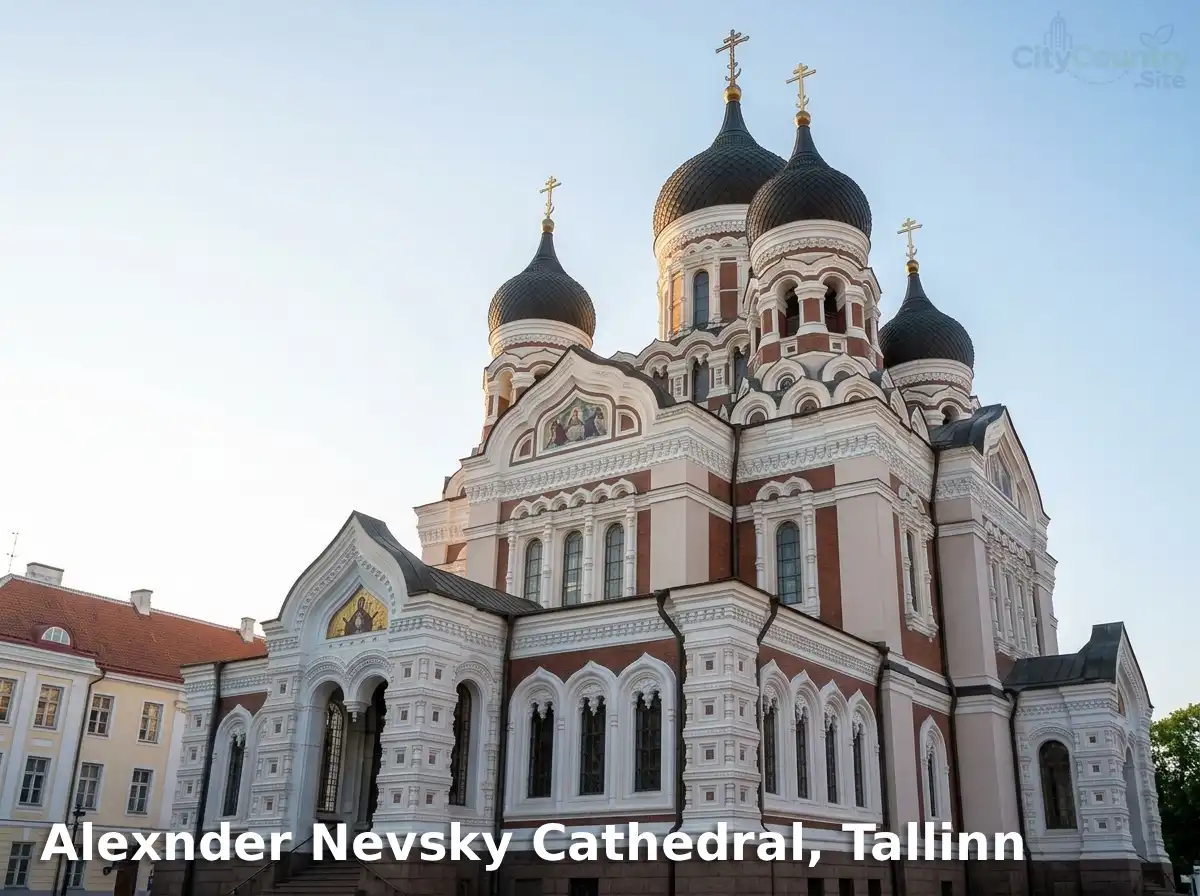
Tallinn Old Town (Vanalinn) is the reason most visitors come to Tallinn and the experience that none of them forget. The enclosed medieval city — with its near-complete circuit of 26 defensive towers and approximately 2 km of medieval walls — contains one of the finest concentrations of medieval architecture in Northern Europe. The Upper Town (Toompea) occupies the limestone cliff — its castle (now housing the Estonian Parliament, the Riigikogu), the magnificent Alexander Nevsky Cathedral (a Russian Orthodox cathedral of extraordinary onion-domed beauty, built during Russian imperial rule as a deliberate assertion of Russian Orthodox identity over Lutheran Estonia and still deeply symbolic in this regard), and Dome Church (Toomkirik) — Estonia’s oldest church, a Lutheran cathedral with remarkable historical monuments — all cluster on the hilltop with spectacular views over the lower town and the Gulf of Finland beyond.
The Lower Town below Toompea is the merchant city — the streets and squares where Baltic trade was conducted for five centuries. Town Hall Square (Raekoja Plats) is the finest medieval town square in Northern Europe — a large open space flanked on one side by the extraordinary Gothic Town Hall (Raekoda, 1404) — the only surviving Gothic town hall in the Baltic states — and on the other sides by merchant houses of various periods. The square has served as the center of Tallinn’s commercial and social life for seven centuries and continues to do so — in summer filled with café terraces and tourists; in winter transformed into the city’s famous Christmas Market.
The Town Hall itself — with its distinctive Gothic tower topped by a weathervane in the form of “Old Thomas” (Vana Toomas) — is one of the finest Gothic secular buildings in Northern Europe. The original weathervane figure has guarded the city since 1530; the one visible today is a copy, but the tradition it represents is genuine.
Kiek in de Kök (“Peek into the Kitchen” in Low German — the name referring to the tower’s original function of allowing watchmen to look down into the courtyards of houses below) is one of Tallinn’s finest tower museums — with excellent exhibitions on the city’s medieval history and the remarkable Bastion Passages — an extensive network of 17th-century underground limestone tunnels and bastions beneath the city walls, now accessible by guided tour. The combination of the tower museum and the tunnel tour provides the finest single insight into Tallinn’s medieval defensive system.
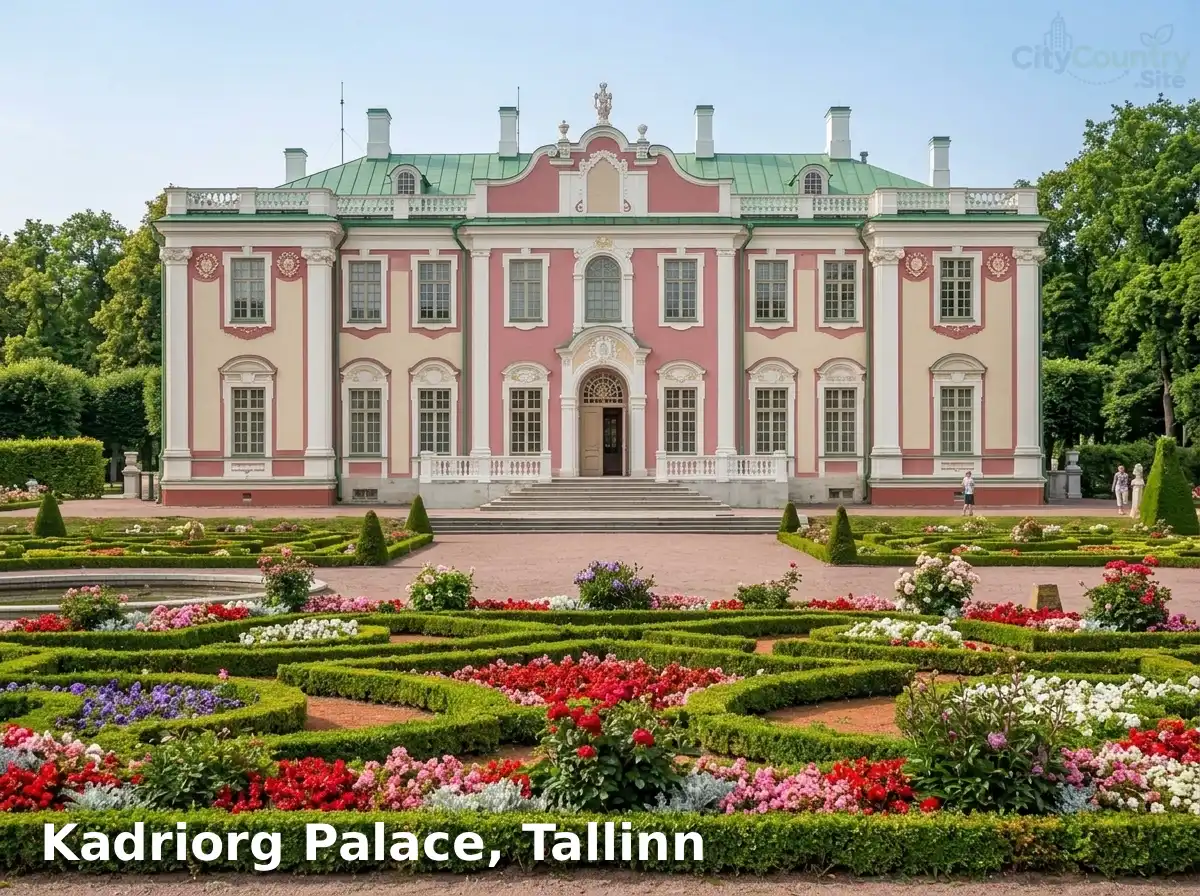
Kadriorg — the baroque palace and park complex built by Peter the Great in 1718 as a summer residence for his wife Catherine I, approximately 2 km east of the old town — is one of the most beautiful pieces of baroque garden design in the Baltic region. The pink palace houses the Kadriorg Art Museum (foreign art from the 16th–20th centuries); the adjacent modern building houses KUMU — one of the finest contemporary art museums in the Nordic-Baltic region. The park — beautifully maintained, with formal baroque gardens around the palace and natural woodland paths beyond — is where Tallinners walk, run, and picnic on warm days.
Telliskivi Creative City — a former industrial complex north of the old town converted into a creative hub since 2009 — is the finest expression of contemporary Tallinn outside the medieval walls. The complex houses studios, restaurants, cafés, vintage shops, galleries, a weekend market, and the Balti Jaam Market — all in a setting of industrial brick buildings that have been beautifully adapted rather than demolished. The Saturday and Sunday markets at Telliskivi are among the finest in the Baltic states.
The Seaplane Harbour Museum (Lennusadam) is one of the most extraordinary museum buildings in the Baltic — a magnificent early 20th-century seaplane hangar of reinforced concrete, beautifully restored, housing an outstanding collection of maritime history including a real submarine (the Lembit, an Estonian submarine acquired in 1936), a full-scale icebreaker, seaplanes, and naval guns. The engineering of the hangar itself — its triple parabolic shells spanning enormous unobstructed spaces — is a remarkable feat of early 20th-century construction. One of the finest maritime museums in Northern Europe.
💡 Did You Know? The Alexander Nevsky Cathedral in Tallinn — one of the most beautiful Russian Orthodox cathedrals in the Baltic — was deliberately built on Toompea Hill by the Russian imperial authorities in 1900 to assert Russian Orthodox Christian dominance over the Lutheran Estonian population at the height of Russification. The cathedral was placed directly opposite the entrance to the Estonian Parliament — a calculated symbolic statement that Estonians have never forgotten. When Estonia regained independence in 1991, there were serious discussions about demolishing the cathedral; instead, it was preserved as a place of worship for the Russian Orthodox community while remaining a complex symbol of colonial history.
9. Tallinn Food & Cuisine Guide
Estonian cuisine has undergone a remarkable transformation in the past decade — from a culinary tradition associated primarily with rye bread, pork, and sauerkraut to a sophisticated Nordic-inflected contemporary dining scene that is among the most exciting in the Baltic region. The combination of extraordinary local ingredients (wild game, freshwater fish, forest mushrooms and berries, dairy of exceptional quality) and a generation of young Estonian chefs trained in Nordic and European culinary techniques has produced restaurants of genuine international caliber.
Must-Try Dishes in Tallinn
Leib (Estonian Rye Bread) — The single most important food in Estonian culture — a dense, slightly sour, deeply aromatic bread made from rye flour with caraway seeds. Estonian rye bread is darker, denser, and more intensely flavored than most rye bread known in Western Europe — closer to the Scandinavian knäckebröd tradition but uniquely Estonian in character. It is served at virtually every Estonian meal and is the most essential food souvenir. The finest rye bread in Tallinn comes from Leib Resto ja Aed (which takes its name from the bread) and from bakeries throughout Kalamaja.
Verivorst (Blood Sausage) — Estonia’s most distinctive and most traditional sausage — a blood sausage mixed with barley groats, onions, marjoram, and fat, stuffed into natural casings and either boiled or roasted. Traditionally eaten on Christmas Eve with lingonberry jam and sauerkraut, blood sausage has become a year-round Estonian delicacy. It is simultaneously humble and — when well made — genuinely extraordinary. Available at the old town’s traditional restaurants and Christmas market stalls.
Mulgipuder — A very traditional Estonian dish of barley groats cooked with potatoes until they form a thick, creamy porridge — then stirred with fried pork fat and onions. Ancient, nourishing, deeply comforting. The food of Estonian farms and the Estonian soul.
Forell (Freshwater Trout and Salmon) — Estonia’s rivers and lakes produce outstanding freshwater fish — smoked, grilled, or cured in traditional Nordic fashion. The Baltic herring (räim) — smoked, marinated, or pickled — is the traditional fish of the Estonian coastal diet and is extraordinary when freshly prepared.
Hapukapsas (Sauerkraut) — Fermented white cabbage — one of the oldest and most fundamental preservation techniques in the Baltic diet. Estonian sauerkraut is typically fermented with caraway seeds and sometimes juniper berries, giving it a flavor distinct from Central European versions. Served alongside pork, sausages, and blood sausage throughout the traditional Estonian meal.
Wild Mushrooms and Berries — Estonia’s extensive forests are extraordinary sources of wild food — chanterelles (kukeseened), porcini (kivipuravik), and various other mushrooms in summer and autumn; blueberries, lingonberries, cloudberries, and sea buckthorn throughout the year. Contemporary Estonian restaurants build menus around these forest ingredients; the Tallinn market at Telliskivi sells them fresh in season.
Estonian Craft Beer and Gin — An extraordinary craft brewing scene has developed in Estonia in the past decade. Põhjala, Tanker, Pohjala’s Nordic brewery collective, and several other Estonian craft brewers produce outstanding ales, stouts, and IPAs. Estonian craft gin — particularly Gin Mare Estonia and Põhjala Gin — uses distinctive local botanicals including sea buckthorn, juniper from Estonian forests, and wild herbs.
Best Restaurants and Food Spots
Leib Resto ja Aed (Old Town) — The finest traditional-modern Estonian restaurant in Tallinn — serving outstanding contemporary Estonian cuisine built around exceptional local ingredients, in a beautiful walled garden setting. The rye bread alone justifies the visit. €20–40 per person.
NOA Chef’s Hall (Coastal) — One of the finest restaurants in the Baltic region — a beautiful restaurant on the waterfront north of the old town serving outstanding contemporary Nordic-Estonian cuisine with breathtaking Gulf of Finland views. Two tasting menus of extraordinary quality and ambition. Book well in advance. €60–100 per person for tasting menu.
Rataskaevu 16 (Old Town) — A beloved Tallinn institution — a beautifully designed restaurant in the medieval old town serving outstanding traditional Estonian and Baltic cuisine. The elk soup and wild boar are outstanding. €15–30.
Ribe (Old Town) — An excellent wine bar and restaurant on one of the old town’s finest streets — outstanding wine selection, creative Nordic small plates, warm atmosphere. €15–30.
F-Hoone (Telliskivi) — The anchor restaurant of the Telliskivi Creative City — a beautiful industrial-space restaurant serving excellent contemporary Estonian comfort food with outstanding craft beer selection. The brunch on weekends is one of the finest in the city. €10–20.
Balti Jaama Turg (Market) — The finest food market in Tallinn — a covered market in the Telliskivi/Baltic Station area offering outstanding street food, fresh produce, Estonian cheese, honey, craft beer, and traditional products. The Saturday and Sunday markets are unmissable.
Olde Hansa (Old Town) — A deliberately theatrical medieval restaurant where staff dress in period costumes, the menu features medieval Hanseatic recipes (wild boar, game meats, honey mead, spiced wine), and the setting — deep vaulted cellars and candlelit halls — is entirely atmospheric. Touristy? Somewhat. Genuinely fun and the food is better than you might expect. €15–35.
💡 Did You Know? Estonia has one of the world’s finest sea buckthorn (astelpaju) traditions — using the bright orange, highly nutritious berries that grow prolifically on Estonia’s coastal dunes in everything from juice and jam to cocktails, ice cream, and fermented drinks. Sea buckthorn contains up to 15 times more vitamin C than oranges and has been used in Estonian folk medicine and cuisine for centuries. The berries’ distinctive sharp, citrusy flavor has made them a favorite ingredient of Estonia’s contemporary chefs, who use them in sauces, desserts, and drinks throughout the year. Sea buckthorn jam from the Tallinn market is one of the finest food souvenirs available from Estonia.
10. Tallinn Accommodation Guide
Tallinn offers excellent accommodation across all budget levels — with the particular advantage that staying within the Old Town walls is both practical and extraordinarily atmospheric. Numerous hotels and guesthouses occupy beautifully restored medieval buildings.
Best Areas to Stay:
- Old Town (Vanalinn): Best for atmosphere, walking access to all historical sights, and the unparalleled experience of sleeping within medieval walls — the clear first choice for most visitors
- Kalamaja: Best for those wanting a more local, contemporary experience — charming wooden houses, creative energy, and excellent cafés within 15 minutes’ walk of the old town
- Kadriorg: Best for a quieter, more elegant residential experience with excellent park access
- City Center (near Viru Gate): Best for mid-range options with easy access to both the old town and modern city
Accommodation Price Ranges (2026)
| Category | Price/Night (USD) | Examples |
|---|---|---|
| Budget Hostel | $20–45 | Tallinn Backpackers, Red Emperor Hostel, Flying Kiwi |
| Mid-Range Hotel / Guesthouse | $70–140 | Hotel Telegraaf, My City Hotel, Hotel St. Petersbourg |
| Upscale Boutique Hotel | $140–250 | Hotel Viru, Schlössle Hotel, Three Sisters Hotel |
| Luxury Hotel | $250–500+ | Schlössle Hotel, Hotel Telegraaf (suites), Savoy Boutique Hotel |
Three Sisters Hotel — three 15th-century merchant houses beautifully combined into one extraordinary hotel in the heart of the old town — is consistently one of the finest boutique hotel experiences in the Baltic region. Rates: approximately $200–350 per night.
Schlössle Hotel — a medieval building in the old town with extraordinarily atmospheric rooms of low vaulted ceilings and stone walls — combines medieval character with genuine luxury comfort. Rates: approximately $200–400 per night.
Tallinn Backpackers — the finest budget option in the old town — a well-run, social hostel in a great location within the medieval walls. Dorm beds from $20; private rooms from $50.
11. Best Time to Visit Tallinn
June through August is Tallinn’s peak season and deservedly so — the extraordinary northern summer light (with near-white nights in June), warm temperatures (20–23°C), the old town’s outdoor terraces in full operation, and the city’s full cultural calendar make it the most vibrant time to visit. Midsummer (Jaanipäev, June 23–24) is Estonia’s most important celebration — if you can be in Estonia for Midsummer, the bonfires, singing, and extraordinary quality of the summer night are unforgettable.
May is an excellent choice — the crowds are not yet at peak summer levels, the city is emerging from winter with genuine spring energy, the days are already very long (17 hours of daylight in late May), and accommodation is somewhat more affordable.
September is the outstanding autumn option — warm golden days, the first autumn colors in the park trees, significantly lower crowds than summer, and the local cultural season at its most active with festivals and exhibitions. A particular favorite of photographers for the quality of light.
December brings Tallinn’s magnificent Christmas Market — one of the finest in Northern Europe, filling Town Hall Square with medieval-themed stalls, mulled wine, traditional crafts, and the extraordinary sight of a Gothic medieval square under snow and festive lights. Often ranked alongside Vienna, Strasbourg, and Prague among Europe’s best Christmas markets.
January and February are cold, dark, and very quiet — temperatures of -10°C are not unusual. But a snowy Tallinn has a raw Nordic beauty that is entirely its own — the cobblestones under snow, the medieval towers frosted white, the ice on the harbor — and accommodation prices are significantly lower than in summer.
Key Festivals & Events in Tallinn
- Tallinn Old Town Days (Tallinna Vanalinna Päevad) (June) — A medieval festival filling the old town with costumed performers, craft markets, music, and historical demonstrations — one of the finest medieval heritage festivals in Northern Europe
- Jaanipäev / Midsummer (June 23–24) — Estonia’s national celebration of the summer solstice — bonfires, singing, traditional games, and the extraordinary midnight summer light
- Tallinn Music Week (TMW) (March/April) — One of the finest music industry showcase festivals in Northern Europe — hundreds of concerts across dozens of venues, spanning every genre
- Tallinn Black Nights Film Festival (PÖFF) (November) — One of the largest accredited film festivals in Northern Europe — with an extraordinary selection of world, European, and Baltic cinema
- Estonian Song and Dance Celebration (Laulupidu) (every 5 years) — The greatest national celebration — hundreds of thousands of singers and dancers gathering at the Song Festival Grounds in a tradition going back to 1869. When it falls within the travel season, it is an unmissable experience of Estonian national identity
- Tallinn Christmas Market (late November–January 6) — Among Europe’s finest — in Town Hall Square, with wooden stalls, mulled wine, traditional food, and the medieval backdrop creating an atmosphere of genuine festive beauty
12. Shopping Guide for Tallinn tour
Tallinn’s shopping scene combines excellent traditional Estonian craft and food products with a growing contemporary design scene.
What to Buy:
Estonian Knitwear — Traditional Estonian knitting produces extraordinarily beautiful patterns — particularly striped mittens, gloves, and socks in geometric patterns that vary by region. The patterns used in Muhu Island knitwear are perhaps the most distinctive — complex, colorful, and entirely Estonian. Available at craft markets and design shops throughout the old town and Telliskivi.
Estonian Linen — Handwoven linen from Estonian artisans — tablecloths, napkins, and clothing of exceptional quality. Estonia’s linen production tradition is centuries old.
Sea Buckthorn Products — The orange coastal berry in every form — jam, oil, juice, cosmetics, and confections. Outstanding food souvenir; lightweight and entirely distinctive.
Estonian Rye Bread — Vacuum-packed traditional dark rye bread makes an excellent food souvenir. Buy from artisan bakeries rather than supermarkets.
Craft Beer from Põhjala or Tanker — Bottles of outstanding Estonian craft beer are available at the Telliskivi market and specialist shops.
Medieval Reproductions and Crafts — The old town’s craft shops sell medieval-style metalwork, leather goods, wooden objects, and jewelry of varying quality. The finest pieces are genuine artisan works; the worst are mass-produced tourist items — choose carefully.
Amber Jewelry — Baltic amber — fossilized tree resin from approximately 44 million years ago — is found along the Baltic Sea coast and is worked into beautiful jewelry and decorative objects. Estonian and Latvian amber jewelry is available throughout the old town.
Where to Shop:
Balti Jaama Turg (Market at Baltic Station / Telliskivi) — The finest all-round market in Tallinn — fresh produce, artisan food, vintage clothing, design objects, craft beer, and the full diversity of Tallinn’s creative economy in one excellent location. Saturday and Sunday mornings.
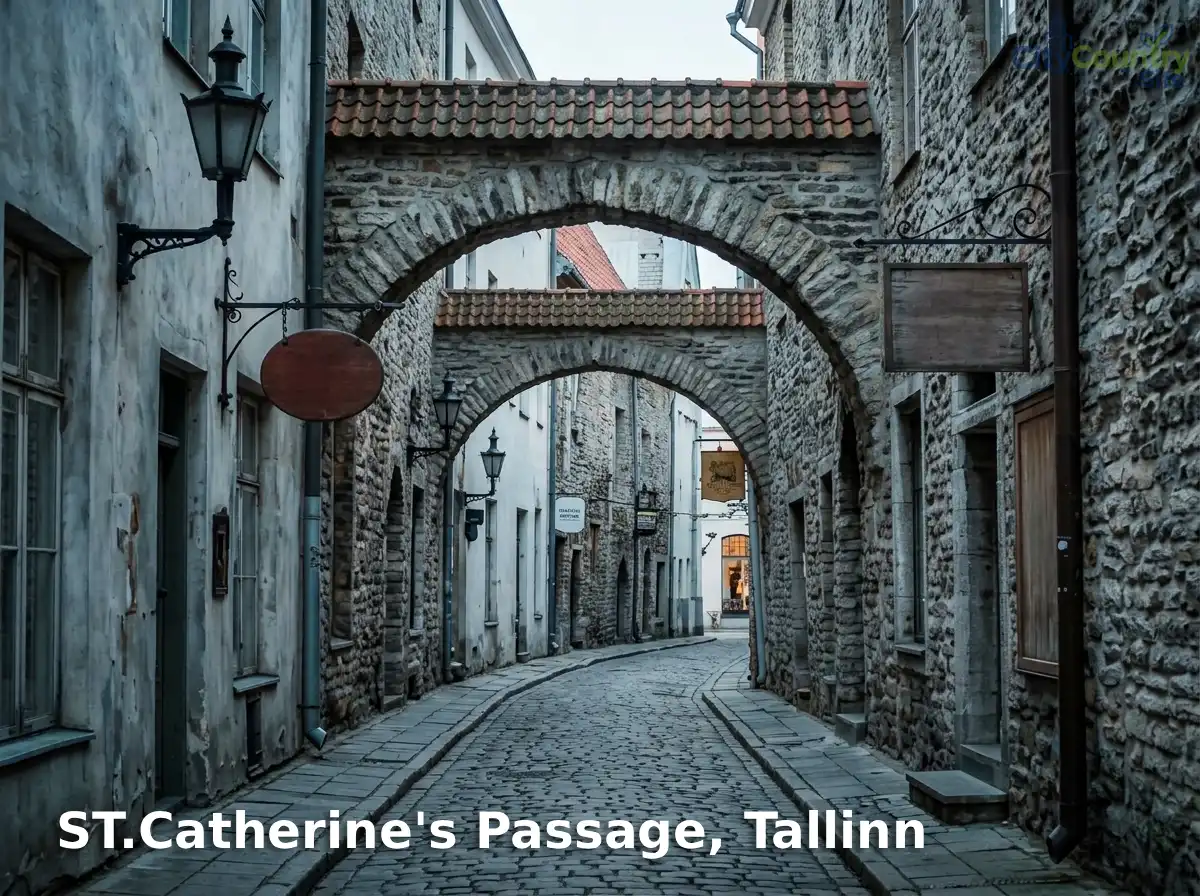
Katariina Käik (St. Catherine’s Passage) — A medieval passageway between two old town streets, lined with artisan workshops — quilts, ceramics, jewelry, and leather goods made on the premises and sold directly. One of the most authentic craft shopping experiences in Northern Europe.
Nukupood (Old Town) — An extraordinary puppet and toy shop in the old town — beautifully made traditional toys and puppets by Estonian artisans. A wonderful children’s and gift shop.
Üks (Telliskivi) — A beautifully curated design and lifestyle shop featuring contemporary Estonian design — fashion, homeware, books, and beauty products made in Estonia.
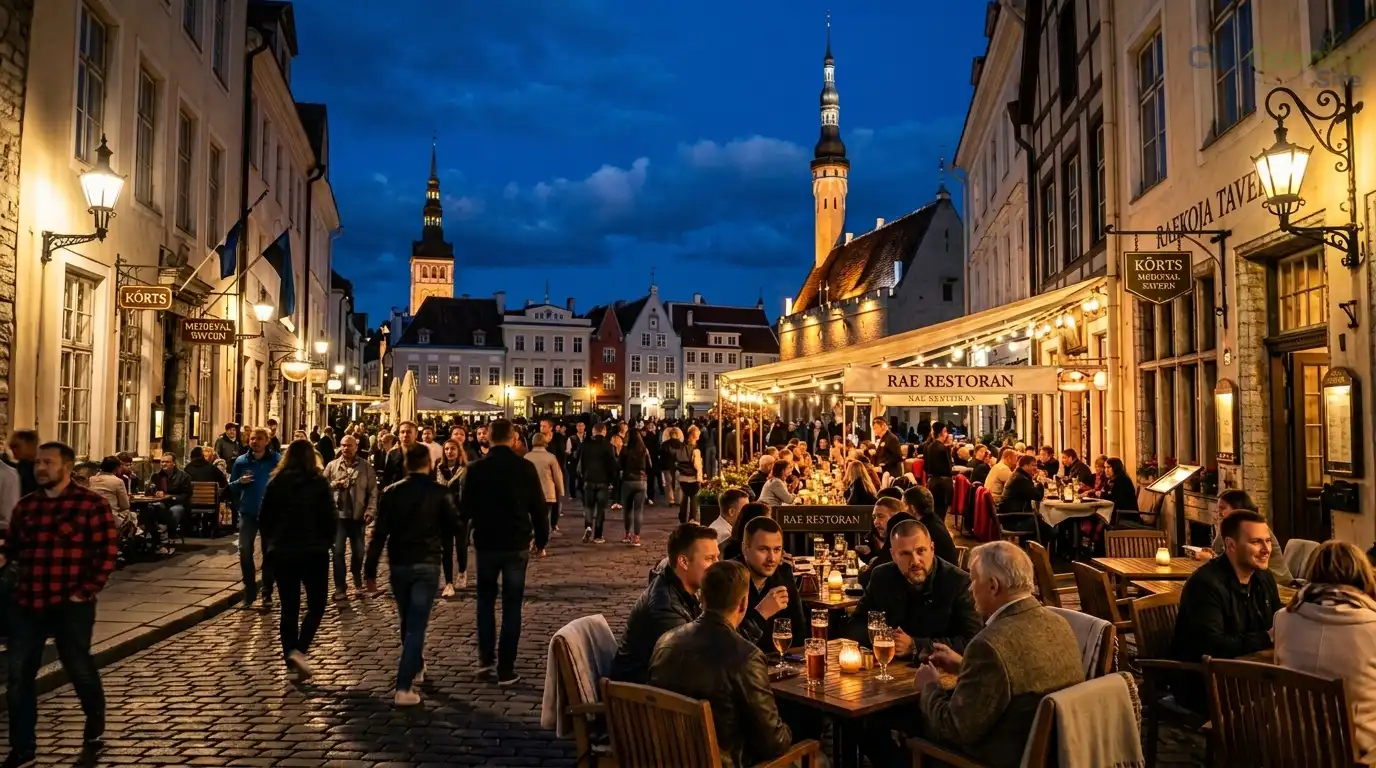
13. Tallinn Nightlife & Entertainment
Tallinn has a nightlife reputation that significantly exceeds what visitors expecting a small, quiet Baltic capital might anticipate. The city’s size, its young educated population, its relatively low prices (by Nordic standards), and its status as a weekend destination for Finnish visitors who find Tallinn’s bars cheaper than Helsinki’s have all contributed to a nightlife scene of genuine energy and variety.
Live Music and Cultural Venues:
Estonia Concert Hall (Eesti Kontsert) — The home of the Estonian National Symphony Orchestra — one of the finest small-nation orchestras in Europe — and a regular venue for classical music of outstanding quality at prices far below comparable concerts in Western Europe.
Estonia Theatre (Rahvusooper Estonia) — Estonia’s national opera and ballet house — regular productions of opera and ballet in a beautiful 1913 building. Tickets are remarkably affordable by international standards.
Vaba Lava — An excellent contemporary theatre and performance space at Telliskivi — home to some of the most interesting contemporary drama in the Baltic region.
Rock Café Tallinn — One of the longest-running live music venues in Estonia — regular concerts from Estonian and international acts.
Bars and Nightlife:
Telliskivi provides the most genuinely creative evening environment — the complex’s bars, restaurants, and event spaces create an alternative scene that is entirely contemporary in contrast to the medieval old town.
Clazz (Old Town) — A beloved jazz bar in the old town — live jazz most evenings in a warm, atmospheric basement setting. One of the finest jazz bar experiences in the Baltic.
Hell Hunt (Old Town) — Tallinn’s first craft beer pub (opened 1993) — a beloved institution that has maintained its character as a genuine local gathering place through the city’s transformation into a tourism destination. Excellent Estonian craft beer on tap.
NOP (Old Town) — A sophisticated cocktail bar in the old town — outstanding mixology, creative cocktails using Estonian botanicals and spirits, and an elegant atmosphere.
Pudel Bar (Kalamaja) — A neighborhood bar in Kalamaja beloved by the creative community — excellent natural wine and craft beer selection in a relaxed, genuine atmosphere. The opposite of tourist-facing hospitality.
Club scene:
Tallinn has a small but quality club scene — Sveta and Puänt are among the most respected venues for electronic music. The old town has several clubs that cater primarily to tourist and Finnish visitor crowds (the Old Town basement clubs have variable reputations); the more locally respected scene is centered on Kalamaja and Telliskivi.
14. Tallinn Hidden Gems & Local Secrets
The Tallinn Song Festival Grounds (Lauluväljak) — The extraordinary outdoor amphitheater on the Pirita coast — designed to accommodate 100,000+ singers and 300,000+ audience members at the Estonian Song Festival — is open and accessible year-round as a public space. Walking to the vast stage, standing in the empty tiered seating, and understanding the scale of the national gathering that has taken place here since 1960 (and the Singing Revolution gatherings of the 1980s that were arguably the most important events in Estonia’s path to independence) is deeply moving. Almost no tourists visit outside of the Song Festival events.
Kalamaja Wooden Houses — The neighborhood of Kalamaja — northwest of the old town — preserves the finest collection of traditional Estonian wooden residential architecture in the city. The wooden houses (puitmajaarhitektuur) of the early 20th century — painted in blues, greens, yellows, and reds — were the homes of workers and craftspeople who lived outside the medieval walls. Walking Kalamaja’s quiet streets, particularly Kopli Street and the side streets toward the sea, reveals a completely different Tallinn from the medieval postcard — gentler, more human in scale, and genuinely beautiful.
Toompea Sunset Viewpoint — The Kohtuotsa viewpoint and Patkuli viewpoint on Toompea Hill offer the finest views over the lower town’s red rooftops, the harbor, and the Gulf of Finland. In summer, the sunset comes late (9–10 PM) and the light on the rooftops turns extraordinary shades of gold and copper. Most tourists visit in the midday heat; locals know to come for the evening light. Go in September for the finest combination of warm color temperature and manageable crowds.
Estonian History Museum at Maarjamäe Palace — A beautifully designed branch of the Estonian History Museum in a magnificent 19th-century seaside palace — the Occupation Museum wing documents the Soviet and Nazi occupations with intelligence and emotional precision. One of the finest occupation history museums in the Baltic region. Almost entirely missed by visitors focused on the old town.
The St. Catherine’s Dominican Monastery Ruins — A medieval Dominican monastery, suppressed during the Reformation in the 16th century, whose ruins — a beautiful Gothic chapter house and cloister — survive in a courtyard off Vene Street in the old town. The ruins are partially open and entirely atmospheric — the quiet of the abandoned cloister in the middle of the busy old town is one of the most unexpected moments of peace available in the city.
Pirita Beach and Coastal Walk — The Pirita sea coast — approximately 5 km northeast of the old town by bus — provides a beautiful Baltic beach with views back toward the Tallinn skyline. The coastal promenade connecting Pirita to the Kadriorg park area is one of the finest urban coastal walks in the Baltic region, passing historic ruins, forested sections, and the Song Festival Grounds.
15. Day Trips from Tallinn
Estonia — roughly the size of the Netherlands or Switzerland — is small enough that interesting destinations are accessible from Tallinn within 1–3 hours by road or short ferry crossing.
Day Trips Table
| Destination | Distance | Travel Time | Method | Highlights |
|---|---|---|---|---|
| Lahemaa National Park | 70 km east | 1 hour | Car / Bus | Coastal forests, manor houses, fishing villages, boulders |
| Tartu | 186 km south | 2.5 hrs | Bus / Train | Estonia’s second city; university town; oldest city in the Baltics |
| Haapsalu | 100 km southwest | 1.5 hrs | Bus / Car | Romantic castle, wooden architecture, seaside charm |
| Paldiski | 50 km west | 45 min | Train / Car | Former Soviet nuclear base; dramatic coastal cliffs |
| Pärnu | 130 km south | 2 hours | Bus / Car | Estonia’s “summer capital”; beach town; spa culture |
| Saaremaa Island | 200 km southwest | 3 hrs (ferry) | Bus + ferry | Estonia’s largest island; medieval castle; windmills; wild landscapes |
| Helsinki, Finland | 85 km north | 2 hours | Ferry | Finnish capital; Suomenlinna fortress; excellent museums |
| Riga, Latvia | 310 km south | 4 hours | Bus / Car | Latvian capital; Art Nouveau architecture; excellent food scene |
Lahemaa National Park is Estonia’s finest natural day trip — a large coastal nature reserve of pine forests, boulders deposited by the last ice age, peat bogs, rivers, and traditional fishing villages. The manor houses of Lahemaa — Palmse, Sagadi, and Vihula, all beautifully restored — provide an insight into Baltic German aristocratic life. The coastal village of Altja — with its traditional wooden fish smokehouses still in use — is one of the most evocative traditional Estonian settlements accessible from Tallinn.
Helsinki — just 2 hours by fast ferry — makes one of the finest and most unusual day trips available from any European capital. Taking a morning ferry, spending a day in the Finnish capital (the extraordinary **Suomenlinna sea fortress, the **Design Museum, the Ateneum Art Museum, and Helsinki’s outstanding café culture), and returning on the evening ferry gives a genuinely memorable double-capital experience. The ferry crossing itself — particularly on a clear summer evening when both cities’ skylines are visible — is beautiful.
Saaremaa Island — Estonia’s largest island, accessible by ferry — offers one of the finest traditional Estonian landscape experiences: the medieval Kuressaare Castle, the extraordinary Kaali meteorite crater (one of the best-preserved impact craters in the world), traditional windmills, and wild coastal scenery of genuine Baltic beauty. A two-day trip from Tallinn is better than a day trip; staying overnight on Saaremaa is strongly recommended.
16. Tallinn’s Local Culture, Customs & Etiquette
Estonians have a cultural character that is immediately distinctive and that visitors frequently need to recalibrate their social expectations to appreciate properly. Estonian reserve — sometimes misread as coldness or unfriendliness by visitors accustomed to more effusive cultures — is better understood as a different kind of warmth: genuine, unperformed, and deeply respectful of others’ space and privacy.
Estonian Reserve: Estonians are among the most introverted national cultures in Europe by self-report and by observable social behavior. They do not make small talk with strangers; they do not smile automatically at people they do not know; they wait at pedestrian crossings without impatience but also without social interaction. This is not rudeness — it is a cultural norm in which silence is respected as a genuine social state rather than a problem to be filled. An Estonian proverb — “Öö on mõtlemiseks, päev on tegutsemiseks” (Night is for thinking, day is for doing) — captures something of this internal orientation. Once actual engagement begins, Estonians are genuinely warm, direct, intellectually sharp, and often possessed of an extremely dry wit.
The Singing Tradition: The Estonian choral singing tradition is not merely a cultural curiosity but the deepest expression of Estonian national identity. The Song Festival (Laulupidu) — held every five years since 1869 — is the event around which Estonian national feeling organizes itself most powerfully. The knowledge that hundreds of thousands of Estonians singing together on the Song Festival Grounds in the 1980s played a significant role in peaceful independence from the Soviet Union gives the singing tradition a political and historical weight that is entirely real. If you encounter choral music in Estonia — in a church, at a festival, or at the Song Festival Grounds — give it full attention.
Linguistic Pride: Estonian is a Finno-Ugric language — related to Finnish and (more distantly) Hungarian, but not to any Indo-European language, making it entirely distinct from Russian, German, Swedish, and the other languages that have dominated the region historically. Estonians are justifiably proud of their language — it is the primary carrier of a culture that survived centuries of foreign domination. Making any effort with Estonian — even the most basic greetings — is warmly received.
Russian Relations: Approximately 25% of Estonia’s population is Russian-speaking — a legacy of Soviet-era in-migration. The relationship between the Estonian and Russian communities is complex and sensitive, shaped by the occupation history and more recently by Russia’s 2022 invasion of Ukraine (which Estonia has firmly condemned and actively supported Ukraine against). This is not a topic to engage with lightly in casual conversation.
Sauna Culture: The Estonian sauna (saun) is a cultural institution of deep importance — communal bathing, socializing, and restoration in the steam heat. Visiting an Estonian sauna — the smoke sauna (suitsusaun) is the most traditional — is a genuine cultural experience. Several Tallinn hotels have saunas; Telliskivi has a public sauna; and the countryside estates accessible on day trips offer traditional sauna experiences.
Tipping:
- Restaurants: 10% tip is standard and appreciated
- Taxis / Bolt: rounding up is standard
- Hotel staff: €1–2 per service
- Tour guides: €10–15 per day
Dos and Don’ts:
- ✅ Do make genuine effort with the sauna if invited — it is the most direct cultural connection available
- ✅ Do visit in the evening when the old town’s lighting creates its most atmospheric quality
- ✅ Do try Estonian craft beer, sea buckthorn products, and rye bread — the most distinctive local food experiences
- ❌ Don’t mistake Estonian reserve for hostility — engage genuinely and you will find genuine warmth in response
- ❌ Don’t refer to the Soviet period as “the Russian occupation” in all contexts — while accurate, it is a charged term in the Russian-speaking community
- ❌ Don’t visit only the old town — Kalamaja and Telliskivi are essential for understanding contemporary Tallinn
17. Safety & Travel Tips
Tallinn is a very safe city for tourists — consistently ranking among the safest cities in Eastern Europe and entirely comparable in safety to Western European capitals. Violent crime against tourists is very rare.
Safe Areas: The entire old town, Kalamaja, Kadriorg, Telliskivi, and all tourist areas are safe at all hours. The old town on weekend nights — particularly in peak summer — can become quite crowded with hen parties and stag parties (Tallinn has been a popular destination for budget European stag/hen tourism for years), which some visitors find less atmospheric; the city has been working to address this through various measures.
Main Practical Concerns:
- Cobblestones in winter — ice-covered medieval cobblestones are genuinely hazardous; wear appropriate footwear in winter months
- Tourist-facing restaurants in the old town — some establishments near Town Hall Square serve mediocre food at high prices; walk one street away for better value
- Stag/hen party tourism — weekends in summer can see significant stag and hen party groups in the old town; if this bothers you, visit midweek or in the evening when groups have moved to clubs
Emergency Numbers:
- All emergencies: 112 (European standard)
- Police: 110
- Tallinn Tourist Information: +372 645 7777
Health Tips:
- Medical facilities in Tallinn are good — the East Tallinn Central Hospital and North Estonia Medical Centre provide quality care
- Tap water in Tallinn is excellent — drink freely from the tap
- In winter, dress in warm layers — Tallinn winters are genuinely cold; thermal underwear is not optional for extended outdoor time
18. Tallinn Budget Travel
Daily Cost Table
| Category | Budget Traveler | Mid-Range | Luxury |
|---|---|---|---|
| Accommodation | $20–45 (hostel) | $80–170 (hotel) | $230–500+ (luxury hotel) |
| Food | $12–22 (market, local cafés) | $35–70 (restaurant meals) | $90–200+ (fine dining) |
| Transport | $2–6 (bus, walking, Bolt) | $10–25 (Bolt, taxis) | $40–80 (private car) |
| Activities | $5–20 (tower, museums) | $25–55 (guided tours, museums) | $70–200+ (private guide, experiences) |
| Total/Day | ~$39–93 | ~$150–320 | ~$430–980+ |
Tallinn is moderately priced — more affordable than Helsinki (just 2 hours away by ferry) and Scandinavian capitals, but somewhat more expensive than Riga or Vilnius. The use of the Euro and the excellent quality of affordable food options (the Balti Jaama market, the excellent local café scene in Kalamaja) mean that budget travel here provides a genuinely excellent experience.
19. Practical City Information
Visa & Entry: Estonia is a member of the Schengen Area and the European Union. EU citizens enter with any valid ID. Citizens of USA, UK, Canada, Australia, Japan, and many others can enter without visa for stays up to 90 days within a 180-day period. Standard Schengen visa requirements apply for other nationalities.
Currency: Estonia uses the Euro (€) — adopted in 2011. No currency conversion required for Eurozone visitors. Cards are accepted universally throughout Tallinn. Contactless payment is entirely standard — Estonia is one of the world’s most cashless societies.
e-Residency: Estonia’s remarkable e-Residency program allows non-citizens to become digital residents of Estonia — accessing digital identity, company registration, banking, and government services remotely. If you have interest in starting a European digital business, Tallinn’s Enterprise Estonia offices can provide information during your visit.
SIM Cards and Internet: Available at the airport and throughout the city. Telia Estonia, Elisa Estonia, and Tele2 Estonia are the main operators. EU visitors can use their home SIM without roaming charges. Tourist SIMs with data are available for approximately €10–15 for non-EU visitors. Free public Wi-Fi is available throughout the old town and in most cafés. Estonia has excellent 4G and 5G coverage.
Power: Estonia uses Type C and F plugs (standard European two-pin round plugs) at 230V, 50Hz.
Drinking Water: Tallinn’s tap water is excellent and entirely safe to drink.
Vaccinations: No special vaccinations required. Tick-borne encephalitis vaccine recommended for extended hiking or camping in forested areas.
20. How to Be a Responsible Traveler in Tallinn
Go Beyond the Old Town: The UNESCO Old Town is extraordinary but it is not all of Tallinn. Visiting only the medieval center gives an incomplete picture of the city and concentrates tourist economic impact in a small area while missing the genuine contemporary character of the city. Kalamaja, Telliskivi, Kadriorg, and the coastal neighborhoods deserve equal time.
Support Local Creative Businesses: Tallinn’s creative economy — design studios, artisan workshops, craft brewers, natural wine importers, independent restaurants — deserves support over tourist-facing chains. The Katariina Käik artisan passage, the Telliskivi market, and the independent restaurants of Kalamaja and the old town’s quieter streets are where your money has the most meaningful impact.
Engage with the Occupation History: The Occupation Museum (Vabamu) — one of the finest occupation history museums in Europe, covering both the Soviet and Nazi occupations of Estonia — provides essential context for understanding what Estonian independence means and why it is protected so seriously. Visiting with genuine attention and intellectual engagement is one of the most important things a thoughtful traveler can do in Tallinn.
Respect the Estonian Sauna: If invited to a sauna — or if you visit one of the excellent public saunas in the city — observe the customs carefully: silence is often expected in the sauna itself; conversation happens outside; the protocol of heating, steaming, and cooling is taken seriously. The Estonian sauna is a place of genuine cultural significance, not a tourist entertainment.
Environmental Consciousness: Estonia is genuinely committed to environmental protection — its forests cover over 50% of the country’s territory and are legally protected. The natural habitats accessible on day trips (Lahemaa, Saaremaa, Matsalu) are fragile ecosystems; follow all marked trails and leave no trace.
21. Travel Media: Documentaries, Books & Channels
Books:
- The Singing Revolution by Mike Majewski and James Tusty — The companion book to the documentary of the same name; an outstanding account of Estonia’s path to independence through song
- The Czar’s Madman by Jaan Kross — Estonia’s finest 20th-century novelist. A magnificent historical novel set in 19th-century Estonia under Russian imperial rule; the finest introduction to Estonian literary culture in English translation
- The Peaceful Warrior by Rein Taagepera — A political scientist’s account of Estonian independence and post-Soviet development
- Old Estonia: Architecture of a Small Baltic State — Various photographic and architectural studies of traditional Estonian building culture
- Rick Steves Estonia, Latvia and Lithuania — The most useful English-language practical guide to the region
Documentaries:
- The Singing Revolution (2006) — A beautifully made documentary about Estonia’s path to independence through the singing tradition; essential viewing before visiting. Available on various streaming platforms
- My Estonia (various BBC and Channel 4 productions) — Several excellent documentaries about contemporary Estonia’s digital society and remarkable post-Soviet transformation
YouTube Channels:
- Rick Steves Europe — Excellent Tallinn and Estonia episodes
- Lost LeBlancs — Beautiful Tallinn travel content
- Indochina Tours — Baltic states travel content including Tallinn
22. Tallinn vs. Similar Cities
| Feature | Tallinn | Riga (Latvia) | Vilnius (Lithuania) |
|---|---|---|---|
| Medieval preservation | ⭐⭐⭐⭐⭐ Best-preserved in Northern Europe | ⭐⭐⭐⭐ Excellent Art Nouveau + Old Town | ⭐⭐⭐⭐ Excellent Baroque old town |
| Digital / tech scene | ⭐⭐⭐⭐⭐ World-leading | ⭐⭐⭐ Good | ⭐⭐⭐⭐ Very good |
| Food scene | ⭐⭐⭐⭐ Very good — rapidly developing | ⭐⭐⭐⭐⭐ Outstanding | ⭐⭐⭐⭐ Very good |
| Nightlife | ⭐⭐⭐⭐ Very good | ⭐⭐⭐⭐⭐ Outstanding | ⭐⭐⭐⭐ Very good |
| Affordability | ⭐⭐⭐ Moderate (uses Euro) | ⭐⭐⭐⭐ Good value | ⭐⭐⭐⭐ Good value |
| Natural surroundings | ⭐⭐⭐⭐⭐ Gulf of Finland + forests + islands | ⭐⭐⭐⭐ Good | ⭐⭐⭐⭐ Good |
| History | ⭐⭐⭐⭐⭐ Extraordinary | ⭐⭐⭐⭐⭐ Extraordinary | ⭐⭐⭐⭐⭐ Extraordinary |
| Helsinki ferry | ⭐⭐⭐⭐⭐ Unique advantage | — | — |
Choose Tallinn if you want the best-preserved medieval city in Northern Europe combined with the world’s most digitally advanced society, extraordinary summer light, the finest maritime museum in the Baltic, easy Helsinki ferry access, and a quality of Nordic social environment that Riga and Vilnius do not quite match.
23. Tallinn City Travel Tips
- Wear proper shoes — medieval cobblestones require grip; particularly important in winter when ice makes them genuinely hazardous
- Don’t eat only in the obvious old town restaurants — walk one street away from Town Hall Square for dramatically better value and quality
- The old town is most beautiful in the early morning (before 9 AM) and in the evening light — midday is when it is most crowded
- Bolt app is Estonian-founded and works excellently throughout Tallinn — download before arriving
- The ferry to Helsinki is worth taking even if you are only spending one night in Finland — the two-capital experience is genuinely memorable
- Tallinn Christmas Market is genuinely one of Europe’s finest — book accommodation months in advance for December visits
- Lahemaa National Park is the finest day trip and almost entirely free — rent a car for maximum flexibility
- Sea buckthorn jam from the Balti Jaama market is one of the finest food souvenirs in the Baltic
- Summer White Nights (mid-June) are worth timing your visit around — the quality of late evening light in the old town is extraordinary
- The Singing Revolution documentary — watch it before visiting; it transforms your understanding of what Estonia is
- Kalamaja on a Saturday morning — coffee at one of the neighborhood cafés, then the market at Telliskivi — is the finest morning in contemporary Tallinn
- Tap water is excellent — bring a reusable bottle
💡 Did You Know? Estonia’s extraordinary e-Residency program — launched in 2014 — allows anyone in the world to apply for Estonian digital identity, giving them the ability to register a European company, access EU digital services, sign documents digitally, and conduct business throughout the EU — all without ever physically visiting Estonia. As of 2026, over 100,000 e-Residents from over 170 countries have joined the program — contributing significantly to Estonia’s economy while extending the concept of national identity beyond physical borders for the first time in history. It is one of the most radical experiments in digital governance ever undertaken, and it is entirely typical of a country that has consistently led the world in applying technology to the challenges of governance.
24. Is Tallinn Worth Visiting? — Final Verdict
Unequivocally and enthusiastically yes — and for travelers who have not yet discovered it, Tallinn may be the finest travel discovery available in Northern Europe. The combination of a UNESCO medieval old town that genuinely rivals Prague and Vienna (without Prague’s crowds or Vienna’s prices), the extraordinary intellectual fascination of the world’s most digitally advanced society operating within medieval walls, extraordinary summer daylight, world-class maritime and occupation history museums, a rapidly developing contemporary food and design scene, and a quality of natural environment (the Gulf of Finland, the Estonian islands, the forests of Lahemaa) — all within a compact, manageable, thoroughly safe city of barely 455,000 people — produces a travel experience of remarkable depth and breadth.
Tallinn is best suited for:
- History and architecture enthusiasts — The medieval old town is genuinely extraordinary; the UNESCO designation is entirely deserved; the combination of Danish, German Hanseatic, Swedish, Russian Imperial, and Soviet layers makes the historical narrative uniquely complex and fascinating
- Technology and innovation travelers — The e-Estonia story — digital governance, e-Residency, the startup ecosystem, the cyber defense center — is one of the most fascinating governance experiments of the 21st century and is best understood from within the city that created it
- Summer travelers seeking long days — The Baltic summer light — near-white nights in June, golden evenings until 10 PM in August — is a genuinely extraordinary natural phenomenon that makes outdoor life a pleasure of unusual intensity
- Winter travelers — The Christmas Market, snow on the medieval rooftops, the raw Nordic beauty of a cold Estonian January — for those who embrace it, winter Tallinn is magical
- Food and craft beer lovers — The contemporary Estonian food scene and craft brewing scene are among the most exciting and most undiscovered in Northern Europe
- Couples and families — Safe, compact, extraordinarily beautiful, with Lahemaa and the Estonian countryside accessible for day trips
- Those who loved medieval cities but are tired of crowds — Prague with fewer people and more genuine local life
Less suited for beach holiday seekers (the Baltic is cold for swimming except in high summer), those requiring Mediterranean warmth, or travelers who find northern reserve difficult to penetrate.
The verdict: Give Tallinn four full days minimum — five is better. Spend a full day in the old town (morning for Toompea, afternoon for the Lower Town and walls). Devote a morning to the Seaplane Harbour Museum. Walk Kalamaja on a Saturday morning. Go to the Balti Jaama market. Take the ferry to Helsinki for a day if the schedule allows. And on your last evening, climb to the Kohtuotsa viewpoint on Toompea at 9 PM in summer and watch the sun decline toward the Gulf of Finland, golden on the red rooftops below, the spires of the old town rising against the pale northern sky. That moment — that particular quality of Baltic evening light on a medieval city that has survived everything thrown at it for 800 years — is what Tallinn is for.
25. Frequently Asked Questions About Tallinn
Q1: Is Tallinn safe for tourists?
Yes — Tallinn is very safe by any European standard. Violent crime against tourists is rare. The old town, Kalamaja, Kadriorg, and all tourist areas are safe at all hours. The main practical concern in winter is ice on the cobblestones — wear appropriate footwear. Weekend nights in the old town can be lively due to stag/hen party tourism, which some visitors find less pleasant; the city is working to manage this. Overall, safety is not a significant concern for visitors to Tallinn.
Q2: Do I need a visa to visit Estonia?
Estonia is a Schengen Area member. EU citizens enter with any valid national ID. Citizens of USA, UK, Canada, Australia, Japan, and many others enter visa-free for up to 90 days within a 180-day period. Standard Schengen visa requirements apply for other nationalities. Check the Estonian Police and Border Guard website for current requirements.
Q3: What is the best way to get from Helsinki to Tallinn?
The Helsinki-Tallinn ferry is the classic connection — operated by Tallink, Viking Line, and Eckero Line. The crossing takes approximately 2 hours by fast ferry. Prices start from approximately €20–50 per person; higher for cabins and vehicle transport. Departures are frequent — multiple sailings daily. The ferry journey itself is a beautiful experience, particularly on the return from Tallinn when the medieval skyline appears across the Gulf.
Q4: What is the Estonian Song Festival and why is it important?
The Estonian Song Festival (Laulupidu) is held every five years (most recently 2019; next 2024/2025) at the Song Festival Grounds in Tallinn, where up to 30,000 choir singers and 100,000+ audience members gather for a massive communal celebration of Estonian choral music. The tradition dates to 1869 and is deeply embedded in Estonian national identity. During the Soviet occupation, the Song Festival continued — serving as a vehicle for national expression within the constraints of communist cultural policy. The events of the Singing Revolution (1987–1991), when mass outdoor gatherings singing forbidden national songs played a significant role in peaceful independence from the Soviet Union, gave the singing tradition a political and historical weight that makes it one of the most extraordinary cultural institutions of any nation.
Q5: How many days should I spend in Tallinn?
A minimum of three full days covers the essential experiences — the Old Town, Toompea, the Seaplane Harbour Museum, Kalamaja, and Telliskivi. Four to five days allows you to add Kadriorg, the Occupation Museum (Vabamu), a day trip to Lahemaa, and more leisurely exploration of the city’s food and café scene. If visiting in December for the Christmas Market, three to four days is ideal for combining the market with the city’s major attractions.
Q6: When is the Tallinn Christmas Market and is it really as good as people say?
The Tallinn Christmas Market runs from late November through January 6 in Town Hall Square (Raekoja Plats). It is consistently ranked among Europe’s finest Christmas markets alongside Vienna, Strasbourg, and Prague — and with considerably fewer crowds than those famous equivalents. The setting — a Gothic medieval square, wooden stalls, mulled wine (glögi), the Town Hall’s Gothic tower illuminated above — is extraordinary. The market sells traditional crafts, Estonian food products, Christmas decorations, and warming drinks. Accommodation during the Christmas market period fills quickly — book well in advance.
Q7: What is e-Residency and how does it relate to visiting Tallinn?
Estonian e-Residency is a program allowing non-citizens anywhere in the world to receive a digital identity from Estonia — enabling company registration in the EU, digital document signing, and access to Estonian digital services, all without physically living in Estonia. It is available to anyone from any country with a clean background. As of 2026, over 100,000 e-Residents from 170+ countries have joined. If you are interested in establishing a European digital business, the Enterprise Estonia offices in Tallinn provide information and support. Several co-working spaces in Telliskivi specifically cater to e-Residents and digital nomads.
Q8: Is the Tallinn Old Town genuinely as good as the UNESCO World Heritage designation suggests?
Yes — and this is not a common response to UNESCO designations, many of which cover sites that are impressive in historical significance but less immediately striking to visit. The Tallinn Old Town is genuinely extraordinary — the completeness of the medieval defensive circuit (towers, walls, gates), the quality of the architecture (the Gothic Town Hall is arguably the finest in Northern Europe outside Lübeck), and the scale of the preserved medieval environment (enough to walk in for half a day without retracing your steps) make it a genuinely world-class medieval city experience. It is most beautiful in the early morning (before 9 AM) and in the evening.
Q9: What is the food scene like in Tallinn and what should I eat?
Tallinn’s food scene has developed remarkably in the past decade into one of the most interesting in the Baltic region. Must-tries include: Estonian rye bread (the finest from Leib Resto ja Aed or Kalamaja bakeries); Kranjska Klobasa-style blood sausage (verivorst) with lingonberry jam; smoked or cured Baltic herring; wild mushrooms and berries prepared by contemporary Estonian chefs; sea buckthorn products in any form; and Estonian craft beer from Põhjala or Tanker. The Friday Open Kitchen (Odprta Kuhna) — wait, that is Ljubljana; the equivalent in Tallinn is the Balti Jaama Turg (Balti Station Market) on weekends and the excellent restaurant scene at Telliskivi.
Q10: What should I know about Estonian culture before visiting?
The most important cultural knowledge for visiting Estonia: Estonians are reserved with strangers but genuinely warm once engagement is established — do not mistake quietness for coldness. The singing tradition is the deepest expression of national identity — treat choral music with respect. The Soviet occupation is living memory — engage with its history at the Vabamu museum with full seriousness. Estonia is NOT Russia — the two countries have a complex and painful relationship; do not confuse or conflate them. English is widely spoken among the younger generation; attempts at Estonian are warmly received.
26. Sources & References
This article was researched using information from the following trusted sources:
- Lonely Planet Estonia — lonelyplanet.com
- TripAdvisor Tallinn — tripadvisor.com
- Booking.com Tallinn Hotels — booking.com
- Wikipedia — Tallinn — en.wikipedia.org
- Tallinn Tourism — visittallinn.ee
- Numbeo — Cost of Living Tallinn — numbeo.com
- Google Maps — maps.google.com
- Wikitravel Tallinn — wikitravel.org
- Skyscanner Estonia Flights — skyscanner.com
- World Travel Guide — worldtravelguide.net
- Enterprise Estonia — investinestonia.com
- e-Residency Estonia — e-resident.gov.ee
- Lennusadam (Seaplane Harbour) — lennusadam.eu
- Condé Nast Traveller Northern Europe — cntraveller.com
- UNESCO Tallinn — whc.unesco.org
27. Tallinn Travel Guide Images