
1. Facts About Harare
| Category | Details |
|---|---|
| Country | Zimbabwe |
| Region / Province | Harare Province (independent city-province) |
| Official Languages | English, Shona, Ndebele (16 official languages total) |
| Currency | Zimbabwe Gold (ZiG) — introduced 2024; USD widely accepted |
| Best Time to Visit | April to October (dry season) |
| Time Zone | Central Africa Time (CAT) — UTC+2 |
| Weather | Subtropical highland climate — warm and dry most of year; summer rains November to March |
| Temperature | 7°C – 29°C (45°F – 84°F) depending on season |
| Map | Located in northeastern Zimbabwe on a high plateau at approximately 1,490 m above sea level |
| Airport | Robert Gabriel Mugabe International Airport (HRE) — 15 km southeast of city center |
| Top Tourist Places | National Gallery of Zimbabwe, Harare Gardens, Chapungu Sculpture Park, Mukuvisi Woodlands, Lion & Cheetah Park, Borrowdale Village |
| Avg. Trip Cost/Day | Budget: $30–55 / Mid-range: $80–150 / Luxury: $180–400+ |
| Nearest Major Airport | Robert Gabriel Mugabe International Airport (HRE) — primary gateway |
| Population | Approx. 1.5 million (city); 3 million+ (metro area, 2026) |
| Famous For | Extraordinary Shona sculpture tradition, jacaranda trees that turn the city purple every October, gateway to Victoria Falls and Zimbabwe’s magnificent national parks, and one of Africa’s most educated and culturally rich populations |
2. Harare City Overview & Background
Every October, something extraordinary happens in Harare. The jacaranda trees that line the city’s wide avenues and fill its garden suburbs burst into flower simultaneously — a mass eruption of the most vivid purple imaginable — transforming the entire city into something that looks less like a capital and more like a painter’s fever dream. Streets disappear beneath a canopy of violet. Parks glow with fallen blossoms. The air carries the faint sweetness of the flowers. Locals barely notice anymore. Visitors stop and stare with their mouths open.
It is the perfect introduction to Harare — a city that surprises you, that offers beauty where you did not expect it, and that rewards the traveler willing to look carefully at what is actually there.
Zimbabwe’s capital sits on a high plateau in the country’s northeast at an elevation of approximately 1,490 metres (4,888 feet) — giving it a climate of comfortable warmth and cool nights that makes it one of Africa’s more pleasant cities to simply be in. The city is well-planned by African standards, with wide tree-lined avenues, extensive parks and gardens, and suburban neighborhoods of considerable beauty spreading outward from a commercial center that carries the marks of its colonial past alongside the ambitions of its post-independence present.
Harare is a city with a complicated story. Zimbabwe’s extraordinary natural wealth — in land, minerals, wildlife, and human talent — was for decades undermined by political mismanagement and economic catastrophe following the end of Robert Mugabe’s authoritarian rule. But the country has been undergoing a genuine, if cautious, stabilization process since 2017. And Harare today is a city of fascinating contradictions: genuine hardship alongside remarkable resilience, extraordinary artistic and intellectual talent alongside challenging infrastructure, and a warmth of human welcome that consistently astonishes first-time visitors.
What makes Harare genuinely special for travelers is the combination of world-class Shona sculpture — one of Africa’s great artistic traditions, centered in the city — an outstanding natural environment of parks, woodlands, and wildlife within city limits, an intellectual and cultural life of surprising sophistication, and a population that is extraordinarily well-educated, widely traveled in spirit if not always in body, and genuinely delighted when visitors show real curiosity about their country.
“I expected a city struggling to survive. I found a city determined to thrive. Harare surprised me more than anywhere I visited in Africa.”
— Anonymous travel writer, Condé Nast Traveller Africa feature, 2024
3. Harare History Timeline
Pre-colonial era — The high plateau of northeastern Zimbabwe has been inhabited for thousands of years. The region is part of the territory of the Shona people — the dominant ethnic group of Zimbabwe — whose ancestors built the extraordinary stone city of Great Zimbabwe to the south, one of the most remarkable pre-colonial urban achievements in sub-Saharan Africa.
1880 — Pioneer Column — a column of British South Africa Company settlers and soldiers led by Cecil Rhodes’s agents — sets out from South Africa to claim the territory for the British Empire.
September 12, 1890 — The Pioneer Column reaches a flat hilltop in northeastern Mashonaland and raises the British flag, establishing a fort and camp they name Fort Salisbury — after British Prime Minister Lord Salisbury. This date is traditionally regarded as the founding of modern Harare, though the Shona name for the area — Harare (from the Shona chief Neharawa, meaning “one who does not sleep” or “the place that never sleeps”) — predates British arrival.
1890s — Fort Salisbury grows rapidly as a British colonial settlement. The town is planned on a grid system with wide avenues — designed to allow ox-wagons to turn in a full circle — creating the broad street layout that still characterizes the city center today.
1897 — Salisbury is formally established as a municipality. The city begins developing the infrastructure of a permanent colonial settlement — churches, hotels, a post office, and commercial district.
1935 — Salisbury is granted city status by royal charter. The population has grown to tens of thousands, with a colonial British population living in comfort alongside a much larger African population in more restricted circumstances.
1953 — The Central African Federation — linking Southern Rhodesia (Zimbabwe), Northern Rhodesia (Zambia), and Nyasaland (Malawi) — is established with Salisbury as its federal capital. The federation is dissolved in 1963 as independence movements gain momentum across the region.
1965 — Rhodesian Prime Minister Ian Smith issues the Unilateral Declaration of Independence (UDI) from Britain, refusing to accept terms for majority-rule independence. The international community, led by Britain and the United Nations, imposes sanctions. Zimbabwe’s guerrilla liberation war — fought by the ZANLA and ZIPRA freedom fighters — begins.
1970s — The guerrilla war against white minority rule intensifies. Salisbury is the center of the Rhodesian government’s resistance. International isolation increases pressure on the Smith regime.
1979–1980 — The Lancaster House Agreement ends the war. Elections are held in 1980; Robert Mugabe’s ZANU-PF wins a landslide victory. Zimbabwe becomes independent on April 18, 1980. Salisbury is renamed Harare on April 18, 1982 — the second anniversary of independence.
1980s — The early years of independence bring economic growth and optimism. Zimbabwe’s excellent educational system produces one of Africa’s most literate populations. Harare develops as a regional hub with a genuine sense of possibility.
1990s — Economic difficulties begin emerging. Government spending exceeds revenue. Corruption increases. The fast-track land reform program — seizing white-owned farms and redistributing them — begins in 2000, devastating agricultural production and triggering an economic crisis.
2000s — Zimbabwe’s economy collapses dramatically. Hyperinflation reaches 500 billion percent at its peak in 2008 — one of the most extreme cases of hyperinflation in world history. Harare’s infrastructure deteriorates seriously. Millions of Zimbabweans emigrate. The population endures extraordinary economic hardship.
2009 — A unity government adopts the US dollar as Zimbabwe’s primary currency, stabilizing the economy and beginning a slow recovery. Harare begins rehabilitating.
2017 — Robert Mugabe is removed from power in a military-assisted transition after 37 years in office. Emmerson Mnangagwa becomes President, promising economic reform and a new era.
2019–2022 — Economic instability continues despite reform promises. A new domestic currency is attempted with limited success. USD remains the practical currency of daily commerce.
2024 — Zimbabwe introduces the Zimbabwe Gold (ZiG) — a new gold-backed currency — in another attempt to stabilize the monetary system. USD remains widely accepted alongside ZiG.
2025–2026 — Harare’s cultural scene, tourism infrastructure, and business environment continue recovering and developing. The city’s extraordinary human capital — its educated, creative, and resilient population — drives a gradual renaissance.
4. Harare Geography & Neighborhoods
Harare sits on a high, gently undulating plateau in northeastern Zimbabwe, part of the Highveld — the elevated central plateau that runs through Zimbabwe, southern Zambia, and parts of Mozambique. At approximately 1,490 metres above sea level, the city enjoys the moderate temperatures and generally pleasant climate characteristic of the African Highveld.
The city is laid out on a broad grid system established by the original colonial planners — wide avenues running in orderly directions, with the original commercial center in the CBD and residential suburbs spreading outward in every direction, many of them extensively planted with trees.
Several small rivers and dams thread through the urban area — Lake Chivero to the west, the Mukuvisi River through the eastern suburbs, and a network of vleis (seasonal wetlands) that create green spaces throughout the city.
Neighborhood Comparison Table
| Area | Best For | Vibe | Price Level |
|---|---|---|---|
| CBD (City Center) | Markets, history, budget accommodation, commerce | Busy, gritty, authentic, colonial-era buildings | Budget–Mid |
| Borrowdale | Upscale accommodation, restaurants, shopping | Affluent, leafy, relaxed, international | High–Luxury |
| Avondale | Mid-range hotels, cafés, bookshops, local life | Pleasant, accessible, comfortable | Mid |
| Highlands | Quiet residential, embassies, guesthouses | Elegant, established, leafy | Mid–High |
| Belgravia | Art galleries, boutique guesthouses, dining | Cultural, sophisticated, quiet | Mid–High |
| Mbare | Authentic local life, market, music, street food | Dense, vibrant, raw, traditional | Budget |
| Mount Pleasant | University area, bookshops, cafés | Intellectual, relaxed, green | Mid |
| Msasa | Business hotels, airport proximity, malls | Functional, commercial | Mid |
Borrowdale is Harare’s most affluent and beautiful suburb — wide, tree-canopied streets, large gardens, excellent restaurants and cafés, and the finest hotels in the city. Avondale is the middle-class heartland and the most practically convenient neighborhood for independent travelers — well served by shops, cafés, guesthouses, and transport. Mbare is the oldest African township in Harare, a dense, vibrantly alive community with the city’s most authentic market culture, traditional music scene, and unfiltered urban energy — fascinating to visit with a local guide.
5. Harare Weather & Temperature Guide
Harare’s Highveld position gives it one of the most comfortable climates in Africa. Extreme heat is rare; extreme cold is rarer. The main variation is between the dry season (April to October) and the rainy season (November to March), which coincides with the Southern Hemisphere summer.
- Dry season: April to October — little to no rain, sunny days, cool to cold nights in winter months
- Rainy season: November to March — afternoon and evening thunderstorms, warm and humid mornings
Month-by-Month Weather Table
| Month | Avg Temp (°C) | Rainfall | Crowd Level | Travel Recommendation |
|---|---|---|---|---|
| January | 16–26 | Very High (peak rains) | Low | ⚠️ Wettest month — lush but wet |
| February | 16–26 | Very High | Low | ⚠️ Still very wet |
| March | 15–26 | High | Low–Medium | ⚠️ Rains easing |
| April | 12–25 | Low | Medium | ✅ Good — rains ending, fresh and green |
| May | 8–23 | Very Low | Medium | ⭐ Excellent — cool, dry, clear |
| June | 7–21 | Negligible | Medium | ⭐ Excellent — cool dry season |
| July | 7–20 | Negligible | High | ⭐ Excellent — peak dry season |
| August | 9–22 | Negligible | High | ⭐ Excellent |
| September | 12–27 | Very Low | High | ⭐ Excellent — warming up |
| October | 15–29 | Low | Very High | ⭐ Excellent — jacaranda season! |
| November | 16–28 | Medium | Medium | ✅ Good — rains beginning |
| December | 16–26 | High | Medium | ⚠️ Rainy season returning |
May through October is the dry season and the best time to visit Harare. July and August are the coolest months — overnight temperatures can drop to 7–8°C, requiring a warm layer, but days are clear, sunny, and beautiful.
October is arguably the most spectacular month in the city’s calendar — the jacaranda trees are in full bloom, transforming the city with purple flowers, temperatures are warm but not hot, and wildlife in surrounding parks is excellent as animals congregate around drying water sources.
The rainy season (November–March) brings dramatic afternoon thunderstorms — often spectacular but rarely all-day affairs. The landscape turns brilliantly green and the rains refresh the city beautifully. Accommodation is cheaper and the city is quieter.
💡 Did You Know? Harare’s jacaranda trees — which produce the city’s signature October purple bloom — are not native to Africa at all. They are imported from South America (primarily Argentina and Brazil), planted extensively throughout Southern African cities during the colonial era. In Harare’s springtime warmth and bright sunshine, they have flourished so completely that they are now entirely associated with the city’s identity — a Brazilian immigrant plant that became Harare’s most recognizable symbol.

6. Harare Airport & Getting There
Robert Gabriel Mugabe International Airport (HRE)
Robert Gabriel Mugabe International Airport (IATA: HRE) is located approximately 15 km southeast of the city center in the Hatfield area. The airport was renamed in honor of Zimbabwe’s first post-independence leader in 2017 — a decision that remains somewhat controversial given Mugabe’s complex legacy.
The airport handles both international and domestic flights. Air Zimbabwe (the national carrier, operating with a small and aging fleet) serves several regional destinations. Ethiopian Airlines, Kenya Airways, South African Airways, Qatar Airways, and Emirates provide the main international connections through their respective hubs.
Key international connections include Johannesburg, Nairobi, Addis Ababa, Dubai, London, and Lusaka. Direct European connections are limited; most travelers connect through Johannesburg (45 minutes) or Nairobi (2 hours).
Getting from HRE to the City Center:
| Transport Option | Duration | Cost (Approx.) | Notes |
|---|---|---|---|
| Taxi (metered / booked) | 20–35 min | $15–25 (USD) | Negotiate or confirm rate before boarding |
| Hotel shuttle | 25–40 min | Free or $10–20 | Pre-arrange through hotel |
| Private transfer (pre-booked) | 20–30 min | $20–35 | Most reliable; book through hotel or tour operator |
| Shared taxi / combi | 40–60 min | $2–4 | Cheaper but confusing for first-timers |
| Public kombi (minibus) | 45–70 min | $0.50–1 | Very cheap, crowded, not recommended with luggage |
Getting to Harare from Neighboring Countries:
| Origin | Transport | Duration | Cost (Approx.) |
|---|---|---|---|
| Johannesburg, South Africa | Flight | 1 hour | $80–200 |
| Nairobi, Kenya | Flight | 2 hours | $150–300 |
| Lusaka, Zambia | Bus / Coach | 6–8 hours | $20–40 |
| Bulawayo, Zimbabwe | Luxury coach | 4.5–5 hrs | $15–25 |
| Victoria Falls | Luxury coach / Flight | 6 hrs / 1 hr | $25–40 / $100–200 |
The luxury coach services — operated by companies including Intercape, Pathfinder, and Citiliner — provide comfortable, air-conditioned connections between Harare and Bulawayo, Johannesburg, and other regional cities. Far preferable to public transport for international travelers.
💡 Did You Know? Zimbabwe was once known as the “breadbasket of Africa” — exporting food to much of the continent from its extraordinarily fertile Highveld farmland. At its agricultural peak in the 1980s and early 1990s, Zimbabwe exported wheat, maize, tobacco, and citrus throughout Africa and beyond. The collapse of that agricultural system — and the country’s painful journey toward recovery — is one of the most instructive economic stories in modern African history.
7. Getting Around Harare
Harare is a spread-out city and not easily navigable entirely on foot, though specific neighborhoods — Avondale, Borrowdale, Belgravia, and the CBD — are walkable within themselves.
Taxis are the primary recommended transport for visitors. Harare has a well-established taxi culture of private cars with yellow taxi plates. Agree on the fare before departure — always in USD. A typical city ride costs $5–15. Ask your hotel to call a trusted taxi company.
Uber operates in Harare and has become increasingly popular and reliable since 2022. It provides transparent pricing and is generally the safest option for visitors. A typical Uber ride costs $3–10 for city journeys.
Kombis (minibuses) — privately operated minibuses running fixed routes throughout the city — are the dominant mode of local transport. Extremely cheap ($0.30–1 per journey) but routes can be confusing for visitors unfamiliar with the system. Generally safe in daylight; not recommended after dark.
Bicycle rental is available through some guesthouses and tour operators in the quieter suburban areas. The flat to gently rolling terrain makes cycling pleasant in residential neighborhoods; the CBD is less suitable due to traffic.
Walking is safe and pleasant in Borrowdale, Avondale, Belgravia, Highlands, and other residential suburbs during daylight hours. The CBD requires more awareness, particularly away from main streets.
Car hire is widely available at the airport and through major operators — Avis, Europcar, and local companies — and is genuinely useful for day trips and national park visits. Drive on the left side of the road; Zimbabwe uses British-style left-hand traffic.
8. Harare Top Attractions & Best Places to Visit
Top Attractions Table
| Attraction | Type | Entry Fee | Best Time | Time Needed |
|---|---|---|---|---|
| National Gallery of Zimbabwe | Art museum / gallery | $5 | Morning | 2–3 hours |
| Chapungu Sculpture Park | Outdoor sculpture / art | $5–10 | Morning | 2–3 hours |
| Mukuvisi Woodlands | Nature reserve / wildlife | $5–10 | Morning | 2–3 hours |
| Lion & Cheetah Park | Wildlife sanctuary | $20–30 | Morning | 2–3 hours |
| Harare Gardens | Public park / gardens | Free | Morning / Evening | 1–2 hours |
| Mbare Musika Market | Cultural market | Free | Morning | 1.5–2 hours |
| Heroes Acre | National monument | $5 | Morning | 1–1.5 hours |
| Zimbabwe Museum of Human Sciences | History / ethnography | $3–5 | Morning | 1.5–2 hours |
| Borrowdale Village | Shopping / dining / culture | Free | Afternoon | 2–3 hours |
| Avondale Flea Market | Craft market | Free | Weekends (morning) | 1–2 hours |
| Lake Chivero Recreational Park | Wildlife / lake / picnic | $10–15 | Morning | Half day |
| Tobacco Floors (auction) | Agricultural heritage | Arranged tour | Mar–Sep season | 2 hours |
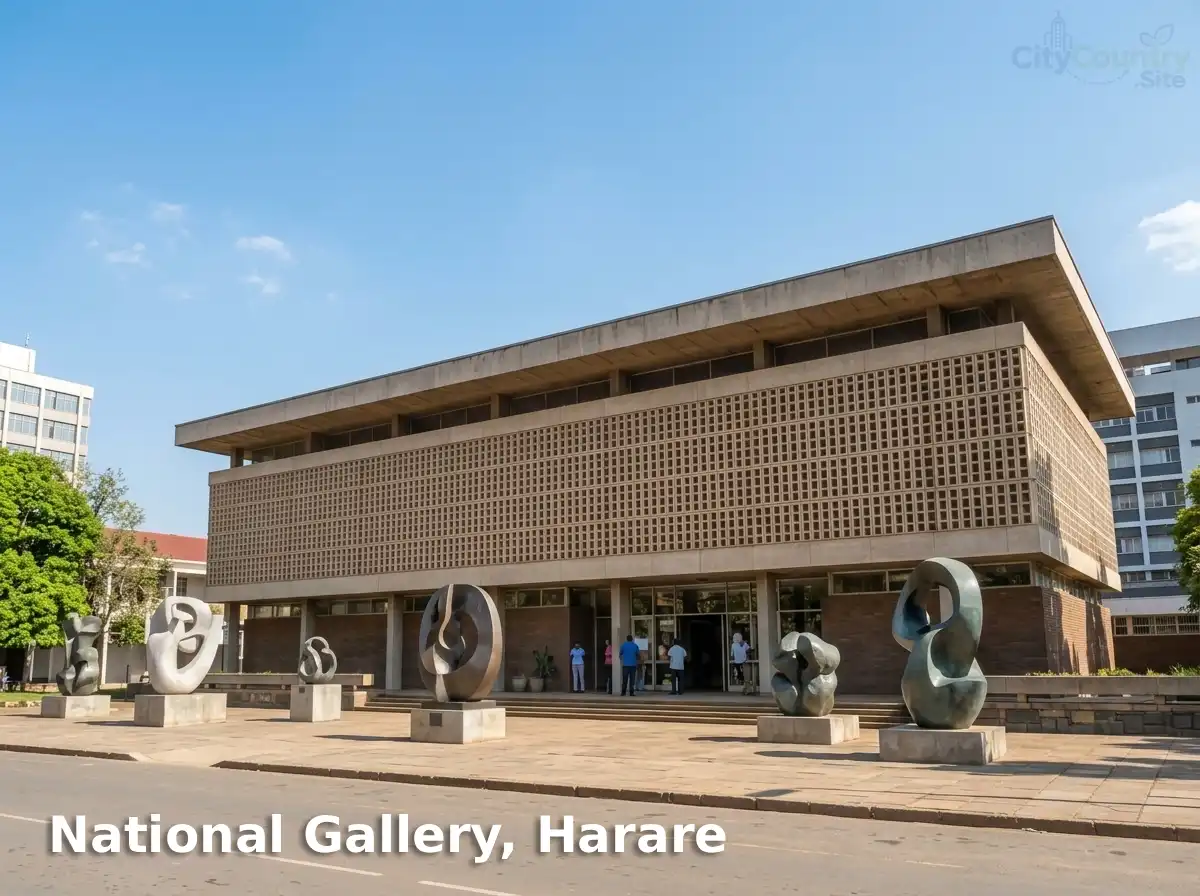
The National Gallery of Zimbabwe is one of southern Africa’s finest art institutions — a beautifully maintained gallery in the city center that houses an outstanding permanent collection of Shona stone sculpture, colonial-era works, and contemporary Zimbabwean and African art. The sculpture collection alone — ranging from early Tengenenge works to contemporary masters — justifies the visit. Entry is among the most affordable of any world-class art museum on the continent.
Chapungu Sculpture Park in Msasa is a revelation — a beautifully landscaped outdoor sculpture park where over 100 Shona stone sculptures by Zimbabwe’s finest artists stand among trees, gardens, and water features. Shona sculpture — carved from serpentinite, opal stone, and other distinctive Zimbabwean stones — is recognized globally as one of Africa’s great artistic traditions. Walking through Chapungu in the morning light, when shadows fall across the stones and birds call from the surrounding trees, is one of the most beautiful cultural experiences in Zimbabwe.
Mukuvisi Woodlands is an extraordinary nature reserve within the city — 265 hectares of indigenous Zimbabwe woodland hosting white rhinos, giraffes, zebras, elands, and over 200 bird species just minutes from the CBD. Game walks with armed rangers provide intimate wildlife encounters at a fraction of the cost and distance of major national parks. One of Harare’s finest and most surprising experiences.
Lion & Cheetah Park near Harare offers close encounters with lions, cheetahs, and wild dogs in a sanctuary setting — popular with families and those who want a wildlife experience before or after the city. Ethical wildlife interaction is increasingly emphasized; check current practices before booking.
Heroes Acre — the national monument built in the 1980s with North Korean architectural assistance — is a striking and deeply symbolic site honoring Zimbabwe’s liberation war heroes. Politically complex in its design and history but architecturally dramatic and historically important for understanding post-independence Zimbabwe’s national narrative.
The Tobacco Floors — Harare is the center of Zimbabwe’s tobacco industry, still one of the country’s most important agricultural exports. During the auction season (approximately March to September), organized tours to the tobacco floors offer a genuinely unique experience — the vast warehouse, the distinctive smell of cured leaf, and the rapid-fire auctioning process are unlike anything else in Africa.
💡 Did You Know? Zimbabwe has one of the highest literacy rates in Africa — approximately 90% of the adult population is literate, a legacy of Robert Mugabe’s early commitment to universal education that expanded the school system dramatically in the 1980s. Harare’s population is notably well-read, widely knowledgeable, and exceptionally articulate in English — conversations with ordinary Hararians often surprise visitors with their depth, humor, and breadth of reference.
9. Harare Food & Cuisine Guide
Harare’s food scene is more varied and sophisticated than most first-time visitors expect — a combination of traditional Zimbabwean cuisine, Southern African grilling culture, international influences from the colonial period, and a growing contemporary restaurant scene driven by Harare’s young, educated professional class.
Must-Try Dishes in Harare
Sadza — Zimbabwe’s foundational food and the center of every traditional meal. A thick, stiff porridge made from white maize meal, cooked until it forms a solid, dense consistency that can be torn into pieces and used to scoop up accompanying dishes. Deeply nutritious, filling, and central to Zimbabwean food identity. Try it with nyama (meat stew), muriwo (collard greens), or matemba (small dried fish).
Nyama (Braai / Barbecue) — Zimbabwe shares the Southern African passion for grilled meat over open coals. Beef, goat, chicken, and occasionally game meats are grilled with minimal seasoning to let the quality of the meat speak. Eaten communally, typically with sadza, grilled vegetables, and cold beer.
Muriwo une Dovi — A classic Zimbabwean combination of leafy greens (usually collard greens or rape leaves) cooked with peanut butter sauce. Rich, earthy, protein-packed, and absolutely delicious. The peanut butter transforms the greens into something genuinely extraordinary.
Mopane Worms (Madora) — Dried or fried caterpillars of the Emperor moth, harvested from mopane trees in Zimbabwe’s lowveld. A traditional protein source eaten throughout southern Africa. Crunchy, savory, and considerably more delicious than they sound. Available at Mbare Market and traditional restaurants — a genuine Zimbabwean culinary adventure.
Bota — A smooth, porridge-like breakfast dish made from maize meal with milk, butter, and sugar. The Zimbabwean equivalent of oatmeal — warm, comforting, and eaten throughout the country every morning.
Matemba — Small dried kapenta fish (similar to whitebait), fried or stewed and served with sadza. The umami punch of these tiny fish is remarkable — they add depth and protein to traditional meals throughout Zimbabwe.
Roasted Maize (Chibage) — Street food at its simplest and most satisfying. Whole cobs of maize roasted over charcoal by roadside vendors throughout the city. Eaten hot, sometimes with salt. One of the great simple pleasures of walking in Harare.
Dovi — A rich peanut butter stew made with chicken or vegetables. Deeply savory, slightly sweet, with a texture that clings beautifully to sadza. A national comfort food.
Best Restaurants & Food Spots
Amanzi Restaurant (Borrowdale) — Consistently Harare’s most acclaimed fine dining experience — set in a beautiful garden space with excellent continental and Zimbabwean-inspired cuisine. The steaks, game dishes, and fresh salads are exceptional. The setting — under mature trees, with soft lighting — is genuinely romantic. Mains: $15–35.
Gava’s Restaurant — One of Harare’s oldest and most beloved traditional Zimbabwean restaurants — a relaxed, family-run establishment where sadza, nyama, muriwo, and matemba are served in generous portions at genuinely local prices. The real thing. $5–12 per person.
La Fontaine (Meikles Hotel) — The flagship restaurant of Harare’s most historic hotel. A colonial-era grande dame of a dining room serving excellent continental cuisine with Zimbabwean touches. Expensive by local standards but very good. Mains: $20–45.
Pariah State (Borrowdale) — Harare’s most popular contemporary café-bar — excellent wood-fired pizza, craft beers, great cocktails, and a relaxed outdoor terrace. A social hub for Harare’s young professional and expat community.
The Tin Roof — A beloved casual restaurant in Avondale known for its generous portions, friendly atmosphere, and good-value meals. Excellent ribs, burgers, and local dishes.
Food Court at Sam Levy’s Village (Borrowdale) — A selection of casual dining options under one roof — quick, affordable, and convenient for visitors based in Borrowdale.
Mbare Market Food Stalls — For the most authentic eating in Harare, head to Mbare with a local guide. Women vendors serve sadza with various accompaniments for barely $1–2. The food is extraordinary; the experience is irreplaceable.
💡 Did You Know? Zimbabwe’s peanut butter (dovi) culture is among the most deeply embedded in Africa. Peanuts — introduced to Zimbabwe centuries ago and grown throughout the country — appear in everything from stews and sauces to street snacks and sweet confections. Zimbabwean peanut butter is made from dry-roasted groundnuts with minimal processing, producing an intensely flavored, grainy, deeply satisfying product completely unlike the commercial peanut butter of Western supermarkets. Bring a jar home.
10. Harare Accommodation Guide
Harare offers a decent range of accommodation — though the top end is not as internationally developed as Nairobi or Kigali, the mid-range and guesthouse sector provides excellent value and genuine comfort.
Best Areas to Stay:
- Borrowdale: Best for comfort, safety, excellent restaurants, and leafy beauty — the clear first choice for most visitors
- Avondale: Best for independent travelers wanting a central, walkable neighborhood with good value options
- Belgravia / Highlands: Best for boutique guesthouses and a quiet, residential atmosphere
- CBD: Best for budget travelers and those with business in the city center
Accommodation Price Ranges (2026)
| Category | Price/Night (USD) | Examples |
|---|---|---|
| Budget Hostel / Guesthouse | $15–35 | Harare Backpackers, various B&Bs in Avondale |
| Mid-Range Guesthouse / Hotel | $40–90 | Bronte Hotel, York Lodge, Selborne Hotel |
| Upscale Hotel | $90–160 | Rainbow Towers Hotel, Cresta Oasis |
| Luxury Hotel | $160–350+ | Meikles Hotel, Imba Matombo, Amanzi Lodge |
Meikles Hotel is Harare’s most historically significant hotel — a grande dame institution opened in 1915 that has accommodated generations of travelers, business people, and dignitaries. Beautifully maintained with colonial-era elegance and genuine charm. The rooftop pool and La Fontaine restaurant add to its distinction. Rates: approximately $150–250 per night.
Bronte Hotel in Belgravia is a beautiful, garden-set hotel in a lovely colonial property that offers excellent value and genuine character. The garden is one of the finest in the city and the atmosphere is genuinely relaxed. Rates: approximately $60–100 per night.
York Lodge in Avondale is a charming, well-run boutique guesthouse consistently praised for warm hospitality, excellent breakfasts, and a lovely garden setting. Ideal for independent travelers. Rates: approximately $45–80 per night.
11. Best Time to Visit Harare
May through October is the best time to visit Harare and most of Zimbabwe. The dry season brings clear skies, comfortable temperatures, and excellent conditions for wildlife viewing in the surrounding national parks and game reserves.
July and August are the coolest months — maximum temperatures around 20°C, with cold nights requiring a warm layer. Clear, dry, and excellent for city exploration and wildlife day trips.
October is particularly special — the jacaranda trees bloom spectacularly throughout the month, transforming the city with vivid purple flowers. Combined with warm temperatures and dry weather, it is arguably Harare’s single most beautiful month. Wildlife in surrounding parks is also excellent as the pre-rain heat concentrates animals around water.
April is a transitional gem — the long rains are ending, the landscape is brilliantly green and fresh, temperatures are comfortable, and accommodation prices are still at off-season levels.
November to March is the rainy season. Daily afternoon thunderstorms — often dramatically impressive — are standard. The city is lush and green, accommodation prices drop, and the pace slows. Not ideal for safari activities but perfectly manageable for city exploration.
Key Festivals & Events in Harare
- Harare International Festival of the Arts (HIFA) (May) — Zimbabwe’s premier arts festival, bringing together Zimbabwean and international artists across theater, dance, music, and visual arts for six days of performances. One of Africa’s finest cultural events — genuinely world-class
- Zimbabwe International Film Festival (ZIFF) (August) — Annual showcase of African and international cinema, growing in reputation each year
- Jacaranda Festival (October) — Various events celebrating the city’s famous October bloom — outdoor concerts, markets, and cultural activities
- Zimbabwe Agricultural Show (August) — The country’s premier agricultural showcase, held annually since 1901 — a fascinating insight into Zimbabwe’s farming heritage
- Harare Marathon (July) — Annual road race through the city’s streets, attracting thousands of runners
- Independence Day (April 18) — Zimbabwe’s national day, celebrated with ceremonies, cultural performances, and civic events
12. Shopping Guide for Harare tour
Harare’s shopping scene ranges from traditional markets of extraordinary authenticity to modern malls to specialist art galleries — with Shona sculpture being the most distinctive and prestigious purchase available.
What to Buy:
Shona Stone Sculpture — Zimbabwe’s greatest artistic export. Carved from serpentinite (verdite), springstone, opal stone, and other distinctive Zimbabwean stones by artists who have developed a globally recognized visual language over six decades. Works range from small decorative pieces ($20–100) to monumental gallery-quality sculptures ($500–50,000+). The finest pieces are held in museums worldwide including the Museum of Modern Art in New York and the Tate Modern in London. Buy from Chapungu Sculpture Park, the National Gallery shop, or established galleries.
Batik and Printed Fabrics — Vibrant, colorful fabrics in traditional and contemporary designs. Beautiful and lightweight — ideal as clothing, wall hangings, or table coverings. Available throughout markets and craft shops.
Mbira (Thumb Piano) — The mbira dzavadzimu — a traditional Shona musical instrument made from metal tines mounted on a wooden board inside a resonating gourd — is Zimbabwe’s most distinctive musical artifact and a genuinely unique souvenir. Find them at Mbare market or specialist music shops.
Woven Baskets — Intricately woven grass baskets in geometric patterns, produced by rural communities throughout Zimbabwe. Beautiful, functional, and directly supporting traditional craftswomen.
Malachite Jewelry — Zimbabwe has significant copper deposits producing beautiful green malachite, carved and polished into beads, pendants, and decorative objects. Striking and genuinely Zimbabwean.
Wildlife Wood Carvings — Carved ebony and other hardwood figures of Zimbabwe’s iconic wildlife — elephants, lions, rhinos, and Buffalo — available throughout craft markets.
Zimbabwean Coffee and Tea — Zimbabwe produces small quantities of excellent highland coffee and tea from the Eastern Highlands region — increasingly available in Harare specialty shops.
Where to Shop:
Mbare Musika Market — Harare’s most authentic and overwhelming market experience. Thousands of vendors selling fresh produce, dried fish, traditional medicines, secondhand clothing, hardware, crafts, and everything in between. Go with a local guide. Extraordinary sensory experience; important cultural immersion. Morning visits strongly recommended.
Avondale Flea Market — A weekly weekend market in Avondale shopping center’s car park — one of the best craft markets in the city. Local artists, sculptors, fabric designers, jewelers, and food vendors gather in a relaxed, friendly atmosphere. Excellent for authentic Zimbabwean crafts at reasonable prices.
Sam Levy’s Village (Borrowdale) — Harare’s most upscale shopping center — a pleasant open-air mall with a good mix of local boutiques, international brands, restaurants, and art galleries. Comfortable, safe, and well-stocked.
Chapungu Sculpture Park Shop — Excellent selection of Shona sculptures at fair, fixed prices. A good option for those who want quality assurance without negotiation.
Book Café — Harare’s legendary cultural hub and bookshop — see Nightlife section for full description. Also stocks a good selection of Zimbabwean literature and art books.

13. Harare Nightlife & Entertainment
Harare has a surprisingly vibrant cultural and after-dark scene — particularly for a city that has faced such significant economic challenges. The resilience and creativity of Hararians is nowhere more evident than in their music, performance, and social cultures.
Cultural Venues:
Book Café — Harare’s most celebrated cultural institution for over two decades. A combination bookshop, café, bar, and live music venue on Samora Machel Avenue that has been the beating heart of Harare’s intellectual and creative life through Zimbabwe’s most difficult years. Exceptional live music — particularly mbira, chimurenga, and jazz — spoken word, poetry slams, and cultural debates take place almost nightly. Inexpensive, authentic, and unmissable. Every visitor to Harare should spend at least one evening here.
The Alliance Française de Harare — The French cultural center hosts regular film screenings, concerts, art exhibitions, and cultural events. A lively and welcoming venue with strong French and Zimbabwean artistic programming.
Theatre in the Park — An outdoor theatre in Harare Gardens hosting regular performances of Zimbabwean drama, comedy, and dance. A lovely setting and an authentic window into Zimbabwe’s remarkable theatrical tradition.
Bars & Rooftop Spots:
Pariah State (Borrowdale) — Harare’s most popular craft beer and cocktail destination — a buzzing outdoor terrace with excellent drinks, good pizza, and the convivial energy of the city’s young professional class.
The Sports Bar (Rainbow Towers Hotel) — The go-to venue for sport viewing — large screens, cold beers, good pub food, and a lively crowd on match nights.
Borrowdale Village Restaurants — The cluster of restaurants and bars around Sam Levy’s Village in Borrowdale creates a lively evening dining scene — al fresco tables, good cocktails, and a comfortable, animated atmosphere.
Live Music:
Zimbabwe has an extraordinary musical heritage — Thomas Mapfumo’s chimurenga music, Oliver Mtukudzi’s Tuku Music, and the mbira tradition of the Shona people are internationally recognized art forms. Ask locally for current performance schedules; live music events happen throughout the week at Book Café, Mannenberg’s Jazz Club, and various venues.
14. Harare Hidden Gems & Local Secrets
The Tengenenge Sculpture Community — About 150 km north of Harare, the Tengenenge community near Guruve is where Zimbabwe’s great Shona sculpture tradition was born in the 1960s. Artists still live and work here communally, carving beside serpentinite rock outcrops surrounded by extraordinary bushveld. Visiting is a profound experience — watching artists at work among raw stone in natural surroundings, with the sculpture emerging from the rock under their tools. Arrange a tour through a Harare travel operator.
Domboshava Rock Art Site — Just 30 km north of Harare, Domboshava’s dramatic granite dome is covered in extraordinary San Bushman rock paintings dating back thousands of years. The site is relatively little-visited and beautifully managed, with the paintings remarkably well preserved. The view from the top of the dome — across a landscape of granite kopjes (rocky outcrops) and woodland — is magnificent.
Mufakose Township Music Scene — Harare’s high-density townships have produced some of Zimbabwe’s greatest musicians. On weekend evenings, informal beer halls and music venues in areas like Mufakose and Kuwadzana host extraordinary live traditional music — mbira sessions, hosho percussion, and contemporary Zimbabwean styles. These are not tourist events; visiting requires local connections and appropriate respect, but the music is world-class.
Mukuvisi Woodlands Birding at Dawn — Mukuvisi’s 200+ bird species include some extraordinary species — including the African fish eagle, woodland kingfisher, and various sunbirds. Arriving at opening time (6 AM) with binoculars before the day’s heat intensifies is one of Harare’s finest early morning activities.
Ewanrigg Botanical Garden — About 40 km east of the city, Ewanrigg Botanical Garden is one of Zimbabwe’s finest collections of aloes, cycads, and indigenous plants — particularly spectacular in late winter (July–August) when the aloes are in dramatic orange and red bloom. Almost completely unknown to international visitors.
National Archives of Zimbabwe — On the edge of Harare’s CBD, the National Archives houses a remarkable collection of colonial photographs, documents, and maps that trace Zimbabwe’s history from pre-colonial times through independence. An unexpected treasure for history enthusiasts, managed by knowledgeable and welcoming archivists.
15. Day Trips from Harare
Harare’s central location makes it an excellent base for exploring Zimbabwe’s extraordinary natural and historical heritage. World-class destinations are accessible within a few hours by road or air.
Day Trips Table
| Destination | Distance | Travel Time | Method | Highlights |
|---|---|---|---|---|
| Domboshava Rock Art | 30 km north | 45 min | Car / Taxi | San rock paintings, granite dome, panoramic views |
| Lake Chivero Recreational Park | 32 km west | 45 min | Car | Game drive (rhinos, hippos), lake views, picnicking |
| Chinhoyi Caves | 116 km northwest | 1.5 hrs | Car | Cobalt-blue underground lake, cave system, swimming |
| Ewanrigg Botanical Garden | 40 km east | 1 hour | Car | Aloe collections, cycads, indigenous plants |
| Marondera Wine Route | 70 km east | 1 hour | Car | Zimbabwe’s emerging wine industry, vineyard visits |
| Tengenenge Sculpture Community | 150 km north | 2.5 hrs | Car / Tour | Living Shona sculpture tradition, artists at work |
| Kariba (for longer trip) | 365 km northwest | 5 hrs / fly | Car / Charter | Lake Kariba, houseboats, exceptional wildlife |
| Great Zimbabwe | 290 km south | 3.5–4 hrs | Car / Coach | UNESCO ruins of ancient African city — Zimbabwe’s greatest historical site |
Chinhoyi Caves is one of Zimbabwe’s most beautiful natural wonders — a series of limestone caves containing a spectacular underground pool of cobalt-blue water so vivid and clear it appears artificial. The main pool — the Sleeping Pool — is a popular swimming and diving site, with visibility extending to astonishing depths. The caves are sacred to local Shona communities; treat them with appropriate respect.
Lake Chivero Recreational Park is Harare’s most accessible wildlife experience — a game reserve surrounding a large reservoir just 32 km from the city, hosting white rhinos, sable antelope, zebras, giraffes, hippos, and crocodiles. Self-drive or guided game drives are available, as are boat trips on the lake. A half-day trip that delivers genuine wildlife encounters within an hour of the city.
Great Zimbabwe — while a longer day trip or better as an overnight — is Zimbabwe’s most important historical site and should be on every visitor’s itinerary. The massive stone enclosures and conical tower of Great Zimbabwe were built between the 11th and 15th centuries by the ancestors of the Shona people — one of the most remarkable pre-colonial African architectural achievements on the continent. The name “Zimbabwe” itself derives from the Shona words for “house of stone” (dzimba dzamabwe). A UNESCO World Heritage Site and a powerful reminder of the sophisticated civilization that predated European arrival.
16. Harare Local Culture, Customs & Etiquette
Zimbabwe is home to a warm, hospitable, and culturally sophisticated people. Visitors who approach Harare with curiosity and respect will find themselves rewarded with genuine welcome and remarkable conversations.
Language: English is the primary language of commerce, education, and government — and is spoken to a very high standard by most educated Hararians. Shona is the dominant indigenous language, spoken by approximately 70% of Zimbabwe’s population. Ndebele is spoken primarily in the southwest. Learning even a few Shona words is received with delight:
- Mhoro / Makadii — Hello / How are you?
- Ndiripwo / Ndiripo — I am fine
- Tatenda / Mazvita — Thank you
- Chisarai — Goodbye
Ubuntu Philosophy: Like much of southern Africa, Zimbabwe’s social culture is informed by the concept of Ubuntu — “I am because we are” — a philosophy of communal humanity and mutual obligation. Generosity, collective care, and social warmth are deeply embedded values. Visitors who engage genuinely with this spirit will find themselves unusually welcomed.
Respect for Elders: Respect for older people is a fundamental Shona value. Stand when an elder enters a room, use both hands when offering or receiving anything from an elder, and never interrupt.
Religion: Zimbabwe is predominantly Christian (over 85%), with a significant and important traditional Shona religion practiced alongside or integrated with Christianity by many people. The midzimu (ancestral spirits) tradition remains deeply important in Zimbabwean cultural life. Treat religious observances and sacred sites with full respect.
Photography: Always ask permission before photographing individuals. At markets like Mbare, always ask — and accept a “no” gracefully. Government buildings, military installations, and official checkpoints must never be photographed.
Dress Code: Reasonably conservative by African standards. Smart casual is appropriate for most situations. Beachwear and very revealing clothing outside of swimming pools is considered disrespectful. Dress modestly when visiting churches, rural communities, or traditional ceremonies.
Tipping:
- Restaurants: 10–15% tip at mid-range and upscale restaurants — very meaningful income supplement
- Safari guides: $10–20 per day — standard and appreciated
- Hotel porters: $1–2 per bag
- Taxi drivers: rounding up the fare is appreciated
- Sculpture artists if visiting workshops: a purchase is the most meaningful form of support
Dos and Don’ts:
- ✅ Do greet people properly before conducting any transaction — Zimbabweans consider a greeting essential to all social interactions
- ✅ Do accept food or tea when offered by a host — declining is considered rude
- ✅ Do engage seriously with the sculpture tradition — asking artists about their work and process is deeply appreciated
- ❌ Don’t discuss politics carelessly — Zimbabwe’s political sensitivities remain complex
- ❌ Don’t photograph the Presidential residence or official government buildings
- ❌ Don’t waste food — a cultural value with deep roots in a country that has experienced serious food insecurity
17. Safety & Travel Tips
Harare is generally a safe city for visitors by African standards, though it requires reasonable awareness and sensible precautions — particularly regarding petty crime and informal economy practices.
Safe Areas: Borrowdale, Avondale, Belgravia, Highlands, Mount Pleasant, and the major tourist sites are all generally safe for visitors during daylight hours. These neighborhoods are well-lit, regularly patrolled, and widely frequented by international visitors and expats.
Areas Requiring More Caution:
- CBD (particularly after dark): Petty crime risk increases after dark; use taxis rather than walking
- Mbare: Fascinating to visit during the day with a local guide; not recommended for independent exploration
- Around the main bus terminals: Crowded and occasionally targeted for pickpocketing
Common Issues:
- Petty theft and pickpocketing in crowded markets and the CBD — keep valuables secure
- Currency confusion — Zimbabwe’s monetary situation has been complex; always be clear about which currency you are paying in (USD is the safest option)
- Overcharging of tourists in informal settings — agree prices clearly before any service
- Occasional power outages (load shedding) — not a safety issue but worth knowing; carry a torch
Emergency Numbers:
- Police: 995 (emergency) or 04-703-631 (non-emergency)
- Ambulance: 994
- Fire: 993
- Medical Air Rescue Service (MARS): 04-734-513 (private, recommended)
Health Tips:
- Malaria is present in Zimbabwe’s lowveld regions but the risk in Harare (at 1,490 m altitude) is low — however, consult a doctor about prophylaxis if visiting lower-lying areas during or after your Harare stay
- Drink only bottled or filtered water — tap water quality is inconsistent
- Medical facilities in Harare include the Avenues Clinic and West End Hospital — the recommended options for visitors requiring medical attention
- Comprehensive travel insurance including medical evacuation is strongly recommended
18. Harare Budget Tour
Daily Cost Table
| Category | Budget Traveler | Mid-Range | Luxury |
|---|---|---|---|
| Accommodation | $15–35 (guesthouse / hostel) | $60–120 (hotel) | $160–350+ (luxury hotel) |
| Food | $6–12 (local restaurants, markets) | $20–45 (restaurant meals) | $50–120+ (fine dining) |
| Transport | $3–8 (Uber, taxis, short distances) | $15–30 (taxi, car hire) | $40–80 (private driver) |
| Activities | $5–15 (gallery, park, market) | $20–50 (guided tours, wildlife) | $60–150+ (private experiences) |
| Total/Day | ~$29–70 | ~$115–245 | ~$310–700+ |
Harare is very affordable by international standards — particularly at the budget and mid-range levels, where excellent guesthouses, quality meals, and meaningful cultural experiences are available at prices that significantly undercut comparable African cities. The USD economy makes budgeting straightforward.
19. Practical City Information
Visa & Entry: Zimbabwe operates a Visa on Arrival and an e-Visa system for most nationalities. Citizens of many Commonwealth countries and some African Union states enter visa-free or with a visa on arrival. The standard single-entry tourist visa costs $30–75 USD depending on nationality. Apply online at evisa.gov.zw before travel to avoid queues at the airport. UNIVISA — a joint visa covering Zimbabwe and Zambia — is available for $50 and is useful for those visiting Victoria Falls from both sides.
Currency: Zimbabwe’s monetary situation has been complex. The Zimbabwe Gold (ZiG), introduced in April 2024, is the official domestic currency. However, US dollars are accepted everywhere and are the most practical currency for visitors. Carry USD cash in small denominations — $1, $5, $10, and $20 bills. ATMs dispensing USD are available but sometimes unreliable; carry sufficient cash.
Vaccinations: Yellow fever certificate required if arriving from or transiting through endemic countries. Recommended vaccinations include Hepatitis A, Typhoid, Tetanus, and Rabies (for rural areas). Malaria prophylaxis recommended for areas outside Harare.
Emergency Contacts:
- Police emergency: 995
- Ambulance: 994
- Avenues Clinic: 04-251-180
- MARS (Medical Air Rescue): 04-734-513
SIM Cards & Internet: Available at the airport and throughout the city. Econet Wireless is Zimbabwe’s dominant and most reliable network. A tourist SIM with data costs approximately $5–10 USD. 4G coverage is available in Harare but can be inconsistent. Wi-Fi is available in most hotels, guesthouses, and cafés. Internet speeds have improved significantly since 2022 with infrastructure investment.
Power: Zimbabwe uses Type D, G, and M plugs — UK-style three-pin square plugs are most common. Voltage is 220V, 50Hz. Load shedding (scheduled power cuts) occurs — sometimes for several hours daily. Better hotels have generators; confirm when booking.
Drinking Water: Tap water quality is inconsistent in Harare and should not be drunk by visitors. Bottled water is widely available and inexpensive — approximately $0.50–1 per 1.5L bottle.
20. How to Be a Responsible Traveler in Harare
Buy Directly from Artists: Zimbabwe’s Shona sculpture tradition is maintained by individual artists and family workshops. Purchasing directly from sculptors at Chapungu, the Tengenenge community, or artists’ studios puts the full value of your purchase into the creator’s hands. Ask to meet the artist, learn about their work, and buy with genuine appreciation of what you are acquiring.
Support Independent Cultural Venues: Places like Book Café, the National Gallery, and local theater companies exist on minimal resources. Paying for events, buying drinks, and donating where possible supports the cultural infrastructure that makes Harare extraordinary.
Use Reputable Local Tour Operators: Zimbabwe’s tourism industry employs thousands of guides, drivers, cooks, and hospitality workers. Using established, locally owned operators — particularly for safaris and cultural tours — ensures your spending supports local livelihoods rather than leaving the country.
Avoid Informal Foreign Exchange: Zimbabwe’s parallel currency market has historically involved illegal USD trading. Exchange money only at banks or licensed bureaux de change — not with street dealers.
Wildlife Ethics: If visiting Lion & Cheetah Park or any wildlife sanctuary, research operator practices regarding animal welfare. Never support venues offering cub petting, lion walking, or inappropriate wildlife interaction. Zimbabwe’s wild spaces — Hwange, Mana Pools, Gonarezhou — maintain genuinely high conservation standards that deserve support through ethical tourism.
Plastic Awareness: Zimbabwe has taken steps to reduce plastic waste. Carry a reusable bag and water bottle.
Engage Honestly with the History: Zimbabwe’s history — from Great Zimbabwe’s pre-colonial glory through colonial suppression, the liberation war, independence, and the subsequent economic crisis — is complex and still being lived. Approach it with genuine curiosity and intellectual honesty rather than simplistic narratives in either direction.
21. Travel Media: Documentaries, Books & Channels
Books:
- House of Stone by Christina Lamb — A profound dual memoir tracing the story of a white Zimbabwean farm and its Black farm worker family through the upheaval of land reform. Essential reading for understanding modern Zimbabwe
- We Need New Names by NoViolet Bulawayo — A Booker Prize-longlisted novel by Zimbabwe’s most celebrated young author — a powerful, funny, and devastating story of childhood in Zimbabwe and exile in America
- Nervous Conditions by Tsitsi Dangarembga — Zimbabwe’s most celebrated novel — a quietly devastating account of Shona family life and gender in colonial Zimbabwe. A masterpiece of African literature
- When a Crocodile Eats the Sun by Peter Godwin — A searing memoir about the collapse of Zimbabwe during the Mugabe years, written by a Zimbabwean-born journalist of extraordinary quality
Documentaries & Films:
- Mugabe and the White African (2009) — Oscar-winning documentary about a white Zimbabwean farming family’s legal battle against land seizure. Extraordinary and moving
- Tanyaradzwa and various HIFA festival documentaries available online showcase Zimbabwe’s extraordinary performing arts culture
- Various BBC and Al Jazeera documentaries on Zimbabwe’s economic crisis provide essential historical context
YouTube Channels:
- Zimbo Life — Zimbabwean lifestyle and travel content
- Tafadzwa Denhere — Zimbabwean travel and culture
- Nyaradzo Mnangagwa — Zimbabwe lifestyle content
22. Harare vs. Similar Cities
| Feature | Harare | Lusaka (Zambia) | Maputo (Mozambique) |
|---|---|---|---|
| Cultural depth | ⭐⭐⭐⭐⭐ Extraordinary — sculpture, music, literature | ⭐⭐⭐ Good | ⭐⭐⭐⭐ Very good |
| Safety | ⭐⭐⭐⭐ Good in tourist areas | ⭐⭐⭐ Moderate | ⭐⭐⭐ Moderate |
| Affordability | ⭐⭐⭐⭐⭐ Excellent value | ⭐⭐⭐⭐ Good | ⭐⭐⭐⭐ Good |
| Wildlife access | ⭐⭐⭐⭐⭐ World-class — Hwange, Mana Pools, Kariba | ⭐⭐⭐⭐ Good | ⭐⭐⭐ Moderate |
| Art scene | ⭐⭐⭐⭐⭐ Africa’s finest sculpture tradition | ⭐⭐ Limited | ⭐⭐⭐⭐ Very good |
| Infrastructure | ⭐⭐⭐ Improving | ⭐⭐⭐ Moderate | ⭐⭐⭐ Moderate |
| Food scene | ⭐⭐⭐⭐ Very good | ⭐⭐⭐ Good | ⭐⭐⭐⭐⭐ Outstanding |
| English spoken | ⭐⭐⭐⭐⭐ Exceptional | ⭐⭐⭐⭐ Very good | ⭐⭐ Limited |
Choose Harare if you want an authentic, deeply cultured southern African capital with access to one of the world’s great artistic traditions in Shona sculpture, outstanding national parks and wildlife within easy reach, an extraordinarily warm and articulate population, and the particular satisfaction of discovering a destination that most travelers have not yet found — but soon will.
23. Harare City Travel Tips
- Carry USD in small denominations — $1, $5, and $10 bills are essential for daily transactions
- October is the jacaranda month — if possible, time your visit for this spectacular natural display
- Book HIFA (Harare International Festival of the Arts) in May well in advance — accommodation fills quickly
- Chapungu Sculpture Park in morning light is one of Africa’s most beautiful cultural experiences — don’t miss it
- Use Uber or pre-booked taxis rather than flagging vehicles on the street — always safer and more transparent
- Never photograph government buildings, military installations, or official checkpoints
- Book Chinhoyi Caves as a day trip — the cobalt-blue underground pool is completely unlike anything else in the region
- Carry a torch — load shedding can cause sudden power outages even in good hotels
- Visit Mbare Market only with a local guide — not for safety reasons alone but to get far more from the experience
- Book Great Zimbabwe as at least an overnight trip rather than a day trip — the site deserves more time than a rushed day allows
- Book medical evacuation insurance before arrival — standard travel insurance is not enough in Zimbabwe
- The Book Café is essential — no visit to Harare is complete without at least one evening there
💡 Did You Know? Zimbabwe’s Shona stone sculpture is represented in the permanent collections of major museums worldwide — including the British Museum, the Smithsonian, the Museum of Modern Art (New York), the Tate Modern (London), and the Musée d’Art Moderne in Paris. It is one of the few indigenous African art forms to have achieved full international critical recognition alongside Western contemporary art — not as “tribal” or “ethnic” art but as contemporary fine art judged entirely on its aesthetic and intellectual merits.
24. Is Harare Worth Visiting? — Final Verdict
Yes — and more than most travelers currently realize. Harare is one of southern Africa’s most genuinely rewarding and least-visited capitals — a city whose extraordinary cultural richness, natural beauty, and warm human welcome consistently exceed visitor expectations.
It is not the easiest destination — Zimbabwe’s history of economic instability has left real marks on infrastructure and daily logistics. Some flexibility and patience are required. But the rewards are entirely disproportionate to the small additional effort involved.
Harare is best suited for:
- Art lovers and cultural travelers — The Shona sculpture tradition centered in Harare is one of Africa’s great artistic achievements; coming here to understand and acquire it directly from the source is a genuinely profound cultural experience
- Wildlife enthusiasts — Harare is the gateway to Zimbabwe’s magnificent national parks — Hwange (Africa’s finest elephant populations), Mana Pools (UNESCO World Heritage wilderness on the Zambezi), Matusadona (Lake Kariba), and of course Victoria Falls within a short flight or drive
- History and literature lovers — Zimbabwe’s complex, layered history and its extraordinary literary tradition (Tsitsi Dangarembga, NoViolet Bulawayo, Yvonne Vera) make Harare a compelling destination for intellectually curious travelers
- Music enthusiasts — The mbira tradition, chimurenga music, and Zimbabwe’s contemporary music scene are extraordinary and largely unknown outside the country
- Independent adventurous travelers who engage on their own terms with a destination rather than needing a polished tourist infrastructure to tell them what to value
- Couples and families open to a genuinely different African experience away from the well-trodden East African safari circuit
Less suited for first-time Africa travelers expecting fully developed tourist infrastructure, those requiring the highest reliability of utilities and services, or those primarily seeking beach holidays.
The verdict: Give Harare a minimum of three days — four is better. Add Victoria Falls and Hwange National Park for a complete Zimbabwe experience of seven to ten days that will comprehensively redefine your understanding of southern Africa. Come with openness, curiosity, and the willingness to be genuinely surprised. Harare will not disappoint.
25. Frequently Asked Questions About Harare
Q1: Is Harare safe for tourists?
Harare is generally considered a safe city for visitors in the main tourist and residential areas — Borrowdale, Avondale, Belgravia, Highlands, and the main tourist sites. Petty crime (bag snatching, pickpocketing) occurs primarily in the CBD and crowded markets. Violent crime against tourists is uncommon. Exercise normal urban precautions — secure valuables, use taxis or Uber rather than walking after dark, and follow your accommodation’s specific safety advice. Many thousands of visitors travel safely through Harare every year.
Q2: What currency should I bring to Harare?
US dollars in small denominations are essential. The Zimbabwe Gold (ZiG) is the official domestic currency introduced in 2024, but USD is universally accepted and practically the currency of everyday commerce for visitors. Bring plenty of $1, $5, and $10 bills for markets, taxis, and local restaurants. Larger bills ($50, $100) may be difficult to break. ATMs exist but can be unreliable — carry sufficient USD cash for your entire stay.
Q3: What visa do I need to visit Zimbabwe?
Zimbabwe offers Visa on Arrival for most nationalities, or an e-Visa available online at evisa.gov.zw before travel. Standard single-entry tourist visa: $30–75 USD depending on nationality. The UNIVISA ($50) covers both Zimbabwe and Zambia and is excellent for those visiting Victoria Falls from both sides of the border. Citizens of some African countries enter visa-free — check current requirements for your nationality before travel.
Q4: What is the best thing to buy in Harare?
Shona stone sculpture is Zimbabwe’s greatest cultural export and the most meaningful, authentic, and beautiful purchase available in Harare. Works range from small pieces under $50 to significant gallery-quality pieces. Buy from Chapungu Sculpture Park, the National Gallery shop, or by visiting artists’ studios. The mbira (traditional thumb piano) is the most distinctive musical souvenir. Quality batik fabrics and woven baskets are also excellent.
Q5: What is HIFA and when is it held?
The Harare International Festival of the Arts (HIFA) is held annually in May, typically for six days. It is Zimbabwe’s and one of southern Africa’s premier cultural events — bringing together international and Zimbabwean artists across theater, dance, music, circus, and visual arts in venues throughout the city. Tickets for individual events and festival passes are available. Accommodation in Harare fills quickly during HIFA — book well in advance.
Q6: How do I get from Harare to Victoria Falls?
The most practical option is a direct domestic flight from Robert Gabriel Mugabe International Airport to Victoria Falls Airport — approximately 1 hour, operated by Air Zimbabwe and FastJet. The luxury coach (Citiliner, Pathfinder) connects Harare and Victoria Falls via Bulawayo in approximately 9–11 hours — an overnight option. Driving via Bulawayo takes approximately 9–10 hours on generally good roads.
Q7: What is Shona sculpture and where can I learn more about it?
Shona stone sculpture is a tradition of figurative and abstract stone carving that emerged in Zimbabwe in the 1950s–1960s, encouraged by Frank McEwen at the National Gallery. Artists carve primarily from serpentinite, springstone, opal stone, and verdite — stones found in Zimbabwe’s geological formations — producing works that are now held in major museum collections worldwide. The National Gallery of Zimbabwe has excellent background and a strong permanent collection. Chapungu Sculpture Park showcases work by many of Zimbabwe’s finest artists. The Tengenenge community (150 km from Harare) is where the tradition was born and artists still work today.
Q8: Is malaria a risk in Harare?
The malaria risk in Harare itself is low due to the city’s altitude (approximately 1,490 metres) — highland elevations reduce mosquito populations significantly. However, if you travel from Harare to Victoria Falls, Hwange, Kariba, Mana Pools, or the Zambezi Valley (all lower altitude), malaria risk increases substantially and prophylaxis is strongly recommended. Consult a travel medicine specialist before your trip.
Q9: Can I visit Zimbabwe’s national parks as day trips from Harare?
Lake Chivero Recreational Park (32 km, 45 minutes) is the most accessible national park from Harare — genuinely worth a half-day visit. Chinhoyi Caves (116 km, 1.5 hours) makes an excellent day trip. For Hwange, Mana Pools, Victoria Falls, and Great Zimbabwe, at least one overnight stay is strongly recommended — the distances are significant and the experiences deserve more than a rushed day visit.
Q10: How good is English in Harare?
English is spoken to an exceptionally high standard throughout Harare — a legacy of Zimbabwe’s excellent post-independence education system. Most educated Hararians speak English as a first or equal-first language. You will rarely encounter communication difficulties in hotels, restaurants, shops, or with any service provider. This makes Harare one of the most accessible African cities for English-speaking travelers.
26. Sources & References
This article was researched using information from the following trusted sources:
- Lonely Planet Zimbabwe — lonelyplanet.com
- TripAdvisor Harare — tripadvisor.com
- Booking.com Harare Hotels — booking.com
- Wikipedia — Harare — en.wikipedia.org
- Zimbabwe Tourism Authority — zimbabwetourism.net
- Numbeo — Cost of Living Harare — numbeo.com
- Google Maps — maps.google.com
- Wikitravel Harare — wikitravel.org
- Skyscanner Zimbabwe Flights — skyscanner.com
- World Travel Guide — worldtravelguide.net
- Zimbabwe E-Visa Portal — evisa.gov.zw
- National Gallery of Zimbabwe — nationalgallery.co.zw
- Chapungu Sculpture Park — chapungusculpturepark.com
- Condé Nast Traveller Africa — cntraveller.com
- UNESCO Great Zimbabwe — whc.unesco.org
27. Harare Travel Guide Images