
1. Facts About Windhoek
| Category | Details |
|---|---|
| Country | Namibia |
| Region / Province | Khomas Region |
| Official Language | English; German and Afrikaans also widely spoken |
| Currency | Namibian Dollar (NAD) — pegged 1:1 to South African Rand; approx. 1 USD ≈ 18.5 NAD (2026) |
| Best Time to Visit | May to October (dry season) |
| Time Zone | West Africa Time (WAT) — UTC+1 (winter); UTC+2 (summer, daylight saving) |
| Weather | Semi-arid highland climate — hot summers, mild winters, very low rainfall |
| Temperature | 5°C – 35°C (41°F – 95°F) depending on season |
| Map | Located in central Namibia on a highland plateau at approximately 1,650 m above sea level |
| Airport | Hosea Kutako International Airport (WDH) — 42 km east of city center |
| Top Tourist Places | Christuskirche, Independence Memorial Museum, Tintenpalast, Old Location Cemetery, National Museum of Namibia, Namibia Craft Centre, Joe’s Beerhouse |
| Avg. Trip Cost/Day | Budget: $40–70 / Mid-range: $100–200 / Luxury: $220–500+ |
| Nearest Major Airport | Hosea Kutako International Airport (WDH) — primary international gateway |
| Population | Approx. 450,000 (city); 500,000+ (metro area, 2026) |
| Famous For | Striking German colonial architecture in the heart of Africa, gateway to the world’s oldest desert and some of earth’s most dramatic landscapes, exceptionally clean and safe streets, and the warmest small-city hospitality on the continent |
2. Windhoek City Overview & Background
Windhoek is a city that defies every expectation you carry into it. You land at the airport and drive through a landscape of thorn scrub and red dust hills that feels like the edge of the earth. And then the city appears — compact, immaculate, improbably ordered — with a Lutheran church on a hill, a pedestrianized shopping street lined with café tables, German bakeries selling strudel and weissbier, and Herero women in voluminous Victorian dresses walking past Ovambo street vendors beside modern glass towers. The whole thing looks like a German provincial town was somehow transplanted to the middle of the Namib Desert. Which is, more or less, exactly what happened.
Namibia’s capital and largest city sits on a high central plateau in the heart of the country at an elevation of approximately 1,650 metres (5,413 feet) — giving it a climate dramatically more temperate than the surrounding desert. With a population of just under half a million people, it is one of the smallest capital cities in Africa by population but one of the most comfortable, organized, and visitor-friendly.
What makes Windhoek genuinely special is its extraordinary cultural layering. This is a city shaped by San hunter-gatherers, Herero and Nama pastoralists, German colonial settlers, Afrikaner farmers, and post-independence Namibian nation-builders — all leaving their marks on the urban fabric in ways that coexist in fascinating tension. The German colonial churches and municipal buildings stand beside Herero women in their distinctive missionary-era dress. The craft market sells both Bavarian-style beer steins and traditional San fire-starting kits. The restaurants serve both Sauerbraten and oryx steak with bush tomato sauce.
For travelers, Windhoek serves as the essential gateway to Namibia — one of the world’s great natural travel destinations. Sossusvlei’s towering red dunes, Etosha National Park’s extraordinary wildlife, the Skeleton Coast’s haunting desolation, and Fish River Canyon’s dramatic depths are all accessed from or through Windhoek. But the city is also increasingly rewarding in its own right — with an arts scene of growing quality, excellent restaurants, safe and walkable streets, and the gentle, uncrowded pleasure of a capital city that has not yet been overwhelmed by mass tourism.
“Windhoek is the great secret of African travel. Everyone flies through it to reach the dunes and the elephants and the desert coast. Almost nobody stops long enough to discover that it is, quite quietly, one of the most pleasant cities on the continent.”
— Anonymous travel journalist, Lonely Planet Africa feature, 2024
3. Windhoek History Timeline
Pre-colonial era — The area around modern Windhoek has been inhabited for thousands of years. San (Bushman) hunter-gatherers are the oldest inhabitants of the region. The Nama (Khoikhoi) pastoralists call the area Aigams (“burning water”) or !Gû||kharab (“place of smoke”), referring to the natural hot springs that once existed here. Herero cattle-herding communities move into the area in the 18th and early 19th centuries.
1840 — Jonker Afrikaner, a Nama captain, establishes a settlement at the hot springs site, which becomes a significant trading and administrative center in pre-colonial Namibia. The Afrikaner community names the settlement Windhoek — possibly from the Afrikaans for “windy corner.”
1842 — The Rhenish Missionary Society establishes a mission station at Windhoek, beginning the Christian missionary presence that will permanently shape the region’s cultural and social landscape.
1850s–1870s — Windhoek changes hands multiple times between Nama, Herero, and other groups amid ongoing conflict over cattle, water, and land in central Namibia.
1890 — German colonial forces under Major Curt von François establish a permanent military fort at Windhoek — Fort Alte Feste — formally establishing German South West Africa’s administrative presence in the territory. The city begins its development as a German colonial capital.
1891 — Windhoek is officially proclaimed the capital of German South West Africa. German settlers begin arriving and the colonial town develops rapidly — government buildings, churches, schools, and homes built in a distinctly German style that will permanently define the city’s architectural character.
1904–1908 — The Herero and Nama Genocide — one of the 20th century’s first genocides — is carried out by German colonial forces under General Lothar von Trotha. An estimated 65,000–100,000 Herero and 10,000 Nama are killed through direct violence, forced labor, and deliberate starvation in the desert. The genocide devastates Namibia’s indigenous population and remains a deeply raw historical wound.
1907 — Christuskirche (Christ Church) — Windhoek’s most iconic landmark — is consecrated. The Lutheran church, built in a unique blend of Art Nouveau and Neo-Gothic styles, crowns a hill at the center of the colonial town and becomes the defining image of Windhoek.
1915 — South African forces, allied with Britain in World War I, capture German South West Africa. Germany loses the territory. South Africa begins administering it under a League of Nations mandate.
1920s–1960s — South Africa governs Namibia (then called South West Africa) under increasingly tight control, eventually extending its apartheid system to the territory in defiance of international law. The UN repeatedly demands South Africa’s withdrawal.
1966 — The South West Africa People’s Organisation (SWAPO), led by Sam Nujoma, begins an armed liberation struggle against South African rule. The independence war lasts over two decades.
1990 — Namibia achieves independence on March 21 — the last major African country to gain independence from colonial rule. Sam Nujoma becomes the first President. Windhoek becomes the capital of a free nation. The date is celebrated as Namibia’s most important national holiday.
1990s–2000s — Windhoek grows steadily as a modern capital. Infrastructure development, democratic institutions, and economic diversification proceed with a stability that makes Namibia one of Africa’s success stories. Tourism becomes an increasingly important economic sector.
2015 — Germany formally acknowledges the Herero and Nama genocide as a genocide for the first time. Lengthy negotiations over reparations and acknowledgment continue through the 2020s.
2024–2026 — Windhoek continues developing as a regional hub for tourism, business, and conservation. The city’s reputation for safety, cleanliness, and organizational excellence — alongside Namibia’s extraordinary natural attractions — drives growing international interest.
4. Windhoek Geography & Neighborhoods
Windhoek sits in a valley between several parallel ridges of the Khomas Highland in central Namibia. The city center occupies the valley floor while residential and commercial suburbs climb the surrounding hills. The landscape is semi-arid — thorn scrub, rocky hills, and pale-red soil dominate the surroundings — but the city itself is surprisingly green, with parks, gardens, and tree-lined streets softening the desert environment.
The Auas Mountains rise to the south, the Eros Mountains to the northeast, and the Khomas Highland extends westward. Several small seasonal rivers (omurambas) pass through the city, dry for most of the year but occasionally flowing after heavy rains.
Neighborhood Comparison Table
| Area | Best For | Vibe | Price Level |
|---|---|---|---|
| City Center (CBD) | Sightseeing, colonial architecture, shopping | Compact, walkable, historical | Mid |
| Klein Windhoek | Upscale guesthouses, restaurants, quiet elegance | Leafy, residential, comfortable | Mid–High |
| Olympia | Boutique guesthouses, cafés, local life | Relaxed, pleasant, accessible | Mid |
| Ludwigsdorf | Luxury guesthouses, embassies, exclusivity | Quiet, upscale, beautifully maintained | High–Luxury |
| Hochland Park | Mid-range accommodation, malls, convenience | Modern, suburban, comfortable | Mid |
| Katutura | Authentic Namibian life, township culture, music | Dense, vibrant, historically significant | Budget |
| Pioneers Park | Quiet residential, nature, hillside views | Green, calm, suburban | Mid |
| Eros | Business hotels, airport route, commerce | Functional, accessible | Mid |
Klein Windhoek is the most comfortable neighborhood for visitors — a pleasant, leafy residential suburb with excellent guesthouses, good restaurants, and walking access to the CBD. Ludwigsdorf is the city’s most exclusive area — beautiful hillside properties, luxury guesthouses, and embassy residences in a setting of considerable elegance. Katutura — the township established by the apartheid government to house Black Namibians — is now a vibrant, thriving community with excellent food stalls, shebeens (informal bars), and an authentic urban Namibian culture that is the essential counterpoint to the colonial CBD.
5. Windhoek Weather & Temperature Guide
Windhoek’s highland position gives it a semi-arid climate that is more temperate than most of Namibia’s desert environments. The city is significantly more comfortable than the coast or the southern desert, but it is still Namibia — meaning hot summers, cool to cold winters, very low humidity, and very low rainfall.
- Dry season (winter): May to October — virtually no rain, clear sunny days, cold nights
- Wet season (summer): November to April — afternoon thunderstorms, hot and sometimes humid mornings
Month-by-Month Weather Table
| Month | Avg Temp (°C) | Rainfall | Crowd Level | Travel Recommendation |
|---|---|---|---|---|
| January | 17–32 | High (afternoon storms) | Low | ⚠️ Hot and wet — lush but stormy |
| February | 17–31 | High | Low | ⚠️ Wettest month |
| March | 16–30 | Medium–High | Low–Medium | ⚠️ Rains easing, still warm |
| April | 12–28 | Low | Medium | ✅ Good — transitioning to dry season |
| May | 7–25 | Very Low | Medium | ⭐ Excellent — dry season begins |
| June | 4–22 | Negligible | High | ⭐ Excellent — cool and dry |
| July | 3–22 | Negligible | High | ⭐ Excellent — peak season |
| August | 5–24 | Negligible | High | ⭐ Excellent |
| September | 9–28 | Very Low | High | ⭐ Excellent — warming up |
| October | 13–32 | Low | Medium–High | ✅ Very Good — hot but beautiful |
| November | 16–33 | Medium | Medium | ⚠️ Rains returning, very hot |
| December | 17–32 | High | Low–Medium | ⚠️ Wet season |
June and July are Windhoek’s most comfortable months — dry, clear, and with daytime temperatures in the low-to-mid 20s°C. Mornings and evenings can be cold — June nights occasionally drop below 5°C — so a warm layer is essential.
September and October offer warm, sunny weather with virtually no rain and longer daylight hours. October can be very hot (32–34°C) but clear, and the combination of heat and light makes photography spectacular.
January and February bring the summer rains — afternoon thunderstorms that can be dramatic but are rarely all-day affairs. The landscape turns a surprising green. Accommodation prices drop. The heat can be intense.
💡 Did You Know? Windhoek receives only about 360 mm of rain per year — making it one of the driest capital cities in the world. For comparison, London receives approximately 600 mm, Nairobi about 800 mm, and Colombo over 2,400 mm. Yet Windhoek’s highland location keeps temperatures moderate enough to make it genuinely comfortable for most of the year — a remarkable climatic sweet spot in the heart of one of the world’s most arid countries.
6. Windhoek Airport & Getting There
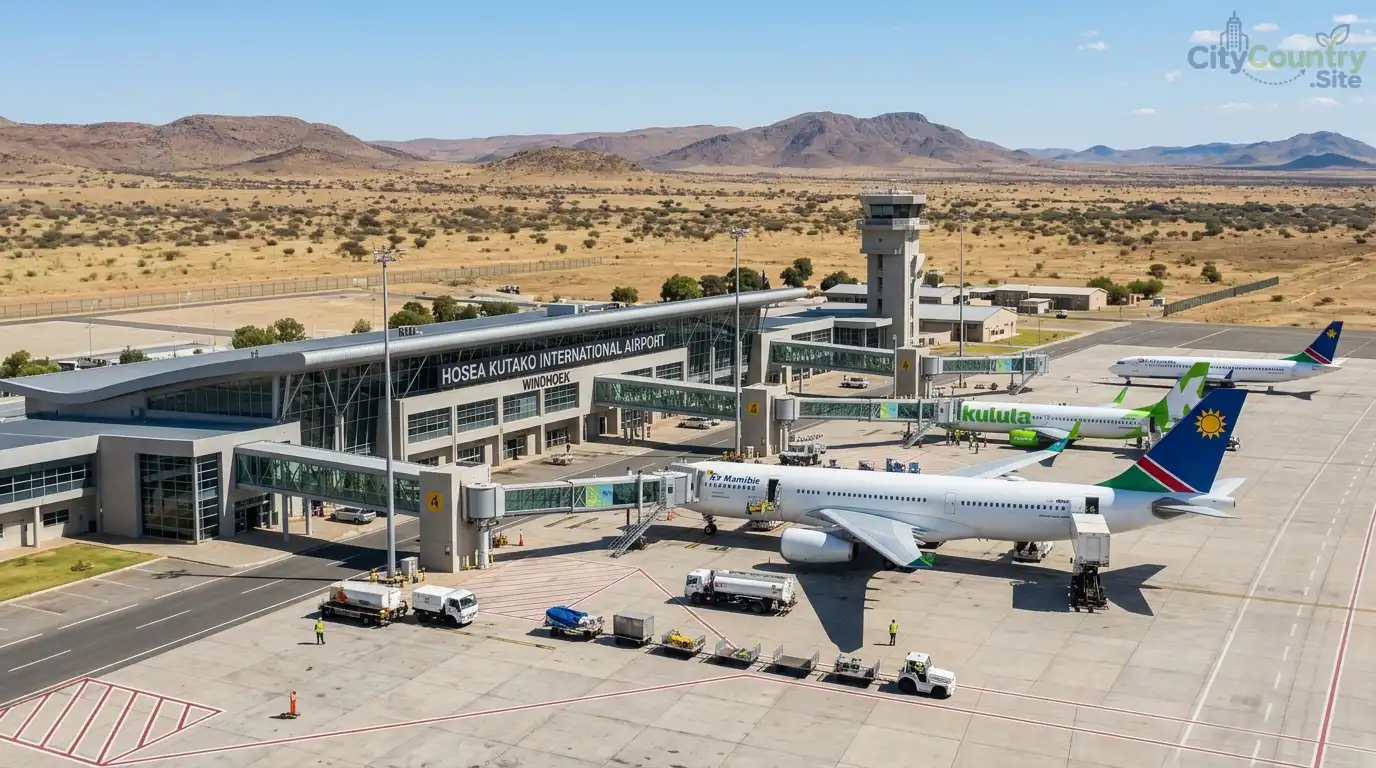
Hosea Kutako International Airport (WDH)
Hosea Kutako International Airport (IATA: WDH) is named after the revered Herero leader and independence activist Hosea Kutako — a figure of enormous significance in Namibian history. The airport is located approximately 42 km east of the city center — one of the longer airport-to-city distances in southern Africa, requiring careful planning for arrivals and departures.
The airport handles international connections including Johannesburg, Cape Town, Frankfurt, London, Addis Ababa, Nairobi, Luanda, and regional southern African destinations. Key airlines include Air Namibia (when operational — check current status), South African Airways, Lufthansa, Ethiopian Airlines, British Airways (via partners), and Kenya Airways.
Eros Airport, approximately 4 km from the CBD, handles domestic flights within Namibia — connecting Windhoek to Lüderitz, Walvis Bay, Katima Mulilo, and other domestic destinations, as well as charter flights to lodges and national parks.
Getting from Hosea Kutako Airport to City Center:
| Transport Option | Duration | Cost (Approx.) | Notes |
|---|---|---|---|
| Pre-booked shuttle / transfer | 40–55 min | NAD 350–500 (~$19–27) | Most reliable; book through hotel |
| Airport taxi | 40–55 min | NAD 400–600 (~$22–32) | Negotiate before boarding |
| Uber | 40–55 min | NAD 300–450 (~$16–24) | Available; reliability varies |
| Shared shuttle bus | 60–80 min | NAD 150–200 (~$8–11) | Cheaper; drops at multiple hotels |
| Rental car | 40–55 min | Varies | Good if driving onward to parks |
Renting a car at the airport is strongly recommended for most visitors to Namibia — the country is vast, national parks are self-drive, and having your own vehicle dramatically expands what is accessible from Windhoek. All major car rental companies operate from Hosea Kutako: Avis, Budget, Hertz, Europcar, and local specialists like Asco Car Hire.
Getting to Windhoek from Neighboring Countries:
| Origin | Transport | Duration | Cost (Approx.) |
|---|---|---|---|
| Johannesburg, South Africa | Flight | 2 hours | $120–280 |
| Cape Town, South Africa | Flight | 2 hours | $130–300 |
| Victoria Falls, Zimbabwe | Flight via JNB | 4–5 hrs | $200–400 |
| Gaborone, Botswana | Road | 8–9 hours | $25–50 (bus) |
| Upington, South Africa | Road | 5 hours | $15–30 (bus) |
💡 Did You Know? Namibia is the second least densely populated country on earth — after Mongolia — with approximately 3.5 people per square kilometre. Flying into Windhoek from Johannesburg, you cross hundreds of kilometres of largely uninhabited terrain, giving you a powerful visual sense of the extraordinary emptiness of this enormous, beautiful country. Namibia is the size of Texas and France combined — and has fewer than three million people.
7. Getting Around Windhoek
Windhoek is one of Africa’s most manageable capital cities for visitors — compact, well-organized, and surprisingly walkable at its core.
Walking is genuinely practical in the CBD and inner neighborhoods during daylight hours. The city center — from the Independence Memorial Museum and Christuskirche to the pedestrianized Post Street Mall and the Craft Centre — can be explored entirely on foot in a few hours. The streets are clean, wide, and safe by day.
Uber operates in Windhoek and is the recommended transport option for journeys beyond walking distance. Reliable, transparent pricing, and comfortable. A typical city ride costs NAD 60–150 (~$3–8). Some drivers also operate via inDriver (a competing app) — worth downloading as a backup.
Taxis — white cars with taxi plates — are widely available. Negotiate the fare before boarding. Shared taxis (kombis) run fixed routes for as little as NAD 10–20 but are primarily used by locals.
Car hire from the airport is essential if exploring Namibia beyond the city. Windhoek itself is manageable without a car, but Etosha, Sossusvlei, and the rest of Namibia require a reliable self-drive vehicle — ideally a 4WD for gravel road travel. Book well in advance, particularly for July–August peak season.
Cycling is possible in the quieter residential suburbs and along some dedicated paths, but the hilly terrain and hot summer temperatures make it practical primarily in winter months. Some guesthouses offer bicycle rental.
8. Windhoek Top Attractions & Beautiful Places
Top Attractions Table
| Attraction | Type | Entry Fee | Best Time | Time Needed |
|---|---|---|---|---|
| Christuskirche (Christ Church) | Colonial church / landmark | Free | Morning | 45 min–1 hour |
| Independence Memorial Museum | National history museum | NAD 50 (~$2.70) | Morning | 2–3 hours |
| Alte Feste (Old Fort Museum) | Colonial fort / museum | NAD 30 (~$1.60) | Morning | 1–1.5 hours |
| Namibia Craft Centre | Art and craft market | Free | Morning | 1–2 hours |
| National Museum of Namibia | Natural history / culture | NAD 30 (~$1.60) | Morning | 1.5–2 hours |
| Tintenpalast (Ink Palace) | Parliament / heritage | Free (guided tours) | Morning | 1 hour |
| Heroes’ Acre | National monument | NAD 30 (~$1.60) | Morning | 1 hour |
| Katutura Township Tour | Cultural / historical tour | $15–25 (guided) | Morning | 2–3 hours |
| Joe’s Beerhouse | Restaurant / cultural institution | Free | Evening | 2–3 hours |
| Daan Viljoen Game Reserve | Wildlife reserve | NAD 80 (~$4.30) | Morning | Half–Full day |
| AfricaArt Gallery | Contemporary Namibian art | Free | Anytime | 1 hour |
| Post Street Mall | Pedestrian street / meteors | Free | Morning | 1 hour |
Christuskirche — the Christ Church — is Windhoek’s defining image and most photographed landmark. Built between 1907 and 1910 in a striking blend of Art Nouveau and Neo-Gothic styles using local blue quartzite, the church sits on a hill at the heart of the colonial city, visible from virtually every approach. Its distinctive greenish copper spire and warm stone walls glow particularly beautifully in the late afternoon sun. The interior is simple and moving — and still a functioning Lutheran congregation.
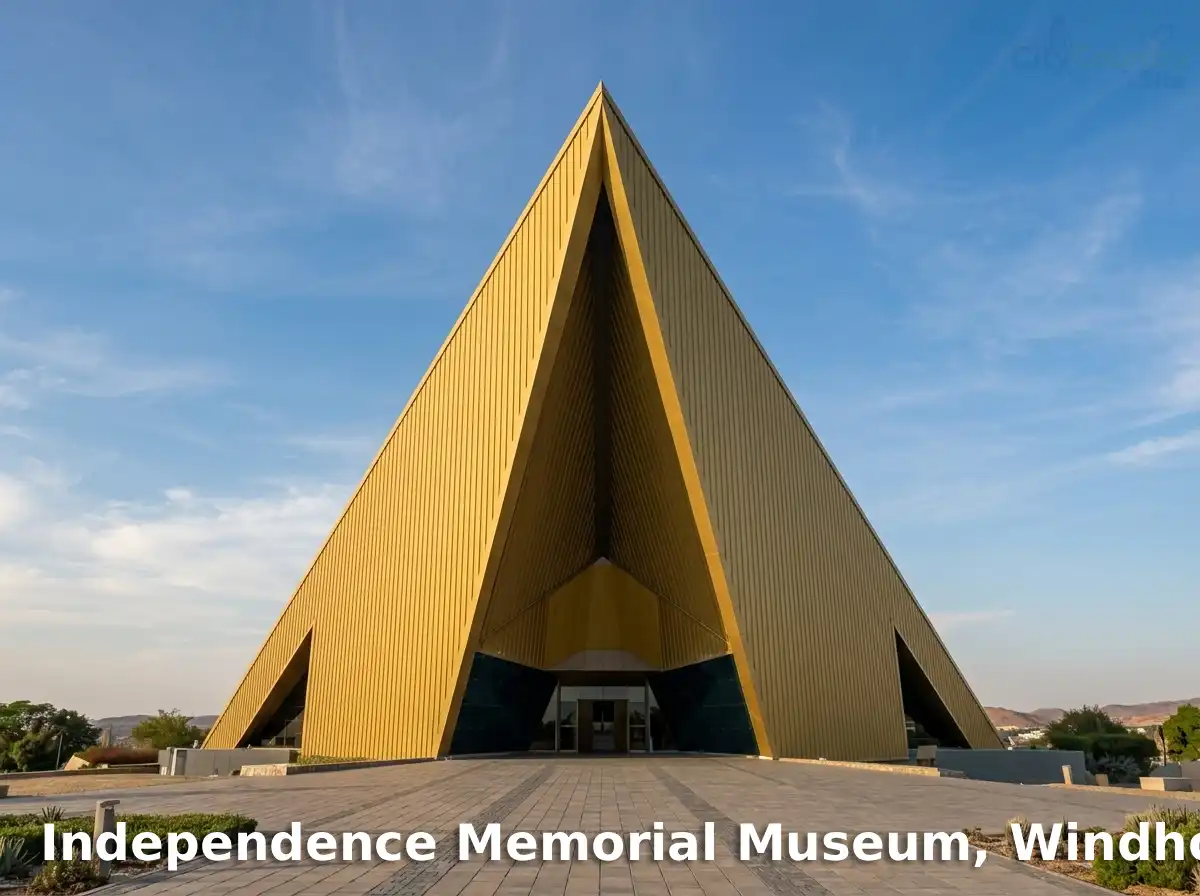
The Independence Memorial Museum is the most important cultural institution in Windhoek — a striking contemporary building opened in 2014 directly opposite the Christuskirche, designed by a North Korean architectural firm (a fascinating geopolitical footnote), housing a comprehensive museum tracing Namibia’s history from pre-colonial times through the German genocide, South African administration, and the liberation struggle to independence. The exhibition is honest, moving, and essential for understanding the country you are visiting.
The Alte Feste (Old Fort) — the German colonial fort built in 1890 that effectively founded modern Windhoek — houses the National Museum of Namibia’s historical collection, including colonial-era artifacts, weapons, and documents. The fort itself, with its thick whitewashed walls, is architecturally striking.
The Tintenpalast (Ink Palace) — Namibia’s Parliament building, built in 1913 — earned its nickname from the extraordinary quantity of administrative ink consumed by German colonial bureaucracy. Today it is the seat of the Namibian National Assembly and can be toured by appointment. The gardens are beautiful and open to visitors.
Katutura Township Tour — Essential for understanding the full complexity of Windhoek. Katutura was established under the apartheid-era “homeland” policy to forcibly relocate Black Namibians away from the city center. Today it is a vibrant, thriving community of approximately 250,000 people with excellent street food, shebeens, markets, and an authentic urban Namibian energy completely different from the colonial CBD. Guided tours operated by community members provide income, context, and genuine insight. The Katutura Single Quarters open-air market on Saturday mornings is an unforgettable experience — braaied meat, kapana (grilled strips of beef), fat cakes (deep-fried dough), and cold Windhoek Lager.
Post Street Mall is Windhoek’s pedestrianized shopping street — notable not just for its shops but for the collection of Gibeon meteorites displayed along its length. These iron-nickel meteorites, part of a prehistoric meteor shower that fell approximately 30,000 years ago in the Gibeon area of southern Namibia, were collected and brought to the mall as a public art installation. Walking among these ancient rocks from space — each weighing hundreds of kilograms — on a busy shopping street is a delightfully surreal Windhoek experience.
💡 Did You Know? The Gibeon meteorites displayed on Post Street Mall are among the most scientifically significant meteorites on earth. They are remnants of the core of a proto-planet that existed in the early solar system approximately 4.5 billion years ago — before our own planet formed. When you touch one of these meteorites on your walk through Windhoek’s shopping district, you are touching material older than the Earth itself.
9. Windhoek Food & Cuisine Guide
Windhoek’s food scene is a genuinely unique fusion — traditional Namibian cuisine built around game meat and wild plants, combined with deep German culinary influences from over a century of colonial presence, and overlaid with contemporary African and international restaurant culture. It is more varied and sophisticated than most visitors expect.
Must-Try Dishes in Windhoek
Kapana — The quintessential Windhoek street food. Strips of beef grilled over open coals at outdoor markets — particularly in Katutura — eaten hot off the grill with a sprinkle of salt and dried chili powder. Fast, cheap, delicious, and completely authentic. The Katutura Single Quarters market on Saturdays is the finest kapana experience in the city.
Oryx Steak — The oryx (gemsbok) is Namibia’s national animal and the finest game meat in the country. Lean, rich, deeply flavored, and extraordinarily tender when properly prepared. Available at most upscale restaurants in Windhoek — typically served as a steak or in a rich stew. This is Namibia’s signature culinary experience.
Biltong — Southern Africa’s magnificent air-dried cured meat — typically beef, oryx, kudu, or springbok — seasoned with coriander, salt, and pepper, then hung in dry desert air until perfectly cured. Namibia’s version is drier and more intensely flavored than the South African equivalent due to the extremely low humidity. The finest biltong snack in Africa. Available in every supermarket and specialist deli.
Potjiekos — A slow-cooked stew prepared in a cast-iron pot (potjie) over open coals — layers of meat, vegetables, and spices cooked for hours without stirring. A deeply satisfying, communal food that reflects the Afrikaner farming tradition that shaped much of Namibia’s food culture.
Boerewors — Traditional southern African farmer’s sausage — a long, coiled sausage of beef and pork seasoned with coriander, nutmeg, and cloves, grilled over coals. Ubiquitous at braais (barbecues) and street markets.
Mopane Worms — Like Zimbabwe, Namibia harvests and eats the dried caterpillars of the Emperor moth. Available fried or stewed at traditional restaurants and market stalls — crunchy, protein-rich, and genuinely tasty once you get past the idea.
Oshifima with Oshikandela — The staple food of the Ovambo people — northern Namibia’s largest ethnic group — and the foundational traditional food of much of the country. Thick millet or mahangu porridge (oshifima) served with sour milk (oshikandela) or wild spinach stew. Simple, nutritious, and deeply comforting.
German Baked Goods — Windhoek’s German heritage is most deliciously evident in its bakeries. Brötchen (bread rolls), Schwarzwälder Kirschtorte (Black Forest cake), Apfelstrudel, and various Bavarian pastries are available in German-style bakeries and cafés throughout the city. Eating a slice of perfect German cake in the middle of the Namibian plateau remains one of Windhoek’s most improbable and delightful pleasures.
Windhoek Lager — Namibia’s iconic beer, brewed in Windhoek since 1920 according to the German Reinheitsgebot (purity law). Clean, crisp, beautifully made. Drinking a cold Windhoek Lager at Joe’s Beerhouse on a warm evening is as essential to the Windhoek experience as visiting Christuskirche.
Best Restaurants & Food Spots
Joe’s Beerhouse — Windhoek’s most famous restaurant and a genuine cultural institution. An eccentric, sprawling outdoor restaurant decorated with thousands of antiques, old signs, wagon wheels, and Namibiana — serving enormous portions of game meat, boerewors, oryx steak, and traditional potjiekos alongside cold Windhoek Lager. Touristy? Somewhat. Essential? Absolutely. No visit to Windhoek is complete without dinner here. Mains: NAD 180–380 (~$10–21).
The Stellenbosch Wine Bar & Bistro — Windhoek’s finest wine and dining experience — an elegant, intimate restaurant with an exceptional South African and Namibian wine list and creative continental cuisine with local ingredients. Mains: NAD 220–450 (~$12–24).
O Portão Portuguese Restaurant — Reflecting Namibia’s proximity to Angola and its Portuguese cultural influences, this excellent restaurant serves outstanding peri-peri chicken, seafood, and traditional Portuguese dishes. Mains: NAD 150–320 (~$8–17).
Katutura Single Quarters Market (Saturday morning) — The finest food experience in all of Windhoek. Arrive before 9 AM for kapana straight off the grill, fat cakes fresh from the fryer, grilled chicken, and oshifima with stew. Eat standing up with local workers, families, and market traders. Cost: barely NAD 50 (~$3) for a full, extraordinary breakfast.
Café Zoo — A beloved Windhoek café institution near the CBD — excellent coffee, good pastries, reliable breakfast and lunch menus, and a comfortable terrace. The default daytime meeting spot for Windhoek’s professional class.
La Marmite — Excellent West African cuisine in a vibrant, colorful restaurant — a reminder of the diverse African communities that make up modern Namibia. Mains: NAD 120–250.
Mugg & Bean / Ocean Basket — South African restaurant chains with reliable quality and comfortable settings throughout the city — useful fallbacks when seeking familiar, predictable food.
💡 Did You Know? Namibia’s Windhoek Lager is brewed to the German Reinheitsgebot — the beer purity law of 1516 — which stipulates that beer may only be made from water, barley malt, hops, and yeast. No additives, no preservatives, no shortcuts. This makes Windhoek Lager genuinely unusual among African beers and explains why it consistently wins international quality awards. It is exported to over 60 countries and regularly features on lists of the world’s finest lagers.
10. Windhoek Accommodation Guide
Windhoek has a well-developed accommodation sector dominated by excellent, garden-set guesthouses that represent the best value in the city. International chain hotels are present but the independently owned guesthouse culture is what genuinely defines Windhoek’s hospitality.
Best Areas to Stay:
- Klein Windhoek: Best overall — leafy, safe, close to the CBD, excellent guesthouses and restaurants
- Ludwigsdorf: Best for luxury and seclusion — beautiful hillside guesthouses in the city’s finest suburb
- Olympia / Pioneers Park: Good mid-range options in quiet, residential settings
- CBD / Eros: Best for business travelers — convenient, functional
Accommodation Price Ranges (2026)
| Category | Price/Night (USD) | Examples |
|---|---|---|
| Budget Hostel / Backpacker | $12–25 | Cardboard Box Backpackers, Chameleon Backpackers |
| Mid-Range Guesthouse | $50–100 | Hotel Heinitzburg (mid rooms), Roof of Africa Hotel |
| Upscale Guesthouse / Boutique Hotel | $100–180 | The Olive Exclusive, Villa Violet, Guesthouse Tamboti |
| Luxury Hotel / Boutique Lodge | $180–400+ | Hotel Heinitzburg, The Olive Exclusive (suites) |
The Olive Exclusive is Windhoek’s most celebrated boutique guesthouse — nine individually designed suites in a beautifully curated property combining contemporary African design with exceptional personal service, a superb pool, and outstanding cuisine. Rates: approximately $200–350 per night including breakfast.
Hotel Heinitzburg is the city’s most historically atmospheric option — a genuine colonial-era castle built in 1914 by a German count for his Namibian bride, converted into an elegant hotel with extraordinary views over the city. The Leo’s at the Castle restaurant is one of Windhoek’s finest. Rates: approximately $150–280 per night.
Cardboard Box Backpackers is consistently Windhoek’s most recommended budget option — clean, social, well-organized, and with excellent practical information for travelers planning onward journeys through Namibia. Dorms from $15; private rooms from $40.
11. Best Time to Visit Windhoek
May through October is universally the best time to visit Windhoek and Namibia. The dry season brings clear skies, comfortable temperatures, and excellent conditions for wildlife viewing in Etosha and other national parks.
June and July are the coolest months — comfortable by day (low to mid-20s°C) and cold at night (sometimes below 5°C). Pack warm layers for evenings. These are peak months — book accommodation and car rental well in advance.
August and September are perhaps the finest months of all — temperatures are warming, skies are clear, wildlife in Etosha is spectacular as animals concentrate around shrinking waterholes, and the light quality for photography is extraordinary.
October is hot but beautiful — temperatures rise toward 32–34°C but with very low humidity and maximum sunshine hours. The pre-rain landscape is parched and dramatic; photography is spectacular.
April is a lovely transitional month — the summer rains are ending, the landscape is unusually green, temperatures are comfortable, and accommodation prices are still at shoulder-season rates.
January and February — the summer rainy season — are the most challenging months. Afternoon thunderstorms, intense heat, and washed-out gravel roads can affect both comfort and wildlife accessibility. However, the green landscape is beautiful, accommodation is at its cheapest, and crowds are minimal.
Key Festivals & Events in Windhoek
- Windhoek Karneval (WIKA) (April) — A remarkable German-heritage carnival tradition transplanted to Africa — colorful parades, traditional German costumes, beer halls, and festive music. One of the most surreal and enjoyable cultural events in Africa
- Namibia International Trade Fair (NAMPO, September) — Major agricultural and business showcase
- Independence Day (March 21) — Namibia’s national day, celebrated with ceremonies, cultural performances, and the enormous pride of a young nation
- Oktoberfest Windhoek (October) — A genuinely authentic German-style Oktoberfest in the heart of Africa — beer steins, lederhosen, oompah bands, and thousands of Windhoekians celebrating their German cultural heritage with great enthusiasm
- Bank Windhoek Arts Festival (September) — Annual celebration of Namibian performing arts
- Windhoek Jazz Festival (various) — Growing annual jazz event showcasing Namibian and international musicians
12. Shopping Guide
Windhoek offers a focused but high-quality shopping experience — particularly for traditional Namibian crafts, gemstones, and outdoor gear for the national parks.
What to Buy:
Namibian Gemstones and Minerals — Namibia is one of the world’s great gem-producing countries — the source of extraordinary diamonds, tourmaline, aquamarine, rose quartz, amethyst, and the extraordinarily rare demantoid garnet. Windhoek has several reputable gem dealers and the Namibia Gem and Mineral Show (periodic) showcases the country’s extraordinary geological wealth. Certified gem shops in the CBD offer beautiful pieces at prices significantly below European retail.
Karakul (Swakara) Fur Products — Namibia produces the world’s finest karakul wool from the Karakul sheep bred in the southern desert. Distinctive gray, black, and brown fleece is worked into hats, scarves, and decorative items. Buy from reputable producers with ethical sourcing certification.
Bushman Crafts and San Art — Traditional San (Bushman) craftwork — carved ostrich egg jewelry, leather pouches, wooden bows, and traditional tools — represents one of the oldest craft traditions on earth. Buy from community cooperatives where proceeds directly support San communities.
Biltong — Every visitor should bring home biltong. Specialist biltong shops in Windhoek prepare fresh biltong from oryx, kudu, springbok, and beef using traditional dry-curing methods. Lightweight, legal to export in most countries (check customs rules), and the finest culinary souvenir in southern Africa.
Namibian Brandy and Craft Spirits — Namibia has a small but growing craft spirits industry. Local brandy and gin distilled from desert botanicals make excellent, distinctive souvenirs.
Contemporary Namibian Art — Windhoek has a growing contemporary art scene with galleries showcasing Namibian and wider southern African artists at accessible prices.
Where to Shop:
Namibia Craft Centre (Old Breweries Building) — The finest craft shopping destination in Windhoek — housed in a beautifully converted colonial-era brewery building near the CBD, the Craft Centre hosts dozens of vendors selling Namibian crafts of generally high quality. Excellent for baskets, wood carvings, jewelry, textiles, ceramics, and biltong. Fixed prices on most items; browsing is relaxed and welcoming.
Post Street Mall — The pedestrianized city center shopping street for everyday retail, clothing, and general shopping. The meteorite display makes it worth a visit regardless of shopping intentions.
Wernhil Park Shopping Centre — Windhoek’s largest indoor mall — comfortable, air-conditioned, well-stocked with local and South African brands, supermarkets, pharmacies, and food options. The most comprehensive shopping under one roof.
Maerua Mall — A large, modern shopping center in Maerua Park with a good selection of retailers, restaurants, a cinema, and Pick n Pay supermarket. More suburban than Wernhil but excellently stocked.
Penduka Craft Shop (Goreangab Dam) — A social enterprise employing women from Windhoek’s informal settlements to produce handmade craft items — textiles, ceramics, jewelry. Beautiful products; genuine community impact. Worth the short trip from the city center.

13. Windhoek Nightlife & Entertainment
Windhoek is a small city and its nightlife reflects that — more intimate and community-based than major African capitals, but with genuine quality and warmth in its best venues.
Cultural Experiences:
National Theatre of Namibia — Regular productions of Namibian drama, music, and dance. Programming ranges from traditional performances to contemporary theater. The building itself is architecturally interesting and the quality of Namibian performing arts is consistently surprising.
Franco-Namibian Cultural Centre — Regular film screenings, concerts, art exhibitions, and cultural debates. An excellent and welcoming venue with strong programming.
Katutura Shebeens (Evening) — The traditional informal bars of the township come to life in the evening — cold beer, braai smoke, live music (frequently traditional oshiimbombode or contemporary Namibian pop), and the genuine social warmth of community gathering. Visit with a local guide for safety and maximum experience.
Bars & Restaurants:
Joe’s Beerhouse — The ultimate Windhoek evening destination and the most convivial place for cold beer, game meat, and conversation. The outdoor setting under huge trees with fairy lights, antique signs, and the buzz of a full house is genuinely wonderful. Go for dinner and stay for drinks.
The Stellenbosch Wine Bar — The most sophisticated evening option in the city — exceptional wine selection, quiet elegance, and the best cheese board in Namibia.
Warehouse Theatre — A popular bar and entertainment venue in the CBD hosting live music nights, comedy shows, and themed events. A genuine local gathering point.
Club Thriller / Club Eclipse — Windhoek’s busiest nightclubs, attracting a young Namibian crowd with local and regional music on Friday and Saturday nights.
The Angolan Kitchen — A relaxed evening gathering spot with Angolan music, grilled chicken, and cold beer that captures the cross-cultural energy of Windhoek’s diverse African community.
14. Hidden Gems & Local Secrets
Daan Viljoen Game Reserve — Just 24 km west of the city center, Daan Viljoen is a beautiful game reserve in the Khomas Highland hills hosting oryx, kudu, blue wildebeest, springbok, zebra, and over 200 bird species — all accessible by self-drive or walking trails from a comfortable rest camp. Watching an oryx silhouetted against the Namibian sunset from a hill in Daan Viljoen, 20 minutes from a capital city, is one of Africa’s most accessible wildlife magic moments.
Penduka Village (Goreangab Dam) — The women’s craft cooperative mentioned in the shopping section also hosts a lovely café on the edge of Goreangab Dam — an improbable oasis where you can eat a home-cooked Namibian lunch at a lakeside table while watching birds on the water and chatting with the women who made the crafts displayed around you. Completely unknown to most visitors.
Namibia’s Craft Beer Scene — Windhoek has developed a small but enthusiastic craft beer culture beyond its famous lager. The Camelthorn Brewing Company and several small craft producers have created a scene of local beers using Namibian botanicals and desert ingredients. Ask locally for current taproom locations.
The Evening Braai Culture — The most authentic Windhoek social experience is not in a restaurant but at a private braai (barbecue). If you are lucky enough to receive an invitation to a Namibian family braai, accept immediately. The combination of excellent meat, local beer, multilingual conversation (Namibians casually move between English, Afrikaans, German, and local languages in a single conversation), and the extraordinary star-filled sky of the Namibian night is something no restaurant can replicate.
Farm Stall on the B1 — Several farm stalls on the main road south of Windhoek sell extraordinary homemade produce — dried fruits, preserves, biltong, farm cheeses, and fresh produce from Namibian farms. Stop at any roadside stall heading south toward Rehoboth for some of the finest artisanal food products in the country.
Westdene Walking — The quiet, older residential suburb of Westdene preserves some of Windhoek’s finest colonial-era architecture — solid German stone houses with covered verandas, mature garden trees, and an atmosphere of a pre-war European provincial town somehow preserved in the African highlands. An extraordinary hour’s walking with a camera.
15. Day Trips from Windhoek
Windhoek’s central position in Namibia makes it the hub for some of the world’s most dramatic natural landscapes — all accessible within a few hours by road or short charter flight.
Day Trips Table
| Destination | Distance | Travel Time | Method | Highlights |
|---|---|---|---|---|
| Daan Viljoen Game Reserve | 24 km west | 30 min | Car | Game drive, walking trails, bird watching, oryx |
| Okapuka Ranch | 35 km north | 40 min | Car / Tour | Game drive, cheetah, lion, rhino encounters |
| Arnhem Cave | 100 km east | 1.5 hrs | Car | Longest cave system in southern Africa |
| Namibia Breweries Tour | In city | 15 min | Taxi | Behind-the-scenes at Windhoek Lager brewery |
| Rehoboth and Lake Oanob | 87 km south | 1 hour | Car | Baster cultural heritage, lake resort, swimming |
| Sossusvlei (overnight strongly recommended) | 340 km south | 4.5 hrs | Car | World’s highest sand dunes, Dead Vlei, salt pans |
| Etosha National Park (2 night minimum) | 435 km north | 5 hrs | Car | Big Five, extraordinary waterhole game viewing |
| Swakopmund (overnight recommended) | 395 km west | 4.5 hrs | Car | German colonial coast town, adventure sports, ocean |
Sossusvlei — while best as an overnight trip — is Namibia’s single most iconic attraction and the primary reason many international visitors come to the country. The towering orange-red sand dunes of the Namib Desert — some reaching over 300 metres in height — surround clay pans of brilliant white, creating a landscape of startling, otherworldly beauty. Dead Vlei — a ghost forest of ancient camelthorn trees preserved for centuries in the bone-dry desert — is one of the most extraordinary natural tableaux on earth. Drive down the morning before sunrise to be on the dunes at dawn.
Etosha National Park is Namibia’s premier wildlife destination — a vast, flat pan surrounded by savanna and thornbush hosting lions, leopards, cheetahs, elephants, black and white rhinos, giraffes, zebras, wildebeest, and hundreds of bird species. The park’s floodlit waterholes — where animals gather through the night — are among the most extraordinary wildlife viewing experiences in Africa. Minimum two nights is strongly recommended; three or four gives a full appreciation.
Swakopmund — a German colonial town on the Atlantic coast, surrounded by the Namib Desert on one side and the cold, fog-laden South Atlantic on the other — is one of the most visually peculiar and surprisingly charming towns in Africa. German half-timbered buildings, excellent seafood restaurants, sand boarding on the dunes, skydiving over the desert coast, and the haunting beauty of the Skeleton Coast make it a compelling overnight destination.
16. Windhoek Local Culture, Customs & Etiquette
Namibia is home to approximately 11 main ethnic groups — Ovambo, Kavango, Herero, Damara, Nama, Caprivian, San, Baster, Tswana, and white Namibians of German and Afrikaner descent — all contributing to one of Africa’s most culturally diverse and complex societies. Windhoek is where all these communities live in closest proximity.
Language: English is the official language and widely spoken in business and tourist contexts. Afrikaans is the most widely spoken home language across ethnic communities and serves as Namibia’s de facto lingua franca. German remains the language of a significant minority community. Oshiwambo is the most widely spoken indigenous language. Most educated Namibians speak three or more languages as a matter of course.
The Herero Dress Tradition — One of Windhoek’s most visually striking cultural features is the dress of Herero women — extraordinarily voluminous Victorian dresses in bold colors, originally adopted from German missionary wives in the 19th century and now completely claimed as distinctly Herero cultural identity. The accompanying horned headpiece (otjikalva) represents cattle horns — central to Herero culture and identity. These are not costumes worn for tourists but genuine everyday dress worn by many Herero women throughout their lives. Admire respectfully; ask permission before photographing.
German Cultural Community — Windhoek’s German-Namibian community — descended from colonial settlers and subsequent immigrants — is fully Namibian in identity while maintaining strong German cultural traditions. German-language schools, churches, clubs, and cultural organizations operate throughout the city. German is spoken casually on the streets and German food, music, and festivals are integral to Windhoek’s character.
Religion: Namibia is overwhelmingly Christian — a legacy of intensive missionary activity — with Lutheran, Catholic, and various evangelical denominations widespread. Traditional religious practices coexist with Christianity in many communities.
Respect for San Culture: The San (Bushman) people — the oldest inhabitants of southern Africa — maintain cultural communities in Namibia’s north and west. Their traditional knowledge, art, and social systems deserve profound respect. When visiting San communities on organized cultural tours, follow all guide instructions about appropriate behavior and photography.
Tipping:
- Restaurants: 10–15% tip at sit-down restaurants — appreciated and meaningful
- Safari guides and trackers: NAD 150–300 per day ($8–16) — standard and important
- Car guards (informal parking attendants): NAD 5–10 per parking session
- Hotel porters: NAD 20–30 per bag
- Petrol station attendants: NAD 5–10 for full service
Dos and Don’ts:
- ✅ Do greet people before conducting transactions — a proper greeting is socially essential in Namibian culture
- ✅ Do ask permission before photographing individuals — particularly Herero women in traditional dress
- ✅ Do try kapana at the Katutura market — it is the most authentic food experience in the city
- ✅ Do carry a warm layer even in summer — evenings cool rapidly at this altitude
- ❌ Don’t photograph government buildings, military facilities, or checkpoints without permission
- ❌ Don’t assume everyone speaks English — Afrikaans is often more useful in rural areas and markets
- ❌ Don’t underestimate driving distances in Namibia — what looks close on a map can be 4+ hours on gravel roads
17. Safety & Travel Tips
Windhoek is one of southern Africa’s safest capital cities for tourists — considerably safer than Johannesburg, Cape Town, or many other regional capitals.
Safe Areas: The CBD, Klein Windhoek, Ludwigsdorf, Olympia, Highlands, Eros, and all the main tourist areas are generally very safe during daylight hours. The CBD is well-patrolled and pleasant for walking.
Areas Requiring Awareness:
- The CBD’s quieter streets and parks after dark — reduce exposure
- Katutura — perfectly safe with a local guide during the day; not recommended for independent after-dark visits
- Around the main transport terminals — petty crime risk in crowded areas
Common Issues:
- Petty theft (bag snatching, pickpocketing) in the CBD and crowded markets — keep valuables secure
- Car break-ins in parking areas — never leave valuables visible in a parked vehicle
- Overcharging of tourists in informal settings — agree prices clearly in advance
Emergency Numbers:
- Police: 10111 (emergency) / 061-209-4111 (Windhoek central)
- Ambulance: 061-211111 / MedRescue: 061-230505
- Fire: 061-258333
- Automobile Association (AA Namibia): 061-224201
Road Safety: Namibia’s roads outside the main highways are gravel — sometimes deeply corrugated. Driving on gravel roads at inappropriate speeds is the leading cause of tourist accidents in Namibia. Never exceed 100 km/h on gravel and reduce speed significantly on corrugated surfaces. A 4WD is recommended for off-main-road travel. Always carry extra water, a spare tyre (two is better), and sufficient fuel — distances between service stations can be enormous.
Health Tips:
- Malaria is present in northern Namibia (Etosha area and north) but the risk in Windhoek itself is very low due to altitude. Consult a doctor about prophylaxis if traveling north
- Drink only bottled water — Windhoek’s tap water is actually treated and technically drinkable but bottled water is recommended for visitors
- Sun protection is critical — Namibia’s clear sky and high altitude mean UV intensity is extreme; wear factor 50+ sunscreen daily
- Private medical facilities include the Roman Catholic Hospital and Mediclinic Windhoek — both excellent
18. Windhoek Budget Tour
Daily Cost Table
| Category | Budget Traveler | Mid-Range | Luxury |
|---|---|---|---|
| Accommodation | $12–25 (hostel / backpacker) | $60–130 (guesthouse / hotel) | $180–400+ (boutique lodge) |
| Food | $8–15 (kapana, local cafés, self-catering) | $25–55 (restaurants) | $60–130+ (fine dining) |
| Transport | $3–8 (Uber, city taxis) | $15–35 (taxi, local car hire) | $50–120 (private driver, rental 4WD) |
| Activities | $5–15 (museums, Craft Centre, walking) | $25–60 (guided tours, Daan Viljoen) | $70–200+ (private tours, day safaris) |
| Total/Day | ~$28–63 | ~$125–280 | ~$360–850+ |
Windhoek is very affordable by international standards — particularly at the guesthouse and local restaurant level. The main expenses for most visitors are car rental ($50–120 per day for a 4WD) and national park fees if doing day trips. Self-catering is very practical given the excellent supermarkets and Namibia’s excellent camping infrastructure.
19. Practical City Information
Visa & Entry: Namibia is remarkably visa-friendly. Citizens of most Western European countries, USA, Canada, Australia, New Zealand, and many southern African nations can enter visa-free for up to 90 days. Citizens of many other countries can obtain a visa on arrival. Only a relatively small number of nationalities require advance visas. Check the Namibia Ministry of Home Affairs website for your specific nationality’s requirements.
Currency: The Namibian Dollar (NAD) is pegged 1:1 with the South African Rand (ZAR) — and Rand is accepted everywhere in Namibia at the same value. USD, EUR, and GBP can be exchanged at banks and the airport. ATMs are widely available in Windhoek. Credit cards are accepted at most hotels, restaurants, and larger shops. Carry NAD cash for markets, fuel stations on remote routes, and smaller vendors.
Vaccinations: No mandatory vaccinations for most travelers. Yellow fever certificate required if arriving from endemic countries. Recommended: Hepatitis A, Typhoid, Tetanus. Rabies vaccination recommended for extended rural stays. Malaria prophylaxis recommended for northern Namibia travel.
Emergency Contacts:
- Police: 10111
- Ambulance: 061-211111
- Mediclinic Windhoek: 061-222687
- AA Namibia (road emergencies): 061-224201
SIM Cards & Internet: Available at the airport and throughout the city. MTC (Mobile Telecommunications Company) is Namibia’s dominant network with the best coverage across the country — essential for road trips. TN Mobile is a secondary option. A tourist SIM with data costs approximately NAD 100–150 (~$5–8) for a starter pack with several GB. 4G coverage is good in Windhoek; coverage thins on remote routes. Wi-Fi is available at most hotels and cafés.
Power: Namibia uses Type D and M plugs (round three-pin, South African standard) — voltage 220V, 50Hz. South African plugs work throughout Namibia; most other visitors need a universal adapter.
Drinking Water: Windhoek’s tap water is treated and technically safe but bottled water is universally recommended for visitors. On road trips, always carry more water than you think you will need — dehydration in Namibia’s dry heat is a genuine risk.
20. How to Be a Responsible Traveler in Windhoek
Support San Community Craft Cooperatives: The San people face significant socioeconomic marginalization in modern Namibia despite being the land’s original inhabitants. Purchasing crafts from certified San cooperatives — available at the Namibia Craft Centre and specific community shops — provides direct income and dignity to communities under severe economic pressure.
Choose Community-Based Tourism: Namibia has an exceptional Community-Based Natural Resource Management (CBNRM) system in which local communities manage and benefit from tourism on communal conservancies. Choosing tour operators that work within this system — particularly for township tours, traditional village visits, and community lodges — ensures your tourism spending directly benefits local people.
Water Consciousness: Namibia is the driest country in sub-Saharan Africa. Water is a precious, scarce resource. Take shorter showers, reuse hotel towels, and be conscious of water usage throughout your stay. Many Namibian accommodations operate their own water recycling systems.
Responsible Wildlife Interaction: Never feed wildlife. Do not approach animals too closely in game reserves. Choose operators who maintain safe, respectful distances from all wildlife. Report any operators encouraging inappropriate wildlife interaction to Namibia Wildlife Resorts.
Reduce Plastic: Carry a reusable water bottle with a filter — this is both environmentally responsible and practically useful on long drives where bottled water access may be limited.
Engage with the Genocide History: The Herero and Nama Genocide of 1904–1908 is a topic that Germany and Namibia have been actively negotiating reparations and acknowledgment for. Approach this history with full seriousness — visit the genocide memorial at the Alte Feste, read the exhibition at the Independence Memorial Museum, and engage with the history not as a historical curiosity but as a living wound in Namibian society.
Buy Local Biltong — Ethically Sourced: Namibia’s game industry provides enormous conservation benefits by making wildlife economically valuable to landowners. Buying biltong from farms practicing sustainable game management supports this conservation model.
21. Travel Media: Documentaries, Books & Channels
Books:
- The Sheltering Desert by Henno Martin — A remarkable true account of two German geologists who survived over two years in the Namibian desert during World War II. Extraordinary story of human endurance and the magnificence of Namibia’s wilderness
- The Covenant of Water by Abraham Verghese — While set partly in India, provides wider context for understanding colonial missionary Africa
- Silence Will Speak by Errol Trzebinski — The extraordinary story of the relationship between Denys Finch Hatton and Karen Blixen, with significant Namibia and East Africa content
- Running in the Family by Michael Ondaatje — Broader African context
Namibia-Specific:
- An Arid Eden by Garth Owen-Smith — An outstanding memoir of four decades of conservation work in Namibia’s communal conservancies by the pioneer of community-based conservation in Africa
- Namibia: The Wildlife and the People (various editions) — Comprehensive photographic and contextual guide
Documentaries & Films:
- Desert Lions (2016, BBC) — Extraordinary documentary about Namibia’s famous desert-adapted lions
- The Sheltering Desert (1992) — German film adaptation of Henno Martin’s survival memoir
- Various BBC Natural World and National Geographic documentaries feature Namibia’s extraordinary wildlife and landscapes
YouTube Channels:
- Lost LeBlancs — Beautiful Namibia travel content including Windhoek
- Kara and Nate — Namibia road trip content
- Namibia Tourism Board — Official destination content
- Exodus Travels — Namibia travel guide content
22. Windhoek vs. Similar Cities
| Feature | Windhoek | Gaborone (Botswana) | Lusaka (Zambia) |
|---|---|---|---|
| Safety | ⭐⭐⭐⭐⭐ Excellent | ⭐⭐⭐⭐ Very good | ⭐⭐⭐ Moderate |
| Cleanliness | ⭐⭐⭐⭐⭐ Outstanding | ⭐⭐⭐⭐ Very good | ⭐⭐⭐ Moderate |
| Cultural depth | ⭐⭐⭐⭐⭐ Extraordinary — German, Herero, San | ⭐⭐⭐ Good | ⭐⭐⭐ Good |
| Wildlife access | ⭐⭐⭐⭐⭐ World-class — Etosha, Sossusvlei | ⭐⭐⭐⭐⭐ Okavango, Chobe | ⭐⭐⭐⭐ Good |
| Affordability | ⭐⭐⭐⭐ Good value | ⭐⭐⭐ Moderate | ⭐⭐⭐⭐ Affordable |
| Food scene | ⭐⭐⭐⭐ Very good — game + German | ⭐⭐⭐ Good | ⭐⭐⭐ Moderate |
| Unique character | ⭐⭐⭐⭐⭐ Completely unique globally | ⭐⭐⭐ Pleasant but generic | ⭐⭐⭐ Standard African capital |
| English spoken | ⭐⭐⭐⭐⭐ Excellent | ⭐⭐⭐⭐⭐ Excellent | ⭐⭐⭐⭐ Very good |
Choose Windhoek if you want one of the world’s most distinctive and culturally layered small capital cities combined with unrivaled access to Namibia’s extraordinary natural heritage — the oldest desert on earth, the finest game-viewing in southern Africa, and landscapes of such dramatic beauty that they are impossible to adequately describe.
23. Windhoek City Travel Tips
- Rent a car at the airport — Namibia is a self-drive country and having your own vehicle unlocks everything
- Book car rental months in advance for July–August — 4WDs sell out quickly in peak season
- Carry USD, EUR, or Rand in addition to NAD — all are widely accepted
- Bring a warm jacket even in summer — Windhoek evenings cool rapidly at 1,650 metres
- The Katutura Saturday morning market is the finest food experience in the city — arrive before 9 AM
- Never drive above 100 km/h on Namibia’s gravel roads — corrugations cause blowouts
- Always carry more water than you think you need — dehydration in Namibia’s dry heat is a genuine risk
- Factor 50+ sunscreen is essential year-round — the UV intensity at altitude in clear desert air is extreme
- Joe’s Beerhouse for dinner is genuinely essential — go for the oryx steak and stay for the atmosphere
- The Namibia Craft Centre is the best single shopping destination for quality-assured Namibian crafts
- Christuskirche is most beautiful in late afternoon golden light — plan your visit accordingly
- Sossusvlei requires an overnight stay — do not attempt it as a day trip from Windhoek
💡 Did You Know? Namibia has the largest cheetah population of any country on earth — home to approximately 3,000 cheetahs, representing around 30% of the world’s total cheetah population. Most of these cheetahs live on Namibian farmland rather than in national parks, protected by an extraordinary community conservation model pioneered by the Cheetah Conservation Fund (headquartered near Otjiwarongo, 250 km north of Windhoek). Namibia’s approach to human-wildlife coexistence on farmland is now studied and replicated across Africa.
24. Is Windhoek Worth Visiting? — Final Verdict
Yes — and it deserves far more time than most travelers give it. Windhoek is consistently treated as a transit point — a night before the flight to Sossusvlei or the drive to Etosha — by visitors whose eyes are already on Namibia’s celebrated wilderness. This is a mistake.
The city is genuinely, quietly remarkable. Its architectural character — German Lutheran churches and colonial administration buildings transplanted to a highland African plateau — is like nothing else on earth. Its cultural complexity — Herero women in Victorian missionary dresses beside German-speaking shopkeepers beside San craft sellers beside Ovambo street vendors — tells the entire story of southern Africa in a single city block. Its food — oryx steak and German strudel and kapana and Windhoek Lager — is a cuisine of extraordinary distinctiveness. And its people — extraordinarily multilingual, warmly hospitable, deeply proud of their young nation’s remarkable journey from colonial nightmare to stable democracy — are among the most engaging you will meet anywhere in Africa.
Windhoek is best suited for:
- History and culture enthusiasts — The layers of German colonial history, Herero and Nama genocide, apartheid resistance, and post-independence nation-building are all readable in the city’s streets, buildings, and museums
- Wildlife and nature travelers — Windhoek is the gateway to some of the world’s finest and most distinctive natural environments — Sossusvlei’s dunes, Etosha’s waterholes, the Skeleton Coast, Fish River Canyon
- Photographers — The extraordinary light quality of Namibia’s clear desert air, the dramatic landscapes, and the city’s visual cultural complexity make it one of Africa’s finest photography destinations
- Self-drive adventurers — Windhoek is the starting point for some of the world’s great road trips — the B1 north to Etosha, the C27 to Sossusvlei, the route to the Skeleton Coast and Swakopmund
- Couples and honeymooners — Namibia’s luxury lodges, dramatic landscapes, and intimate wilderness experiences make it one of the world’s great romantic travel destinations
- Travelers seeking genuine discovery — Windhoek remains, for most of the world, an undiscovered gem. Coming here before it becomes the next Nairobi or Kigali on every must-visit list is a genuine travel privilege
Less suited for those seeking beach holidays, busy cosmopolitan nightlife, or major metropolitan energy. Windhoek is small, quiet, and subtle — it rewards the attentive traveler rather than the sensation-seeker.
The verdict: Give Windhoek two full days at minimum — three is better. Add Sossusvlei and Etosha for a complete Namibia experience of ten to fourteen days that will be among the finest wildlife and landscape journeys of your life. Come curious, come patient, and come ready to be quietly, thoroughly surprised.
25. Frequently Asked Questions About Windhoek
Q1: Is Windhoek safe for tourists?
Windhoek is one of southern Africa’s safest capital cities for visitors. The main tourist areas — the CBD, Klein Windhoek, Ludwigsdorf, Olympia — are very safe during daylight hours. Petty crime (bag snatching, pickpocketing) occurs at low levels in the CBD. Violent crime against tourists is uncommon. Exercise normal urban precautions — secure valuables, use Uber rather than walking after dark, and follow your guesthouse’s specific local advice. Many thousands of international visitors travel through Windhoek safely every year.
Q2: Do I need a visa to visit Namibia?
Citizens of most Western European countries, USA, Canada, Australia, New Zealand, Japan, and many southern African nations can enter visa-free for up to 90 days. Most other nationalities can obtain a visa on arrival at the airport. Very few nationalities require advance visas. Check the Namibia Ministry of Home Affairs website for your specific situation. No pre-departure visa is required for the majority of international visitors.
Q3: What is the best way to get around Namibia from Windhoek?
Car rental is essential for exploring Namibia beyond Windhoek. The country is vast, roads between major attractions are long, and public transport is limited. Rent a 4WD vehicle if your itinerary includes gravel roads (which most do). Book well in advance — particularly for peak season (July–August). All major international rental companies operate from Hosea Kutako airport. Alternatively, small-group tours and fly-in safaris are available for those not comfortable self-driving.
Q4: What currency should I bring to Windhoek?
The Namibian Dollar (NAD) is the local currency, pegged 1:1 to the South African Rand. Both Rand and NAD are accepted everywhere. USD, EUR, and GBP can be exchanged at the airport and city banks. ATMs dispensing NAD are widely available in Windhoek. Credit cards are accepted at hotels, restaurants, and larger shops. Carry some NAD cash for markets, fuel, and smaller vendors.
Q5: What is the German connection to Windhoek?
Windhoek was colonized by Imperial Germany from 1890 to 1915 as part of German South West Africa. During this period, German settlers built the city’s distinctive colonial architecture — the Christuskirche, the Alte Feste fort, the Tintenpalast, and hundreds of residential buildings in distinctly German styles. A German-Namibian community of approximately 30,000 people, descended from colonial settlers and subsequent immigrants, still lives in Namibia and maintains strong German cultural traditions. German is heard casually in Windhoek’s streets, German bakeries and restaurants operate throughout the city, and German-language schools, clubs, and churches function normally. It is a living cultural legacy that makes Windhoek uniquely distinct from any other African capital.
Q6: What is the single best day trip from Windhoek?
Daan Viljoen Game Reserve (24 km west, 30 minutes) is the most convenient and rewarding day trip — a genuine game reserve with oryx, kudu, zebra, and excellent birding just minutes from the capital. For a longer day trip, Okapuka Ranch (35 km north) offers guided game drives and cheetah and lion encounters in a private reserve setting. Sossusvlei is most rewarding as an overnight trip — the dune experience at sunrise justifies the 340 km drive.
Q7: When is the best time to visit Windhoek?
June to October is the dry season and the best time to visit. August and September are the finest months overall — warm, dry, clear, and with excellent wildlife viewing conditions in Etosha and other parks. October is particularly beautiful due to maximum sunshine and the dramatic pre-rain landscape. April is an excellent shoulder-season choice — fresh and green after the rains, with comfortable temperatures and lower accommodation rates.
Q8: Is there a beer tour or brewery visit in Windhoek?
Yes — Namibia Breweries Limited, which produces the famous Windhoek Lager, offers scheduled tours of its Windhoek facility. Tours must be booked in advance through the brewery’s website or through local tour operators. The tour covers the brewing process from malting through fermentation to the bottling line, with tasting at the end. Given that Windhoek Lager is one of the world’s genuinely fine beers and one of Namibia’s most recognized exports, a brewery tour is a worthwhile and enjoyable addition to any Windhoek itinerary.
Q9: Is Windhoek good for families with children?
Windhoek is an excellent family destination — safe, clean, manageable in size, and with wildlife experiences accessible very close to the city. Daan Viljoen Game Reserve, the Lion & Cheetah Park, and the Cheetah Conservation Fund near Otjiwarongo (day trip) all offer wildlife encounters that delight children. The Namibia Craft Centre and Joe’s Beerhouse are family-friendly. The main consideration for families is car safety on gravel roads — maintain appropriate speeds and carry emergency supplies.
Q10: What makes Namibian biltong different from South African biltong?
Namibian biltong is typically made from game meats — oryx (gemsbok), kudu, and springbok — rather than primarily beef, giving it a more complex and gamey flavor profile. Namibia’s extremely low humidity and clean desert air create ideal natural curing conditions, producing a drier, more intensely concentrated flavor than the South African equivalent. The combination of game meat and exceptional curing conditions makes Namibian biltong arguably the finest version of this southern African delicacy anywhere in the world. Buy from specialist biltong shops in Windhoek — not from supermarket pre-packages — for the best quality.
26. Sources & References
This article was researched using information from the following trusted sources:
- Lonely Planet Namibia — lonelyplanet.com
- TripAdvisor Windhoek — tripadvisor.com
- Booking.com Windhoek Hotels — booking.com
- Wikipedia — Windhoek — en.wikipedia.org
- Namibia Tourism Board — namibiatourism.com.na
- Numbeo — Cost of Living Windhoek — numbeo.com
- Google Maps — maps.google.com
- Wikitravel Windhoek — wikitravel.org
- Skyscanner Namibia Flights — skyscanner.com
- World Travel Guide — worldtravelguide.net
- Namibia Ministry of Home Affairs (visas) — mha.gov.na
- Namibia Breweries Limited — nambrew.com
- Cheetah Conservation Fund — cheetah.org
- Condé Nast Traveller Namibia — cntraveller.com
- UNESCO Namibia — whc.unesco.org
27. Windhoek Travel Guide Images