
1. Facts About Tirana
| Category | Details |
|---|---|
| Country | Albania |
| Region / Province | Tirana County |
| Official Language | Albanian (Shqip); English increasingly spoken by younger population; Italian widely understood |
| Currency | Albanian Lek (ALL) — 1 USD ≈ 95–100 ALL (2026) |
| Best Time to Visit | April to June; September to October |
| Time Zone | Central European Time (CET) — UTC+1 (UTC+2 in summer) |
| Weather | Mediterranean-influenced continental climate — hot dry summers, mild wet winters, beautiful spring and autumn |
| Temperature | 2°C – 35°C (36°F – 95°F) depending on season |
| Map | Located in central Albania on the Ishëm River plain, surrounded by mountains, approximately 30 km east of the Adriatic Sea |
| Airport | Tirana International Airport Nënë Tereza (TIA) — 17 km northwest of the city center |
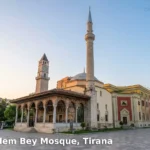
| Top Tourist Places | Skanderbeg Square, Bunk’Art 1 and 2, National History Museum, Et’hem Bey Mosque, Blloku District, Dajti Mountain, Grand Park of Tirana |
| Avg. Trip Cost/Day | Budget: $30–55 / Mid-range: $70–150 / Luxury: $180–380+ |
| Nearest Major Airport | Tirana International Airport Nënë Tereza (TIA) — Albania’s only international airport |
| Population | Approx. 910,000 (city); 1.2 million (greater metro area, 2026) |
| Famous For | The world’s highest density of communist-era concrete bunkers (approximately 173,000 scattered across the country), the extraordinary transformation from Europe’s most isolated communist state to a vibrant, colorful, EU-candidate capital in barely three decades, one of Europe’s fastest-growing tourism sectors, exceptional Albanian cuisine largely unknown outside the Balkans, and a nightlife energy that is genuinely among the most surprising in southeastern Europe |
2. Tirana City Overview & Background
Tirana is the kind of city that makes experienced travelers stop mid-sentence and revise what they thought they knew about Europe. Come expecting a grey post-communist capital and you find instead a city of extraordinary color — literally, thanks to the transformation begun by former mayor and artist Edi Rama, who in the early 2000s painted the city’s drab communist-era apartment blocks in vivid geometric patterns of orange, yellow, green, and blue, turning what had been one of Europe’s drabbest urban environments into one of its most visually distinctive. Come expecting a city without history and you find instead layers of Ottoman grandeur, Italian Fascist urban planning, communist brutalism, and post-1990 chaotic energy that create an urban palimpsest unlike anything else in the Balkans.
Albania’s capital sits on a broad plain surrounded by mountains — the Dajti Mountain rising dramatically to the east, visible from virtually every street in the city, and the forested hills of the Currila range to the west. The Lana River runs through the center of the city in a modest channel — hardly the great river that anchors Riga or Vilnius, but a useful geographical marker dividing the historic center from the expanding modern districts.
What makes Tirana uniquely compelling in 2026 is the extraordinary speed of its transformation. Albania spent 1945–1990 under the most repressive and most isolated communist regime in Europe — that of Enver Hoxha, who sealed the country from the outside world so completely that Albanian citizens could not own cars, could not travel freely, could not practice religion (Albania was declared the world’s first atheist state in 1967), and could not receive foreign radio or television. The country emerged from this isolation in 1991 into a chaos so extreme that the state essentially collapsed in 1997, triggering a mass emigration that reduced the population by approximately 800,000 people in barely a decade.
What has happened since — and particularly in the last decade — is one of the most remarkable urban and social transformations in European history. Tirana today is a city of genuine vitality: restaurants of surprising sophistication, a nightlife scene that draws visitors from across Europe, a contemporary arts and design culture that is entirely home-grown, and a population that has the particular energy of people who have lived through extraordinary adversity and come through it with their humor, warmth, and determination intact.
The EU candidate status granted to Albania in 2014 (with accession negotiations continuing) has accelerated investment, governance reform, and cultural confidence. Young Albanians — many educated abroad, many returning from Italy, Germany, Greece, and the United Kingdom — are driving a renaissance that is visible in every new restaurant, every renovated building, every street art installation, and every conversation with a local who is simultaneously proud of how far the country has come and impatient for how far it still needs to go.
“Tirana surprised me more completely than any city I have visited in twenty years of serious travel. I arrived with almost no expectations and left with the conviction that it is one of the most interesting and most genuinely exciting cities in Europe right now. The keyword is ‘right now’ — this will not last forever.”
— Anonymous travel journalist, Condé Nast Traveller Balkans, 2025
3. Tirana History Timeline
Prehistoric and ancient periods — The Albanian highlands have been inhabited since the Paleolithic era. The ancient Illyrians — the indigenous people of the western Balkans — inhabit the territory of modern Albania for at least two millennia before the common era. The Illyrian tribes are skilled metalworkers and seafarers who resist both Greek colonial expansion on the coast and later Macedonian domination.
168 BCE — Rome defeats the last Illyrian kingdom and incorporates the territory into the Roman province of Illyricum (later divided into Dalmatia and Pannonia). The region that will become Albania is part of the Roman world for over 600 years — significant Roman cities develop on the Albanian coast including Dyrrachium (Durrës), the starting point of the Via Egnatia — the great Roman road connecting the Adriatic to Constantinople.
4th–6th centuries CE — The decline of Roman authority and the migrations of Visigoths, Huns, and Avars through the Balkans bring significant disruption to the Illyrian population. Byzantine authority eventually extends over much of the territory.
7th–9th centuries — Slavic peoples migrate into the Balkans in significant numbers, surrounding the Illyrian-descended Albanian population (who call themselves Shqiptarë — “Sons of the Eagle”) in the highland zones of the central Balkans.
1190 — The first Albanian principality is documented — the Principality of Arbanon — marking the first recorded independent Albanian political entity.
14th century — The powerful Albanian noble Gjin Muzaka controls the Tirana region. Various Albanian principalities emerge and compete for territory in the complex political world of the late medieval Balkans.
1385–1478 — The Ottoman Empire expands into Albania. The great Albanian national hero Gjergj Kastrioti Skënderbeu (Skanderbeg) — an Albanian nobleman who had served as an Ottoman military commander — defects from the Ottomans in 1443 and leads a remarkable 25-year resistance against the Ottoman Empire, winning numerous battles against vastly larger forces. His red-and-black double-headed eagle banner becomes the symbol of Albanian national identity and forms the basis of the modern Albanian flag. Skanderbeg dies in 1468; Albanian resistance continues until 1478.
1478–1912 — Ottoman rule over Albania. Tirana develops as a small market town and administrative center under Ottoman governance. The Et’hem Bey Mosque — built between 1793 and 1821 and the oldest surviving building in modern Tirana — is the finest monument of Ottoman Tirana. A significant portion of the Albanian population converts to Islam during the Ottoman period — Albania today has a Muslim majority (approximately 57%) alongside substantial Orthodox (20%) and Catholic (17%) minorities.
1614 — The first written mention of Tirana as a settlement — in the records of the Ottoman administrator Sulejman Pasha Bargjini, who establishes a mosque, a caravanserai, and a bazaar, creating the nucleus of what will become the modern city.
1912 — Albanian independence is declared in Vlorë on November 28 — celebrated annually as Albania’s National Day. The Declaration of Independence of Albania is signed by the National Assembly following the Ottoman Empire’s collapse in the First Balkan War. The Albanian flag — Skanderbeg’s red-and-black double-headed eagle — becomes the national symbol.
1920 — The Congress of Lushnjë designates Tirana as the capital of Albania — chosen partly for its central location and partly to avoid the coastal cities that were contested between the new Albanian state and its neighbors. At the time, Tirana is a small market town of approximately 12,000 people.
1925–1939 — The regime of President (later King) Ahmet Zogu (Zog I) attempts to modernize and Westernize Albania. Italian advisers and architects are invited to develop Tirana’s urban infrastructure. The Italian-designed urban plan of Tirana — with its broad central boulevard, Skanderbeg Square, and neoclassical government buildings — dates from this period. Zog’s relationship with Mussolini’s Italy progressively deepens.
1939 — Fascist Italy invades and occupies Albania on April 7 — the occupation meeting minimal resistance. Albania becomes an Italian protectorate; King Zog flees to Greece and eventually Britain.
1941 — The Albanian Communist Party is founded under the leadership of the young Enver Hoxha — a former schoolteacher and the dominant figure of Albanian politics for the next 44 years.
1943–1944 — Following Italy’s armistice with the Allies, Nazi Germany briefly occupies Albania before being expelled by the Albanian communist National Liberation Army led by Hoxha in November 1944.
1944–1985 — Enver Hoxha’s communist regime. Albania becomes the most isolated and most repressive communist state in Europe:
- 1948 — Albania breaks with Yugoslavia’s Tito, aligning with Stalin’s USSR
- 1961 — Albania breaks with the USSR, aligning with Mao’s China
- 1978 — Albania breaks with China, becoming entirely isolated internationally
- 1967 — Albania declares itself the world’s first atheist state — all mosques, churches, and religious buildings are closed, converted to other uses, or demolished; religious practice is criminalized
- 1967–1986 — Approximately 173,000 concrete bunkers (the famous pillboxes) are constructed throughout the country on Hoxha’s orders — one bunker for every four Albanian citizens, designed to defend against the invasion that never came
- Travel, private vehicle ownership, and contact with foreigners are criminalized; the secret police (Sigurimi) maintains total surveillance of the population
1985 — Enver Hoxha dies. Ramiz Alia takes power and begins cautious liberalization.
1990–1991 — The communist regime collapses under popular pressure. Mass demonstrations fill Skanderbeg Square in December 1990. The Democratic Party of Albania is founded. Free elections are held in March 1991; the communists win but a general strike forces further reform. Multi-party elections in March 1992 bring the Democratic Party under Sali Berisha to power. Albania opens to the world.
1997 — The collapse of pyramid schemes — in which approximately two-thirds of Albanian families had invested — triggers a financial crisis and then a complete breakdown of state authority. Armed gangs loot military arsenals; approximately 2,000 people are killed in the resulting anarchy; the government falls. An Italian-led UN peacekeeping force restores order. The crisis accelerates emigration — approximately 800,000 Albanians leave the country in the 1990s alone.
2000s — Edi Rama becomes Mayor of Tirana (2000–2011). His policy of painting the communist-era apartment blocks in vivid colors transforms the city’s appearance and wins him international attention, including the World Mayor Prize in 2004. Infrastructure investment, urban regeneration, and the beginning of genuine economic growth transform Tirana progressively.
2009 — Albania joins NATO — a moment of enormous national significance and security assurance for a country that spent 45 years in complete international isolation.
2014 — Albania receives EU candidate status — accession negotiations continue in 2026 with genuine progress on governance, rule of law, and institutional reform.
2013–present — Edi Rama serves as Prime Minister of Albania — his Socialist Party winning multiple elections. The political landscape remains contested, with ongoing debates about corruption, judicial reform, and the pace of EU integration.
2019 — A devastating earthquake (magnitude 6.4) strikes central Albania in November — killing 51 people and causing extensive damage throughout the country, including significant structural damage to historic buildings in Tirana and the surrounding region. The international response is significant; reconstruction continues.
2024–2026 — Tirana continues its remarkable transformation. International tourism grows dramatically — from barely 50,000 international visitors per year in 2010 to over 1.5 million by 2025, making Albania one of Europe’s fastest-growing tourism destinations. The city’s food scene, nightlife, and cultural infrastructure develop rapidly. EU accession negotiations advance. The new National Theatre (rebuilt after controversy over the demolition of the old communist-era building) opens. Tirana positions itself as one of the most exciting and most affordable European capitals for contemporary travelers.
4. Tirana Geography & Neighborhoods
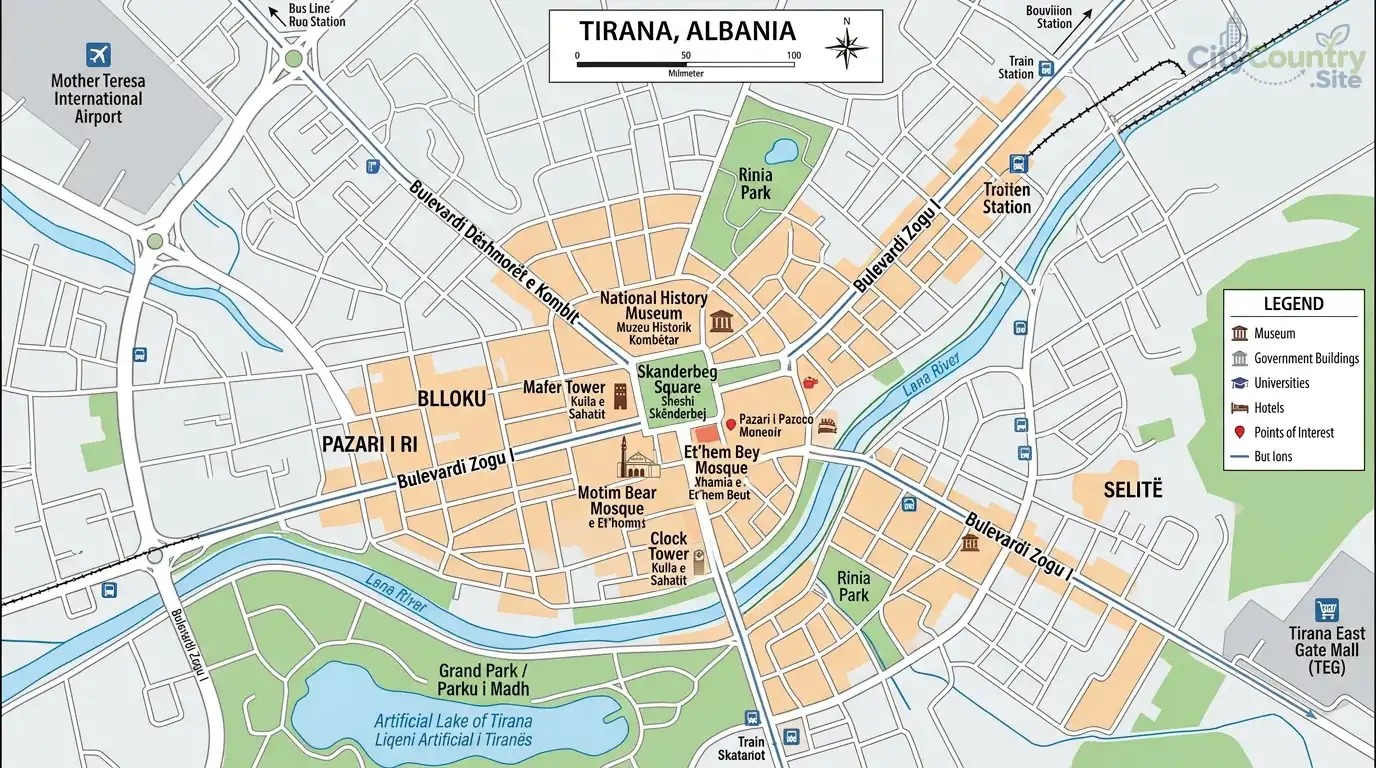
Tirana occupies a broad alluvial plain at the foot of the Dajti Mountain (1,612 metres), with the mountain’s forested eastern face providing one of the most dramatic urban backdrops of any capital city in the Balkans. The plain is bounded by lower hills on multiple sides and is traversed by the small Lana River running roughly east to west through the city center.
The city’s geography reflects its rapid 20th-century growth: a historic core of Ottoman and Italian Fascist buildings around Skanderbeg Square; a surrounding ring of communist-era apartment blocks (now increasingly colorful); and an outer zone of chaotic post-1991 construction ranging from informal settlements to luxury developments.
Neighborhood Comparison Table
| Area | Best For | Vibe | Price Level |
|---|---|---|---|
| Skanderbeg Square / Historic Center | History, museums, mosques, central orientation | Grand, historic, tourist-accessible | Mid |
| Blloku (The Block) | Restaurants, cafés, nightlife, shopping | Vibrant, trendy, social | Mid–High |
| Pazari i Ri (New Bazaar) | Food market, artisan shops, authentic Tirana | Lively, authentic, local | Budget–Mid |
| Kombinat | Street art, creative community, alternative culture | Bohemian, urban, creative | Budget–Mid |
| Rruga e Kavajës | Local life, residential, authentic | Genuine, unhurried, mixed | Budget–Mid |
| Ali Demi / Vasil Shanto | Residential, parks, local cafés | Quiet, local, authentic | Budget |
| Sauk | Upscale villas, embassies, quiet suburbs | Affluent, green, residential | High |
| Lapraka | Modern development, budget accommodation | Functional, mixed, developing | Budget–Mid |
The Blloku (Block) is Tirana’s most internationally famous neighborhood — and its most extraordinary. During the communist period, the Blloku was a sealed residential compound accessible only to the communist party elite — Enver Hoxha’s villa and the residences of senior party officials were here, entirely off-limits to ordinary Albanians. When the regime fell, the Blloku was opened to the public for the first time — and within a decade it had transformed into the most vibrant restaurant and nightlife district in the city. The contrast between its communist exclusivity and its current democratic energy is one of the most symbolically satisfying transformations in post-communist Europe.
Pazari i Ri (New Bazaar) — the beautifully renovated traditional market area just north of Skanderbeg Square — is the most authentic and most atmospheric daytime destination in Tirana, with a spectacular covered market, artisan shops, traditional restaurants, and the daily rhythm of Albanian urban life.

5. Tirana Weather & Temperature Guide
Tirana has a Mediterranean-influenced continental climate — hot, dry summers and mild, wet winters, with beautiful spring and autumn seasons that represent the finest travel windows.
Month-by-Month Weather Table
| Month | Avg Temp (°C) | Rainfall | Crowd Level | Travel Recommendation |
|---|---|---|---|---|
| January | 2–11 | High | Very Low | ✅ Good — mild, green, quiet |
| February | 4–13 | High | Very Low | ✅ Good — spring beginning |
| March | 6–16 | Medium | Low | ⭐ Excellent — spring blooms |
| April | 9–20 | Medium | Medium | ⭐ Excellent — finest spring weather |
| May | 13–24 | Low–Medium | High | ⭐ Excellent — warm and beautiful |
| June | 17–29 | Low | High | ⭐ Excellent — warm and lively |
| July | 20–33 | Very Low | High | ⚠️ Hot — manageable with indoor breaks |
| August | 20–34 | Very Low | High | ⚠️ Hottest — beach season |
| September | 16–29 | Low | High | ⭐ Excellent — finest autumn month |
| October | 12–22 | Medium | Medium | ⭐ Excellent — golden autumn |
| November | 7–16 | High | Low | ✅ Good — quieter, atmospheric |
| December | 4–12 | High | Low | ✅ Good — mild by Balkan standards |
April through June is Tirana’s finest travel season — warm temperatures (20–25°C), relatively low rainfall, the city’s parks and surrounding mountains at their most beautiful, and the tourist crowds manageable. The surrounding Albanian Alps are still snow-capped in April; the wildflowers in the mountain valleys are extraordinary in May.
September and October are the outstanding autumn option — warm but not scorching, the mountains beginning their color transformation, and the city at its most photogenic in the softer light. September in particular is excellent — still warm enough for the Albanian coast as a combination, but the peak summer heat has broken.
July and August are hot — Tirana in high summer can reach 34–35°C, which is genuinely uncomfortable in the city. Most Albanians who can afford it head to the coast; the city empties slightly in August. If visiting in peak summer, plan outdoor activities for early morning and late evening.
Winter (November–February) is mild by Balkan standards — Tirana rarely experiences snow — but wet, with significant rainfall. The surrounding mountains are snow-covered (ski resorts within 2 hours are operational); the city is quiet and affordable.
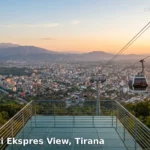
💡 Did You Know? Tirana is one of the few European capital cities where you can see snow-capped mountains from the city center year-round — the Dajti Mountain to the east retains snow at its higher elevations well into spring, and on clear winter days the views from central Tirana’s boulevards encompass a dramatic Alpine panorama of entirely unexpected grandeur for a Mediterranean-climate city. The Dajti Ekspres cable car — operating year-round — provides access to the mountain from the city’s eastern suburbs in under 20 minutes.

6. Tirana Airport & Getting There
Tirana International Airport Nënë Tereza (TIA)
Tirana International Airport Nënë Tereza (IATA: TIA) — named after Mother Teresa, who was born in Skopje to Albanian parents and is claimed as an Albanian national figure — is located approximately 17 km northwest of the city center and is Albania’s only international airport. A significant expansion and modernization project completed in recent years has substantially improved the airport’s capacity and facilities.
Wizz Air is the dominant carrier at Tirana — the Hungarian low-cost airline has made Tirana one of its most important Southeast European bases, connecting the city to an extraordinary range of European destinations. Additional carriers include Ryanair, easyJet, airBaltic, Turkish Airlines, Lufthansa, Austrian Airlines, ITA Airways (formerly Alitalia), British Airways (seasonal), and several others. International connections include London, Rome, Milan, Frankfurt, Vienna, Istanbul, Amsterdam, Brussels, Paris, Zurich, and many other European cities. The route network has expanded dramatically in the past five years as Albanian tourism grows.
Getting from TIA to the City Center:
| Transport Option | Duration | Cost (Approx.) | Notes |
|---|---|---|---|
| Airport Bus (Rinas Express) | 30–40 min | 250 ALL (~$2.60) | Reliable, cheap, runs regularly |
| Taxi (official) | 25–35 min | 2,500–3,000 ALL (~$26–31) | Use official airport taxi rank |
| Bolt / inDrive | 25–35 min | 1,500–2,500 ALL (~$16–26) | App-based; significantly cheaper |
| Hotel shuttle (pre-booked) | 30–40 min | Varies | Some hotels offer transfers |
Getting to Tirana from neighboring countries:
| Origin | Transport | Duration | Cost (Approx.) |
|---|---|---|---|
| Pristina, Kosovo | Bus | 3–4 hours | €10–20 |
| Skopje, North Macedonia | Bus | 5–6 hours | €15–25 |
| Podgorica, Montenegro | Bus | 4–5 hours | €10–20 |
| Athens, Greece | Bus / Flight | 8 hrs / 1.5 hrs | €20–35 / €60–150 |
| Rome, Italy | Flight | 1.5 hours | €50–150 |
| London, UK | Flight | 2.5 hours | €60–200 |
| Istanbul, Turkey | Flight | 1.5 hours | €60–180 |
💡 Did You Know? Mother Teresa (Anjezë Gonxhe Bojaxhiu, 1910–1997) — the Catholic nun who founded the Missionaries of Charity in Calcutta and won the Nobel Peace Prize in 1979 — was born in Skopje (then part of the Ottoman Empire, now capital of North Macedonia) to Albanian parents from the Prizren area of what is now Kosovo. Both Albania and North Macedonia claim her as a national figure; in Albania she appears on banknotes and the country’s international airport carries her name. The Albanian claim to Mother Teresa is not merely symbolic — her family’s Albanian identity and Catholic faith were central to her personal formation, and she spoke Albanian throughout her life.
7. Getting Around Tirana
Tirana is a moderately sized city with a somewhat chaotic traffic environment — a consequence of the extraordinary proliferation of private vehicles following the end of a regime that banned car ownership entirely. Getting around effectively requires a combination of walking, app-based transport, and occasional public buses.
Walking is the primary mode for the city center — the historic core around Skanderbeg Square, the Blloku district, the Pazari i Ri market, and the Grand Park are all within comfortable walking distance of each other (20–30 minutes maximum between the farthest points of the tourist circuit). The city center is becoming increasingly pedestrian-friendly as car-free zones expand.
Bolt and inDrive are the primary ride-hailing options — both operate in Tirana with good availability and transparent pricing. Bolt is generally more reliable; inDrive (formerly inDriver) allows price negotiation and is often cheaper. A typical city ride costs 500–1,500 ALL (~$5–16).
Taxis — white with yellow license plates — are widely available. Always agree on the fare before departing or ensure the meter is running. A typical city ride costs 600–1,500 ALL (~$6–16). Bolt and inDrive are generally cheaper and more transparent.
City Buses (Tirana Urban Transport) — operate throughout the city at very low cost (40 ALL per journey — barely $0.40). Routes can be confusing for first-time visitors but useful for reaching the Dajti cable car terminal and more distant neighborhoods.
The Dajti Ekspres Cable Car — from the eastern suburb of Sauk to the summit of Dajti Mountain — is a transport and tourism attraction combined, providing spectacular views over the city during the 15-minute ascent.

8. Top Attractions & Best Places in Tirana
Top Attractions Table
| Attraction | Type | Entry Fee | Best Time | Time Needed |
|---|---|---|---|---|
| Skanderbeg Square | Central plaza / national symbol | Free | Morning / Evening | 1 hour |
| National History Museum | National history / archaeology | 700 ALL (~$7) | Morning | 2–3 hours |
| Bunk’Art 1 | Communist bunker / Cold War museum | 700 ALL (~$7) | Morning | 2 hours |
| Bunk’Art 2 | Communist bunker / museum of terror | 500 ALL (~$5) | Morning | 1.5 hours |
| Et’hem Bey Mosque | Ottoman mosque / historic landmark | Free | Morning | 30–45 min |
| National Art Gallery | Albanian and Balkan art | 500 ALL (~$5) | Morning | 1.5–2 hours |
| Grand Park of Tirana (Parku i Madh) | Urban park / artificial lake / nature | Free | Morning / Afternoon | 1.5–2 hours |
| Pazari i Ri (New Bazaar) | Renovated market / food / crafts | Free | Morning | 1.5–2 hours |
| Dajti Mountain (Cable Car) | Nature / views / hiking | 800 ALL round trip (~$8) | Morning | Half–full day |
| House of Leaves (Shtëpia e Gjetheve) | Surveillance museum / communist history | 500 ALL (~$5) | Morning | 1.5 hours |
| Blloku District | Historic communist elite zone / café culture | Free | Afternoon / Evening | 2–3 hours |
| Pyramid of Tirana | Communist monument / youth culture hub | Free (exterior) | Any time | 45 min |
Skanderbeg Square (Sheshi Skënderbej) is the physical and symbolic heart of Tirana — a vast, newly renovated central plaza dominated by the equestrian statue of Gjergj Kastrioti Skënderbeu, the 15th-century Albanian national hero who resisted the Ottoman Empire for 25 years. The square is flanked by an extraordinary architectural ensemble: the Et’hem Bey Mosque (Ottoman, 1821) and its clock tower; the National History Museum (communist era, with a massive socialist realist mosaic on its facade); the Palace of Culture (built with Soviet assistance in the 1960s); and the Tirana International Hotel. The juxtaposition of Ottoman, Italian Fascist, and communist architectural styles around a single central square is perhaps the most concentrated expression of Tirana’s layered historical identity anywhere in the city.
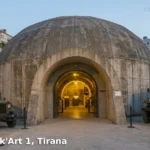
Bunk’Art 1 and Bunk’Art 2 are the most extraordinary and most innovative museums in Albania — and among the most unusual museum experiences available anywhere in the Balkans. Bunk’Art 1 occupies a vast Cold War nuclear bunker built beneath Dajti Mountain to shelter the Albanian communist leadership in the event of a nuclear attack. The bunker — with its miles of tunnels, 106 rooms, and entire parallel world of offices, communication centers, and living quarters — has been transformed into a comprehensive museum of the Hoxha era, combining the extraordinary physical experience of the bunker itself with an outstanding historical exhibition on Albanian communism and its human costs. Bunk’Art 2 — located in a smaller bunker beneath the Ministry of Internal Affairs in the city center — focuses specifically on the Sigurimi (communist secret police) and the full apparatus of state terror: the surveillance, the arrests, the interrogations, the executions. Both are essential visits.
The House of Leaves (Shtëpia e Gjetheve) — opened as a museum in 2017 in the former headquarters of the communist surveillance apparatus — is one of the most chilling and most fascinating museums in southeastern Europe. The building was used by the Sigurimi to conduct mass surveillance of the Albanian population — wire-tapping, mail interception, and informant management. The preserved equipment, files, and physical infrastructure of a surveillance state are displayed with remarkable intelligence and emotional precision. The building’s walls were covered in vine leaves to prevent surveillance from the outside — hence the name.
The National History Museum (Muzeu Historik Kombëtar) is Albania’s largest and most comprehensive museum — its enormous socialist realist mosaic on the exterior facade (depicting heroic Albanians through the ages, from Illyrian warriors to communist partisans) is one of the most distinctive public artworks in the Balkans and one of the finest examples of socialist realist monumental art in Europe. The interior covers Albanian history from Illyrian prehistory through the Ottoman period, national independence, and the communist era. The Skanderbeg collection — historical objects related to the national hero — is particularly significant.
The Pyramid of Tirana — a bizarre, triangular concrete structure built as the Enver Hoxha Museum in 1988 by Hoxha’s daughter and son-in-law — is one of the most architecturally distinctive monuments of the communist era anywhere in Europe. After serving as a NATO headquarters during the Kosovo War, a nightclub, and a TV station, it sat derelict for years while its fate was debated. A remarkable renovation completed in 2022 has transformed it into a youth culture and creative technology hub — with climbing walls on its sloping external surfaces and a creative arts complex within. The Pyramid is now simultaneously a communist relic, a youth space, and one of the most visually extraordinary buildings in the Balkans.
Pazari i Ri (New Bazaar) — the beautifully renovated traditional market area just north of Skanderbeg Square — is the most authentic and most enjoyable daily destination in Tirana. The covered market building (beautifully redesigned) houses stalls of fresh produce, traditional Albanian food products, artisan crafts, and excellent small restaurants and coffee shops. The surrounding streets are full of independent shops, artisan workshops, and traditional Albanian businesses that provide a genuine sense of the city’s daily life. Morning hours (8–12 PM) are the most vibrant.
💡 Did You Know? Albania’s approximately 173,000 concrete military bunkers — built on the orders of Enver Hoxha between 1967 and 1986 at an estimated cost equivalent to building two European-standard housing units for every Albanian family — represent one of the most extraordinary and most wasteful construction programs in European history. The bunkers are virtually indestructible — designed to withstand a direct tank hit — and their removal would cost more than the country’s entire GDP. Albania has therefore been forced to find creative uses for them: some have become artist studios, cafés, storage facilities, and tourist attractions; many simply sit empty in fields and hillsides throughout the country. They are simultaneously a monument to communist paranoia and an absurdist landscape art installation on a national scale.

9. Tirana Food & Cuisine Guide
Albanian cuisine is one of the least known and most genuinely excellent traditional food cultures in Europe — a rich, Mediterranean-influenced cooking tradition shaped by Ottoman, Greek, and Italian influences, combined with exceptional local ingredients from the Albanian highlands, rivers, and Adriatic coast. The discovery of Albanian food is one of the most consistently rewarding surprises for visitors arriving with no particular culinary expectations.
Must-Try Dishes in Tirana
Tavë Kosi — Albania’s most celebrated national dish and one of the finest traditional preparations in the Balkans. A baked casserole of lamb and rice in a rich, tangy yogurt and egg sauce — the lamb is slow-cooked until tender, then combined with the yogurt-egg mixture and baked until the top is golden and slightly puffed. The result is deeply savory, creamy, and entirely distinctive. Available at virtually every traditional Albanian restaurant; the finest versions use lamb from the Albanian highlands and the thick, full-fat yogurt produced by Albanian dairy farmers. Essential eating in Tirana.
Fergese — Tirana’s own signature dish — a rich, thick preparation of roasted red peppers, cottage cheese (gjizë), tomatoes, and sometimes beef or offal, slowly simmered together until the ingredients meld into a dense, deeply flavored spread. Eaten with fresh bread as a starter or as a main dish with rice. Fergese is specifically associated with Tirana’s culinary tradition and is found in its finest form in the city’s traditional restaurants.
Byrek (Burek) — Albania’s contribution to the great Balkan pastry tradition — thin phyllo dough layered with fillings of spinach and cheese (most traditional), meat, tomato, or leek, baked in round pans and cut into slices. Albanian byrek has its own distinctive character — slightly thicker and more generously filled than the Bosnian or Turkish versions — and at its finest (eaten warm from a traditional byrekxhi bakery, with a glass of cold yogurt) is one of the most satisfying simple foods in southeastern Europe.
Fli — A traditional Albanian layered pancake dish of particular importance in northern Albanian culinary culture — thin batter layers cooked one at a time on a pan and brushed with cream (kajmak) between each layer, building up into a rich, slightly dense, intensely satisfying dish. Served with honey, butter, or sour cream. A dish of genuine complexity and cultural depth.
Tave Elbasani — Named after the city of Elbasan, this version of the baked lamb dish uses a particularly rich egg-and-yogurt sauce and is considered by many Albanians the finest version of the baked lamb preparation. Available in specialty restaurants in Tirana.
Sufllaqe — The Albanian version of the döner kebab — minced or sliced meat (chicken, beef, or lamb) wrapped in thin flatbread with salad and sauces. Albania’s most popular street food and the fuel of the city’s late-night economy. Available at sufllaqe stands throughout the city for 150–300 ALL (~$1.50–3).
Trilece — Albania’s most beloved dessert — a three-milk cake (tris leches) of Turkish/Latin American origin that has become entirely Albanian in its local adaptation. Sponge cake soaked in a mixture of three types of milk (whole milk, evaporated milk, and cream), topped with caramel. Rich, custardy, and entirely irresistible. Available at virtually every café and restaurant in the country.
Raki (Rakia) — Albania’s essential alcoholic drink — a fruit brandy (most commonly grape, but also plum, mulberry, or other fruits) distilled in home or artisan production throughout the country. Albanian raki is typically stronger and less refined than Balkan rakija elsewhere — home-produced raki can reach 60–70% alcohol — but at its best it is a genuine spirit of considerable character. Always served at the beginning of a meal; refusing a first glass is considered impolite.
Albanian Wine — Albania has a 3,000-year-old wine-making tradition rooted in the ancient Illyrian viticulture. The collapse of the communist state temporarily disrupted production, but Albanian wine has undergone a serious quality renaissance in the past decade. The indigenous Shesh i Zi (Black Shesh) and Kallmet red grape varieties produce wines of distinctive, sometimes wild character; the Shesh i Bardhë (White Shesh) produces interesting whites. Wineries in the Berat, Shkodër, and Sarandë regions are producing increasingly impressive results.
Best Restaurants and Food Spots in Tirana
Mullixhiu (Blloku) — The most celebrated and most intellectually serious restaurant in Albania — chef Bledar Kola’s extraordinary project of documenting, reviving, and reimagining traditional Albanian cuisine using exceptional local ingredients. The tasting menus are outstanding; the wine list is the finest showcase of Albanian wines available anywhere. Reservations essential. 3,000–6,000 ALL (~$31–63) per person.
Oda (Old City) — A beautifully designed traditional Albanian restaurant in a restored Ottoman-era building — outstanding tavë kosi, fergese, and traditional Albanian cuisine in the most authentic setting available in the city center. 1,500–3,000 ALL (~$16–31).
Mrizi i Zanave (Near Shkodër, day trip) — Not strictly in Tirana, but the finest traditional Albanian restaurant in the country — a farm-to-table experience of extraordinary quality using entirely locally sourced ingredients from the restaurant’s own farm and the surrounding area. If visiting northern Albania, this is an essential detour. 2,000–4,000 ALL.
Pazari i Ri Market Restaurants — The small restaurants and food stalls within and around the New Bazaar offer the most affordable and most authentic Albanian breakfast and lunch in Tirana — byrek, fresh vegetables, dairy products, and traditional dishes at 200–600 ALL (~$2–6) per dish.
Era Restaurant (Multiple locations) — A reliable, well-run Albanian restaurant chain serving consistently good traditional Albanian cuisine — tavë kosi, grilled meats, byrek, and Albanian salads — at very accessible prices. Good for a reliable traditional Albanian meal without the need for advance planning. 1,000–2,500 ALL (~$10–26).
Komiteti (Blloku) — A legendary Tirana institution — not primarily a restaurant but a museum-bar filled with extraordinary communist-era objects, furniture, and memorabilia, serving excellent raki and traditional Albanian drinks. One of the most atmospheric spaces in the city. 400–800 ALL for drinks.
💡 Did You Know? Albania has one of the highest per-capita olive oil consumption rates in Europe — a direct consequence of the extraordinary density of ancient olive trees throughout the Albanian landscape. Many Albanian olive trees are genuinely ancient — some estimated to be over 1,000 years old — surviving from the Byzantine and Ottoman periods in groves that have been continuously productive for centuries. The olive oil of southern Albania (particularly from the Berat and Vlorë regions) is increasingly recognized by international food critics as among the finest produced in the Mediterranean basin — rich, grassy, and possessed of a distinctive intensity that reflects the old vines and traditional pressing methods.
10. Tirana Accommodation Guide
Tirana offers a growing range of accommodation — from excellent budget hostels to genuinely impressive boutique hotels — with the particular advantage that even the finest hotels are significantly less expensive than comparable properties in Western European or more touristed Balkan capitals.
Best Areas to Stay:
- Blloku District: Best for nightlife access, restaurants, and the most vibrant contemporary Tirana atmosphere
- Near Skanderbeg Square / Historic Center: Best for proximity to major sights, the mosque, the museums, and central orientation
- Pazari i Ri area: Best for authentic neighborhood character and easy market access
- Sauk / Outer Districts: Best for quiet, upscale residential experience with better air quality
Accommodation Price Ranges (2026)
| Category | Price/Night (USD) | Examples |
|---|---|---|
| Budget Hostel | $12–30 | Tirana Backpacker Hostel, Trip’n’Hostel, Freddy’s Hostel |
| Mid-Range Hotel / Guesthouse | $45–100 | Hotel Antea, Tirana Inn, Hotel Colosseo |
| Upscale Boutique Hotel | $100–200 | Atelier Hotel, Hotel Mosaic, Vila Alba |
| Luxury Hotel | $200–380+ | Tirana Marriott, Sheraton Tirana, Casa Boem |
Tirana Marriott Hotel — in a prominent position near the Blloku district — is the city’s most reliable luxury address, with excellent facilities, outstanding service, and the international standards that business and luxury travelers expect. Rates: approximately $180–320 per night.
Atelier Hotel — a beautifully designed boutique property in the Blloku area — offers exceptional character, artistic design, and personalized service at prices significantly below comparable Western European boutique hotels. Rates: approximately $120–200 per night.
Tirana Backpacker Hostel — a well-run, sociable hostel in a great central location — is consistently one of the finest budget options in the city. Dorm beds from $12; private rooms from $30.
11. Best Time to Visit Tirana
April through June is Tirana’s finest season for visitors — mild temperatures (20–25°C), relatively low rainfall, the surrounding mountains at their most dramatically beautiful (snow-capped peaks above spring-green valleys), and the city’s outdoor café culture in full operation. May is perhaps the single finest month — warm enough for outdoor eating and exploration, cool enough for comfortable walking, and the surrounding Albanian countryside at its most intensely beautiful.
September and October offer outstanding conditions — the summer heat has broken, the autumn light is golden, the wine harvest season in Albania’s wine regions creates additional interest for food and wine enthusiasts, and tourism pressure is slightly lower than peak summer. September is particularly recommended for those combining Tirana with the Albanian coast — the sea is warm, the crowds have thinned from August peaks, and the landscape is beautiful in the changing light.
July and August are the hottest months — Tirana can be uncomfortably warm (34–35°C) in the urban environment. Most Albanians head to the coast in August; visiting Tirana in peak summer is feasible but plan outdoor activities for early morning and evening.
Winter (November–March) is mild, quiet, and affordable — Tirana rarely snows but rainfall is significant. The surrounding mountains offer ski resorts (Dajti and the more serious Valbona and Theth areas for experienced skiers). A winter Tirana visit is entirely feasible and offers an authentic, un-touristed city experience at very low prices.
Key Festivals and Events in Tirana
- Tirana International Film Festival (TIFF) (November) — Growing annual film festival attracting European and Balkan cinema, held at various venues throughout the city
- Tirana Design Week (October) — A growing annual celebration of Albanian and international design across various city venues
- Summer Music Festival (July–August) — Various outdoor concert series, particularly in the Grand Park and at the Pyramid venue
- Albania National Day (November 28) — Independence Day celebration with military parades on Skanderbeg Square, cultural events, and national festivities
- Tirana Jazz Festival (autumn) — Growing annual jazz event bringing local and international musicians to intimate city venues
- New Year and Orthodox/Catholic Christmas — Albania’s mixed religious heritage creates an extended festive season from Christmas (December 25) through Orthodox Christmas (January 7) with decorations, markets, and celebrations
12. Shopping Guide
Tirana’s shopping scene is dominated by the Pazari i Ri market for authentic Albanian products, with a growing contemporary design scene developing in the Blloku and surrounding creative districts.
What to Buy:
Albanian Olive Oil — Among the finest in the Mediterranean, from ancient groves in southern Albania. Available at the Pazari i Ri market from producers who bring their own oil. An outstanding and genuinely distinctive food souvenir.
Artisan Raki — Home-produced Albanian grape or mulberry raki from artisan distillers — available at the market and in specialist shops. Buy carefully; the quality varies enormously. The finest artisan productions are exceptional.
Albanian Honey — Outstanding mountain honey from Albanian highland beekeepers — produced in environments of extraordinary botanical diversity, with chestnut, wildflower, and pine honey all available. Available at the Pazari i Ri from beekeepers selling direct.
Traditional Albanian Crafts (Filigree) — Albania has a centuries-old tradition of silver filigree jewelry — intricate wirework in geometric and floral patterns. The finest examples come from the old craft workshops of Shkodër and Berat, but specialist shops in Tirana’s old bazaar area sell excellent pieces.
Albanian Wool Products — Traditional handwoven wool textiles — çorape (woolen socks), kilims, and decorative weavings in traditional Albanian geometric patterns. Available at the craft shops of Pazari i Ri and the National History Museum shop.
Copper Crafts — Traditional Albanian copperwork — coffee sets, plates, and decorative objects — from the surviving coppersmith tradition of Albanian bazaar culture.
Where to Shop:
Pazari i Ri (New Bazaar) — The finest all-round shopping experience in Tirana — fresh produce, traditional food products, artisan crafts, and the full energy of Albanian market culture. Tuesday–Sunday; best before noon.
Çarshia e Vjetër (Old Bazaar area) — The streets around the Et’hem Bey Mosque retain some traditional artisan shops and craft sellers in a setting with genuine historic character.
Tirana East Gate Mall / TEG — Modern shopping mall on the city’s eastern edge — international brands, Albanian and regional fashion, cinema, food court, and the full range of contemporary retail.

13. Tirana Nightlife & Entertainment
Tirana has one of the most genuinely surprising and most energetic nightlife scenes in southeastern Europe — a consequence of the extraordinary social energy released after 45 years of communist prohibition, the city’s young demographic profile, and the particular Albanian talent for hospitality and sociality.
The Blloku district is the epicenter — dozens of cafés, bars, and restaurants open from early morning through to the small hours, with an energy that builds through the evening into genuine late-night intensity. The Blloku’s transformation from communist elite compound to the most vibrant nightlife district in the country is one of the most symbolically satisfying post-communist transformations anywhere in Europe.
Live Music and Cultural Venues:
Albanian National Theatre (Teatri Kombëtar) — Albania’s national theatre — regular productions of Albanian and international drama, as well as opera and musical performances. The theatre’s recent history (the old communist-era building was controversially demolished in 2020 and replaced with a new structure) has given it political as well as cultural significance.
National Music Academy — Regular classical music performances by Albanian musicians and visiting ensembles.
OKB Outdoor Venue — One of the city’s most popular outdoor concert venues — regular concerts and DJ events in a beautiful setting near the Grand Park.
The Pyramid — The repurposed communist monument now hosts cultural events, concerts, and youth-oriented programming in its transformed interior and on its distinctive sloping exterior.
Bars and Cafés:
Komiteti (Blloku) — The most atmospheric bar in Tirana — a living museum of communist Albania, filled with extraordinary period objects (communist party membership cards, Hoxha-era furniture, propaganda posters, vintage Albanian consumer products) displayed on every surface. Serves Albanian raki, traditional drinks, and light food in a setting of extraordinary historical density. One of the finest bar experiences in the Balkans.
Radio Bar (Blloku) — A beloved Tirana institution — a sophisticated bar with excellent cocktails, a carefully curated music program, and a genuinely chic atmosphere.
Hemingway Bar (Blloku) — A long-standing Tirana classic — reliable cocktails, warm atmosphere, and the kind of enduring neighborhood bar quality that survives changing fashions.
Sky Club Tirana — A rooftop bar offering panoramic views over the city and Dajti Mountain — particularly spectacular at sunset and after dark.
Clubs:
Tirana’s club scene is growing rapidly — FOLIE, Hemingway Club, and several other venues offer DJ events and live music in various styles. The scene is less developed than Riga or Belgrade but growing quickly, driven by a young population and increasing international visitor numbers.
14. Hidden Gems & Local Secrets
The Colorful Buildings of Edi Rama — While the famous painted apartment blocks of Tirana are increasingly well known to international visitors, most tourists see only the most-photographed examples near the city center. The full extent of the colorful building project — which covered hundreds of apartment blocks throughout the city in vivid geometric patterns between 2000 and 2011 — requires exploring the residential neighborhoods beyond the tourist circuit. Walking the streets of Kombinat, Lapraka, and the outer residential districts reveals the full, extraordinary scale of what is essentially a citywide public art project.
The Clock Tower of Tirana (Kulla e Sahatit) — The beautiful Ottoman-era clock tower adjacent to the Et’hem Bey Mosque — built in 1822 and the oldest surviving Ottoman structure in Tirana alongside the mosque — is frequently overlooked in favor of the more famous mosque. The tower’s slender proportions and the view from its upper level over Skanderbeg Square are outstanding.
The Artificial Lake (Liqeni Artificial) and Grand Park at Dawn — The Grand Park of Tirana — with its large artificial lake created in the communist era — is beautiful at any time, but arriving at dawn, when the lake is still and Dajti Mountain reflects in the water, and the city is quiet, reveals the park’s extraordinary natural quality. Completely free to enter; completely overlooked at dawn.
Bunk’Art’s Hidden Tunnel Sections — Beyond the main exhibition areas of Bunk’Art 1, the full extent of the nuclear bunker system beneath Dajti Mountain extends for kilometres and is only partially accessible to the general public. Various tours offer access to additional sections of the tunnel network not included in the standard museum visit — these extended tours are worth booking for anyone with genuine interest in the Cold War history.
The Orthodox Cathedral of the Resurrection (Katedralja e Ringjalljes) — A magnificent modern Orthodox cathedral completed in 2012 — one of the largest Orthodox churches in the Balkans — standing near the Grand Park. The interior is decorated with extraordinary Byzantine-style mosaics of very high quality; the building itself is architecturally ambitious and genuinely impressive. Almost entirely overlooked by international visitors focused on the communist-era attractions.
Tirana’s Street Art Scene (Kombinat and Beyond) — Beyond the official painted buildings, Tirana has developed a genuine street art culture, concentrated in the Kombinat and Kinostudio neighborhoods. Walking these areas reveals a continuously evolving outdoor gallery of considerable quality — Albanian and international artists working in scales from small stencils to entire building facades.
15. Day Trips from Tirana
Albania is a small country — roughly the size of Switzerland — with an extraordinary concentration of historical, natural, and cultural attractions accessible within a few hours of the capital.
Day Trips Table
| Destination | Distance | Travel Time | Method | Highlights |
|---|---|---|---|---|
| Dajti Mountain | 26 km east | 20 min cable car | Cable car + bus | City views, hiking, nature, restaurant |
| Durrës | 38 km west | 40 min | Bus / Car / Train | Ancient Roman amphitheater; Adriatic beach; archaeological museum |
| Berat | 122 km south | 2 hours | Bus / Car | UNESCO “City of a Thousand Windows”; Ottoman old town; citadel |
| Krujë | 32 km north | 45 min | Bus / Car | Skanderbeg’s castle; national museum; traditional bazaar |
| Shkodër | 116 km north | 1.5 hrs | Bus / Car | Rozafat Castle; Ottoman old town; Mrizi i Zanave restaurant |
| Apollonia | 100 km south | 1.5 hrs | Car | Ancient Greek city ruins; outstanding archaeological site |
| Vlorë | 147 km south | 2 hours | Bus / Car | Independence declaration site; Albanian Riviera gateway |
| Gjirokastër | 232 km south | 3 hours | Bus / Car | UNESCO “City of Stone”; Ottoman citadel; Ali Pasha heritage |
Berat is the finest and most essential day trip from Tirana — and one of the most beautiful historic towns in the Balkans. The UNESCO-listed “City of a Thousand Windows” sits dramatically on a hillside above the Osum River — its white Ottoman houses with their extraordinary arrays of large windows covering the hillside in geometric patterns. The Berat Citadel — an inhabited medieval fortress — contains Byzantine churches, Ottoman mosques, and traditional Albanian houses in a continuously lived-in walled city of remarkable authenticity. The town below contains the beautifully preserved Mangalem neighborhood with its Ottoman architecture and the excellent Ethnographic Museum. A full day is needed and entirely rewarded.
Krujë — 45 minutes north of Tirana — is the site of Skanderbeg’s castle and the national hero’s most important legacy. The medieval castle contains the Skanderbeg National Museum — a comprehensive account of the Albanian resistance to Ottoman expansion in the 15th century. The attached traditional bazaar (çarshi) is one of the best-preserved Ottoman-era bazaars in Albania, with traditional craftspeople still working in the same trades as their ancestors. The view from the castle over the surrounding mountains and the distant Adriatic is extraordinary.
Durrës — 40 minutes west — provides the finest combination of ancient history and beach recreation accessible from Tirana. The Roman Amphitheater of Durrës — dating from the 2nd century CE and one of the largest in the Balkans — is extraordinarily well-preserved and deeply atmospheric, sitting half-embedded in the fabric of the modern city. The Archaeological Museum of Durrës contains the finest collection of Illyrian and Roman artifacts in Albania. And beyond the history, the Durrës beach — the closest Adriatic swimming to Tirana — provides a summer escape of significant pleasure.

16. Tirana Local Culture, Customs & Etiquette
Albania has a cultural character that is distinctively its own — shaped by centuries of Ottoman rule, the unique isolation of the Hoxha era, and the extraordinary resilience of a people who maintained cultural identity under conditions that would have destroyed less cohesive communities.
The Kanun (Code of Lekë Dukagjini): The traditional Albanian customary law code — the Kanun — continues to influence social norms and behavior in Albania, particularly in the northern highlands, even when it conflicts with state law. The most famous and most misunderstood aspect of the Kanun is the blood feud (gjakmarrja) tradition — a system of honor-based retribution that creates obligations between families spanning generations. Blood feuds have significantly diminished in modern urban Albania but remain a factor in some rural communities. Understanding the Kanun’s broader values — hospitality (besa), honor, and reciprocity — provides essential context for understanding Albanian social behavior.
Besa: The most important concept in Albanian social culture — besa (pledge, word of honor) is the absolute commitment to keeping promises and fulfilling obligations toward guests and strangers. The Albanian tradition of hospitality rooted in besa means that a guest in an Albanian home is treated with extraordinary generosity and protected with the host’s own honor. This tradition of extraordinary hospitality toward strangers is one of the most genuinely touching aspects of the Albanian character and explains why Albanian tourism consistently receives among the highest ratings for local friendliness in any visitor survey.
Religion: Albania’s communist-era atheism and the country’s mixed religious heritage (Muslim majority; Orthodox and Catholic minorities; Bektashi Sufi order with a significant following) have produced a remarkably secular and tolerant society by regional standards. Albanians broadly identify with their religious heritage culturally while practicing relatively casually. The phrase commonly attributed to the national poet Pjetër Bogdani — “The religion of Albanians is Albanianism” — resonates widely as an expression of national identity above religious division. Interfaith marriages are common; religious festivals of multiple faiths are celebrated widely.
The Albanian Head Shake: One of the most disorienting cultural quirks for new visitors — Albanians nod their head for “no” and shake it for “yes” — the opposite of the convention familiar to most Western visitors. This is confirmed: if an Albanian nods at you, they are saying no; if they shake their head, they are agreeing. This takes approximately three days to internalize and causes significant initial confusion.
Coffee Culture: Albanian coffee culture is deeply Mediterranean — coffee is drunk slowly, in company, as an occasion for conversation rather than a functional caffeine delivery system. The standard Albanian coffee is “kafe turke” (Turkish coffee) — unfiltered, strong, served in small cups with sugar; and “ekspres” (espresso). Accepting an offer of coffee from an Albanian host is essentially mandatory — refusing is a significant social breach.
Tipping:
- Restaurants: 10% tip is standard and greatly appreciated; service culture is developing
- Taxis / Bolt: rounding up is appreciated
- Hotel staff: 200–500 ALL (~$2–5) per service
- Tour guides: 1,000–2,000 ALL (~$10–20) per day
Dos and Don’ts:
- ✅ Do accept coffee and raki when offered — refusing is a social breach of significant proportions
- ✅ Do visit Bunk’Art — the Cold War nuclear bunker museum is one of the most extraordinary museum experiences in the Balkans
- ✅ Do eat at Mullixhiu — the finest Albanian restaurant in the country and a genuinely world-class dining experience
- ✅ Do learn the Albanian head-shake convention before arriving — it will save significant confusion
- ❌ Don’t confuse Albanians with other Balkan peoples — Albanian language, culture, and identity are entirely distinct from Serbian, Greek, or Slavic cultures
- ❌ Don’t photograph military or government installations
- ❌ Don’t arrive expecting a fully developed tourist infrastructure — Albania is developing rapidly but the experience requires a spirit of adventure that more polished destinations do not demand
17. Safety & Travel Tips
Tirana is a safe city for tourists by Balkan standards — significantly safer than its reputation a decade ago, and improving year on year. Violent crime against tourists is uncommon. The city center, Blloku, and all tourist areas are safe for walking at all hours.
Safe Areas: The historic center, Skanderbeg Square, the Blloku district, Pazari i Ri, and the Grand Park are all safe. Standard urban precautions — secure valuables, be aware in crowded areas — apply as anywhere.
Main Practical Concerns:
- Traffic — Tirana’s traffic is chaotic and driving standards are aggressive by Western European standards; exercise extreme caution as a pedestrian and at road crossings
- Road conditions outside Tirana — While improving rapidly, Albanian roads outside the main highways can be in poor condition; a reliable vehicle and careful driving are essential for day trips
- Power cuts — Less common than a decade ago but still occasional; hotel generators cover most accommodation
Emergency Numbers:
- Police: 129
- Ambulance: 127
- Fire: 128
- All emergencies: 112
- Tourist Information: +355 4 2223 313
Health Tips:
- Medical facilities in Tirana are improving — the American Hospital Tirana provides the best private care available
- Tap water in Tirana is technically treated but drinking bottled water is strongly recommended
- Travel insurance with medical evacuation coverage is strongly recommended for Albania
- Tick-borne encephalitis and rabies risks exist in rural areas; appropriate precautions for outdoor activity
18. Tirana Budget Tour
Daily Cost Table
| Category | Budget Traveler | Mid-Range | Luxury |
|---|---|---|---|
| Accommodation | $12–30 (hostel) | $55–120 (hotel) | $180–380+ (luxury hotel) |
| Food | $8–15 (market, local restaurants) | $25–55 (restaurant meals) | $65–160+ (fine dining) |
| Transport | $2–5 (bus, walking, Bolt) | $8–18 (Bolt, taxi) | $30–60 (private car) |
| Activities | $5–15 (museums, cable car) | $15–35 (guided tours) | $50–120+ (private guide) |
| Total/Day | ~$27–65 | ~$103–228 | ~$325–720+ |
Tirana is the most affordable capital city in Europe — bar none. Budget travelers eating at the Pazari i Ri and local restaurants, staying in excellent hostels, and using Bolt can have a genuinely rich experience for well under $40 per day. Even mid-range and luxury travel costs a fraction of equivalent experiences in Western European capitals. The Albanian Lek’s low exchange rate against the dollar and euro makes everything feel extraordinarily affordable for visitors from hard-currency economies.
19. Practical City Information
Visa & Entry: Albania has a relatively liberal visa policy. Citizens of EU member states, USA, UK, Canada, Australia, Japan, and many others can enter visa-free for stays up to 90 days without prior application. EU citizens can enter with just a national ID card (no passport required). Albania is not yet a Schengen Area member but processes are in place for eventual membership with EU accession. Check the Albanian Ministry of Foreign Affairs for current requirements for your specific nationality.
Currency: The Albanian Lek (ALL) — at approximately 1 USD ≈ 95–100 ALL — is the local currency. Euro is widely accepted in Tirana’s tourist-facing establishments, hotels, and restaurants, often alongside or instead of Lek. ATMs dispensing Lek are widely available; always have some Lek cash for markets, taxis, and smaller establishments. Credit cards are accepted at upscale hotels and restaurants; cash is required for most everyday transactions.
SIM Cards and Internet: Available at the airport and throughout the city. Telekom Albania, Vodafone Albania, and ONE Telecommunications are the main operators. Tourist SIMs with 5–10 GB data are available for approximately 500–1,000 ALL (~$5–10). 4G coverage is good throughout Tirana; 5G is expanding. Wi-Fi is available at hotels and increasingly at cafés and restaurants.
Power: Albania uses Type C and F plugs (standard European two-pin round plugs) at 230V, 50Hz. Standard European adapters work throughout.
Drinking Water: Tap water is treated but drink bottled water throughout Albania — infrastructure issues make tap water reliability uncertain.
Vaccinations: No mandatory vaccinations for most travelers to Albania. Recommended: Hepatitis A, Typhoid, Tetanus, and rabies precautions for rural travel.
20. How to Be a Responsible Traveler in Tirana
Engage Seriously with the Communist History: The Bunk’Art museums, the House of Leaves, and the Museum of Secret Surveillance document a period of extraordinary human suffering that is living memory for most Albanians over 40. Visiting these sites with full attention and genuine engagement — rather than as novelty tourism — honors the experiences of the people who lived through them.
Support Albanian Artisans and Producers at Pazari i Ri: The New Bazaar directly connects Tirana’s consumers with Albanian farmers, food producers, and artisan craftspeople. Buying olive oil from the producer who pressed it, honey from the beekeeper who harvested it, and crafts from the artisan who made them puts money directly into the rural economy.
Eat Albanian Food at Albanian Restaurants: Tirana’s growing international restaurant scene includes Italian, Japanese, and American options that are entirely unnecessary given the extraordinary quality of Albanian traditional cuisine. Choosing Mullixhiu, Oda, Era, and other Albanian restaurants over international alternatives keeps money within the local culinary economy and supports the exceptional Albanian chefs who are doing genuinely important cultural work.
Respect the Traffic Rules — and the Pedestrian Right of Way: Traffic in Tirana is chaotic; as a pedestrian, assume that vehicles will not yield even at marked crossings. But as a driver or passenger, the rapid improvement of Albanian road culture requires everyone’s participation.
Environmental Awareness: Albania’s extraordinary natural environment — the Accursed Mountains, the Albanian Riviera, the Vjosa River (Europe’s last wild river) — is under pressure from rapid and not always well-regulated development. Support the growing network of Albanian environmental organizations working to protect these extraordinary landscapes.
21. Travel Media: Documentaries, Books & Channels
Books:
- The Accursed Mountains: Journeys in Albania by Robert Carver — An idiosyncratic and brilliantly written account of travel through post-communist Albania in the late 1990s; essential background for understanding the country’s recent history
- Broken April by Ismail Kadare — Albania’s greatest novelist and multiple Nobel Prize nominee, this short novel set in the Albanian highlands is the finest introduction to Albanian traditional society and the kanun; Kadare’s work generally is the definitive literary approach to Albanian culture
- The Palace of Dreams by Ismail Kadare — Kadare’s masterpiece — a Kafkaesque novel set in Ottoman Albania that functions simultaneously as historical fiction and allegorical critique of the communist regime under which it was written
- Albania: From Anarchy to a Balkan Identity by Miranda Vickers — The most accessible scholarly account of modern Albanian history
- High Albania by Edith Durham — A classic early 20th-century account of travel through the Albanian highlands by an English writer who became one of the most important Western interpreters of Albanian culture
Documentaries:
- Various BBC and Arte documentaries on Albanian communism and the Hoxha era provide essential context
- Albania: The Eagle’s Land — Various documentary productions on Albanian nature and culture
- Anthony Bourdain: Parts Unknown (Season 8) — An outstanding episode in Tirana and beyond that did significant work in introducing Albanian food and culture to international audiences
YouTube Channels:
- Rick Steves Europe — Albania episodes with historical context
- Mark Wiens — Outstanding Tirana and Albanian food content
- Bald and Bankrupt — Several compelling Albania videos showing authentic off-the-beaten-path experiences
22. Tirana vs. Similar Cities
| Feature | Tirana | Sarajevo (BiH) | Skopje (N. Macedonia) |
|---|---|---|---|
| Historical depth | ⭐⭐⭐⭐ Ottoman + communist layers | ⭐⭐⭐⭐⭐ Outstanding — WWI + siege | ⭐⭐⭐ Moderate |
| Communist heritage | ⭐⭐⭐⭐⭐ World-class Bunk’Art museums | ⭐⭐⭐ Good | ⭐⭐⭐ Good |
| Food scene | ⭐⭐⭐⭐⭐ Outstanding — entirely undiscovered | ⭐⭐⭐⭐⭐ Outstanding Bosnian cuisine | ⭐⭐⭐ Moderate |
| Affordability | ⭐⭐⭐⭐⭐ Most affordable capital in Europe | ⭐⭐⭐⭐⭐ Exceptional | ⭐⭐⭐⭐⭐ Exceptional |
| Nightlife | ⭐⭐⭐⭐⭐ Genuinely excellent | ⭐⭐⭐⭐ Very good | ⭐⭐⭐⭐ Good |
| Day trips | ⭐⭐⭐⭐⭐ Berat, Krujë, Durrës, Dajti | ⭐⭐⭐⭐ Mostar outstanding | ⭐⭐⭐ Moderate |
| Natural setting | ⭐⭐⭐⭐⭐ Mountains visible from center | ⭐⭐⭐⭐⭐ Mountain valley — extraordinary | ⭐⭐⭐ Good |
| Unique character | ⭐⭐⭐⭐⭐ Entirely unlike anything else | ⭐⭐⭐⭐⭐ Unique globally | ⭐⭐⭐ Distinctive |
Choose Tirana if you want the most affordable European capital, the world’s most extraordinary communist-era museum experiences (Bunk’Art), genuinely undiscovered Albanian cuisine of outstanding quality, one of the most surprising and most energetic nightlife scenes in southeastern Europe, and the particular pleasure of discovering a city that is transforming in real time before your eyes.
23. Tirana City Travel Tips
- Learn the head shake convention immediately — Albanian “no” is a nod and “yes” is a head shake; this causes immediate and significant confusion if not known in advance
- The Albanian Lek (100 ALL ≈ $1) makes mental arithmetic easy once internalized — divide by 100 for approximate dollar equivalent
- Bunk’Art 1 requires advance booking during peak season — the bunker’s capacity is limited
- Mullixhiu is the finest restaurant in Albania and requires reservation — book days or weeks in advance
- Bolt app is essential — the Albanian taxi system is reliable but app-based Bolt is consistently cheaper and more transparent
- Berat is a must day trip — UNESCO-listed and genuinely extraordinary; take the early morning bus and spend a full day
- Drink Albanian coffee slowly — accepting and sitting with a coffee is the most culturally authentic experience available in Tirana
- The Pyramid of Tirana is most photogenic at sunset when the light catches the concrete surfaces
- Visit Pazari i Ri before 11 AM for the freshest produce and most vibrant market atmosphere
- Albanian drivers do not yield to pedestrians at crossings — treat every road crossing as requiring active negotiation with traffic
- Drink raki when offered — refusing is a significant social breach; Albanian hospitality besa requires acceptance
- The Albanian coast (Vlorë, Sarandë, Himara) combines excellently with Tirana for a week-long Albania itinerary
💡 Did You Know? During the entire communist period of 1945–1990, Albania was the only country in Europe that completely banned private car ownership. Albanians could not own vehicles; the country’s roads were used exclusively by state vehicles and party officials. When the regime collapsed in 1991, Albanians who had never driven a vehicle in their lives immediately began acquiring cars — producing a period of extraordinary traffic chaos that contributed to the anarchic atmosphere of the early 1990s. By 2000, Tirana had gone from essentially no private vehicles to an unmanageable proliferation of cars on road infrastructure built for an entirely different era. The traffic problem thus created has been one of the defining urban challenges of post-communist Tirana.
24. Is Tirana Worth Visiting?
Yes — emphatically and with the particular enthusiasm reserved for destinations that deliver far more than they promise. Tirana is one of Europe’s most genuinely surprising travel discoveries — a city whose reputation as a grey, chaotic, post-communist backwater is several years out of date and wildly inaccurate, and whose reality as a vibrant, colorful, historically fascinating, culinarily outstanding, and extraordinarily affordable capital is one of the best-kept secrets in European travel.
It is not a city for everyone. The tourist infrastructure, while improving rapidly, is not at the level of Prague or Ljubljana. The traffic is chaotic. The urban fabric is architecturally inconsistent — moments of genuine beauty alongside jarring post-communist construction. And the full depth of Tirana’s historical experience requires genuine engagement with difficult history — communist terror, Stalinist isolation, and the extraordinary human cost of 45 years of Europe’s most repressive regime.
But for travelers willing to engage — genuinely, curiously, and without excessive comfort expectations — Tirana delivers rewards that are entirely its own: the Bunk’Art museums are unlike anything available anywhere else in Europe; Mullixhiu is producing Albanian cuisine of genuine world-class quality; the Blloku nightlife has a post-communist energy that is authentically exhilarating; the day trips to Berat and Krujë provide some of the finest medieval and Ottoman heritage available in the Balkans; and the Albanian people — warmed by their extraordinary hospitality tradition — make every encounter a genuinely human connection rather than a transaction.
Tirana is best suited for:
- History enthusiasts — The communist-era museums are genuinely extraordinary; the Ottoman heritage is underappreciated; the Illyrian and Roman layers add further depth
- Food adventurers — Albanian cuisine is the finest undiscovered traditional food culture in Europe; discovering it is one of the greatest pleasures available in the Balkans
- Budget-conscious travelers — The most affordable European capital; outstanding value at every level
- Nightlife seekers — The Blloku’s energy and the Albanian capacity for celebration make Tirana one of southeastern Europe’s most underrated nightlife destinations
- Those who want to be early to a destination — Tirana in 2026 is at the precise point of transformation where the experience is genuinely excellent but the mass tourism has not yet arrived
- Balkan itinerary travelers — Tirana as a base for exploring Berat, Gjirokastër, the Albanian Riviera, and eventually Kosovo and North Macedonia provides one of the richest regional travel experiences in southeastern Europe
- Architecture and urban design enthusiasts — The colorful buildings, the communist bunkers, the Ottoman mosque, the Italian Fascist urban plan, and the extraordinary Pyramid make Tirana an urban design education
Less suited for travelers expecting polished tourism infrastructure, those requiring the certainty of well-maintained roads and reliable utilities throughout their journey, or those with no appetite for the particular adventure that genuinely developing destinations provide.
The verdict: Give Tirana three full days minimum — four is better. Spend a morning at Bunk’Art 1, an afternoon at Bunk’Art 2 and the House of Leaves. Walk Skanderbeg Square at dusk. Eat fergese and tavë kosi at Oda. Have drinks at Komiteti. Take a full day to Berat. Climb to the Pyramid at sunset. Drink raki with strangers who will immediately become friends. Visit Pazari i Ri at 9 AM for the finest breakfast in the city. And before you leave — standing somewhere above the city, with Dajti Mountain to the east and the Adriatic horizon to the west and the extraordinary, colorful, chaotic, resilient city spread below you — you will understand what it means to discover a place at exactly the right moment. Tirana is that place. This is that moment.
25. Frequently Asked Questions About Tirana
Q1: Is Tirana safe for tourists?
Yes — Tirana is significantly safer than its reputation from a decade ago suggests. Violent crime against tourists is uncommon. The city center, Blloku, Skanderbeg Square, and all tourist areas are safe for walking at all hours. The main practical concern is traffic — Albanian driving culture is aggressive and pedestrians must be extremely careful at road crossings. Standard urban precautions (secure valuables, be aware in crowds) apply. Women traveling solo report generally positive experiences; as always, standard awareness applies.
Q2: Do I need a visa to visit Albania?
Albania has a liberal visa policy. Citizens of EU member states, USA, UK, Canada, Australia, Japan, and many others can enter visa-free for up to 90 days. EU citizens can enter with just a national ID card. Albania is not in the Schengen Area but maintains visa-free agreements with most Western countries. Check the Albanian Ministry of Foreign Affairs website for current requirements for your specific nationality before travel.
Q3: What currency is used and is the Euro accepted?
The official currency is the Albanian Lek (ALL) — approximately 100 ALL ≈ $1 USD. The Euro is very widely accepted in Tirana’s hotels, tourist restaurants, and many shops — often preferred over Lek in tourist-facing establishments. ATMs dispensing Lek are widely available. Always carry some Lek cash for markets, taxis, and everyday transactions. Credit cards are accepted at major hotels and restaurants.
Q4: What are Bunk’Art 1 and Bunk’Art 2 and why should I visit them?
Bunk’Art 1 occupies a vast Cold War nuclear bunker built beneath Dajti Mountain to shelter the Albanian communist leadership in the event of nuclear attack — 106 rooms, miles of tunnels, and a comprehensive museum of the Hoxha era. Bunk’Art 2 occupies a smaller bunker beneath the Ministry of Internal Affairs in the city center and focuses specifically on the Sigurimi (communist secret police) and the apparatus of state terror. Both are genuinely extraordinary experiences — combining the physical environment of Cold War paranoia with outstanding historical exhibitions. Entry: approximately $5–7 each; advance booking recommended in peak season.
Q5: What is Albanian food like and what should I definitely eat?
Albanian cuisine is one of the finest and least known traditional food cultures in Europe — Mediterranean-influenced, rich in dairy, olive oil, lamb, and fresh vegetables. Must-eat dishes: Tavë Kosi (baked lamb and rice in yogurt sauce — the national dish), Fergese (Tirana’s own signature dish of peppers, cheese, and tomatoes), Byrek (phyllo pastry with spinach and cheese, eaten warm with yogurt), and Trilece (three-milk cake dessert). The finest Albanian restaurant in the country is Mullixhiu — book in advance. The most affordable authentic eating is at the Pazari i Ri market and the many traditional local restaurants throughout the city.
Q6: What is the Albanian head shake and what does it mean?
This is crucial to know before arriving: in Albania, nodding the head means “no” and shaking the head means “yes” — the exact opposite of the convention familiar to most Western visitors. This is confirmed Albanian custom, not a myth or regional variation. You will be confused multiple times before it becomes natural. When an Albanian nods at you, they are declining or disagreeing; when they shake their head, they are affirming or agreeing. Allow approximately 2–3 days for this to become intuitive.
Q7: What is the best day trip from Tirana?
Berat (122 km south, approximately 2 hours by bus) is the single finest day trip from Tirana and one of the most beautiful historic towns in the entire Balkans. The UNESCO-listed “City of a Thousand Windows” — its Ottoman houses covering a hillside with extraordinary arrays of windows — and the inhabited medieval citadel above the town provide one of the most atmospheric and most genuinely beautiful heritage experiences in southeastern Europe. Take the early morning bus and allow a full day. Krujë (32 km north, 45 minutes) is a faster and highly rewarding alternative — Skanderbeg’s castle, the national museum, and the traditional bazaar in a dramatic mountain setting.
Q8: What is the Pyramid of Tirana?
The Pyramid of Tirana is a large triangular concrete structure built in 1988 as the Enver Hoxha Museum by the communist dictator’s daughter and son-in-law. After the regime’s fall, it served variously as a NATO headquarters during the Kosovo War, a nightclub, and a television station before falling into disrepair. After years of political debate about its fate, it was comprehensively renovated and reopened in 2022 as a youth technology and creative arts hub — with climbing walls on its distinctive sloping exterior surfaces and creative programming within. It is simultaneously a communist relic, an architectural curiosity, and a symbol of Albania’s determination to repurpose rather than simply erase its complex past.
Q9: How does Albania compare to other Balkan destinations?
Albania offers what is arguably the finest combination of value, historical depth, natural beauty, and culinary excellence in the western Balkans — at prices significantly below Croatia, Montenegro, and even comparable to the more affordable parts of Bosnia and Serbia. The Albanian Riviera south of Vlorë is genuinely among the most beautiful coastlines in the Mediterranean. The Accursed Mountains (Bjeshkët e Namuna) in the north provide hiking of extraordinary grandeur. The UNESCO-listed cities of Berat and Gjirokastër are among the finest preserved Ottoman urban environments in Europe. And the communist heritage — bunkers, surveillance museums, totalitarian architecture — provides a historical dimension unique in Europe. The one significant limitation is infrastructure — roads, accommodation outside major cities, and tourist services are improving rapidly but remain less developed than neighboring countries.
Q10: How many days should I spend in Tirana?
Two full days covers the essential city experiences — Skanderbeg Square, Bunk’Art 1 and 2, the House of Leaves, Pazari i Ri, the Pyramid, and the Blloku district. Three days adds the Dajti Mountain cable car, more museum time, the Grand Park, and a relaxed evening in Komiteti. Four to five days allows the Berat day trip, the Krujë day trip, more food exploration, and the ability to absorb the city at a properly unhurried pace. For those doing a wider Albania itinerary (Tirana + Albanian Riviera + northern Albania), 2–3 days in Tirana works excellently as a base.
26. Sources & References
This article was researched using information from the following trusted sources:
- Lonely Planet Albania — lonelyplanet.com
- TripAdvisor Tirana — tripadvisor.com
- Booking.com Tirana Hotels — booking.com
- Wikipedia — Tirana — en.wikipedia.org
- Albania Tourism — albania.al
- Numbeo — Cost of Living Tirana — numbeo.com
- Google Maps — maps.google.com
- Wikitravel Tirana — wikitravel.org
- Skyscanner Albania Flights — skyscanner.com
- World Travel Guide — worldtravelguide.net
- Bunk’Art Museums — bunkart.al
- Mullixhiu Restaurant — mullixhiu.com
- Condé Nast Traveller Balkans — cntraveller.com
- Albanian Ministry of Foreign Affairs (visas) — punetejashtme.gov.al
- UNESCO Albania — whc.unesco.org
27. Tirana Travel Guide Images